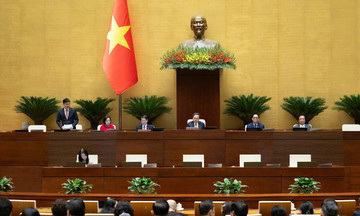
On the morning of 11/12, the National Assembly passed a Resolution on special mechanisms and policies designed to significantly improve public health protection and care. This Resolution mandates the Government to outline the scope and roadmap for increasing health insurance benefits, as well as the list of diseases covered by the Health Insurance Fund for early screening, diagnosis, and treatment. These changes must be implemented concurrently with the planned increase in health insurance contributions starting in 2027.
The primary goal of increasing health insurance contributions is to advance towards waiving basic medical costs for participants, within the scope of their benefits. This will be carried out according to a roadmap that considers socio-economic conditions and the Health Insurance Fund's financial capacity.
The National Assembly has also called for an increase in the coverage rate and payment levels for health insurance medical examination and treatment expenses. This includes costs for early screening, diagnosis, and treatment of specific diseases, along with expanding priority groups eligible for support from the Health Insurance Fund.
Under the new provisions, health insurance participants from near-poor households and individuals aged 75 and above who receive social retirement benefits will have 100% of their medical examination and treatment costs covered within their benefit scope. Furthermore, individuals under social policy, vulnerable groups, low-income earners, and other priority categories will receive increased health insurance benefits. The Health Insurance Fund will cover the costs for early screening, diagnosis, and treatment of certain diseases, and health insurance packages will be diversified to meet the varied needs of the public.
Currently, the health insurance contribution rate stands at 4,5% of the basic salary. In 2024, Vietnam recorded 183,6 million medical examinations and treatments nationwide, marking a 9,7 million increase compared to 2023. Approximately 40 million individuals regularly utilized health insurance for examinations, averaging 4,5 visits per person per year. National health insurance medical examination and treatment expenditures reached nearly 140.000 billion VND, an increase of over 18.000 billion VND (15%) compared to the same period in 2023.
Despite these efforts, individuals currently self-pay over 40% of their medical examination and treatment costs, indicating a substantial burden of medical expenses on the population. Moreover, grassroots healthcare facilities have not yet fully provided primary healthcare services, and comprehensive disease screening has not been widely implemented across the country.
 |
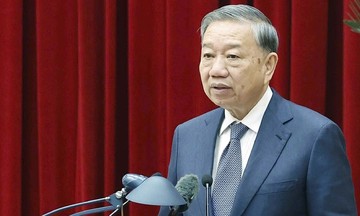
Minister of Health Dao Hong Lan at the National Assembly session on the morning of 11/12. *Photo: National Assembly Media*
The Resolution also introduces preferential mechanisms for salaries and allowances for healthcare staff. Medical doctors, traditional medicine practitioners, dentists, preventive medicine doctors, and pharmacists will be ranked from salary level 2 upon recruitment into their professional titles, pending new salary regulations.
Individuals regularly and directly engaged in medical specialties such as psychiatry, forensic medicine, forensic psychiatry, emergency resuscitation, and anatomical pathology will receive a 100% professional preferential allowance. Healthcare professionals working at communal health stations and preventive health facilities in ethnic minority areas, mountainous regions, difficult or extremely difficult areas, border areas, and islands will also receive a 100% professional preferential allowance. In other areas, communal health station staff will receive a minimum of 70% professional preferential allowance.
88.600 billion VND for healthcare and population
On the same morning, the National Assembly passed a Resolution approving the investment policy for the National Target Program on healthcare, population, and development for the 2026-2035 period. The total capital allocated for the 2026-2030 period is 88.600 billion VND, comprising 68.000 billion VND in central government funds, 20.000 billion VND in local funds, and nearly 600 billion VND from other sources. For the 2031-2035 period, the Government will propose resource allocation to the National Assembly based on the results of the initial phase.
The program aims to ensure all citizens receive primary healthcare and early disease prevention at the grassroots level. It also seeks to increase birth rates, adapt to population aging, provide care for vulnerable groups, and improve overall physical and mental health, stature, life expectancy, and quality of life.
Specific targets by 2030 include reducing the stunting rate in children under 5 years old to below 15%, with a further reduction to 13% by 2035. The crude birth rate in 2030 is projected to increase by 0,5 per thousand compared to 2025. The sex ratio at birth is targeted to decrease to below 109 boys/100 girls by 2030 and to 107 by 2035. Additionally, the rate of men and women receiving pre-marital counseling and health check-ups is expected to reach 90% by 2030 and 95% by 2035.
Vu Tuan