The 4th Plenum of the 14th Central Committee began its discussions on 5/10, focusing on comprehensive reforms in cadre work. According to a communique from the Party Central Office, delegates spent the afternoon in group discussions. Their agenda included reviewing Resolution 26, issued in 2018 by the 12th Party Central Committee, and drafting a new resolution. This new directive aims to continue building a strong cadre contingent at all levels and fundamentally reform cadre work to meet the nation's development needs in the new era.
The afternoon sessions also included a preliminary review of Resolution 28. Issued in 2022 by the 13th Party Central Committee, this resolution addresses the ongoing reform of the Party's leadership and governance methods within the political system during the new phase.
Earlier in the morning, the Central Committee convened to address cadre affairs, including the election of additional members to the Central Inspection Committee. A key decision was also made to rename the Party Committee of the Fatherland Front and Central Mass Organizations to the Party Committee for Mass Mobilization, the Front, and Central Mass Organizations. Subsequently, the Central Committee and delegates proceeded to group discussions, where they deliberated on a resolution aimed at reinforcing the building and rectification of a clean, strong, and comprehensive Party and political system, essential for the nation's development in the new era.
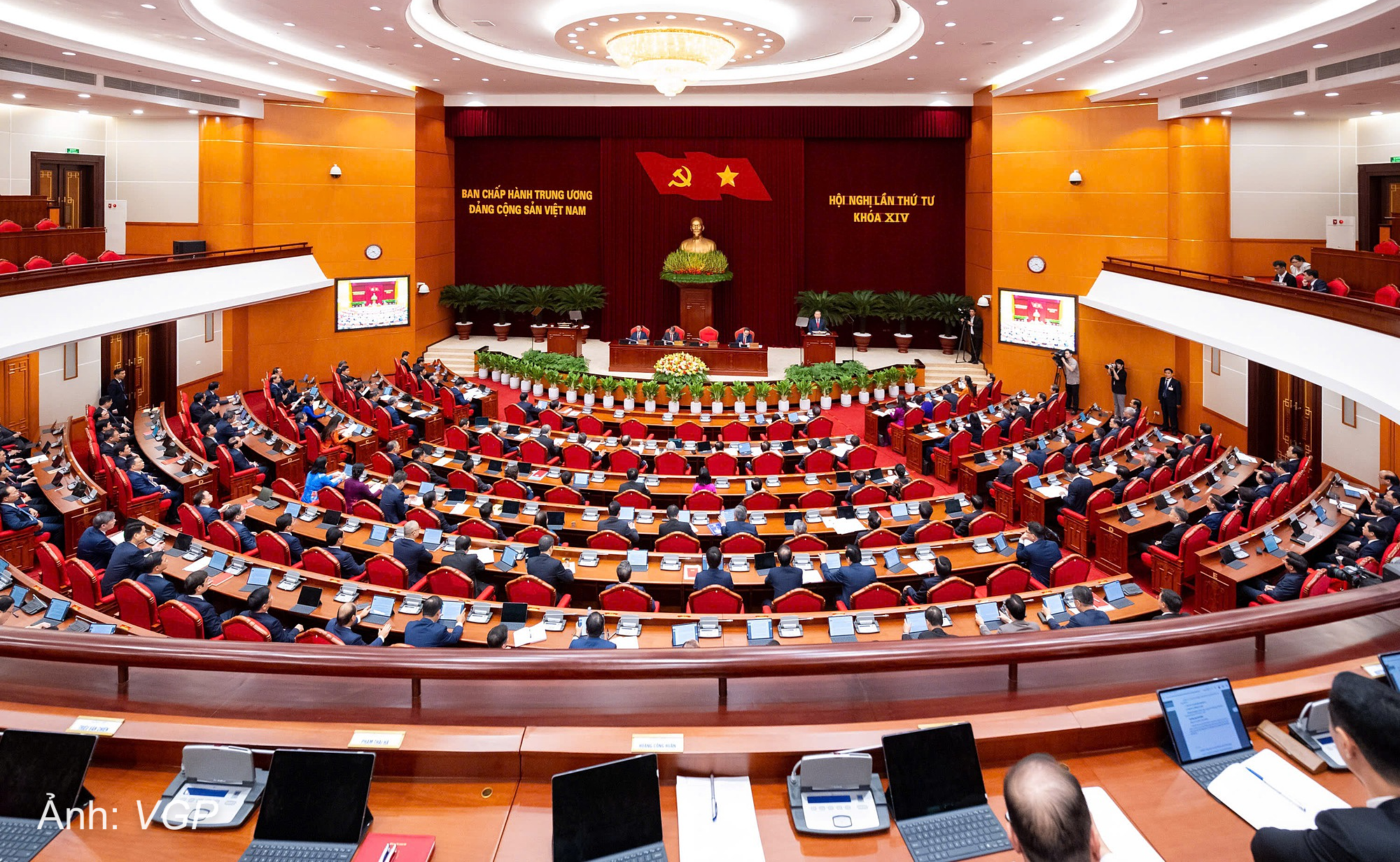 |
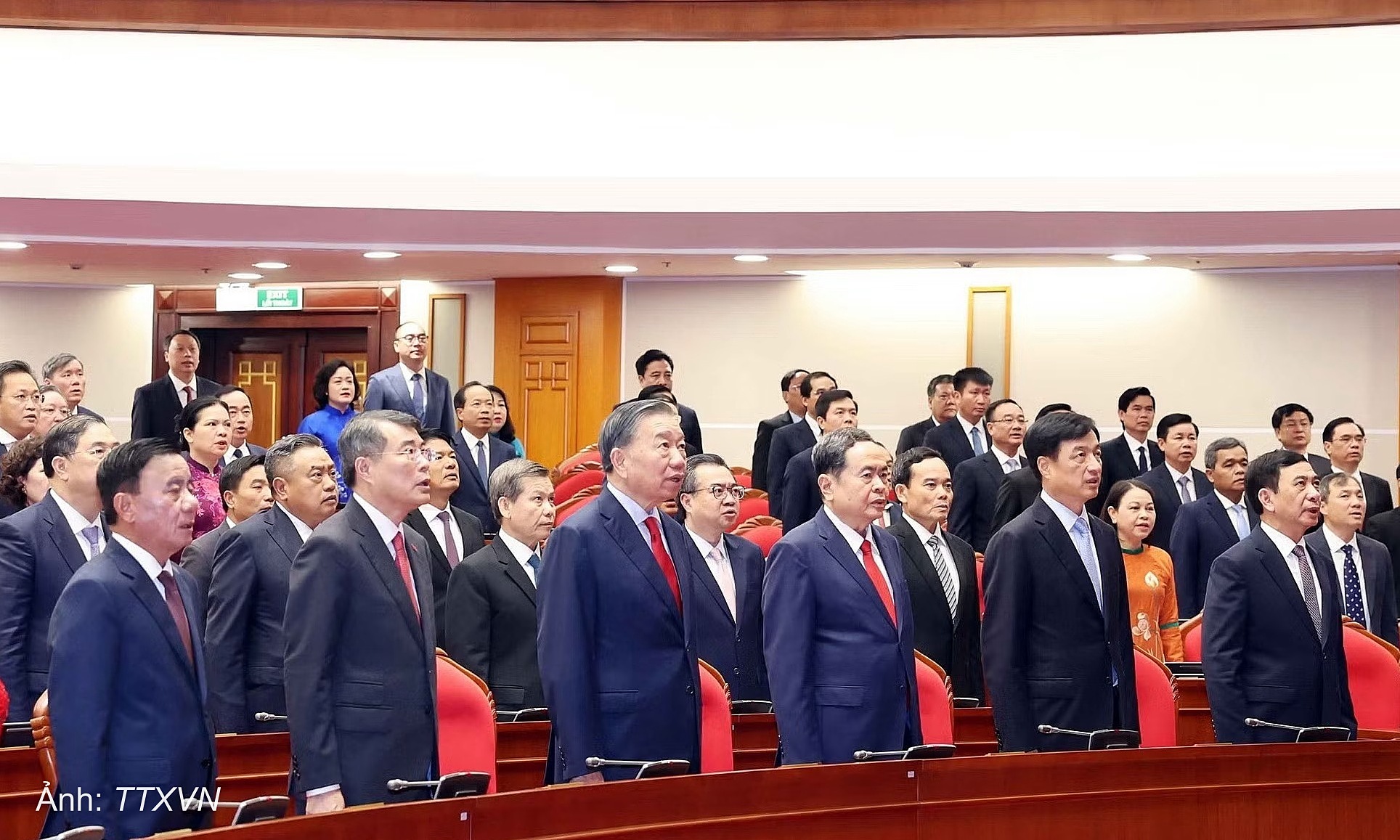
Opening session of the 4th Plenum of the 14th Central Committee, morning of 5/10. Photo: VGP
The plenum officially opened on the morning of 5/10, chaired by General Secretary and President To Lam. National Assembly Chairman Tran Thanh Man presided over the opening segment of the conference.
In his opening address, General Secretary and President To Lam underscored that policy decisions only materialize through a cadre contingent possessing the necessary qualities, capabilities, and commitment. He stressed the importance of integrating cadre work with political objectives and job roles. This includes sourcing, training, evaluating, deploying, and screening cadres, ensuring a cohesive approach across all stages, levels, and terms, rather than fragmented efforts.
Effective cadre evaluation must identify an individual's qualities, true talent, reputation, and potential, particularly demonstrated through their handling of complex tasks. Performance results should be assessed relative to their authority, available resources, and working conditions. Crucially, achievements must not be used to compensate for violations concerning political conduct, ethics, or integrity.
This evaluation process should lead to appropriate deployment, assigning suitable responsibilities, or timely replacement. Furthermore, the accountability of evaluators, nominators, and decision-makers must be clearly defined, encompassing both the positive outcomes and any negative repercussions of cadre appointments.
To Lam emphasized that strategic-level cadres require vision, systemic thinking, and the capacity to select and implement major policies. Grassroots cadres, he added, must possess a deep understanding of their local areas, along with the ability to resolve issues and serve the populace effectively. Leaders, in particular, must excel at identifying and utilizing talented individuals, fostering collective intelligence, and preparing a strong successor contingent.
"Each term must leave behind a better cadre contingent, a stronger organization, and higher implementation capacity," the General Secretary and President stated.
He also called for clarity on mechanisms to identify and attract cadres from the non-state sector and overseas Vietnamese. Furthermore, he urged the creation of genuine opportunities for young cadres, female cadres, ethnic minority cadres, and scientific-technical cadres, cautioning against merely symbolic representation.
The 4th Plenum of the 14th Central Committee continued its work on 6/10, marking its second day.
Vu Tuan