 |
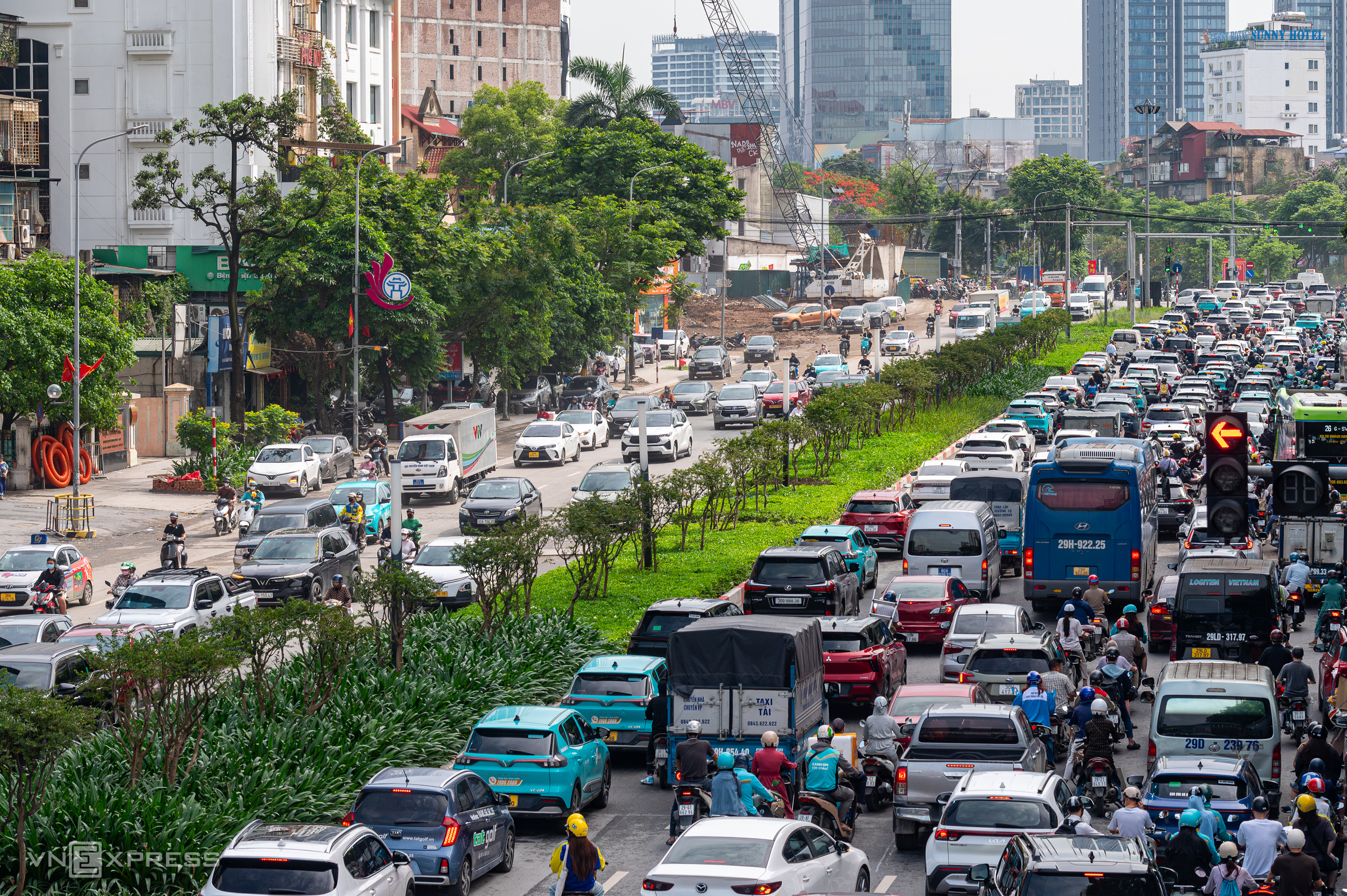
Nguyen Chi Thanh street, approximately 1.8 km long, features 10 lanes for motor vehicles and non-motorized vehicles, connecting to many major intersections in Hanoi. Facing prolonged one-way congestion during rush hours, the Traffic Police Department is considering a plan to narrow the median strip to implement reversible traffic flow.
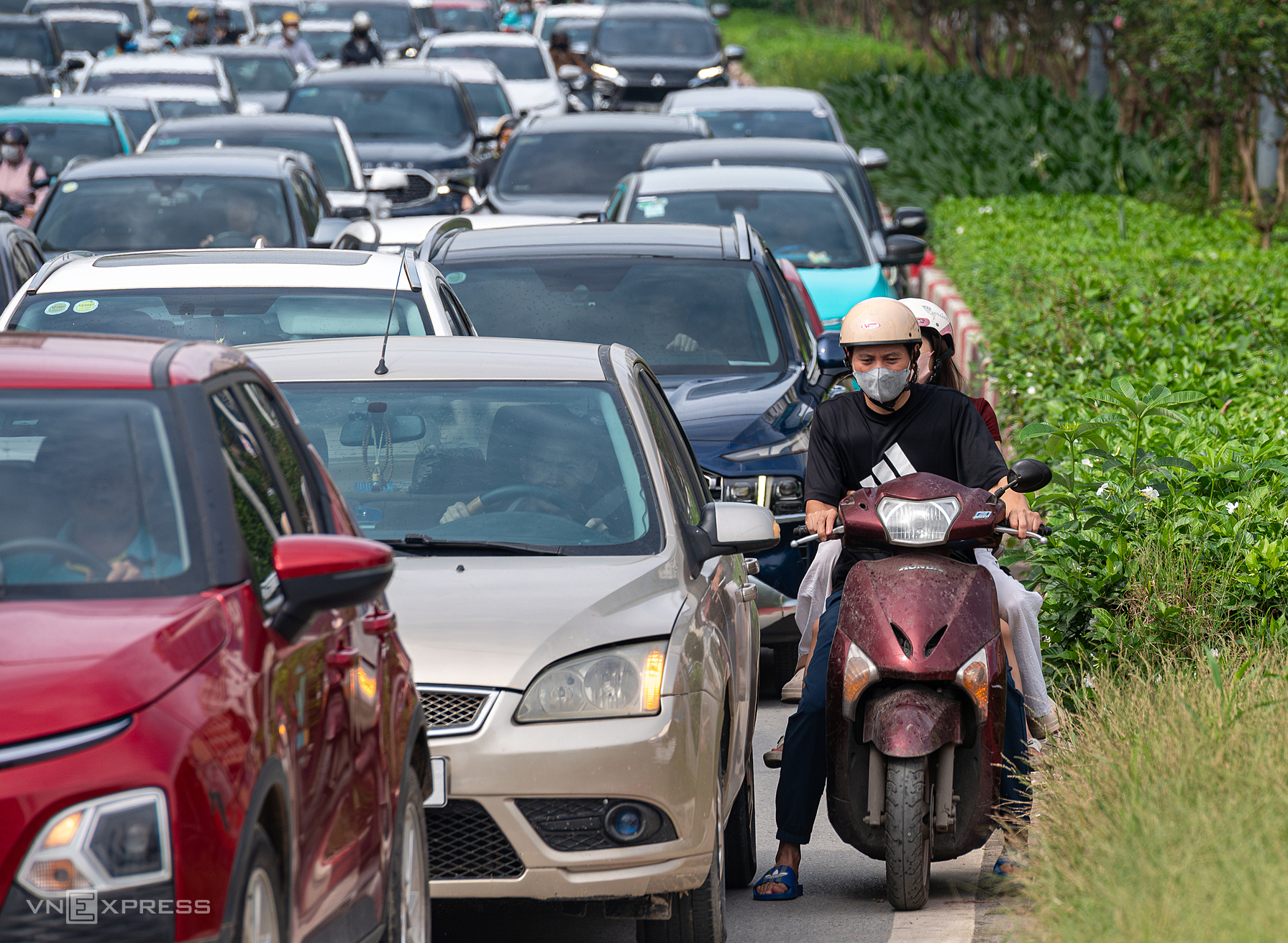 |
During morning rush hours, Nguyen Chi Thanh street often experiences prolonged congestion inbound towards the city center, while the opposite direction remains relatively clear with significantly less traffic.
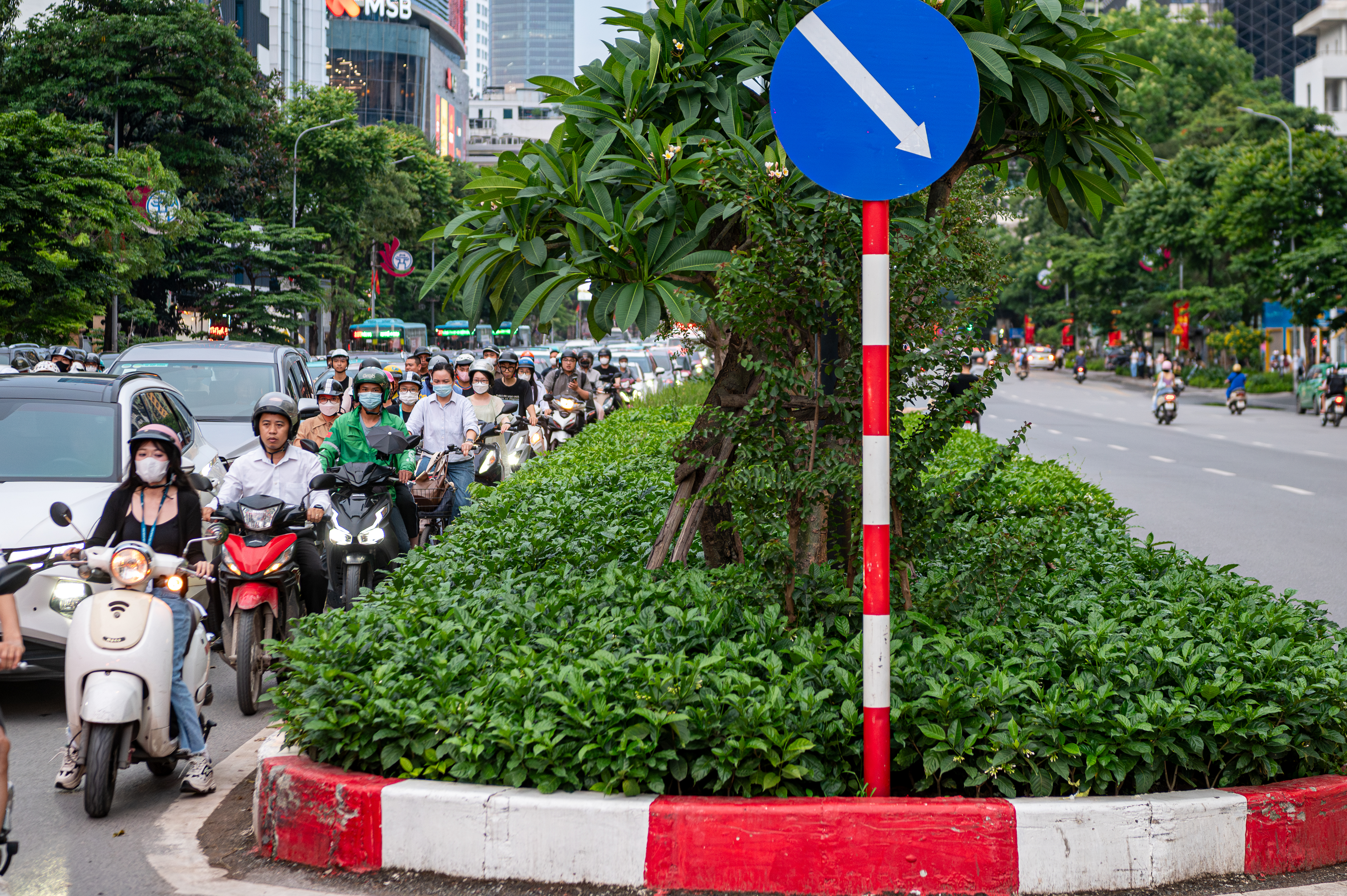 |
To alleviate congestion, authorities previously narrowed the median strip in 2018 to widen the road. The current median strip is still over 4 m wide and planted with many trees.
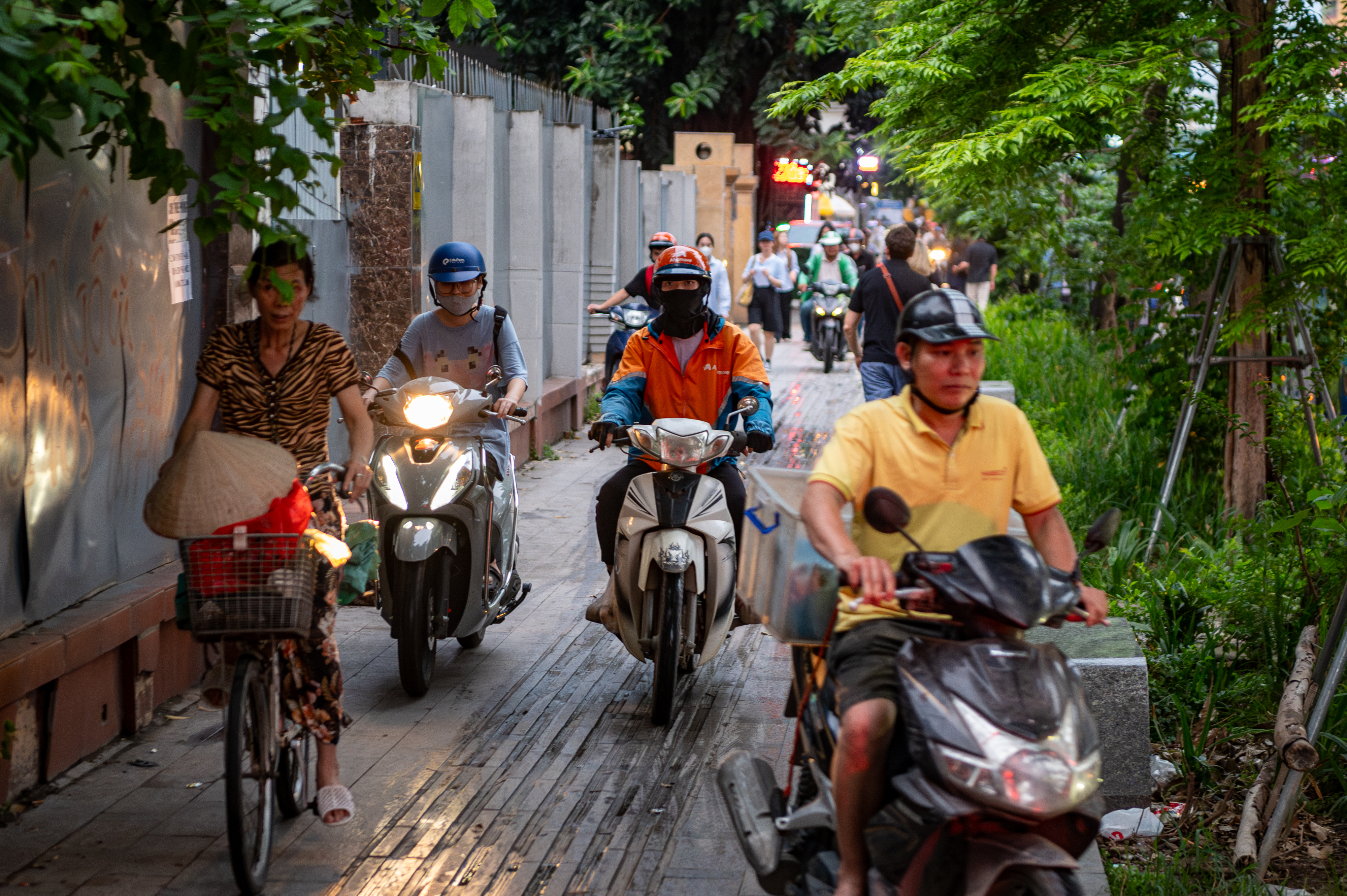 |
Prolonged congestion forces many motorbikes onto sidewalks to find a path when lanes are packed with vehicles, leaving almost no room to move.
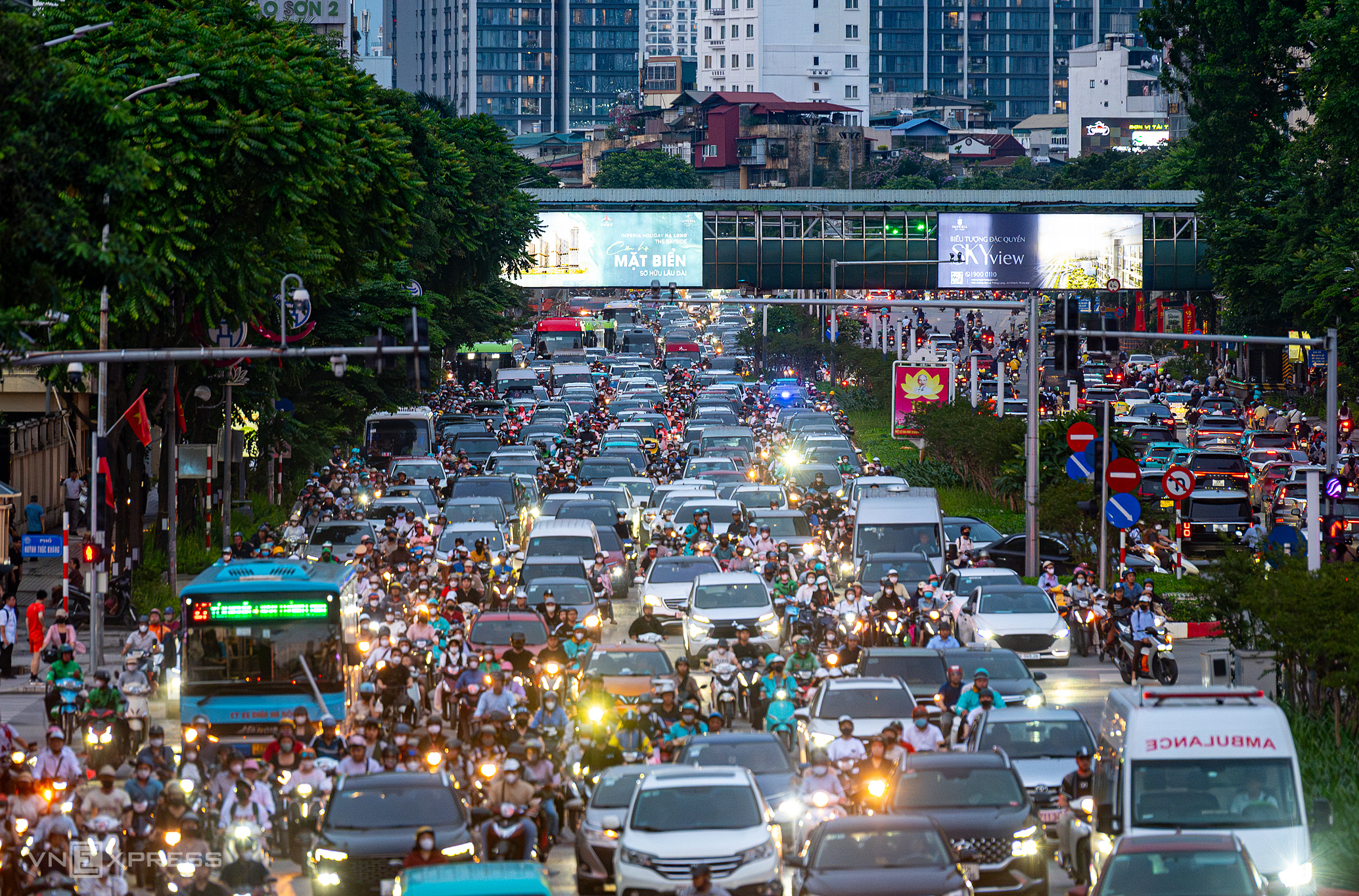 |
During afternoon rush hours, Nguyen Chi Thanh street experiences prolonged congestion outbound from the city center, with vehicles moving slowly, often inching forward meter by meter.
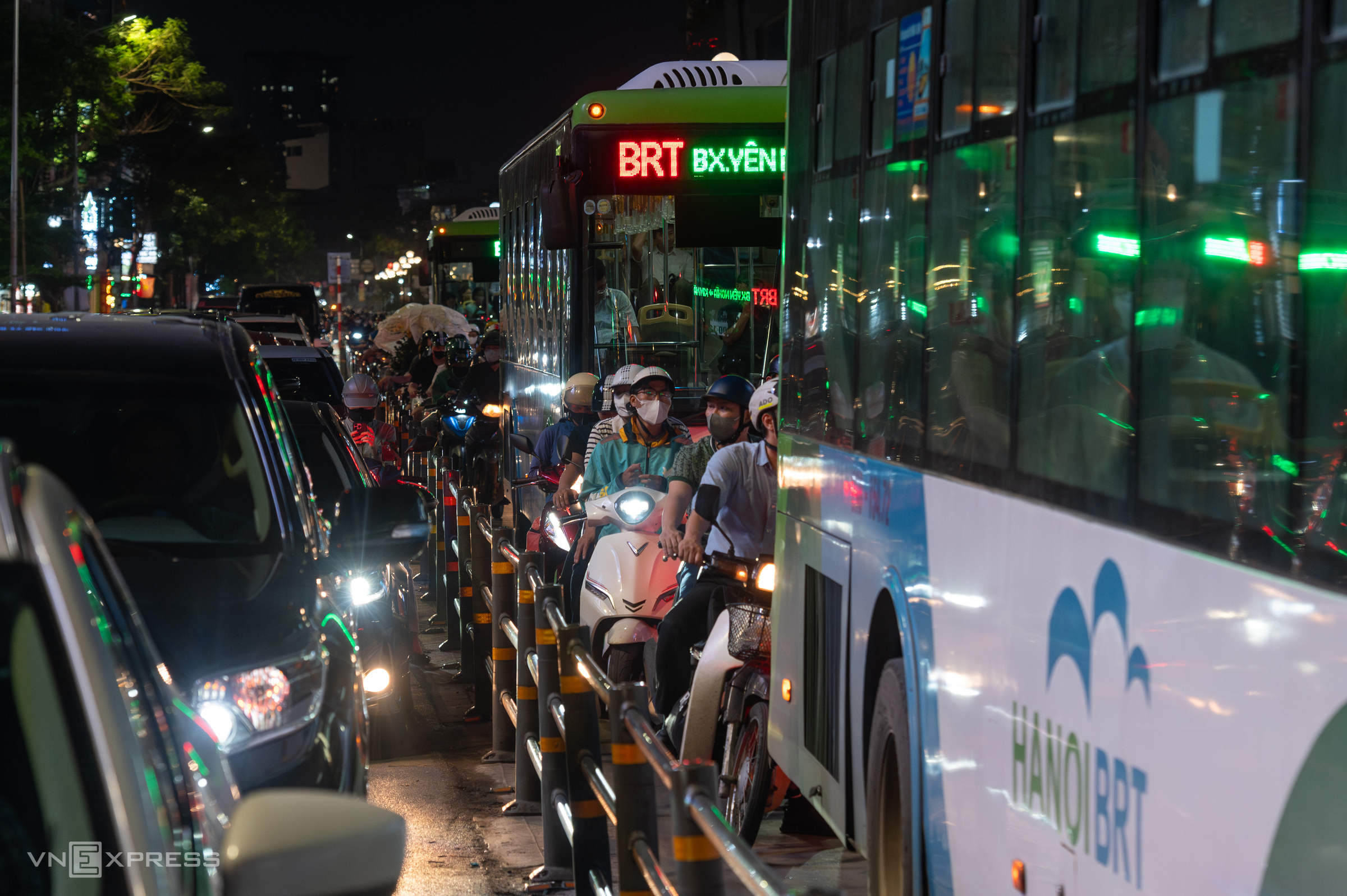
Le Van Luong street is approximately 2 km long with a cross-section of nearly 40 m. Each direction has 3 traffic lanes: two mixed-use lanes for cars and motorbikes, and one dedicated lane for the BRT (Bus Rapid Transit) system.
Despite its width, this road frequently experiences rush hour congestion due to high traffic volume. Both sides of the route are densely populated with apartment complexes, office buildings, and residential areas.
During rush hours, when traffic is heavily congested, many motorbikes often spill into the dedicated BRT lane, exacerbating traffic chaos.
This area frequently sees two mixed-use lanes accommodating three rows of cars, completely filling the road. Cars bumper-to-bumper and side-by-side force motorbike riders to weave through traffic or move onto sidewalks to find a way forward.
 |
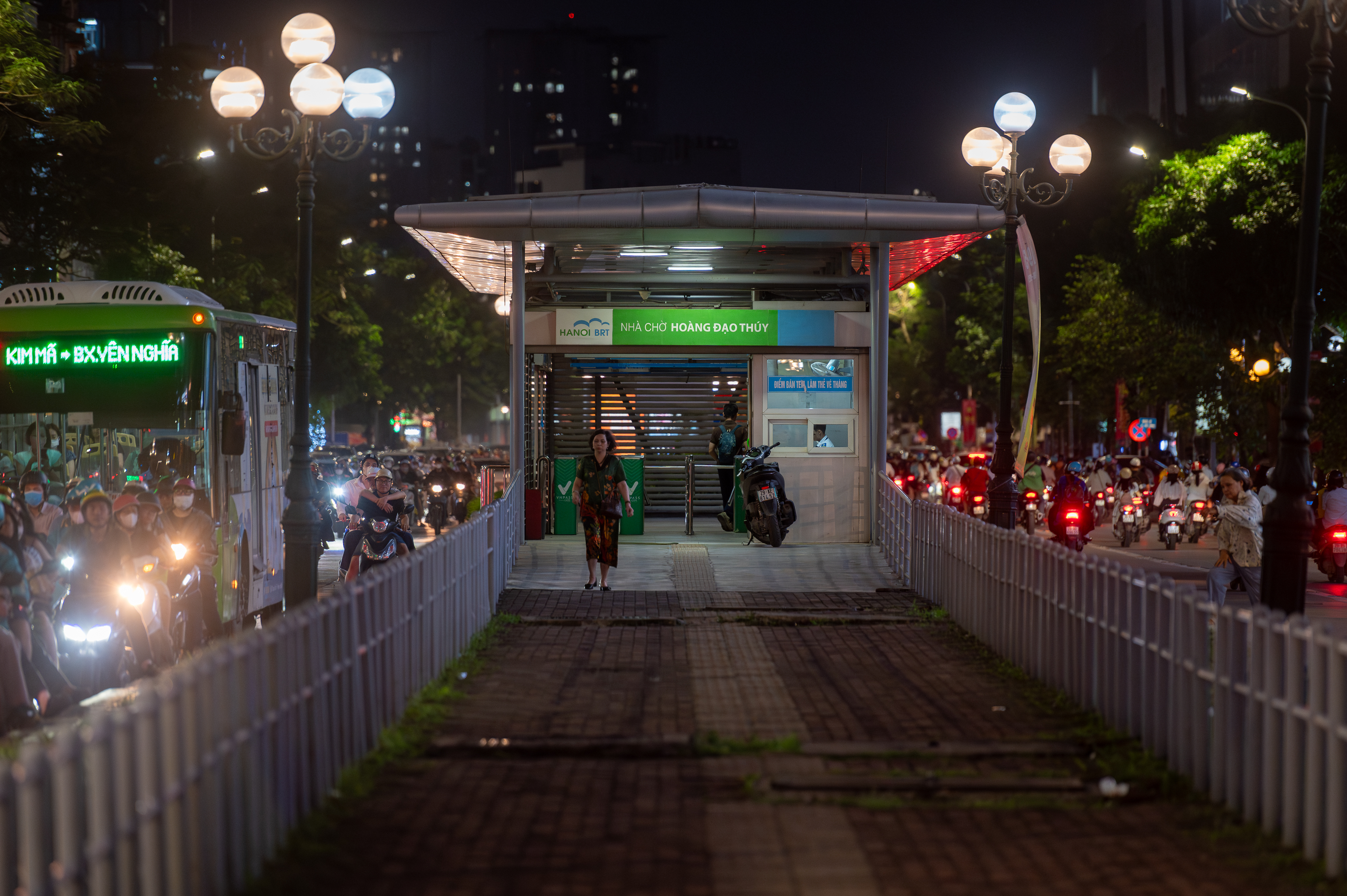
The median strip along the route is about 4-6 m wide, planted with grass, and features BRT bus stops. On Le Van Luong street, traffic congestion often occurs at major intersections such as Hoang Minh Giam, Nguyen Tuan, Hoang Dao Thuy areas, and the Le Van Luong - Lang Ha overpass, especially during peak hours.
 |
According to the Traffic Police Department's proposal, morning rush hours will prioritize increasing lanes for inbound traffic from the outskirts to the city center. Conversely, late afternoon will see adjustments to the opposite direction, catering to residents leaving the city center. The implementation timeline has not yet been announced.
Lane allocation is expected to be regulated based on actual vehicle density at different times to enhance road utilization and reduce congestion. This model is similar to the traffic plan implemented on Cong Hoa street in TP HCM since mid-May.
The Bang.