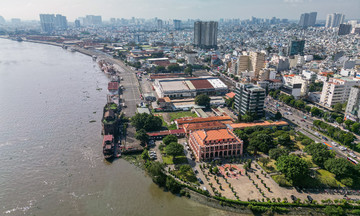
On 27/2, at a specialized session, the Da Nang City People's Council (HDND) approved a proposal to adjust the city's master plan for the 2021-2030 period, with a vision to 2050. This marks a crucial step following the city's administrative boundary adjustments with Quang Nam province.
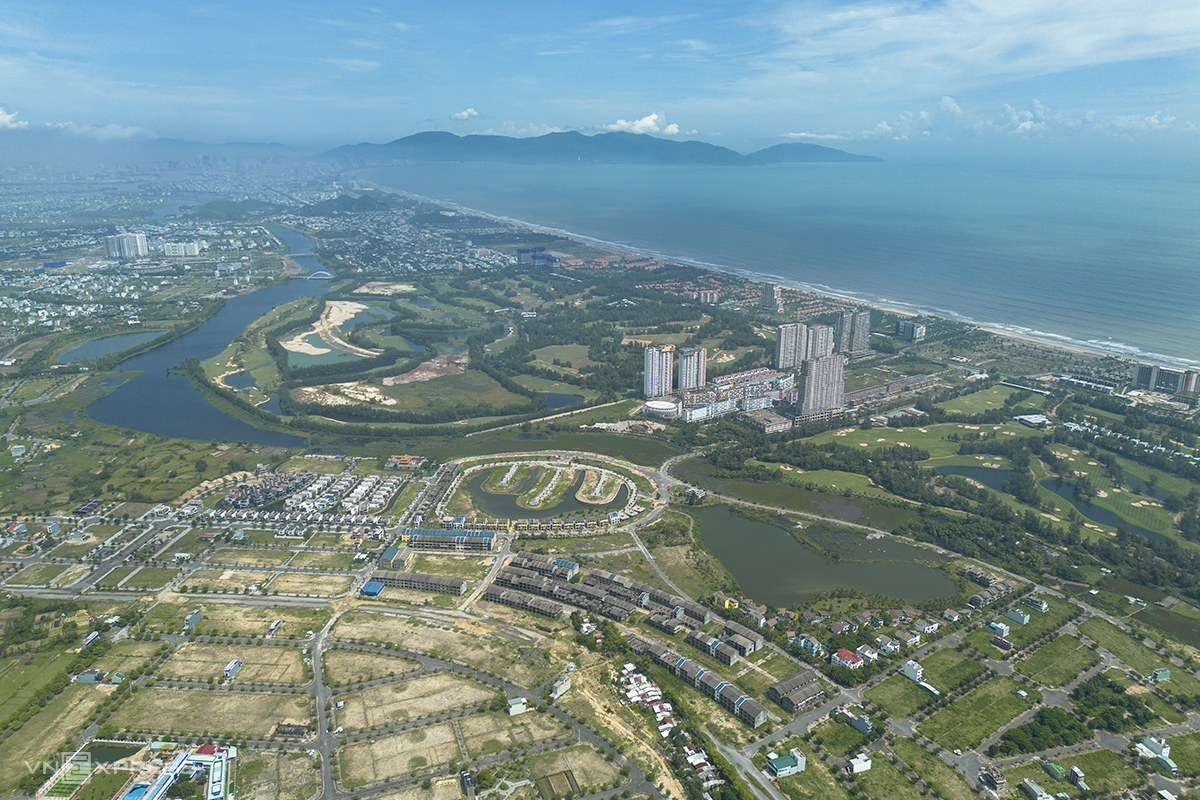 |
A view of Ngu Hanh Son ward, adjacent to Dien Ban Dong and the Hoi An area, with infrastructure planned, 8/2025. Photo: Nguyen Dong |
A view of Ngu Hanh Son ward, adjacent to Dien Ban Dong and the Hoi An area, with infrastructure planned, 8/2025. Photo: Nguyen Dong
Speaking at the session, Ho Ky Minh, Standing Vice Chairman of the Da Nang City People's Committee (UBND), stated that the city is focusing on integrating the adjusted plan by Q1. He anticipates completion by Q3 to facilitate the implementation of new urban and economic spaces.
For the southern Hoi An area, the city's UBND leadership announced that a consulting unit is being contracted to develop a comprehensive plan for the entire stretch from Cua Dai bridge to Thang An and Thang Truong communes. The objective is to achieve synchronized infrastructure and clearly define the function of each area before implementing component projects. This content is expected to be detailed in the construction planning project submitted in Q3/2026.
Accelerating North-South, East-West infrastructure
To ensure progress, the city is preparing to establish a steering committee for key projects. Initially, 6 important transport projects along the North-South and East-West axes have been approved. These include: the Hoang Sa - Truong Sa route; an expressway connecting Da Nang - Chu Lai; the expansion and upgrade of National Highway 14B; and northwestern routes linking the high-tech zone with the free trade zone.
These projects will be added to the 2026-2030 mid-term public investment list and the 2026 plan, aiming to expand development space and promote a transit-oriented development (TOD) urban model.
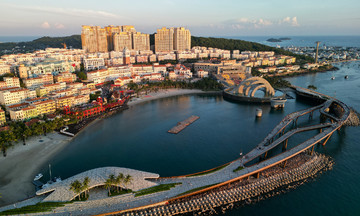
Regarding Hong Trieu fishing port (Duy Nghia commune) and Tam Quang fishing port (Nui Thanh commune), the city is studying the construction of new boat shelters to replace Tho Quang boat shelter (Son Tra ward). The plan is to convert Tho Quang into a tourist port. This matter will be reported at the upcoming session.
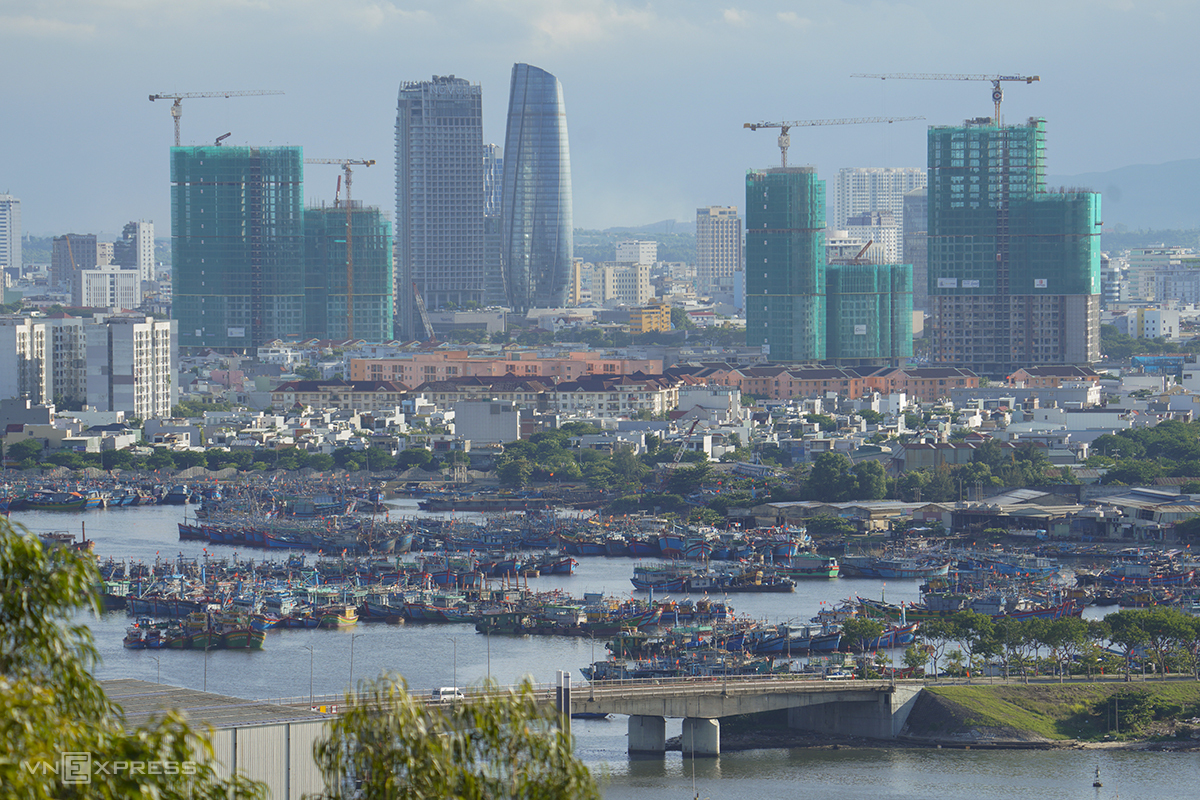 |
The current Tho Quang fishing port is slated for conversion into a tourist port. Photo: Nguyen Dong |
The current Tho Quang fishing port is slated for conversion into a tourist port. Photo: Nguyen Dong
During the session, delegate Nguyen Thanh Tien, Secretary of Thanh Khe ward, suggested that the vision for 2030 and 2050 requires stronger breakthroughs given the rapid development and many changes. He proposed ensuring synchronization between the city's plan and the general plan approved by the Prime Minister, allowing for flexible adjustments during implementation.
Concerning the goal of becoming a special-grade urban area by 2030, delegate Tien stressed the need for a clearer implementation strategy, particularly regarding population size. Regulations require a special-grade urban area to have at least 5 million residents, while natural growth is limited. Therefore, the city needs a strategy to attract mechanical population growth by developing key sectors like tourism, education, and training to draw high-quality human resources.
Tien also emphasized that Da Nang needs to build its own distinct identity, different from Hanoi and TP HCM, by clarifying its ecosystem orientation linked to world cultural heritage, creating a unique mark.
Restructuring development space
According to the adjusted plan, by 2030, Da Nang aims to become a major socio-economic center for Vietnam and Southeast Asia. It envisions itself as a hub for science-technology, innovation, digital transformation, tourism, trade, finance, and logistics.
The city is positioned as a center for high-tech industry, supporting industries, high-quality education and training, and healthcare. It will develop towards green growth, climate change adaptation, and national defense-security.
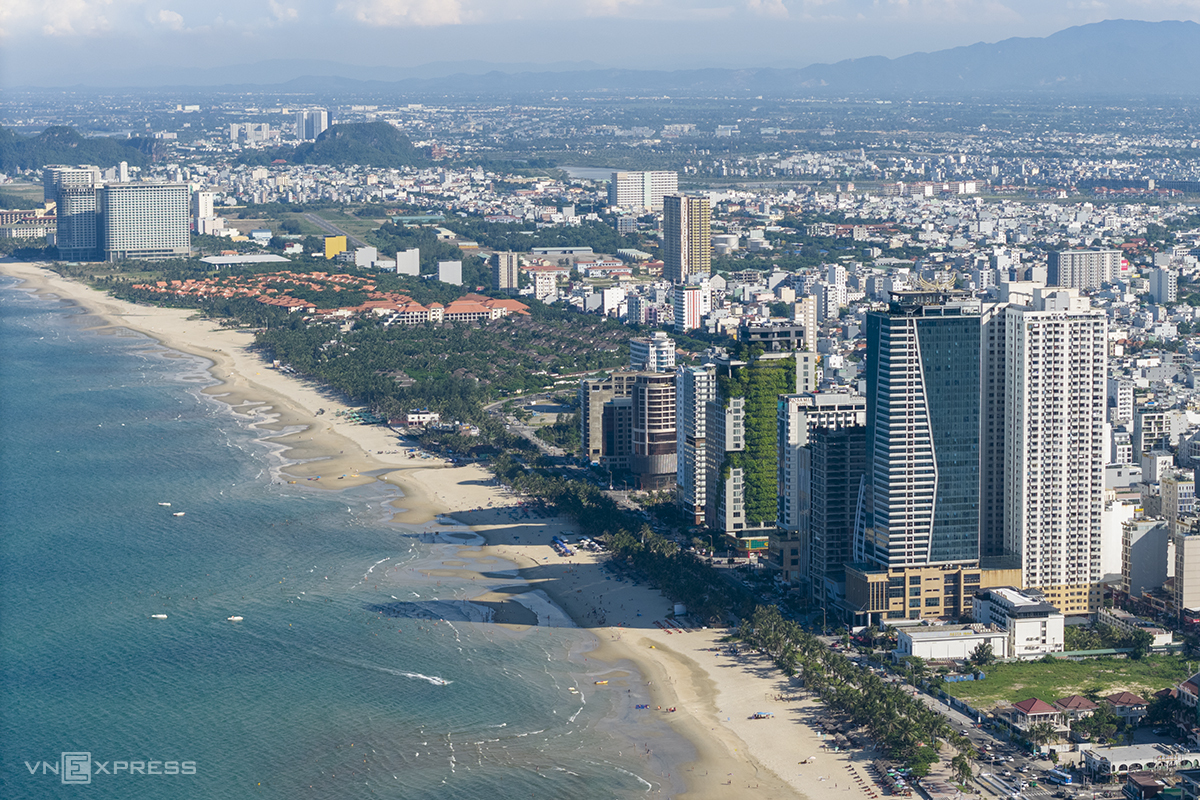 |
A coastal urban area of Da Nang, 6/2025. Photo: Nguyen Dong |
A coastal urban area of Da Nang, 6/2025. Photo: Nguyen Dong
The vision for 2050 sees Da Nang becoming an "Asia-class liveable city" model, prioritizing environmental protection over growth. It aims to establish a free trade zone, an international finance-logistics and innovation center. Strong development of marine economy, renewable energy, circular economy, and low-carbon initiatives are also priorities.
The spatial structure is being reorganized into three functional zones: the eastern coastal area as an urban-industrial-service driver; the western midlands and mountainous areas for agriculture-forestry and ecological economy; and marine and island spaces for promoting marine economy and renewable energy. Tourism will be organized along an integrated sea - urban - heritage - ecological axis.
With an area of more than 11,800 km2 and 94 administrative units at commune level, the plan opens new development opportunities. However, the challenge lies in tightly controlling the urbanization process to avoid sprawl and ensure a balance between growth and long-term conservation.
Nguyen Dong