The Hanoi People's Committee recently issued a plan to develop products and services for elderly care, supporting seniors to remain active in the workforce, pursue entrepreneurship, and contribute to economic development.
Based on local conditions and needs, each commune and ward will establish at least one day care facility for elderly residents. Local authorities will also support the operation of elderly care clubs within the community.
This day care model is designed for seniors who live with their families but require health monitoring, rehabilitation, social interaction, or support while their family members are at work. After utilizing these services, they can return home, unlike the long-term residency required by nursing homes.
The Department of Health will establish criteria for the creation, operational mechanisms, and activity protocols for these day care centers and community clubs. The department will also provide professional guidance on health care, rehabilitation, palliative care, and staff training.
Information regarding elderly individuals and care facilities will be integrated into an electronic data system, linking with Hanoi's central data hub and the National Population Database. This integration will enable the city to assess local needs, coordinate services efficiently, and monitor the performance of these facilities.
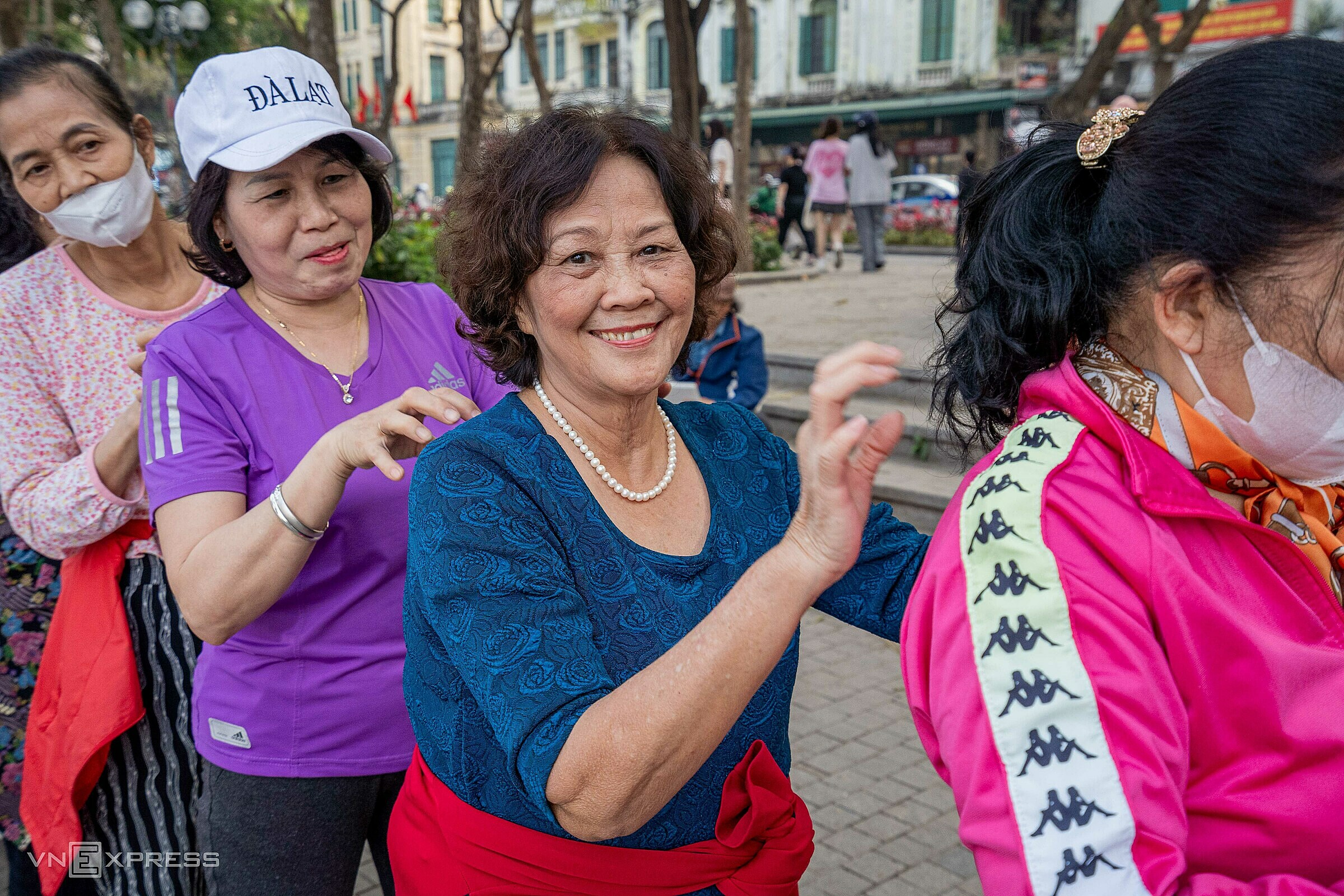 |
Elderly people in Hanoi exercise by Hoan Kiem Lake. *Photo: Hoang Giang*
Hanoi plans to announce a list of projects and preferential sectors to attract private investment into geriatric hospitals, eco-friendly nursing homes, palliative care centers, and home care services. Investors could receive incentives such as reduced land rent, access to surplus public facilities, credit, and fee exemptions as stipulated by regulations.
Beyond healthcare needs, the city will also survey seniors interested in working, vocational training, or starting businesses. It will develop a list of suitable jobs and commission services to connect them with employment opportunities. Elderly individuals will also receive support to access voluntary occupational accident insurance, credit, and entrepreneurship programs.
In late June, the Hanoi Employment Service Center hosted its inaugural job fair specifically for seniors. Approximately 250 positions were identified as suitable for the health, experience, and skills of this demographic. Available roles included: security guards, customer service representatives, chefs, assistant chefs, janitorial staff, sanitation workers, handicraft producers, hourly domestic helpers, and various part-time positions.
This plan aims to help Hanoi adapt to its rapidly aging population, expand community care services, and enable seniors to continue working in roles suitable for their health.
By 2025, Vietnam is projected to have approximately 16,5 million people aged 60 and above, representing 16% of its population. Projections indicate that the nation will officially enter an aged population phase by 2036, with this demographic potentially exceeding 25% by 2050. While the average life expectancy for Vietnamese people is 74,7 years, the average number of healthy years is only about 65,4. This nearly 10-year disparity highlights a significant demand for healthcare, rehabilitation, and support services for seniors.
Vo Hai