 |
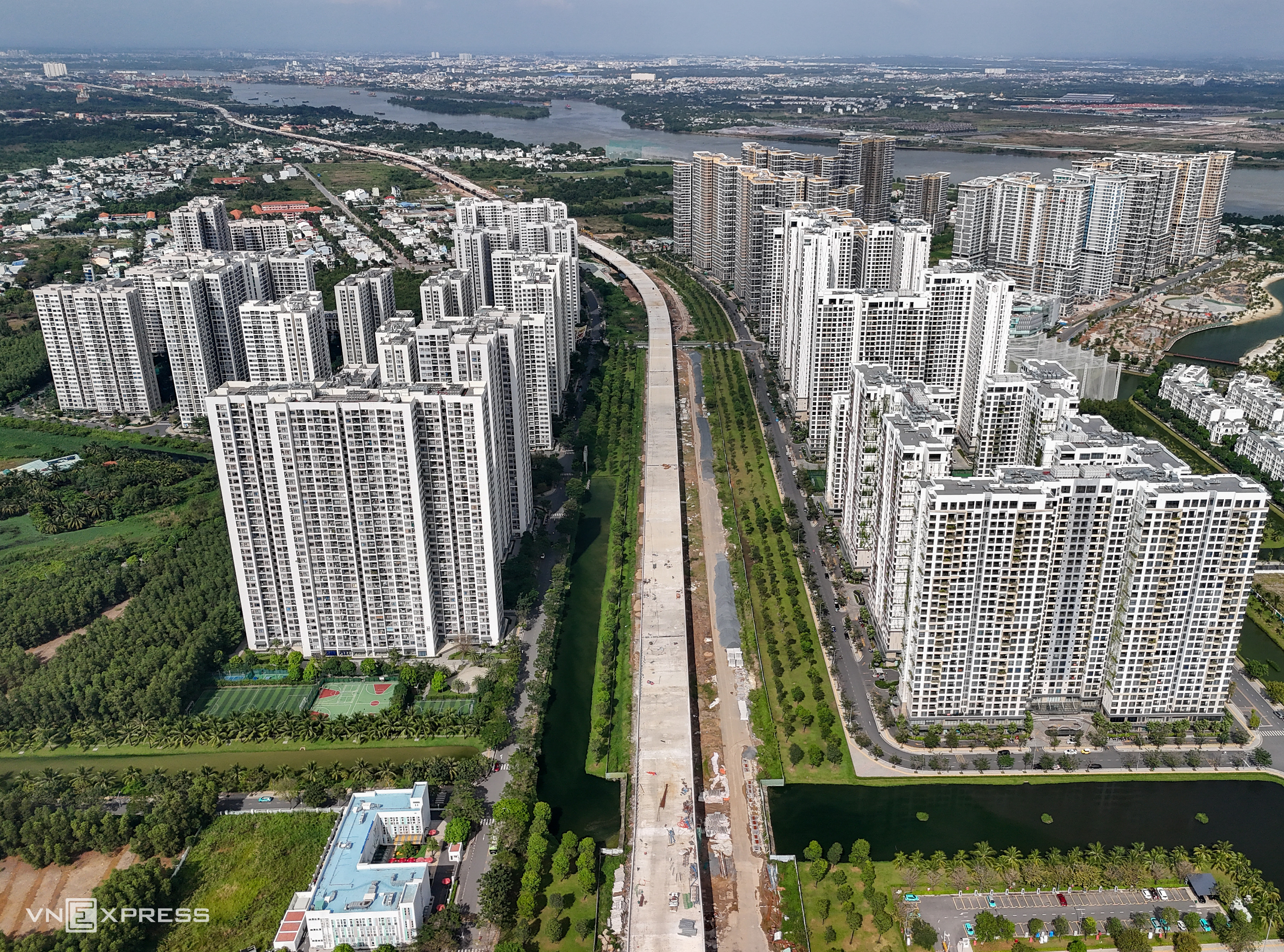
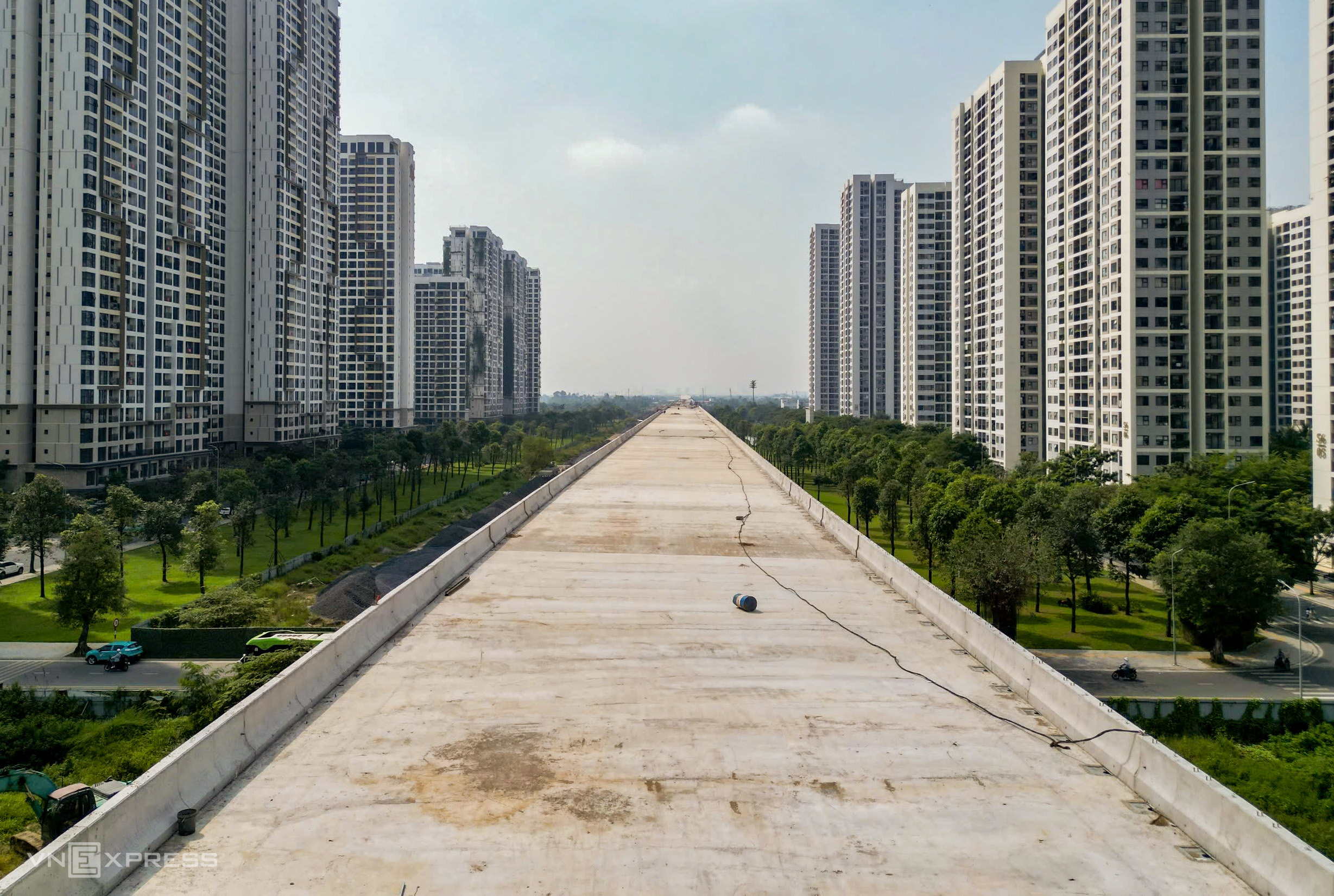
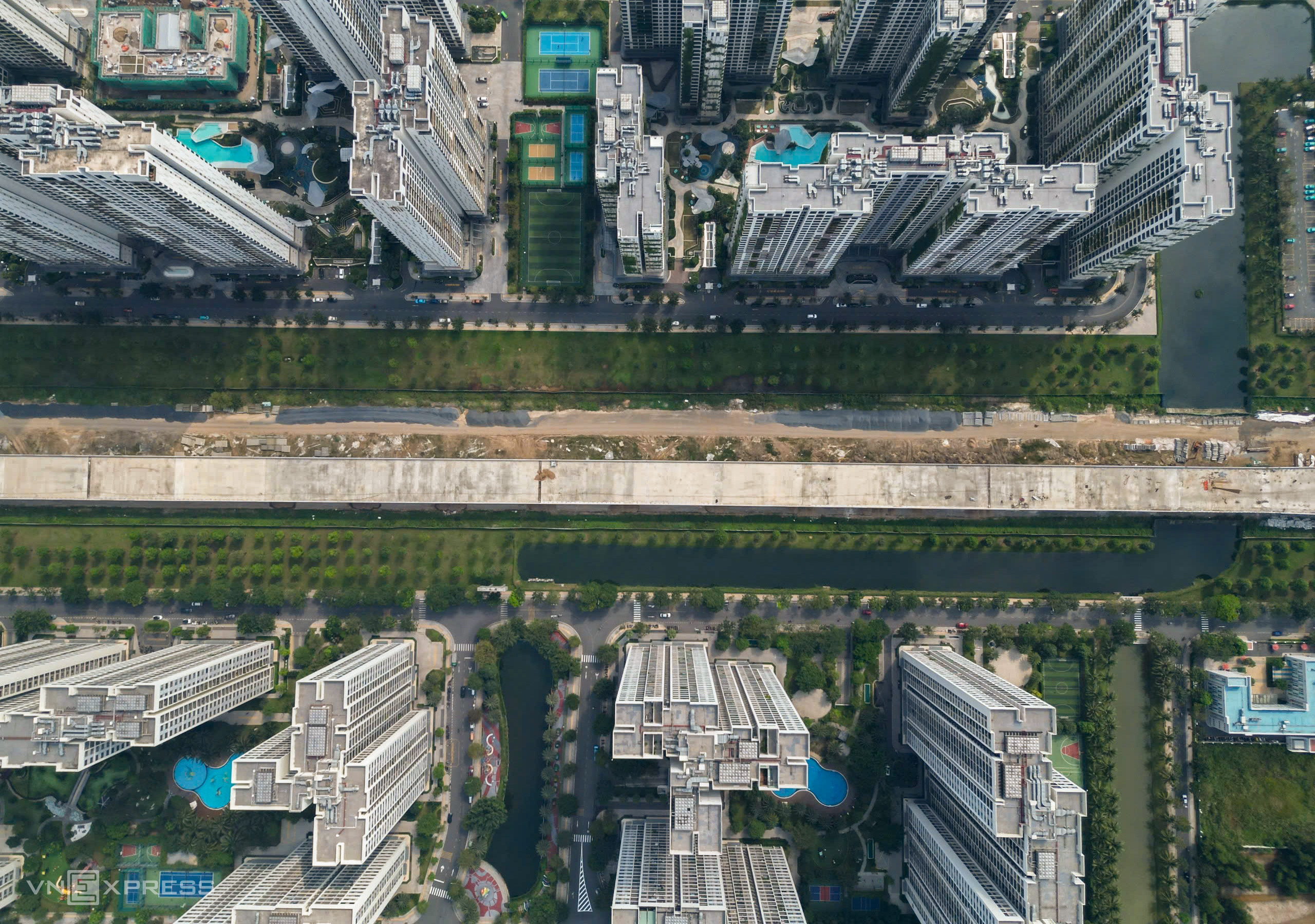
The section traversing the urban area has completed viaduct installation, girder placement, concrete pouring, and guardrail construction on both sides. Once finished, the road will feature four lanes, measuring 21,5 m wide where emergency lanes are present and 19,5 m in regular sections. |
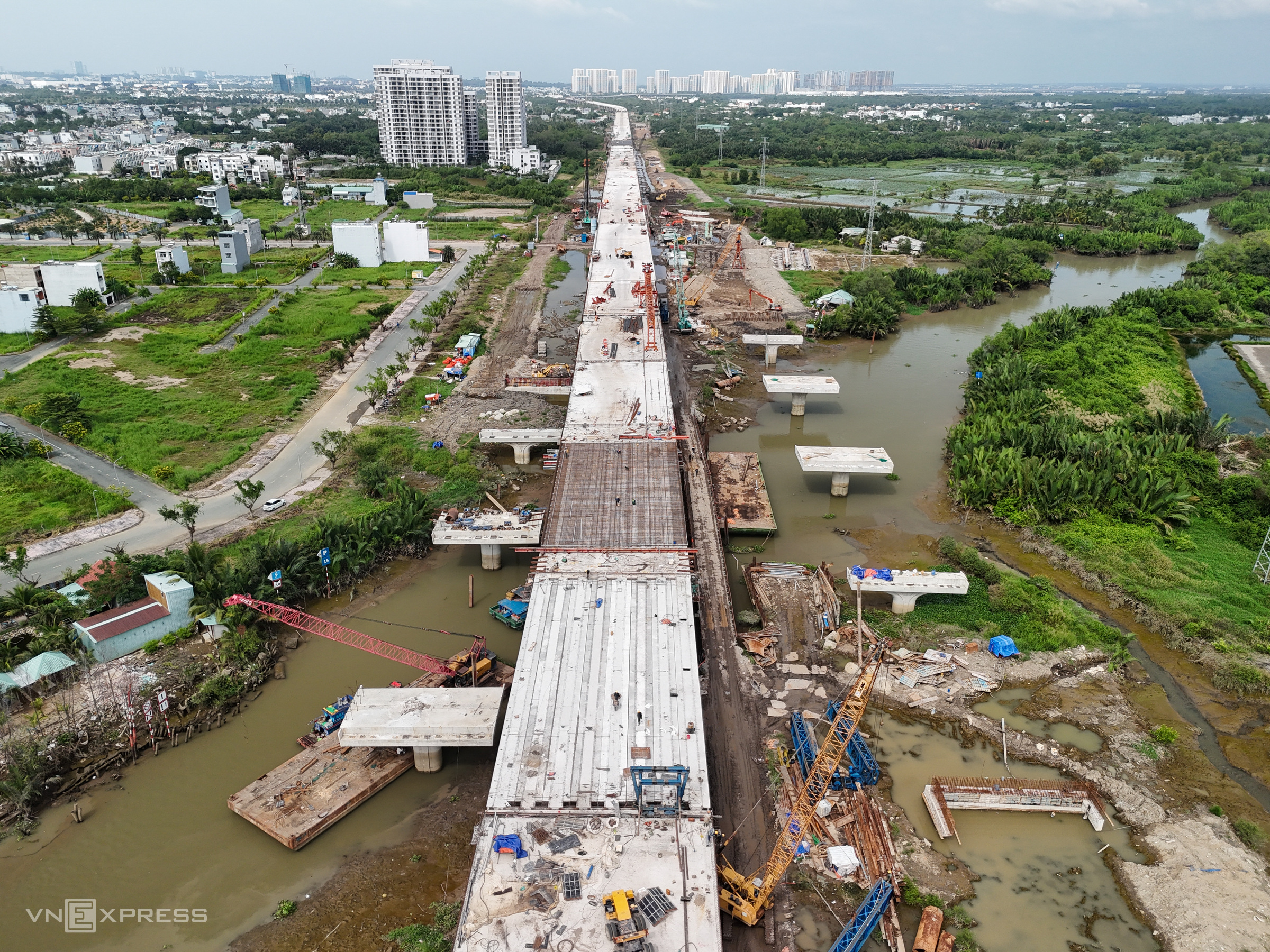
On 11/12/2024, the elevated section of Ho Chi Minh City's Ring Road 3, passing through the Vinhomes Grand Park urban area, had largely taken shape. This segment, part of Package XL3, spans over 3 km and is the fastest-progressing section within the 14,7 km elevated road in former Thu Duc City.
The project has achieved 68,1% of its total volume, with the 14,7 km elevated viaduct reaching 85%, ahead of schedule and ready for a technical opening on 19/12/2024. Additionally, several sections totaling nearly 30 km in Dong Nai and Tay Ninh provinces will also have a technical opening. The entire route is expected to be fully operational by mid-2025.
 |
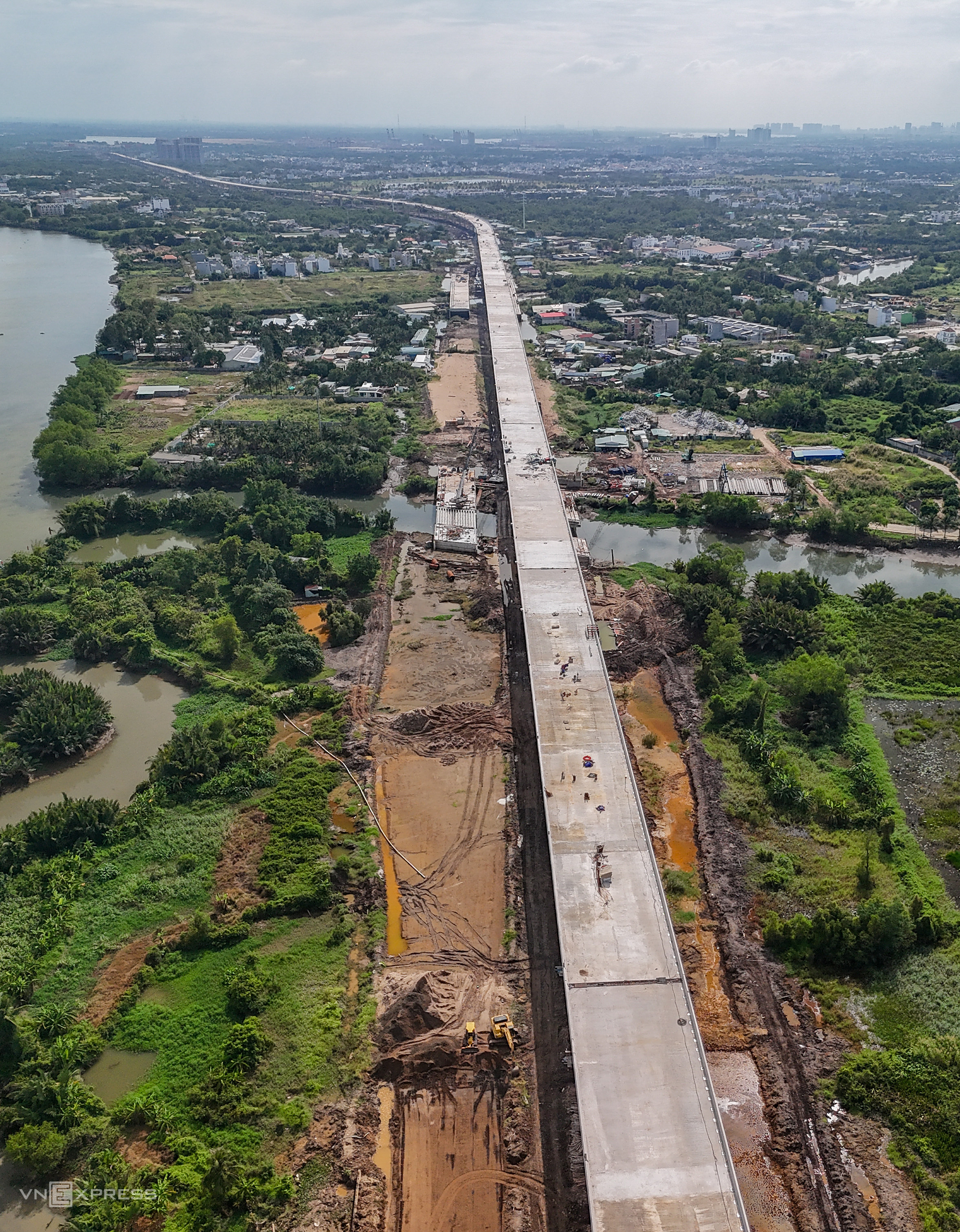
Following the urban section, the part passing through Long Binh ward, heading towards the Tan Van interchange, is also largely complete on its main alignment, ready for the technical opening. |
 |
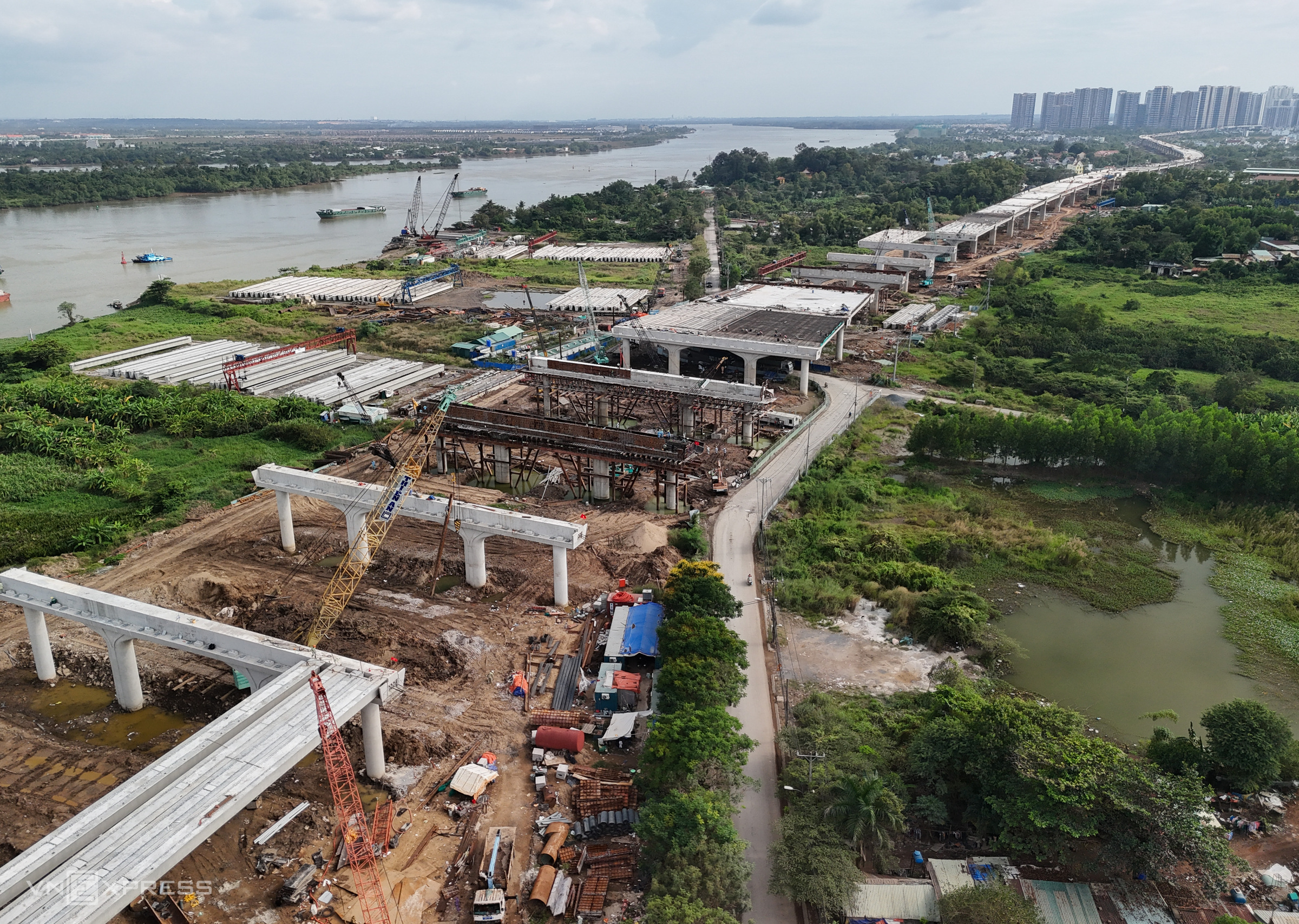
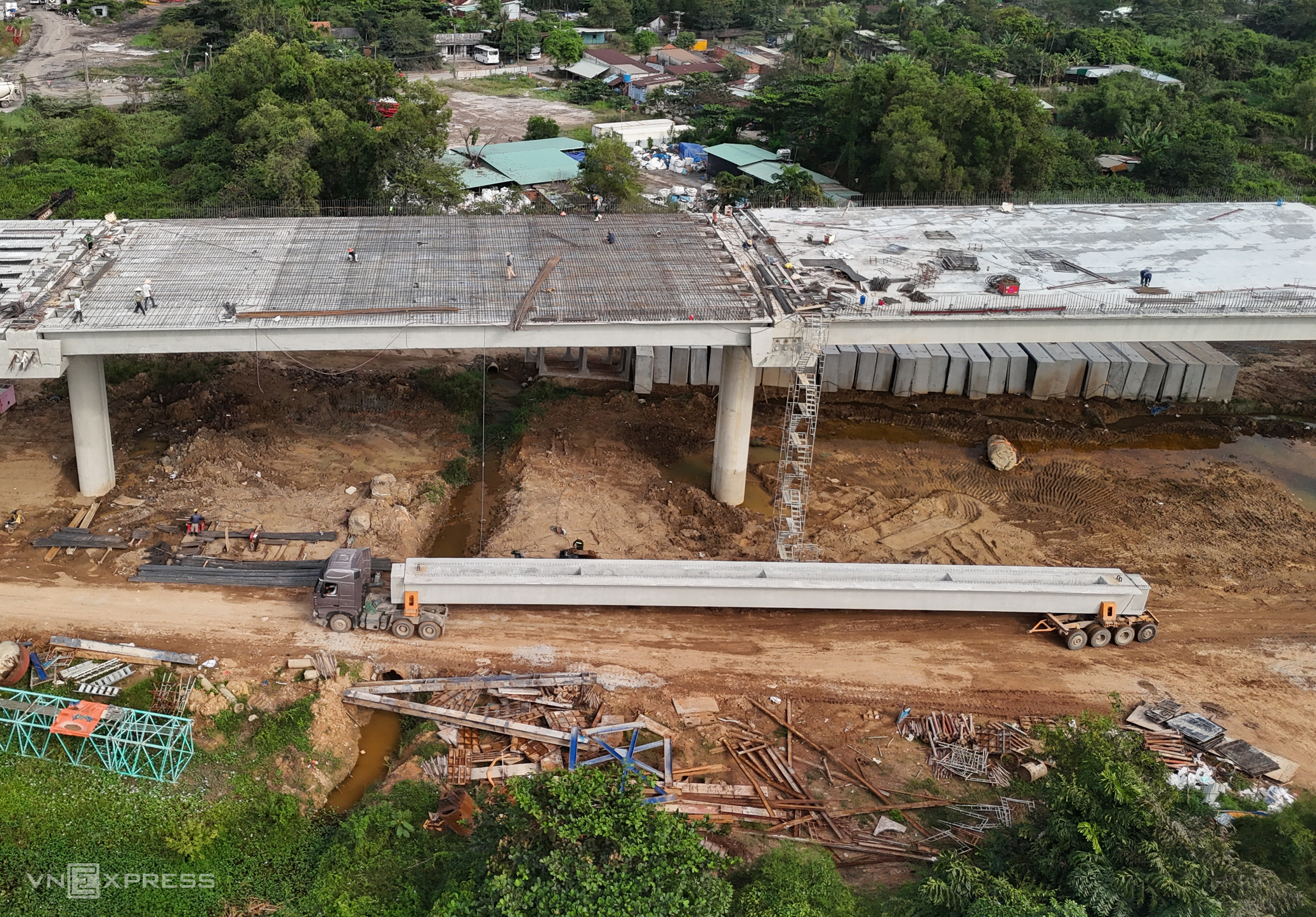
In this section, concrete and reinforced steel girders, 38 m long and weighing 80 tons, are transported from the casting yard and lifted by cranes to an elevation of 11-15 m for assembly. |
 |
The road surface is assembled from eight to nine girders placed on T-shaped bridge piers. Previously, the contractor treated weak ground and reinforced the foundation before pouring concrete to prevent pier settlement and maintain road stability. |
 |
Alongside the main span, parallel roads and bridges for the elevated section are also under simultaneous construction. The parallel roads are designed with four lanes, with speeds ranging from 60-100 km/h, and are expected to be fully completed by mid-2026. |
The elevated Ring Road 3 section, curving along the Dong Nai River, is still under construction for its girder and deck slab components.
To meet the technical opening deadline, the Ho Chi Minh City Transportation Management Board has directed contractors to organize night shifts, working in three shifts and four teams, to maintain project progress.
 |
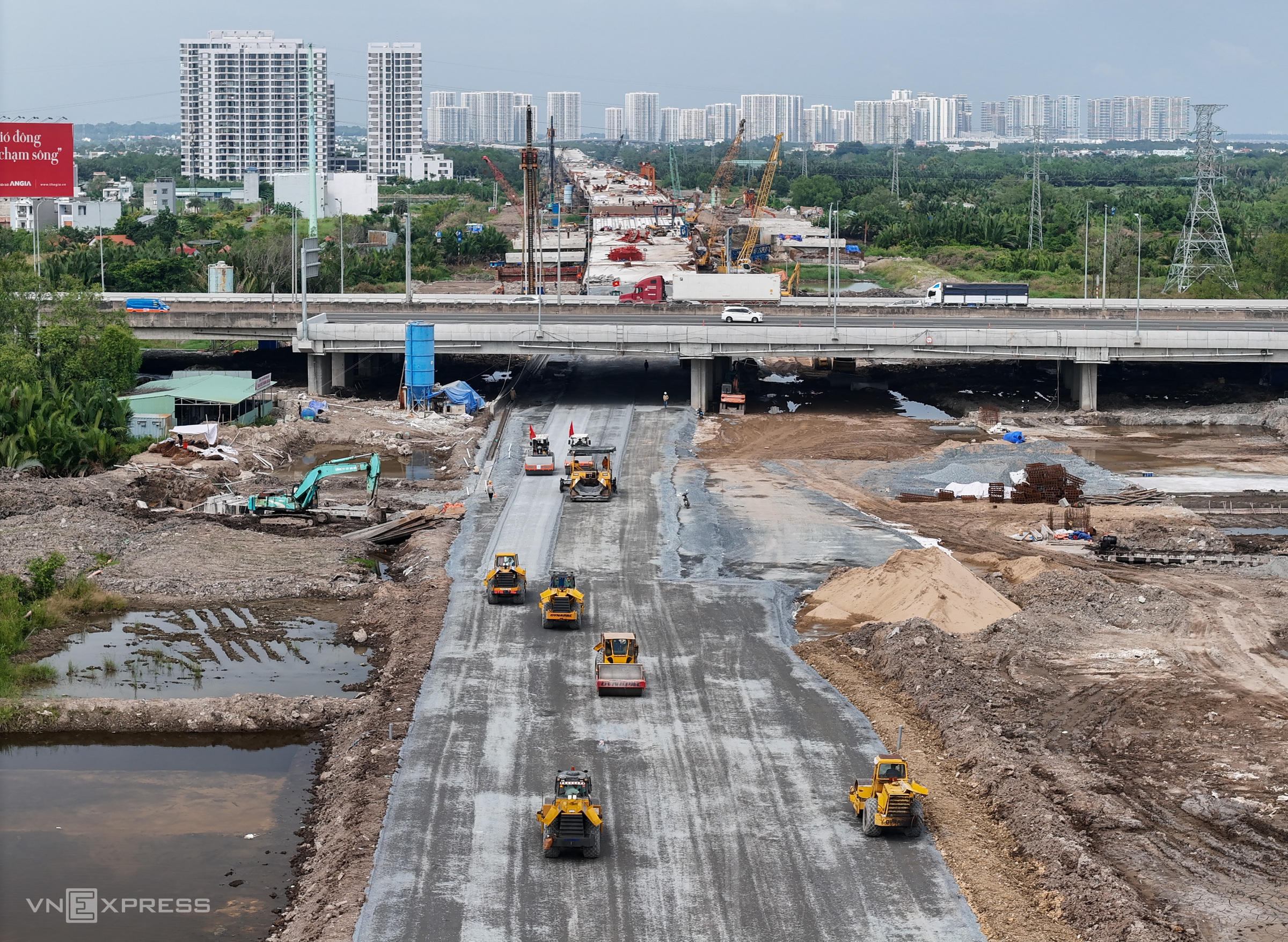
Many vehicles and machines are currently constructing the elevated road surface leading down at the Ho Chi Minh City - Long Thanh Expressway interchange. |
 |
Hundreds of machines and equipment have been mobilized to ensure the timely completion of the elevated section.
Above, workers are busy launching girders and finishing the bridge surface. A contractor representative stated that 500-600 workers and engineers are continuously working day and night on the construction site.
 |
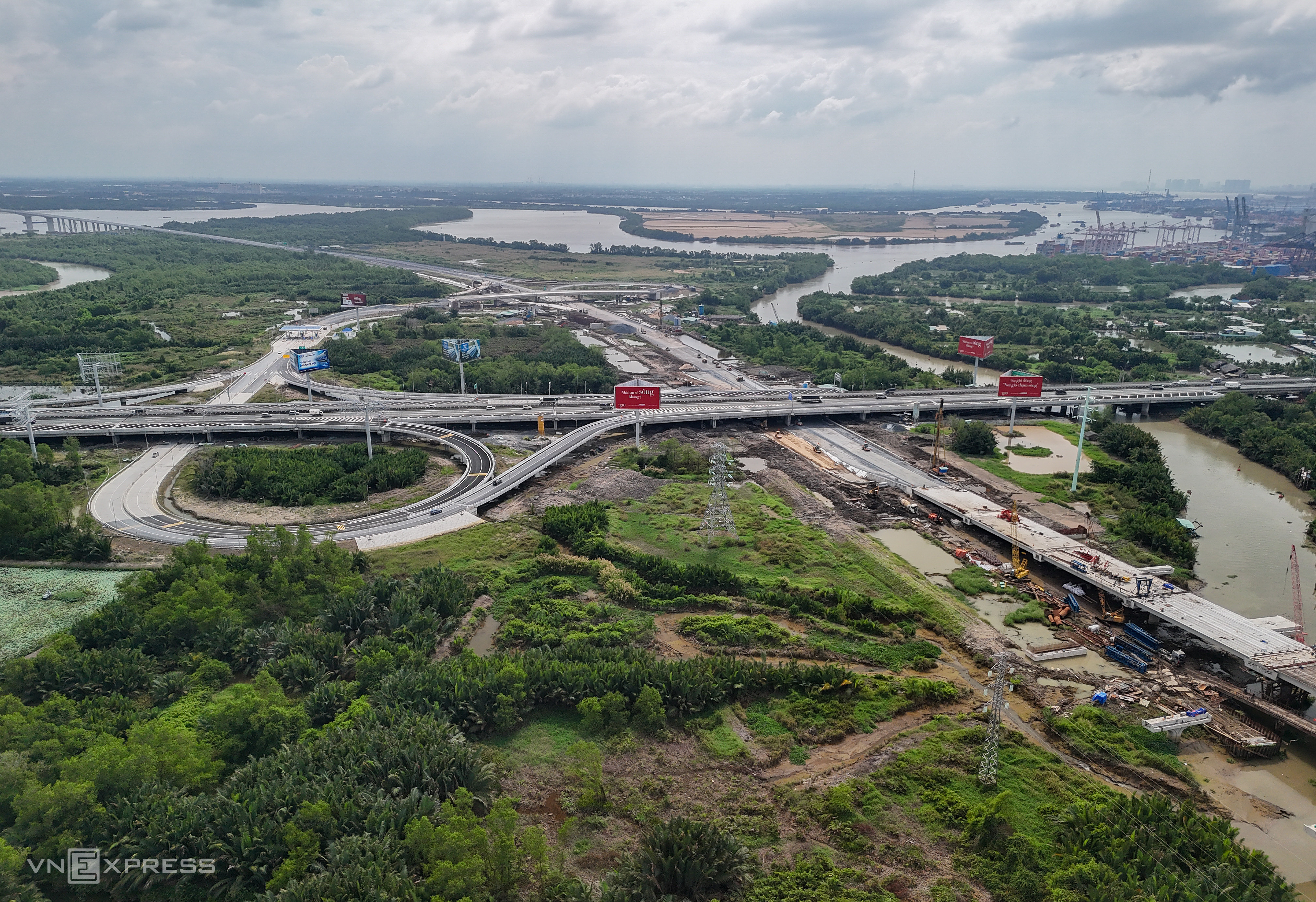 |
The elevated section of Ring Road 3 concludes at the Ho Chi Minh City - Long Thanh Expressway interchange. Here, bridge spans are seamlessly connected, and connecting ramps to the expressway and Nhon Trach bridge are under construction.
Designed with an overpass crossing Ring Road 3 and four ramps, this interchange ensures connectivity between various routes and links to the Ben Luc - Long Thanh Expressway. It is one of six large-scale interchanges on Ring Road 3, which include connections with the Ben Luc - Long Thanh Expressway, Tan Van, Binh Chuan, Provincial Road 10, and the Ho Chi Minh City - Trung Luong Expressway.
 |
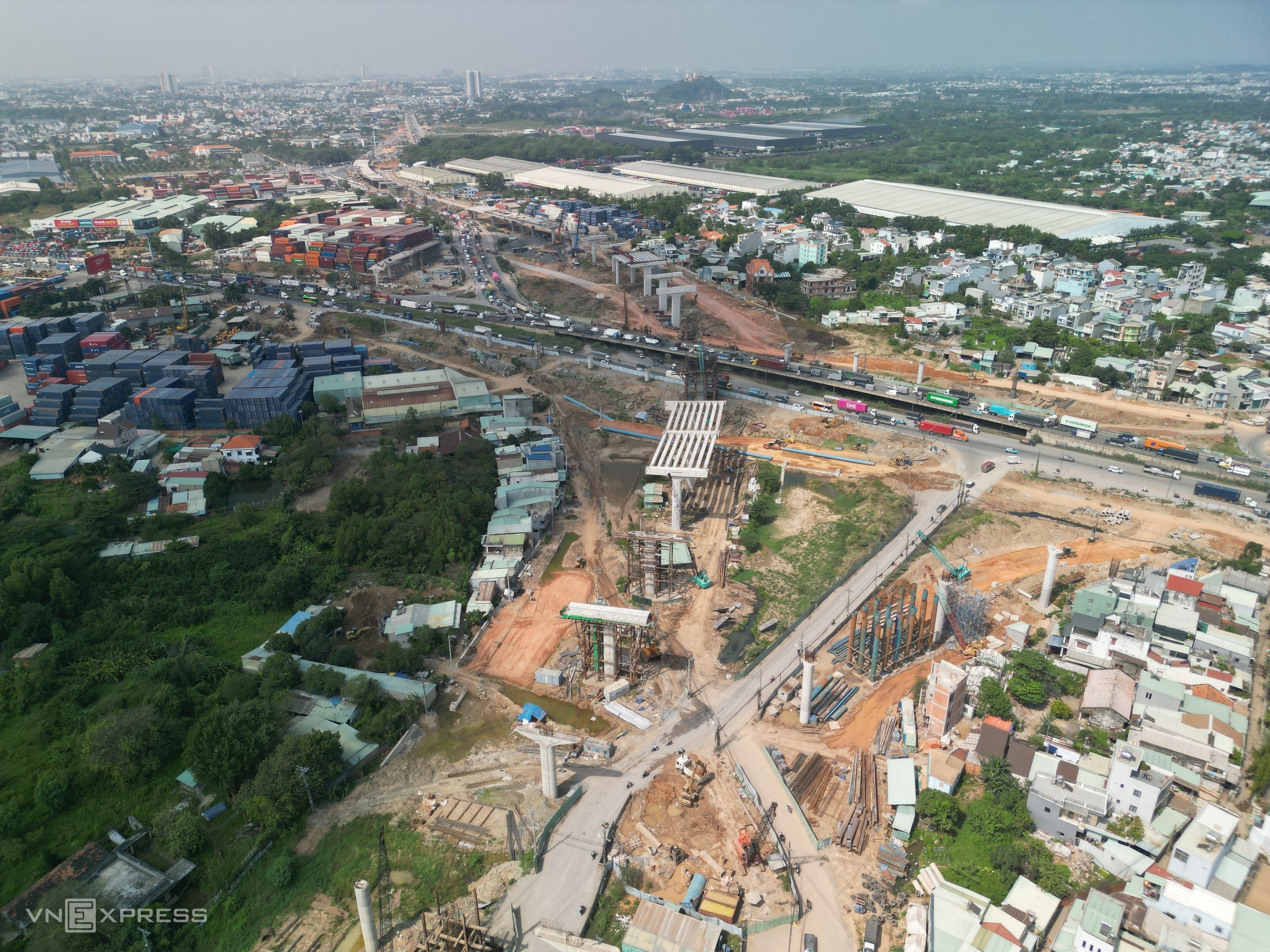 |
Meanwhile, at the Tan Van interchange (in former Binh Duong province), the elevated road section and connecting ramps remain unfinished and will not be ready for the technical opening this time.
This is the largest interchange of the Ho Chi Minh City Ring Road 3 project, connecting Hanoi Highway, Metro Line one, Nguyen Xien street, and DT 743A. The interchange features three levels and five bridge ramps, situated at the border of TP HCM and Dong Nai, serving port clusters and handling heavy traffic.
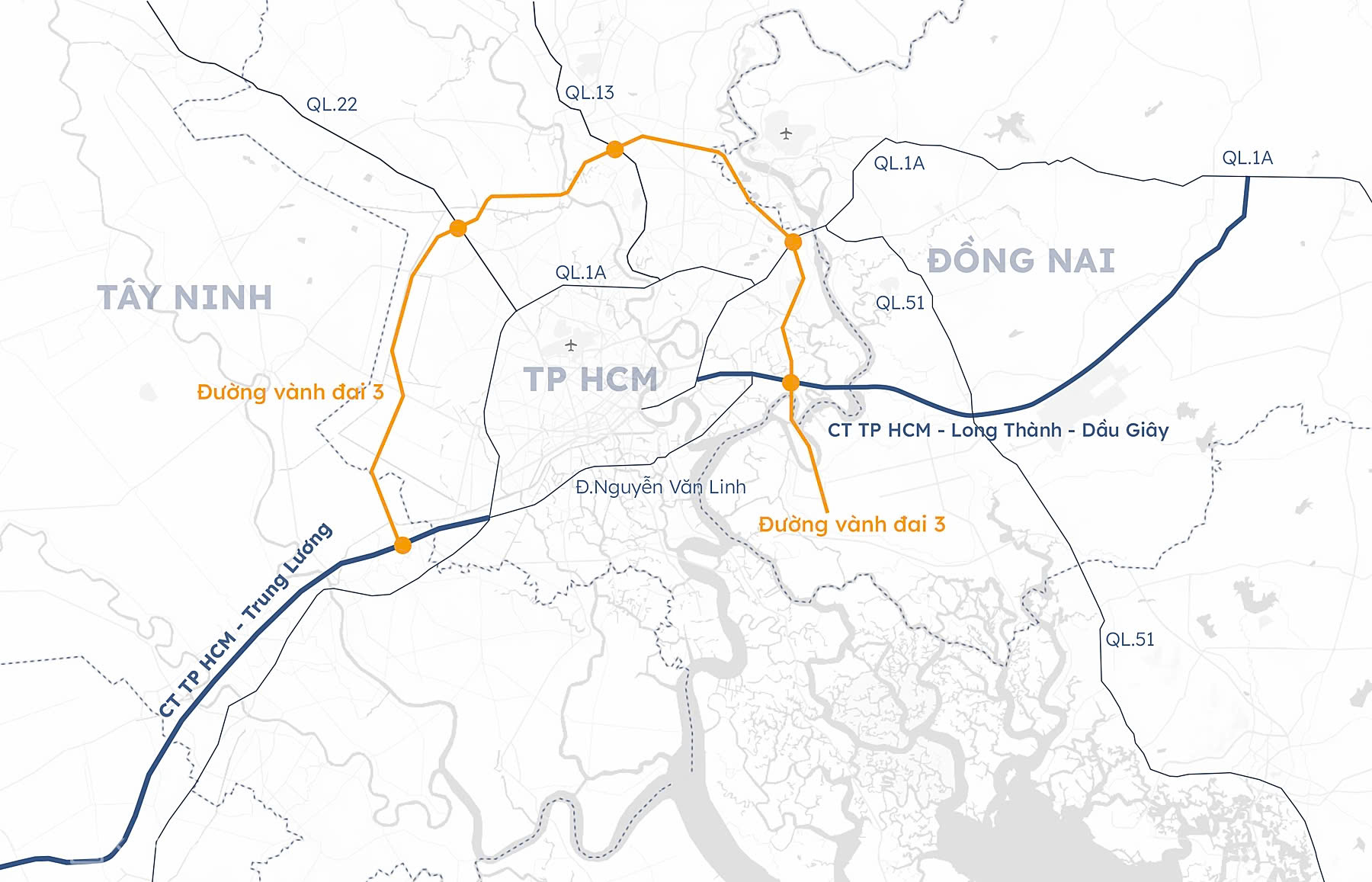 |
Ring Road 3 alignment. *Graphic: Khanh Hoang*
Ring Road 3 spans over 90 km, serving as an inter-regional route connecting TP HCM, Dong Nai, and Tay Ninh. Upon completion, the entire route will not only improve traffic connectivity but also establish an urban and industrial corridor, impacting not only the four provinces and cities it passes through but also the entire Southern key economic region.
Quynh Tran