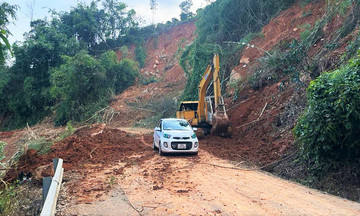
From 16/11-20/11, heavy rain, measuring 150-400 mm, caused damage to many roads. The most severe damage occurred along Khanh Le Pass on National Highway 27C, where numerous sections of the embankment suffered landslides, and the road surface cracked and subsided. Rocks falling from the pass struck a passenger bus, resulting in 6 deaths and 19 injuries. This route recently saw 7 additional landslide points, including mot location where half the road surface split open for over 40 m, sinking by nearly mot meter.
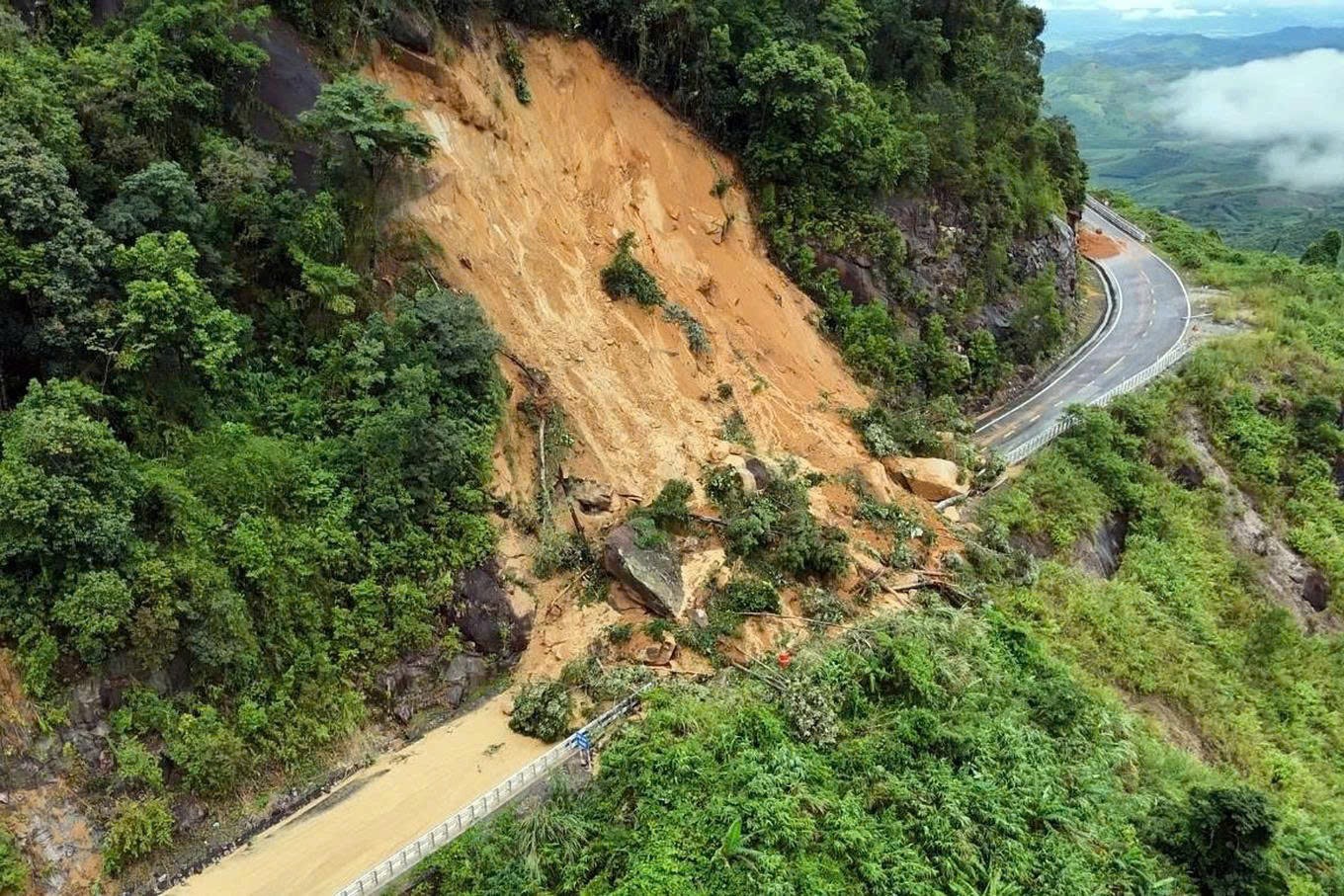 |
Many landslide points on Khanh Le Pass remain unfixed. Photo: Minh Bang
Provincial Road 9, which crosses Khanh Son Pass, also experienced landslides. In mot instance, a camp sheltering 10 people was buried, leading to hai deaths and mot injury.
Currently, both passes remain closed to traffic. Authorities are clearing landslides and using explosives to break up large rocks that fell onto Khanh Le Pass.
Additionally, falling earth and rocks from embankments damaged or partially buried Provincial Roads 27, 701, 703, and 707. The Ngoc Thao bridge also suffered damage to its abutment and upstream retaining wall.
The Department of Construction has been tasked with assessing the extent of the damage and proposing repair plans.
According to Decree 66/2021, an emergency natural disaster situation applies to incidents affecting lives, health, housing, and infrastructure projects such as dikes, dams, airports, railways, national roads, provincial roads, power systems, and economic and industrial zones. Such situations require the mobilization of special response measures.
The Chairman of the Provincial People's Committee has the authority to declare an emergency situation within their jurisdiction. Ministers and heads of ministerial-level agencies can declare emergencies for infrastructure under their management. If an incident exceeds the capacity of local authorities and ministries, the Prime Minister will make the final decision.
Bui Toan