|
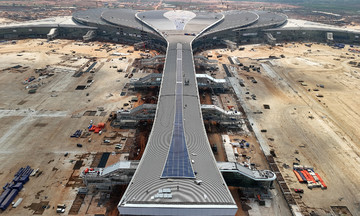
The passenger terminal, considered the "heart" of the project, is notably nearing completion. Construction began in 2023 with a total investment of 35,000 billion VND. The structural phase is expected to conclude in 2025, with all components finalized by August 2026.
The terminal package, featuring a lotus petal design, has taken shape following the roof installation. Workers are currently busy with the final stages of the roof construction, aiming to complete the building phase in time for a technical flight on 19/12.
The project comprises a central terminal and three wings, designed with separate departure and arrival routes. The structure includes one ground floor and three upper floors, with a roof peak height exceeding 45 m and a total floor area of approximately 376,000 square meters.
 |
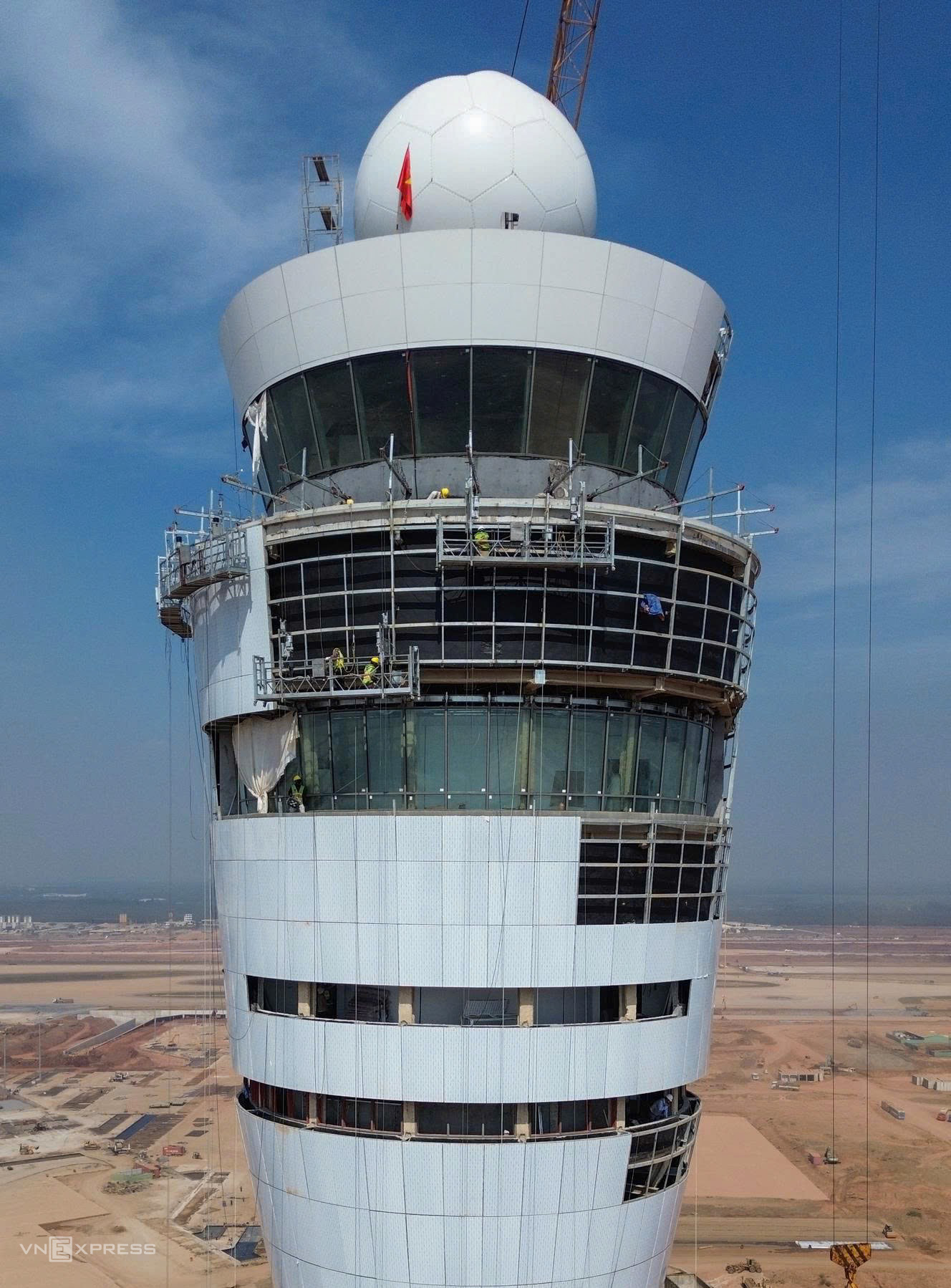 |
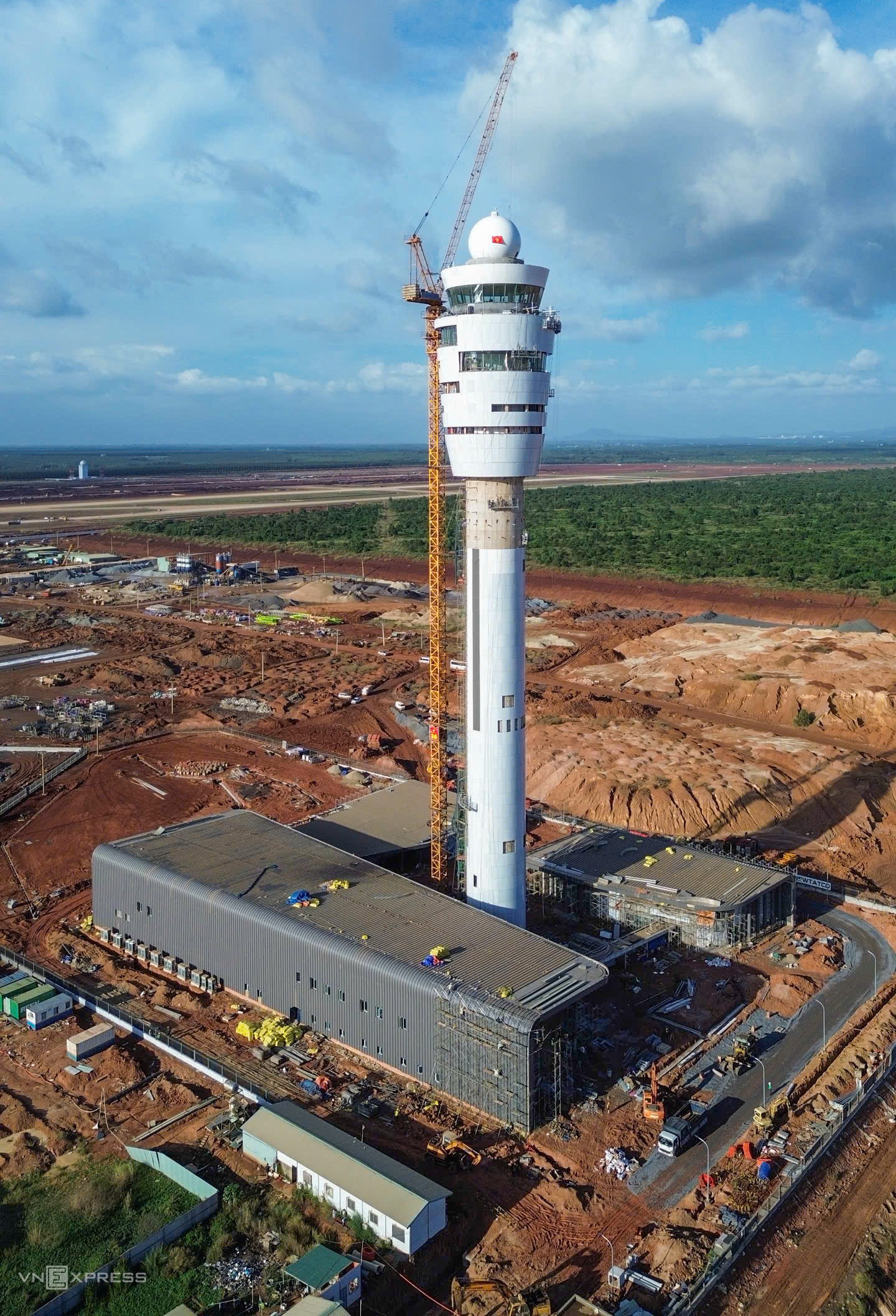
Nearby, the air traffic control tower and its auxiliary facilities, with a total investment of 3,500 billion VND, have largely completed their construction. The tower’s design, resembling a lotus bud, harmonizes in color and architecture with the passenger terminal. Standing 123 m tall with a radar installed at its peak, the tower has a construction area of about 80 square meters and a shaft diameter of 10 m.
At the base of the tower, auxiliary facilities such as the technical building, VIP building, power station, and ATC area landscaping are being urgently implemented.
Inside the air traffic control tower, specialized air traffic management equipment and systems are being installed, ensuring readiness for the upcoming technical flight. Once operational, the facility will serve as the "brain" for all takeoff and landing operations, ensuring the safety of hundreds of thousands of flights annually.
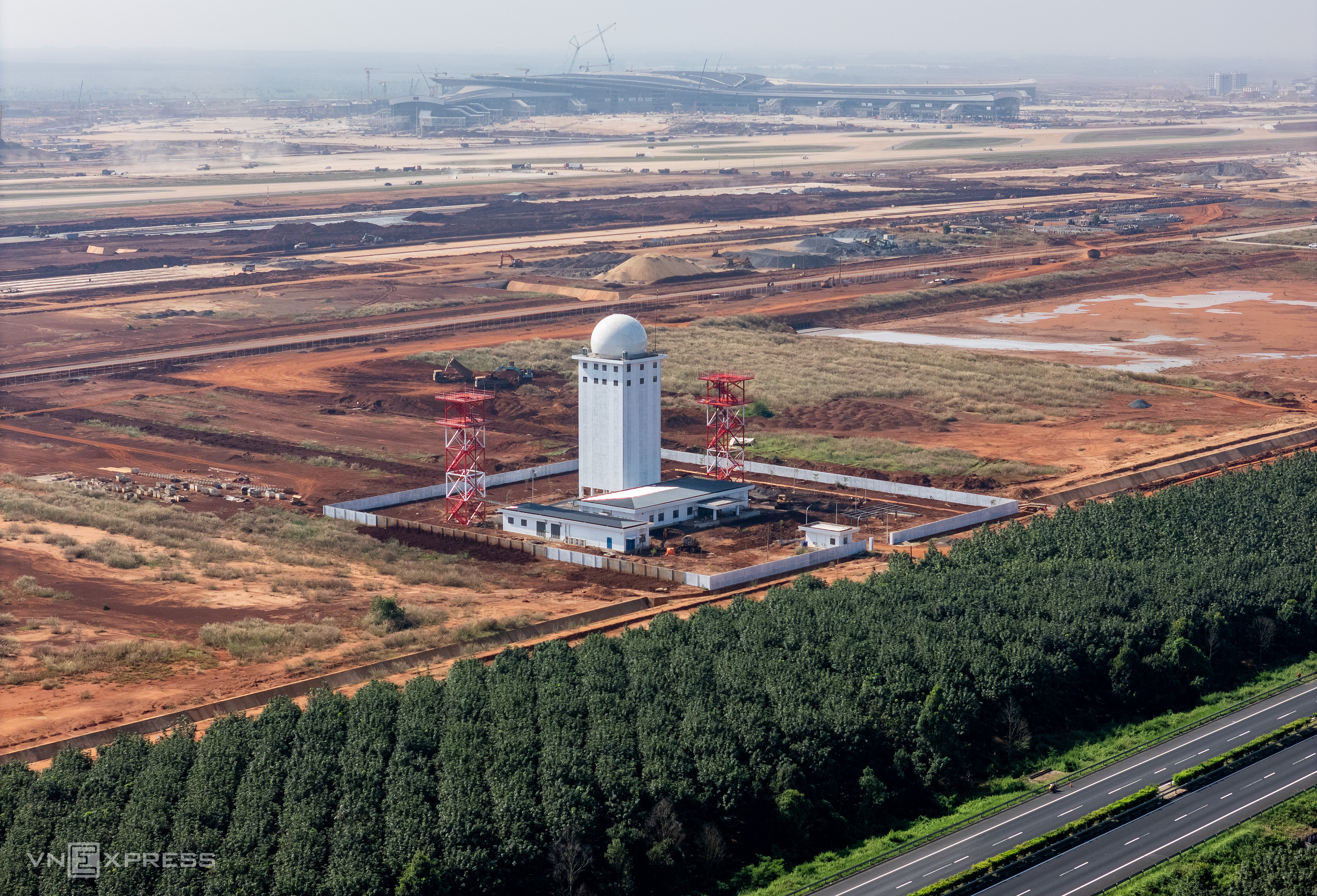 |
The surveillance radar system has taken form, with the mechanical and electronic components fully installed.
The installed radar complex includes a primary surveillance radar (PSR) and a secondary surveillance radar (SSR), fully meeting the standards of the International Civil Aviation Organization (ICAO) and Eurocontrol. When operational, the radar system will expand surveillance coverage and enhance air traffic management quality.
 |
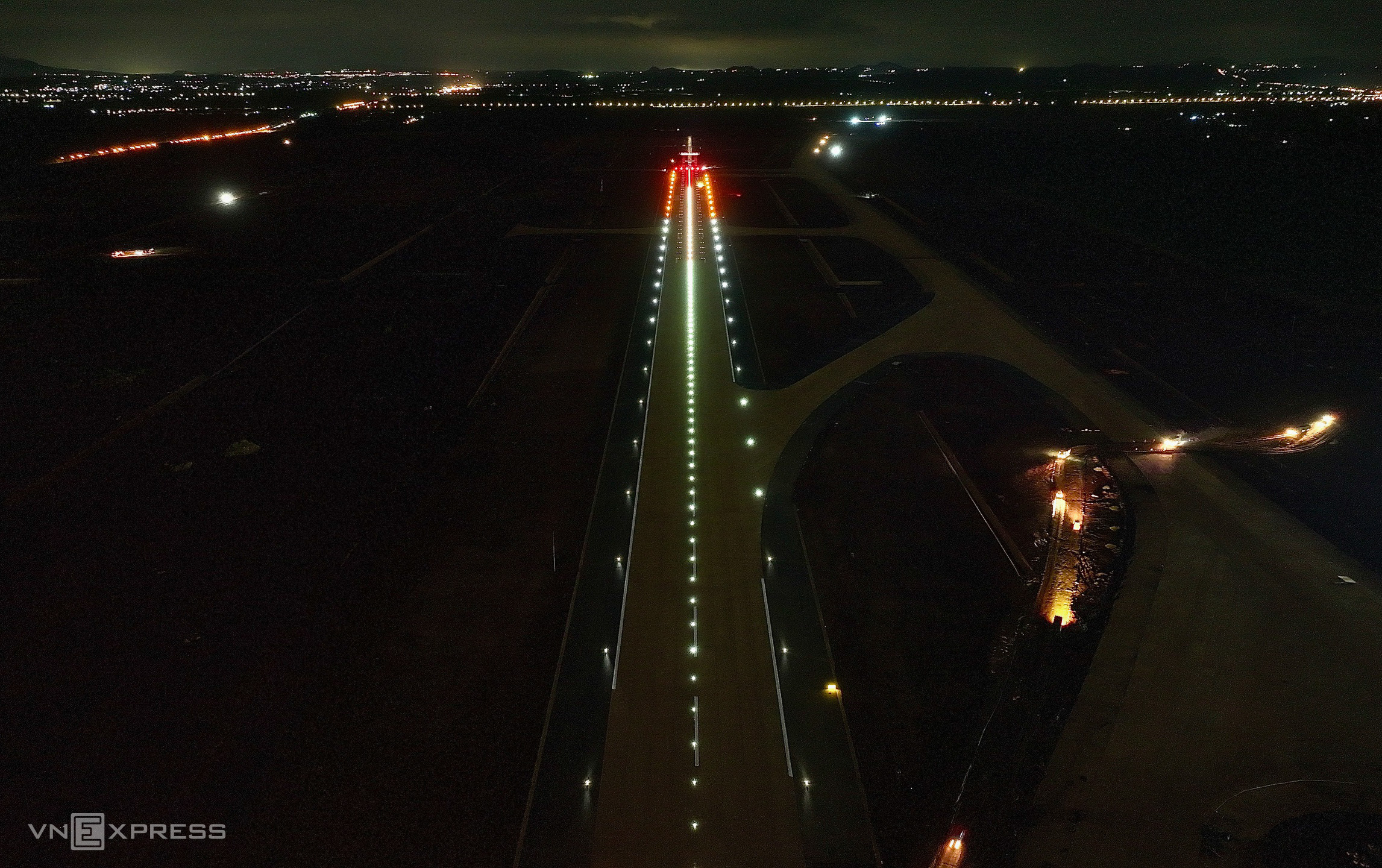 |
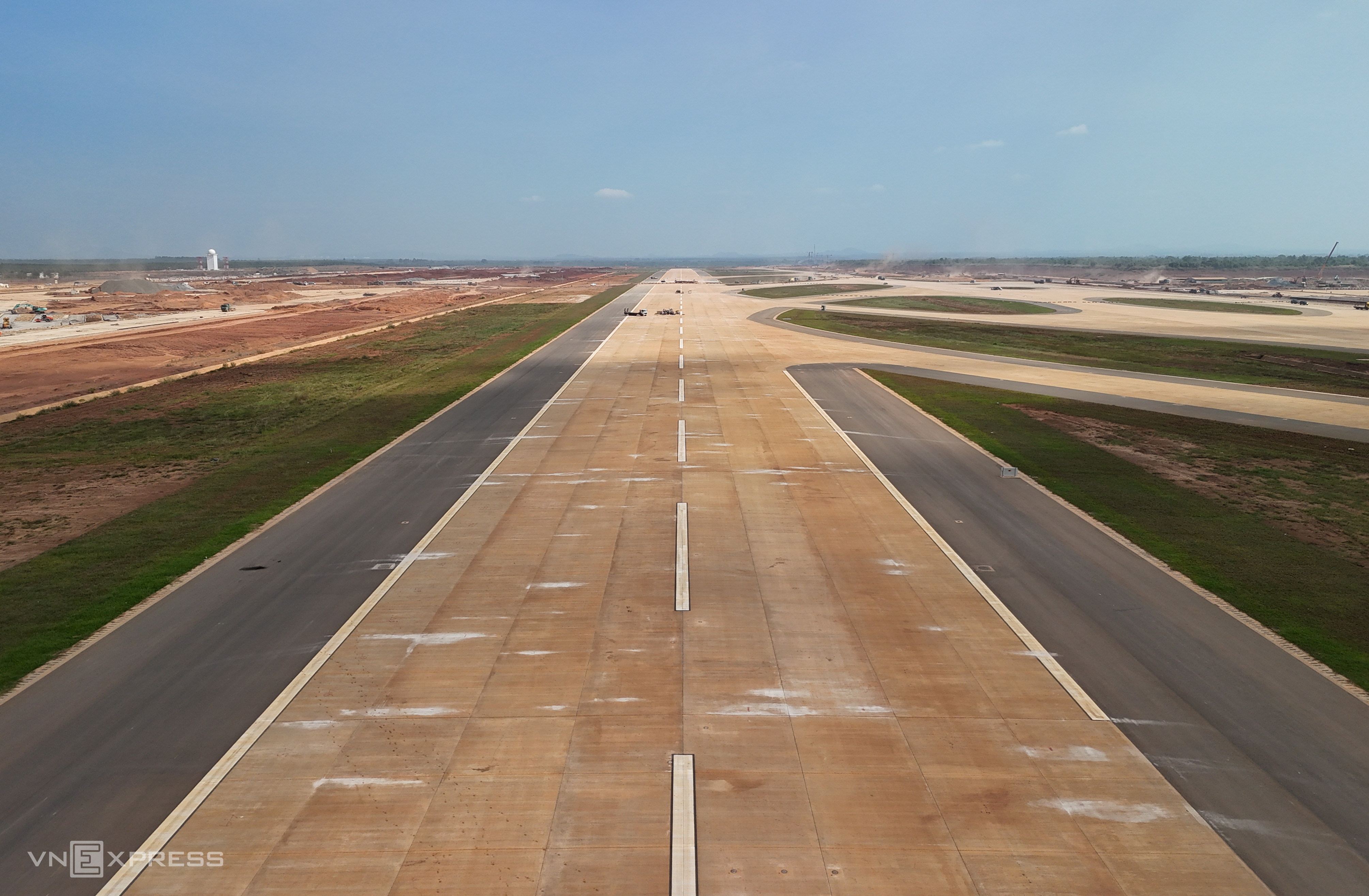
Runway one at the airport is complete and illuminated at night. The runway, 4 km long and 70 m wide, can accommodate the most advanced aircraft available today.
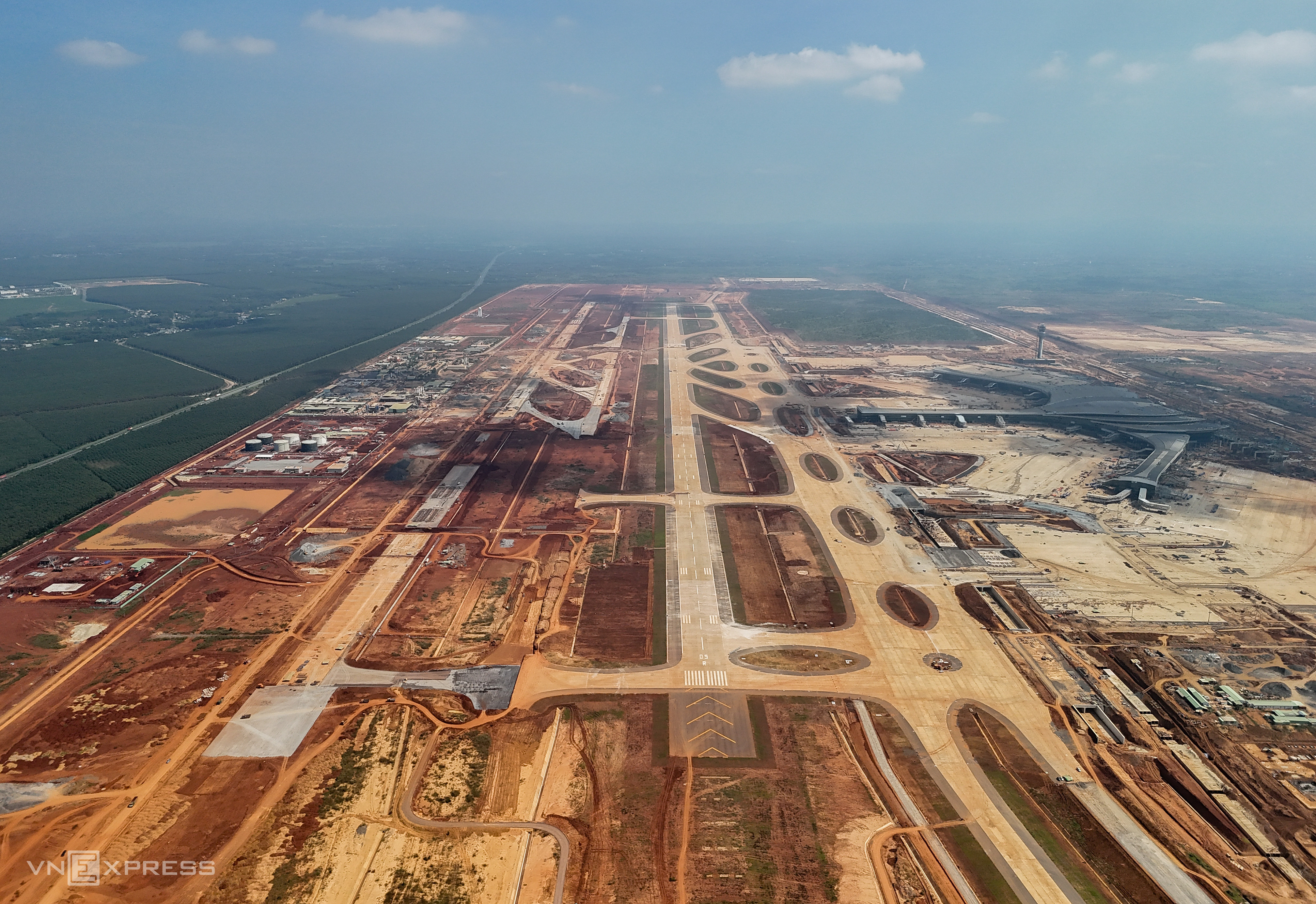 |
Adjacent to it, the second runway (left) is gradually taking shape after half a year of construction. This runway is 4 km long and 75 m wide. Having two runways provides redundancy in case one encounters issues, which is essential for a high-capacity airport.
 |
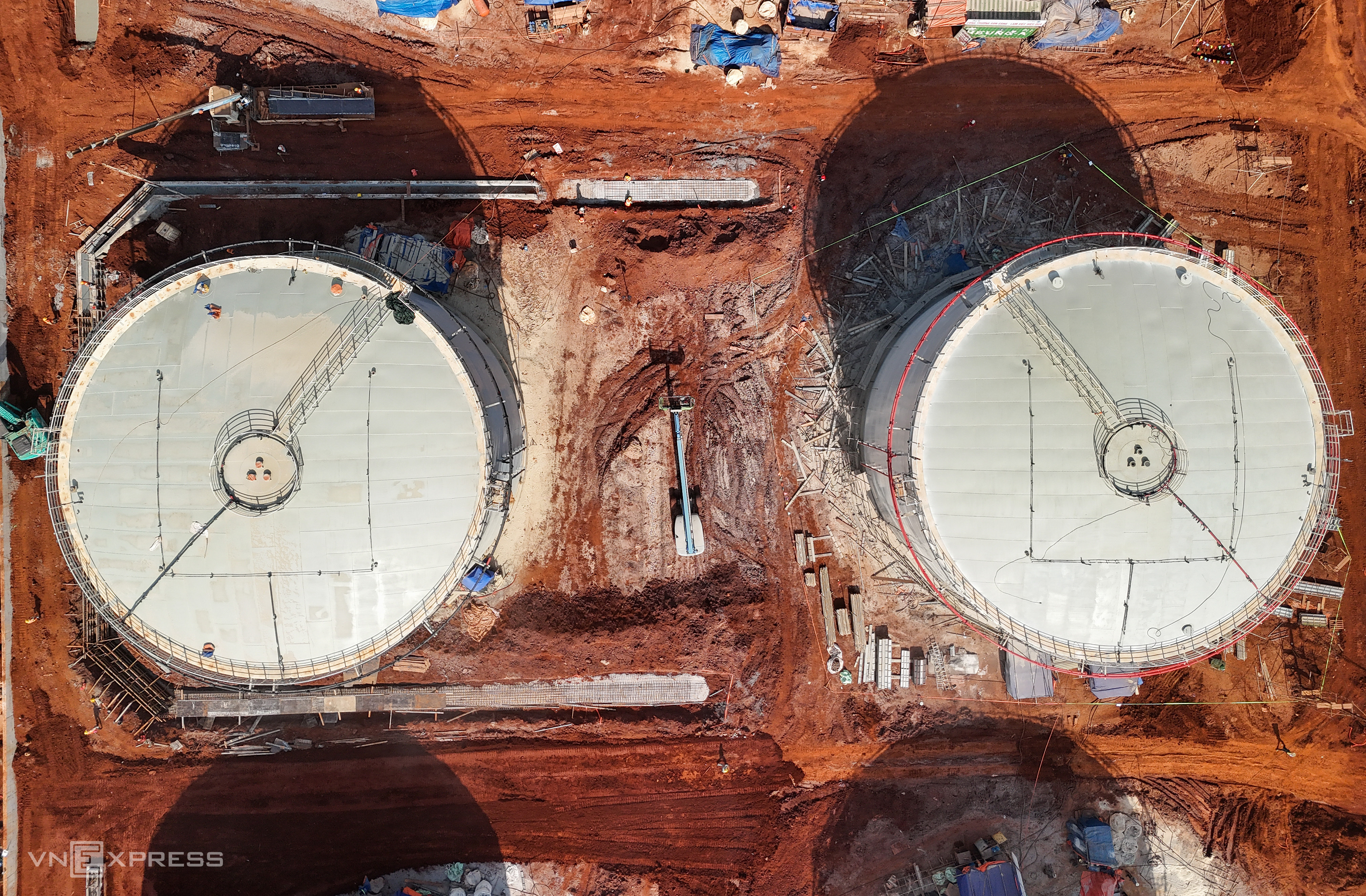 |
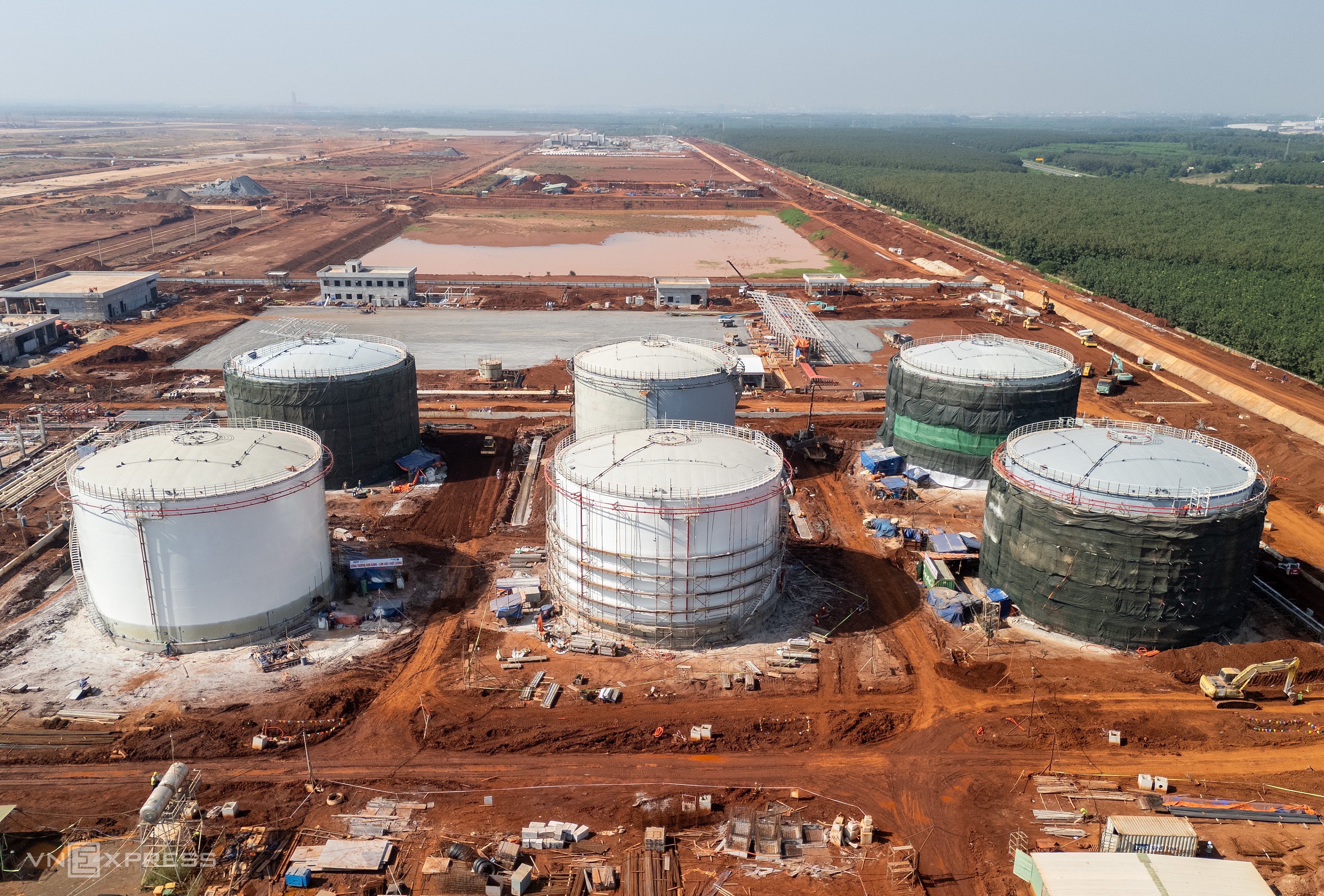
The aircraft fuel supply system, with a total capital of over 2,800 billion VND, commenced construction in October 2024 and is expected to be completed next year. According to the design, the Long Thanh airport fuel station will have a capacity of 5,200 cubic meters per day, comprising six fuel tanks.
Each tank has a capacity of 6,000 cubic meters, along with an underground pipeline system leading to the apron, ensuring large-scale fuel storage and supply capabilities.
The project to construct state agency offices, with a total capital of approximately 765 billion VND, is entering its final completion phase.
These components include the headquarters of the Southern Airports Authority, Customs, Immigration Department, local Police, Animal Quarantine, and Plant Quarantine. The Ministry of Construction announced that the structures have largely completed their building phase and are being finalized, ensuring completion before 19/12.
Long Thanh airport, phase one, spans 1,810 hectares. Construction began on 5/1/2021, with a capacity for 25 million passengers and 1,2 million tons of cargo annually. The project aims for substantial completion before 19/12 and commercial operation by mid-2026.
 |
Overview of Long Thanh airport. Photo: ACV
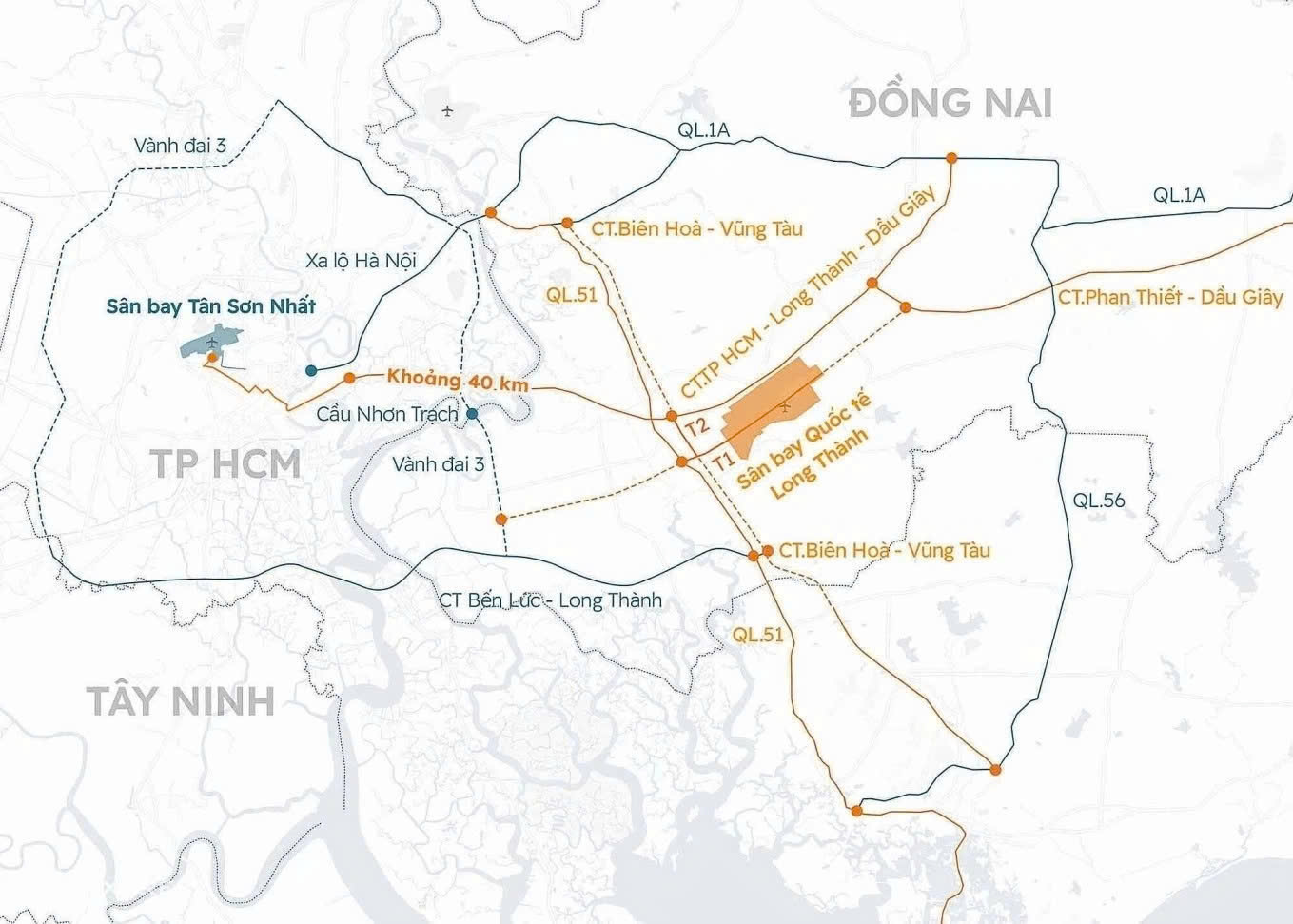 |
Location of Long Thanh airport and connecting routes to TP HCM. Graphic: Hoang Thanh
Quynh Tran - Phuoc Tuan