Phu Vang commune announced on 8/7 the discovery of a pen engraved with "Nguyen Duy Nam". The pen was found during the excavation of grave number 18, row 20, located in the right section of the Phu Vang commune martyrs' cemetery. This excavation aimed to collect biological samples for DNA identification from a grave that previously had no information about the fallen soldier.
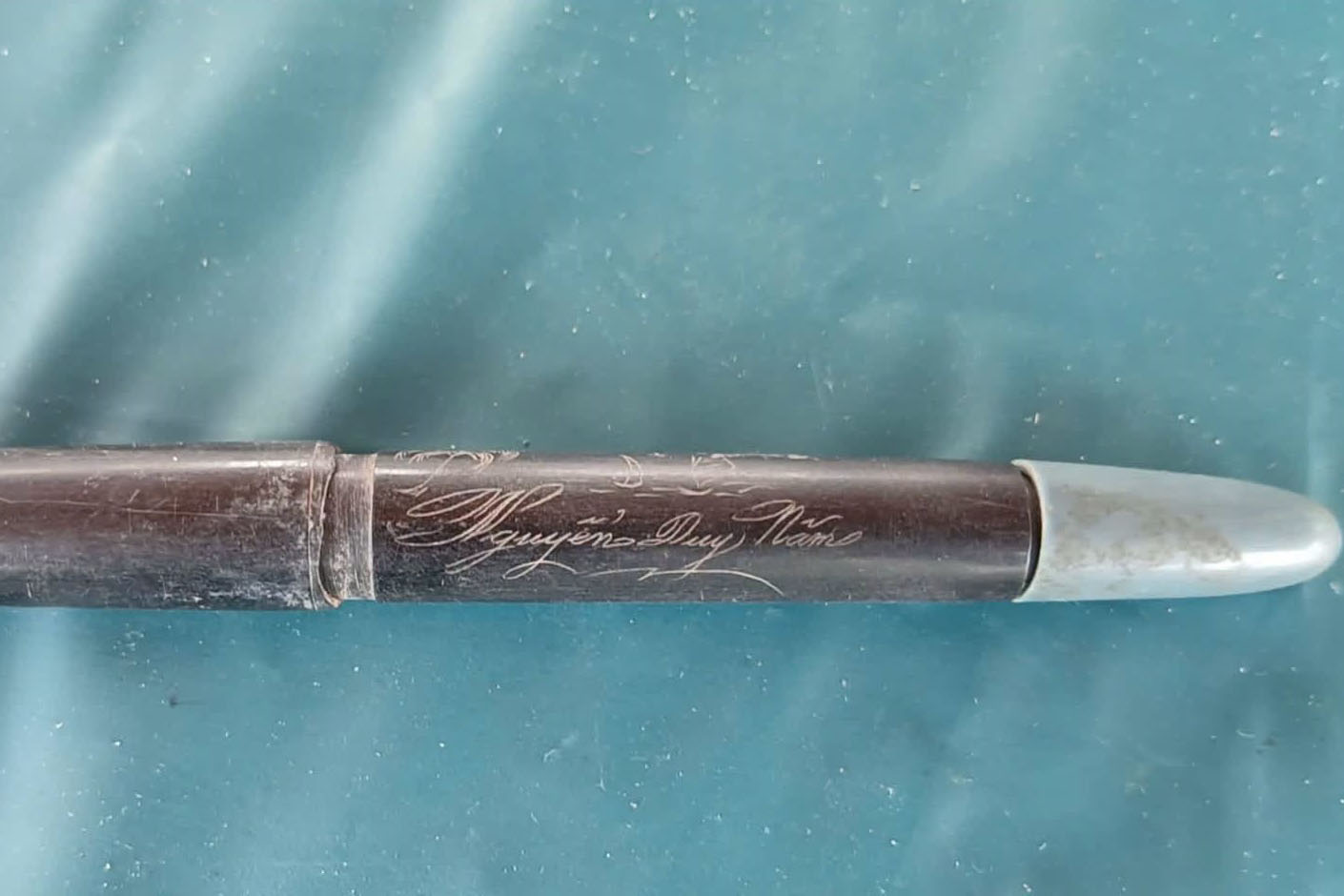 |
The pen found buried with the fallen soldier's remains. Photo: Phu Vang
The discovered pen, engraved with "Nguyen Duy Nam", is made of wood with an aluminum cap, remaining almost completely intact. The inscription on the pen is still clear and legible.
The Hue City Steering Committee 515 assessed that the discovery of this engraved pen holds special value. It provides a crucial source of information, aiding the process of identity verification, cross-referencing records, and locating relatives. Authorities are coordinating with specialized units to verify details related to the inscription on the pen. They are also cross-referencing this information with fallen soldier records and DNA data to clarify the identity, hoping to soon return the fallen soldier to their true name and hometown.
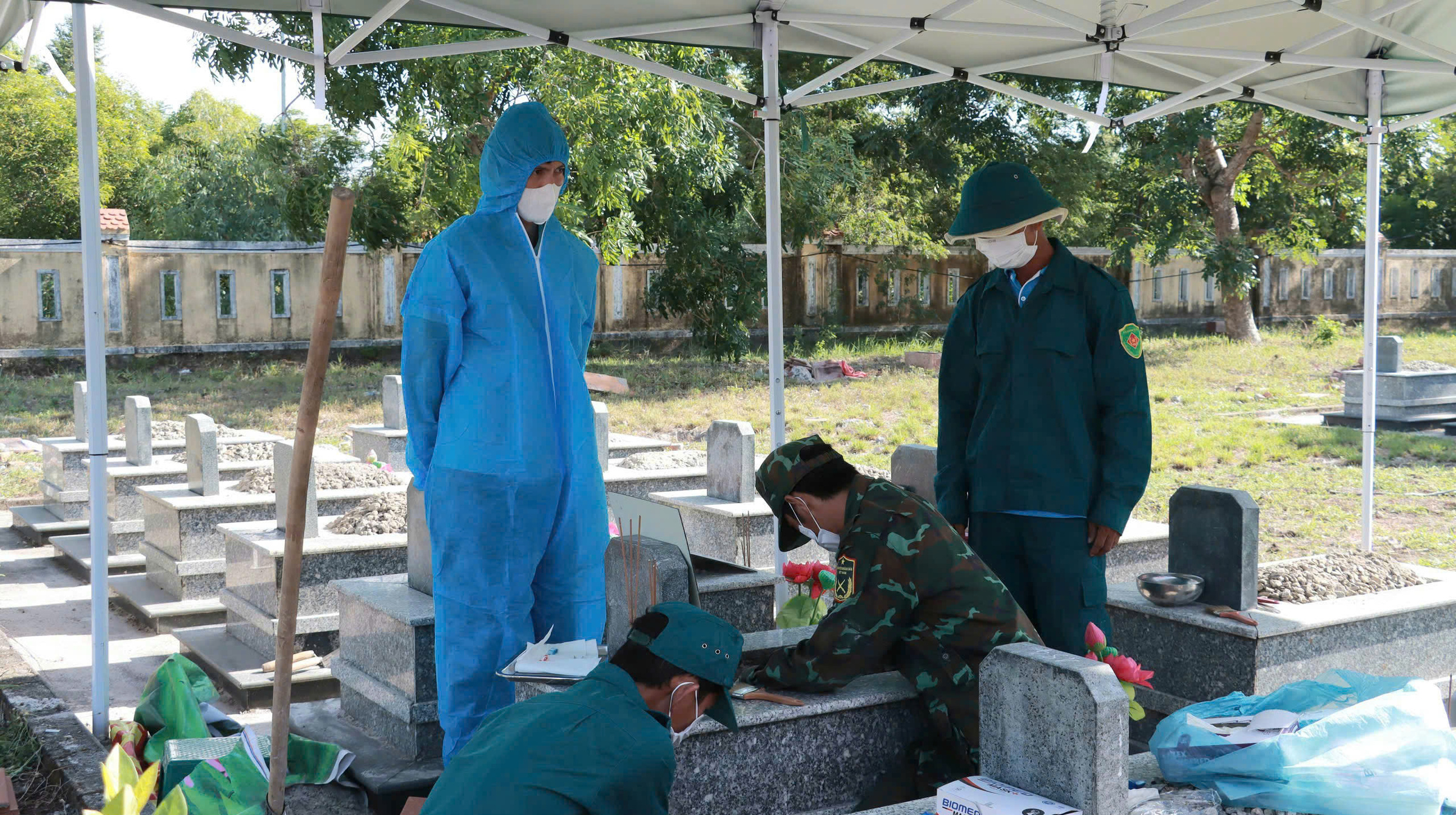 |
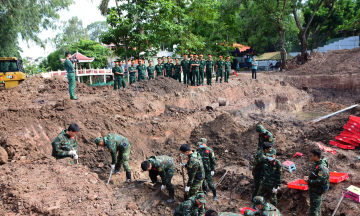
Excavation underway to collect biological samples from fallen soldiers' remains at Phu Vang commune martyrs' cemetery. Photo: Quang Dao
This discovery is part of a larger ongoing effort. Over the past 10 days, as part of the "500-Day and Night Campaign to Accelerate the Search, Repatriation, and Identification of Fallen Soldiers' Remains", the Hue City Steering Committee for the Search, Repatriation, and Identification of Fallen Soldiers' Remains has been collecting biological samples from unidentified graves. The Phu Vang commune martyrs' cemetery alone contains 1,595 sets of remains that will undergo excavation for DNA testing. This site has the largest number of unidentified fallen soldiers' graves in Hue city. To date, authorities have excavated 333 unidentified graves to collect biological samples for DNA identification. According to the plan, biological samples will be collected from 42 cemeteries across Hue city for DNA testing.
During the American War (Vietnam War), Thua Thien Hue province was one of the fiercest battlefields, known for the Tet Offensive of 1968. For 26 days and nights, the Phu Xuan Regiment 6 coordinated with various forces to attack the Hue Citadel, holding it for 26 days and nights.
Vo Thanh