The Ministry of Interior is developing a draft law to amend and supplement certain articles of the Law on Vietnamese Workers Going Abroad Under Contract. The draft introduces new regulations aimed at strengthening early management and protecting workers from the recruitment and training stages. This includes prohibiting sending workers to countries or territories that do not yet permit the reception of foreign labor.
According to the drafting agency, there has been a rise in brokerage and job promotion activities in markets lacking official mechanisms for receiving foreign workers or comprehensive legal frameworks. This exposes workers to significant risks and makes it difficult to protect their rights in case of disputes.
The draft also amends regulations concerning professions prohibited for overseas employment. While the current law only prohibits massage work in restaurants, hotels, or entertainment centers, the new draft proposes a general ban on massage work. This provision aims to mitigate the risk of workers, especially female workers, being trafficked, exploited, or subjected to forced labor.
Another change relates to service fees, with the draft allowing foreign employers to pay a portion or the entirety of the service fees that enterprises are permitted to collect on behalf of the workers. In such cases, enterprises may only collect the remaining balance as agreed upon. Non-profit public service entities sending workers abroad are prohibited from collecting service fees from workers.
According to the drafting agency, allowing foreign partners to cover some costs will help reduce the financial burden on workers before their departure.
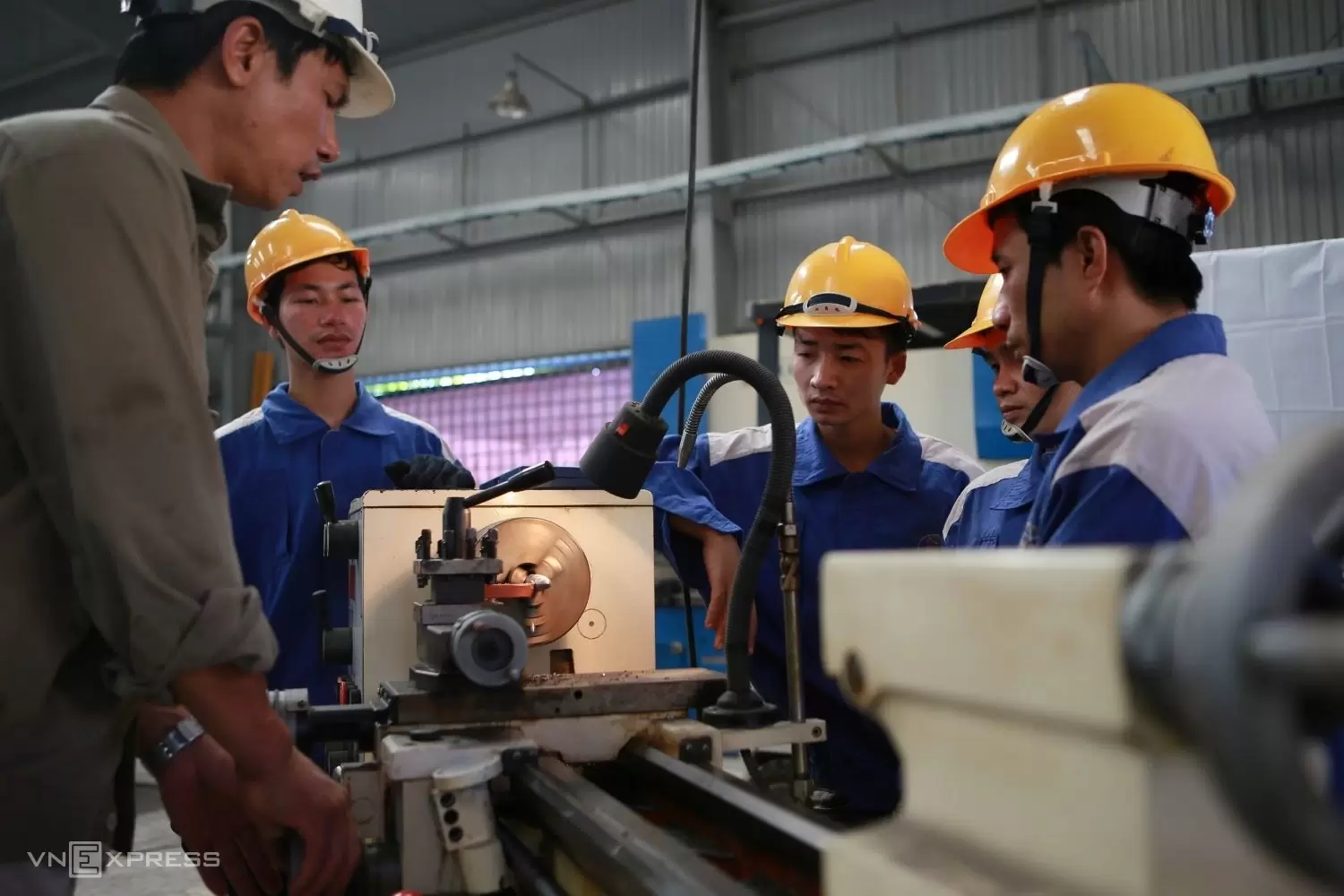 |
Practical metal cutting and welding class for workers going to Lithuania and Romania. *An Phuong*
Training fees only collected after worker selection
The draft allows enterprises to proactively prepare labor resources based on the demands of recipient markets, either directly or in coordination with vocational education institutions and employment service organizations, to provide vocational skills and language training. However, to prevent workers from incurring significant costs without being hired, the draft stipulates that enterprises may only collect fees for vocational skills and language training after the workers have been selected by the foreign party.
This new point addresses the reality that many workers pay fees very early without guaranteed opportunities to travel abroad. This regulation is expected to reduce financial risks and protect workers' rights during their preparation for overseas employment, while also increasing accountability for enterprises.
Enterprises whose licenses are revoked due to serious violations will not be re-licensed for a period of 5 years. Legal representatives, owners, members, or shareholders of enterprises with revoked licenses are also prohibited from participating in establishing or managing new enterprises applying for licenses during the same period.
The Ministry of Interior states that this aims to prevent violating enterprises from dissolving or changing their legal entity only to continue operations under a different name, thereby enhancing deterrence and ensuring a healthy competitive environment.
After more than 5 years of implementation, the Law on Vietnamese Workers Going Abroad Under Contract has established an important legal framework for overseas labor activities. However, new forms of violations have emerged, including impersonating licensed enterprises, leasing operating licenses, illegally collecting fees, or recruiting workers for markets and jobs with inherent risks.
Therefore, this draft law is developed to enhance control from recruitment and training to the point of workers' departure and overseas employment, better ensuring their legitimate rights and interests.
By *Son Ha*