Tomorrow, 12/6, the Hanoi People's Council will commence its 4th session to consider various topics, including a Resolution on policies to support the conversion of road transport vehicles from fossil fuels to clean energy and to encourage public transport use.
According to the draft, the city will offer direct financial support to individuals from poor households who convert to green transport vehicles. Each individual will receive one-time assistance for one motorbike or moped, with a maximum limit of 20 million dong.
To qualify for this support, individuals from poor households must own a fossil-fuel motorbike or moped registered before the effective date of this resolution. They must convert to a green transport vehicle between the resolution's effective date and 31/12/2027. Additionally, they must complete the transfer, handover, or removal of their old fossil-fuel vehicle from the low-emission zone, or apply other disposal measures, and finalize the registration of their new green transport vehicle.
Public service units and road transport businesses headquartered in Hanoi, with business registration in the city before the effective date of this resolution, will be considered for capital and interest rate support when converting to green transport vehicles.
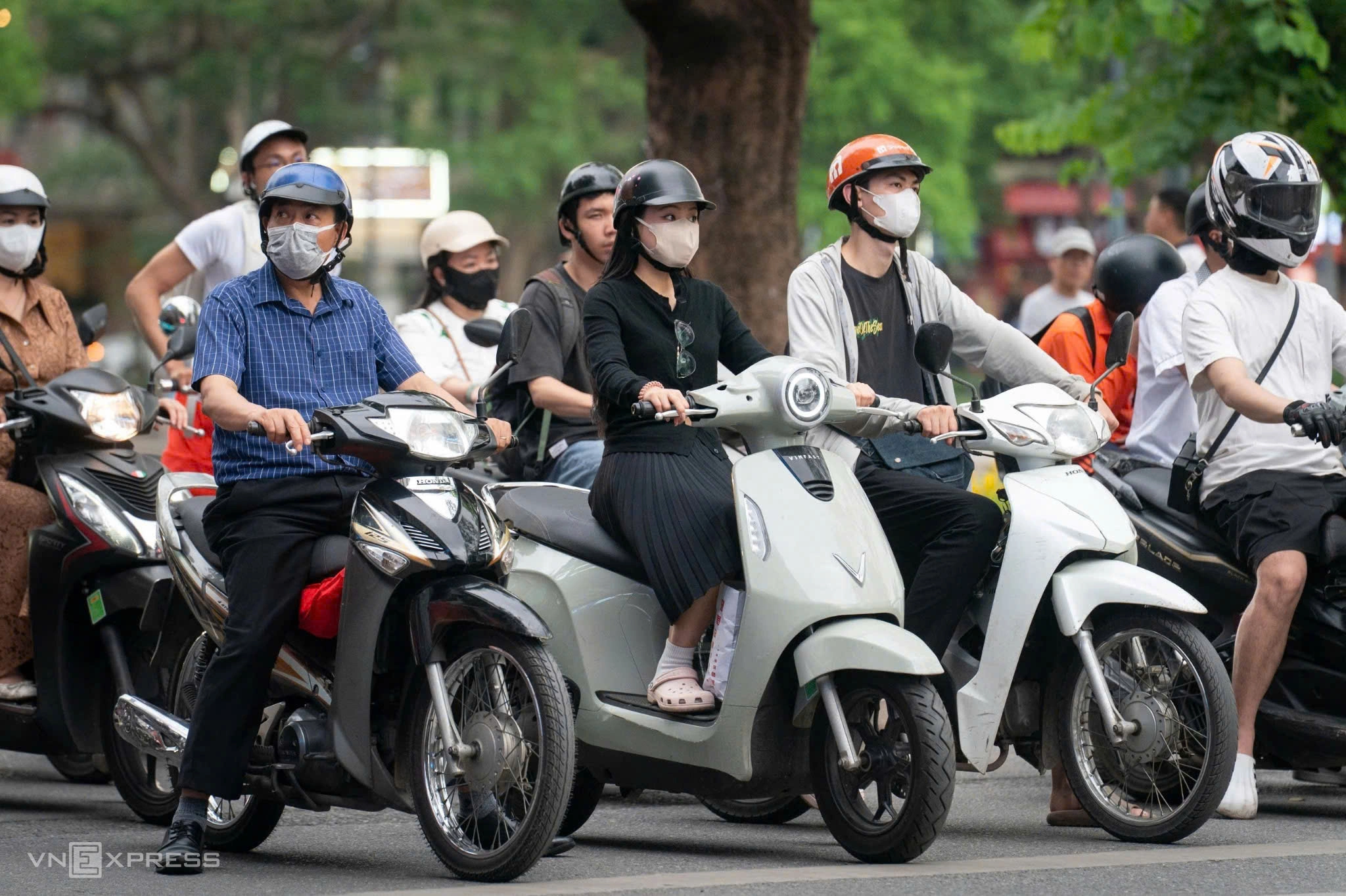 |
Hanoi is expected to only subsidize the conversion of gasoline motorbikes to electric motorbikes for poor households. Photo: Hoang Giang
Alongside supporting green vehicle conversion, the draft outlines policies to encourage the use of public passenger transport via bus and urban railway. The city will waive bus fares (excluding tourist buses) for people traveling within ring road one from 1/1/2027 until 31/12/2027.
The city will also waive fares until 31/12/2030 for users of public passenger transport by bus (excluding tourist buses) or urban railway across the entire city during holidays, Tet (Lunar New Year), and special socio-political events of the nation and the city. The City People's Committee will determine the specific number of fare-free days based on the actual situation at each time.
Previously, the city had sought feedback multiple times on the draft support for green transport vehicle conversion, which initially proposed support levels for all individuals converting gasoline motorbikes to electric vehicles. Specifically, a draft in May stipulated that individuals using gasoline motorbikes, who were permanent residents or had continuously resided temporarily for two years or more, would receive 20% of the vehicle's value, up to 5 million dong, if they converted to an electric motorbike. Individuals from poor households would receive 100% of the converted vehicle's value, up to 20 million dong, while those from near-poor households would receive 80% of the converted vehicle's value, up to 15 million dong.
Explaining the policy change, the Department of Construction stated that policy-making should target organizations and individuals significantly affected, particularly vulnerable groups who rely on fossil-fuel motorbikes and automobiles for their daily livelihoods. Consequently, the initial draft resolution included a broad range of beneficiaries and diverse support policies for the poor, near-poor, ride-hailing vehicles, residents, and transport businesses.
However, after receiving feedback from relevant agencies and units, the City People's Council's Urban Committee's review indicated that a large number of beneficiaries would significantly impact the city's resource balancing capacity. This could pose risks to control and fairness for residents, necessitating thorough and careful consideration. Based on these findings and to ensure the resolution's synchronous implementation with the Resolution on the low-emission zone project within ring road one, the support policy is now narrowed, prioritizing individuals from poor households.
Vo Hai