Starting on 15/5, a 2.5 km section of Cong Hoa street, stretching from the Ut Tich intersection to Truong Chinh in Tan Binh District, will feature Ho Chi Minh City's first reversible lane traffic model. This initiative aims to alleviate persistent congestion on one of the city's vital traffic arteries.
The new system employs fixed steel barriers to separate the two middle lanes, preventing vehicles from making unauthorized lane changes. At both ends of this section, mobile barriers will be installed. These barriers will open and close at specific times, dynamically adjusting the direction of traffic flow to match real-time density during peak periods.
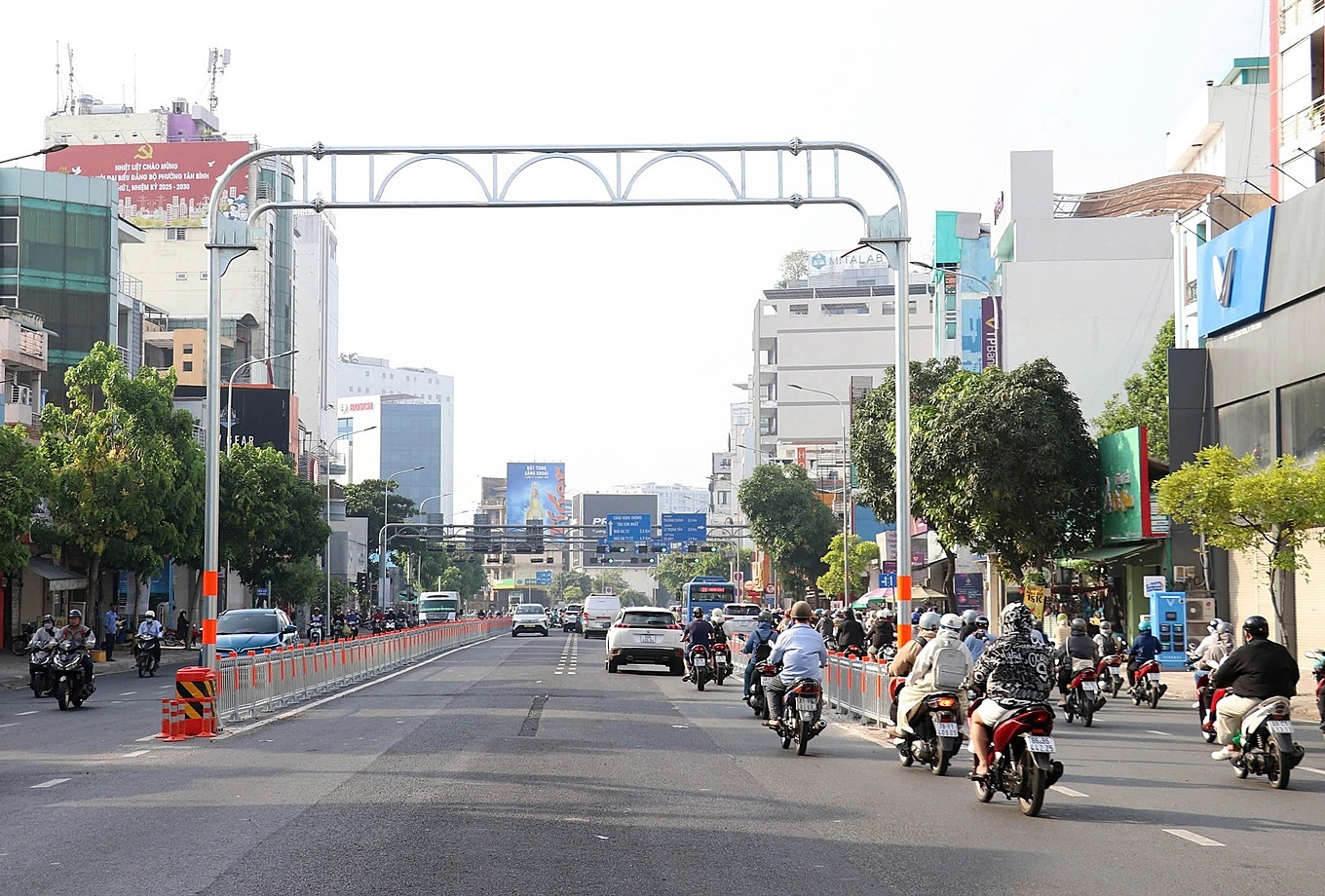 |
The two middle lanes of Cong Hoa street are being installed with fixed dividers in preparation for the reversible lane. *Photo: Giang Anh*. |
During morning peak hours, when traffic volume from the northwest significantly increases towards the city center and Tan Son Nhat Airport, the barrier near Truong Chinh will open. This allows vehicles to utilize the two middle lanes, effectively increasing the total number of lanes heading towards the city center to 4, while the opposite direction will have two lanes.
Conversely, in the evening, the system will reverse its configuration to prioritize vehicles traveling from the city center towards Truong Chinh and the An Suong intersection. At this time, the barrier near Ut Tich will open for vehicles to enter the middle lanes, and the Truong Chinh barrier will close to prevent traffic conflicts. Outside of these peak hours, the two middle lanes will revert to normal two-way traffic operation.
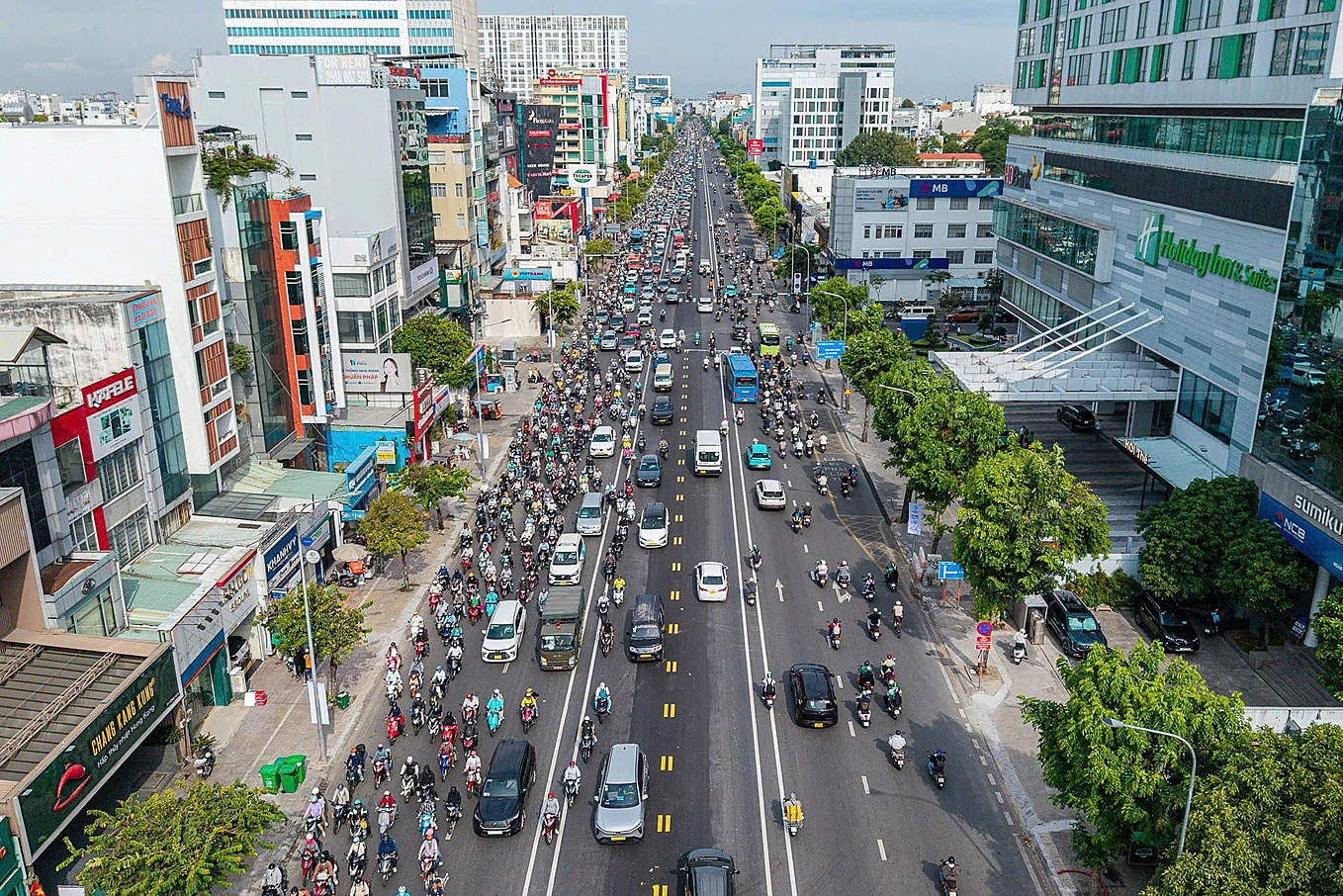 |
Cong Hoa street from above. *Photo: Quynh Tran*. |
According to the Ho Chi Minh City Department of Construction, this solution is designed to maximize existing road capacity, thereby increasing throughput without requiring extensive road expansion. The initial phase of implementation will involve manual operation of the barriers, with plans to research and develop automated systems in the future.
Cong Hoa street serves as a critical traffic artery, connecting the northwest region of Ho Chi Minh City with the bustling city center and Tan Son Nhat Airport. For many years, this route has been plagued by frequent congestion, with the Hoang Hoa Tham intersection being a particular hotspot for traffic bottlenecks.
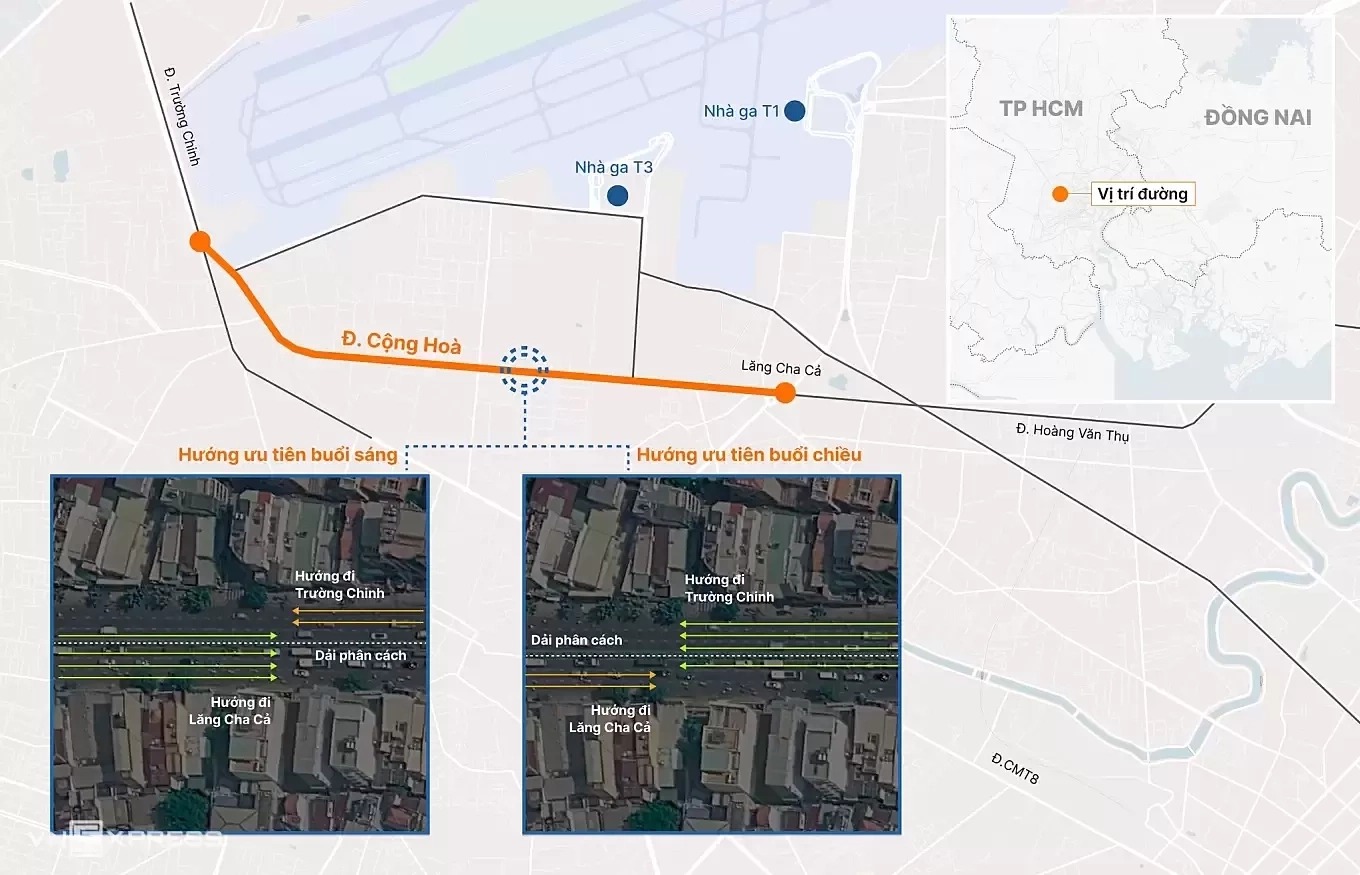 |
Reversible lane organization plan. *Graphic: Khanh Hoang*. |
Flexible reversible lane models have been successfully adopted by many countries globally, employing various methods. Examples include "zipper"-style movable barriers used in the US, Canada, and New Zealand, as well as sophisticated directional traffic light systems implemented in Australia, the UK, and Singapore.
By Giang Anh