Speaking at a conference to disseminate the 14th Party Congress resolution on the afternoon of 7/2, general secretary To Lam affirmed that the Party's "Doi Moi" (Renovation) decision was correct, epoch-making, and historically significant. From a poor, backward nation, ravaged by war and subjected to embargoes for many decades, Vietnam has steadily risen to become a middle-income developing country, deeply integrated into the world economy, with its international standing increasingly asserted.
Despite achieving relatively high growth rates for many years, the quality of growth, sustainability, and economic resilience still face limitations. The country's mastery of technology, labor productivity, and endogenous competitiveness are not yet commensurate with its potential and the people's expectations. The political system has been built relatively synchronously, but the effectiveness of national governance, administrative discipline, and policy implementation quality still fall short of development requirements.
Based on this reality, the Party leader emphasized that the current requirement is not merely to affirm the correct path of renovation, but more importantly, to implement strong, decisive, and profound changes in development thinking, growth models, and especially implementation capacity. "The most fundamental bottleneck currently does not lie in the policies, but in the capacity to transform these policies into concrete development results," he said.
The general secretary called for a unified shift in mindset from speaking to doing, from awareness to action. He urged resolute efforts to overcome the situation of much talk and little action, or good talk but poor execution, and to end bureaucratic and superficial work styles. Every Party committee, Party organization, cadre, and Party member, especially leaders, must uphold their sense of responsibility and set an example in transforming decisions into reality.
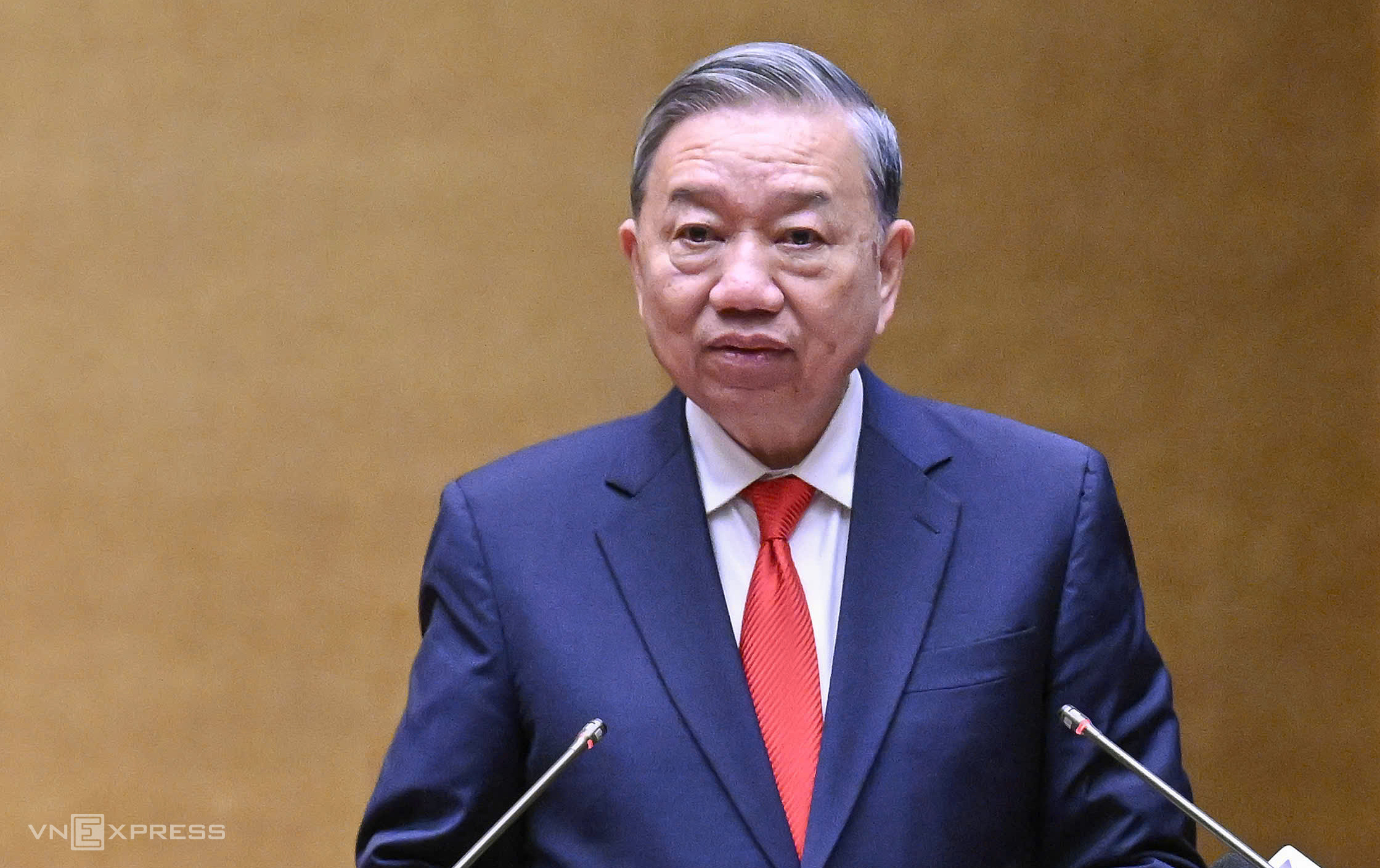 |
General secretary To Lam speaking on the afternoon of 7/2. Photo: Giang Huy
To effectively implement the 14th Party Congress resolution, the general secretary highlighted 5 key points. Among these, he stressed that every major Party policy must be institutionalized promptly, synchronously, and consistently into feasible policies and laws. This aims to thoroughly overcome situations where resolutions are correct, but policies are slow to be issued, lack synchronization, or are difficult to implement.
Implementation methods and enforcement discipline must be strongly reformed, shifting from administrative command-based management to results-based governance. Evaluation should move from formal reports to concrete development outcomes and tangible social impact. Development effectiveness and public satisfaction must be the highest measures of resolution implementation.
The general secretary particularly emphasized building a team of cadres with strong implementation capabilities, who dare to think, dare to act, and dare to take responsibility for the common good. This involves overcoming situations where cadres are good at advising but weak in implementation. Practical results will serve as the most important standard for evaluating cadres, alongside mechanisms to protect those who dare to innovate.
Narrowing the gap between resolutions and tangible results is identified by the general secretary as a measure of the Party's leadership and governing mettle. It also serves as a standard by which history will judge today's generation of cadres and Party members through the practical values the people enjoy.
The general secretary called on the National Assembly to strongly promote its legislative and supreme oversight roles, ensuring that major Party policies are institutionalized promptly, synchronously, and feasibly. Oversight must be thorough, linked to accountability for rectification, to prevent institutional bottlenecks from persisting and hindering development resources.
The government and ministries must shift decisively from issuing policies to thoroughly implementing them, with tangible development results serving as the measure of their executive capacity. The focus is on forming growth poles, key economic regions, dynamic urban areas, and new-generation special economic zones with regional and international competitiveness.
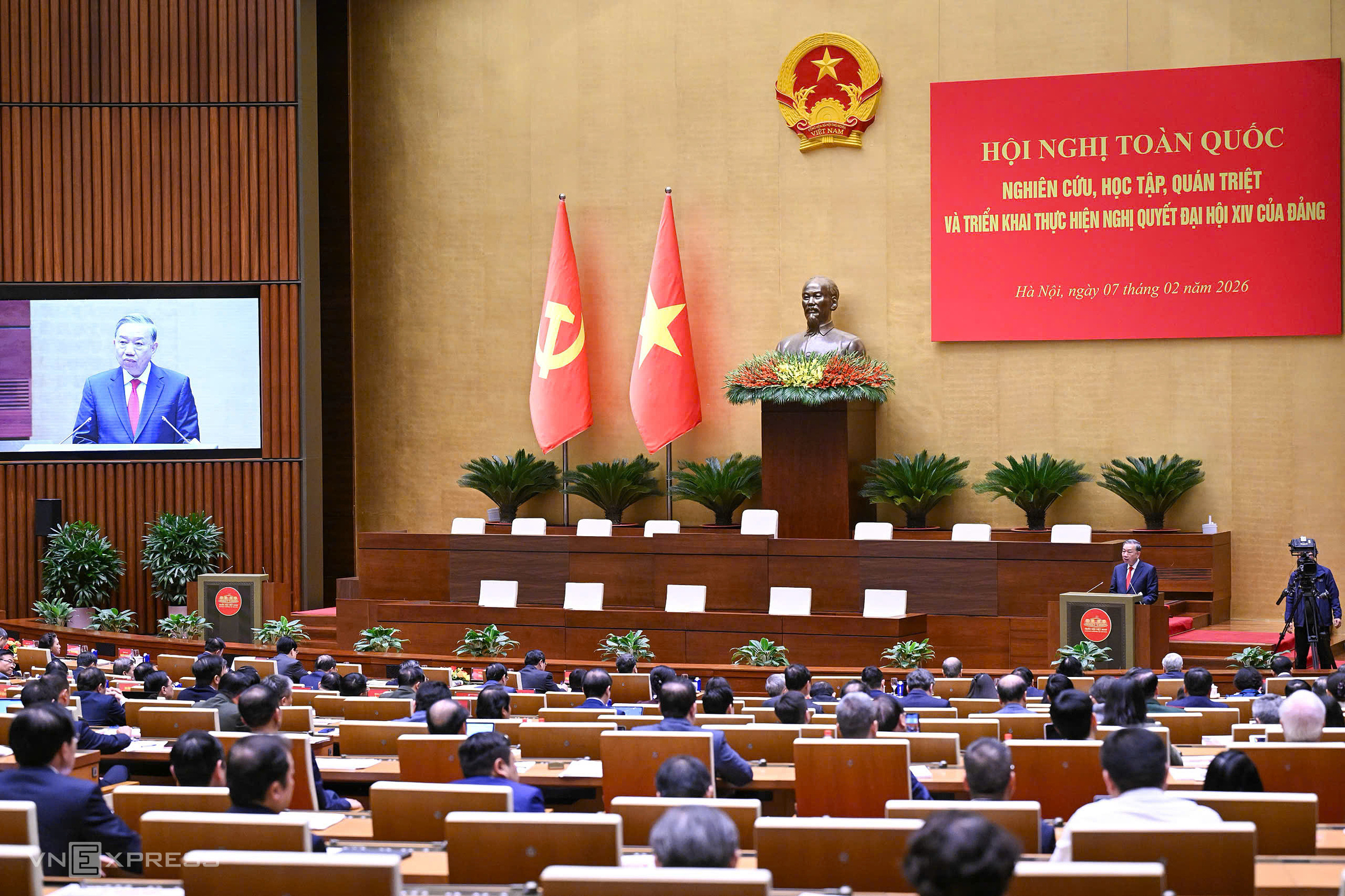 |
Delegates attending the conference to disseminate the 14th Party Congress resolution at Dien Hong Hall, National Assembly House, on the afternoon of 7/2. Photo: Giang Huy
According to the general secretary, local authorities are at the forefront of implementing resolutions, directly transforming Party policies into concrete socio-economic development results. Localities must not pursue superficial targets, embellish achievements, or passively wait, rely on others, or mechanically copy models. In any locality where reform is delayed, resources are wasted, or development opportunities are missed, the leader must bear responsibility before the Party and the people.
Emphasizing that disciplinary responsibility must be paramount, the general secretary demanded that collective responsibility not obscure individual accountability. Individuals who do not meet requirements must withdraw or be considered for reassignment. He stated that the situation of correct resolutions but weak, delayed, or ineffective implementation, without anyone taking responsibility, cannot be tolerated.
"We must not allow weaknesses in organization and human resources to slow the nation's progress, because time is a particularly important and non-renewable development resource. Delays in implementation not only waste resources but also reduce speed and lose opportunities for national development," the general secretary said. He urged all Party committees, Party organizations, authorities, the Fatherland Front, and socio-political organizations to promptly concretize the resolution into action programs and plans, ensuring that actions match words and are carried out thoroughly to produce tangible results.
>>> Content of general secretary To Lam's speech
Vu Tuan