The Ly Hoa river mouth, one of five main river mouths in northern Quang Tri province, serves as a vital access point to the sea for hundreds of fishing vessels from Dong Trach commune's coastal area. This area has experienced frequent silting in recent years, with the most severe blockage occurring in early 2026. During this period, strong cold fronts, turbulent seas, and large waves pushed sand to completely obstruct the river mouth, preventing upstream water from draining into the sea.
Tran Dinh Long, a resident of Nam Duc hamlet in Dong Trach commune, reported that the silting problem has been ongoing for many years. Before 2000, even large vessels could navigate the river mouth. However, increasing sand deposits have gradually shallowed the riverbed. Now, many fishing vessels are forced to anchor at Thanh Khe boat harbor, about 6 km away, or in Dong Hoi ward, located about 20 km away.
After digging a new channel, vessels still face difficulties going out to sea at Ly Hoa river mouth. *Video: Dac Thanh*
Long added that annually, from about november to june, the river mouth experiences severe silting, occasionally becoming shallow enough for people to wade across. Local authorities have repeatedly attempted dredging and creating new channels, but these efforts only provide temporary relief before the sand re-accumulates. By early 2026, the river mouth was completely sealed by sand, causing the water flow to almost stagnate.
Dong Trach commune statistics indicate a local fleet of 212 fishing vessels measuring 6-12 m and 103 vessels under 6 m. With the river mouth blocked, these boats cannot access the sea. Some fishermen resort to hiring cranes to transport their vessels over the sandbar, enabling them to reach fishing grounds.
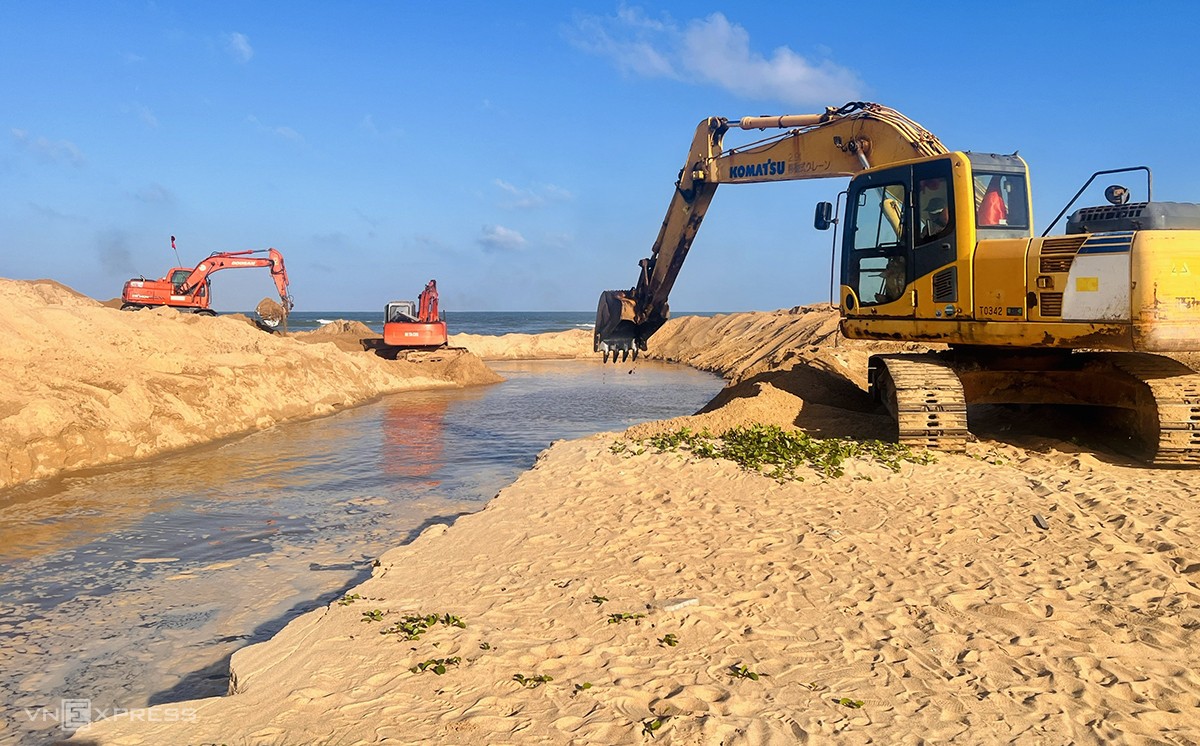 |
The Ly Hoa river mouth, completely blocked by sand, where authorities mobilized excavators to dig a trench for water drainage to the sea. *Photo: Dac Thanh*
The blocked river mouth not only affects fishing but also impedes upstream water drainage, leading to the flooding of about 50 hectares of the 2025-2026 winter-spring rice crop. Moreover, approximately 20 hectares of rice paddies in hamlets of the former Dong Trach commune remain unsown due to inundation. Nearly 200 hectares of brackish aquaculture ponds, currently undergoing treatment, are also impacted by the stagnant water.
In response to the crisis, Dong Trach commune authorities mobilized resources to excavate a temporary channel. This channel, cut through a sand dune, connects the Ly Hoa river directly to the sea. Thousands of cubic meters of sand were removed to create a passage approximately 100 m long and 30 m wide, aiming to restore water flow and alleviate flooding in agricultural areas.
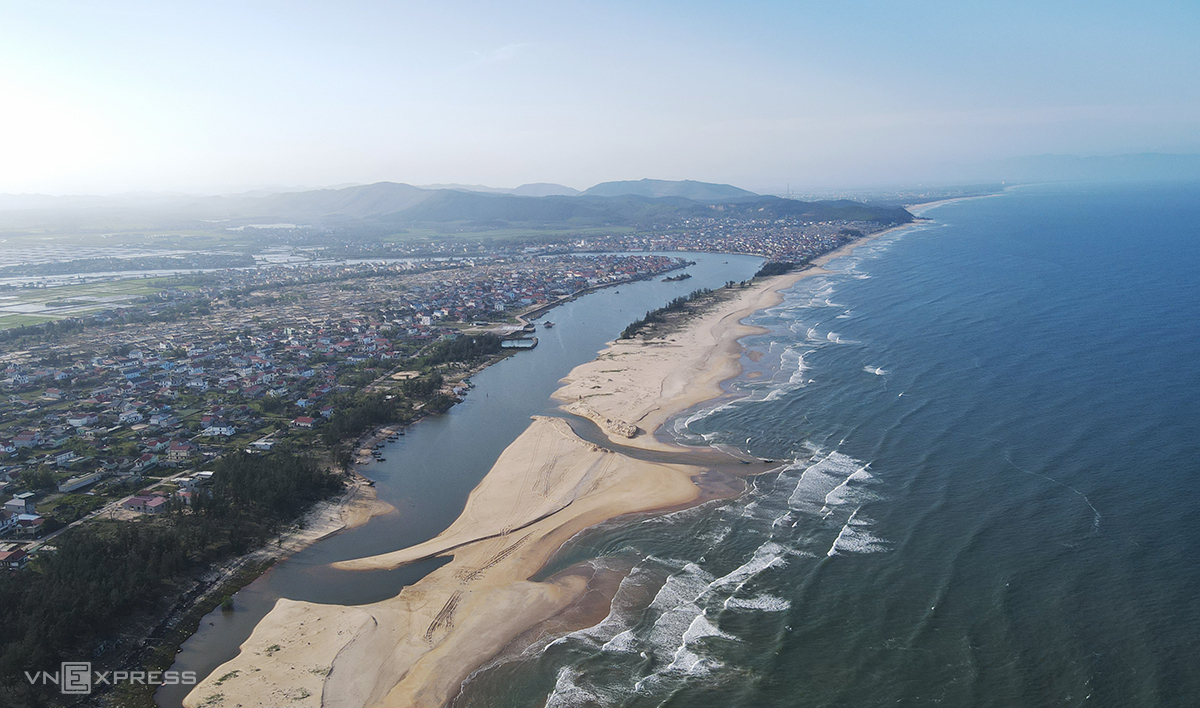 |
The Ly Hoa river mouth opened for water drainage. *Photo: Dac Thanh*
However, local residents report that this newly excavated channel primarily facilitates water drainage. Vessel access remains dependent on tidal conditions. The swift currents through the temporary opening also make navigation challenging and pose risks, especially during turbulent seas.
Vo Hai Quan, President of Dong Trach commune, acknowledged that digging the channel is merely a temporary measure to relieve flooding and offer brief access for fishing vessels. He anticipates that after a season of rough seas, the newly created passage will likely be re-silted.
Dong Trach commune has submitted a report to the Quang Tri Provincial People's Committee and related departments. The report requests an assessment of the Ly Hoa river mouth's condition and calls for funding to construct a permanent system of embankments and floodgates, integrated with a navigation channel. This long-term solution aims to stabilize water flow and secure the livelihoods of coastal residents.
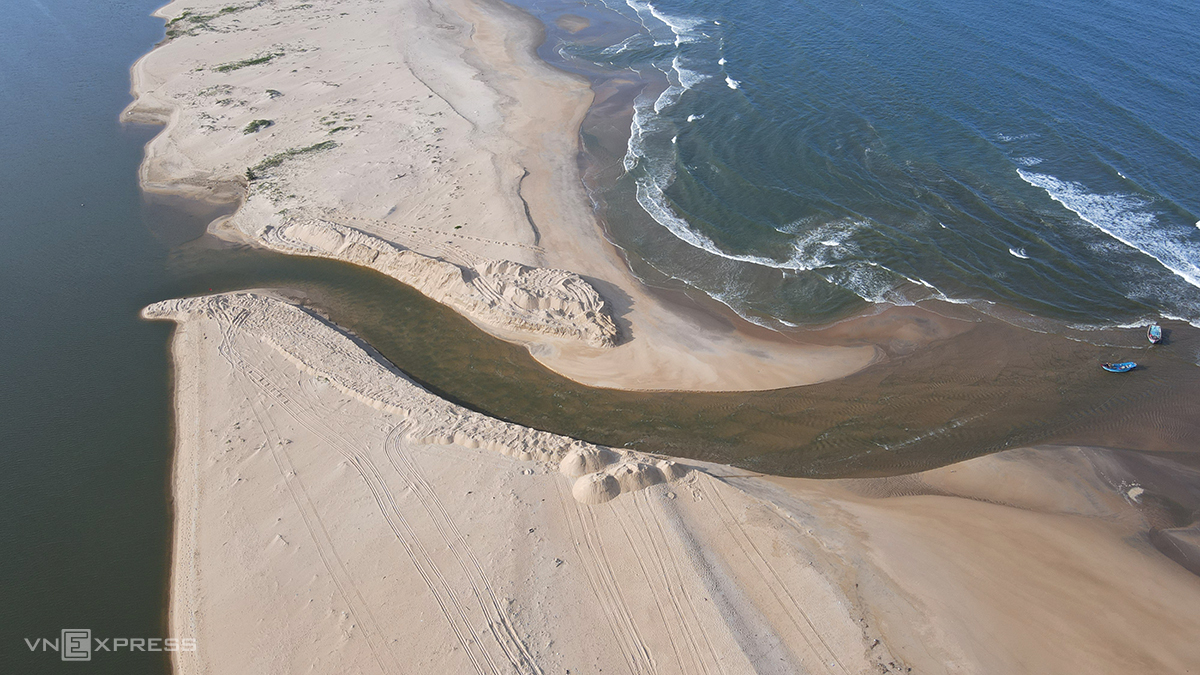 |
After digging a channel for water drainage, sand continues to accumulate, and vessels can only enter or exit during high tide. *Photo: Dac Thanh*
Dac Thanh