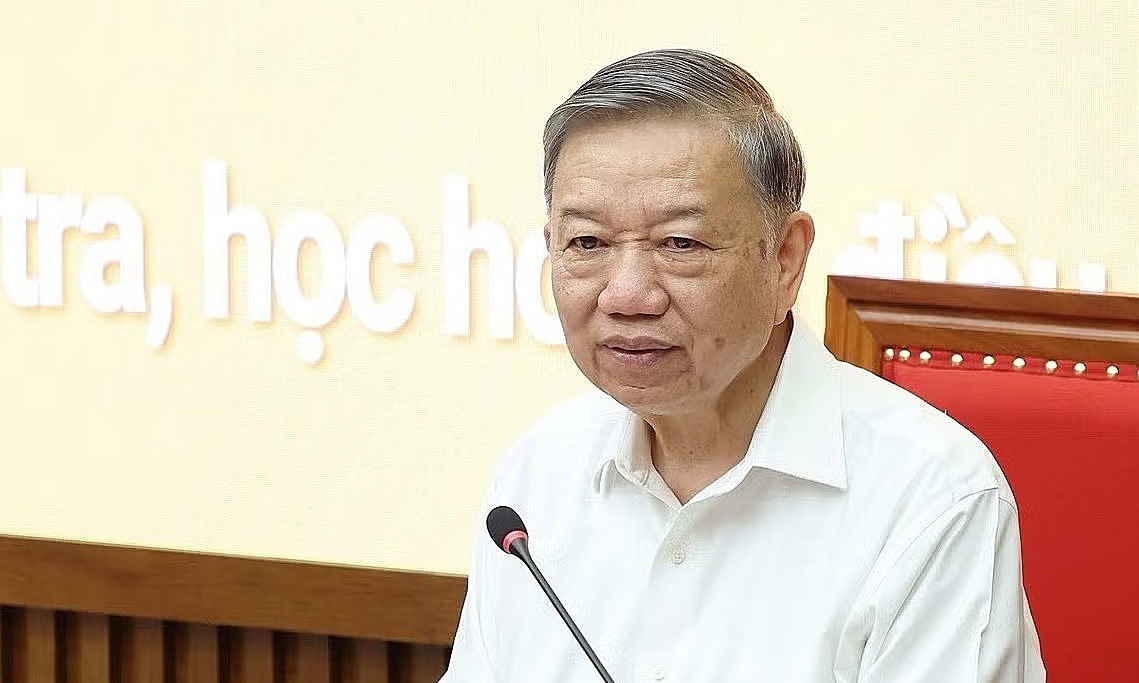
Working with the Central Policy and Strategy Committee on the proposal to develop new regulations for Party members in private business on the afternoon of 14/9, General Secretary and President To Lam affirmed that this policy is the result of the Party's process of intellectual innovation, practical summation, and theoretical development.
The new regulations must inherit enduring principles while addressing emerging issues related to ownership, production organization, distribution, and the responsibilities of Party members within a socialist-oriented market economy.
The General Secretary and President emphasized the need to affirm Party members' right to engage in legal economic activities, linking it to their specific legal status, duties, and obligations. "Party membership demands a higher standard of exemplary responsibility, without creating business privileges," he stated, noting that all support policies must be based on transparent and equal criteria, ensuring businesses are not discriminated against whether their owners are Party members or not.
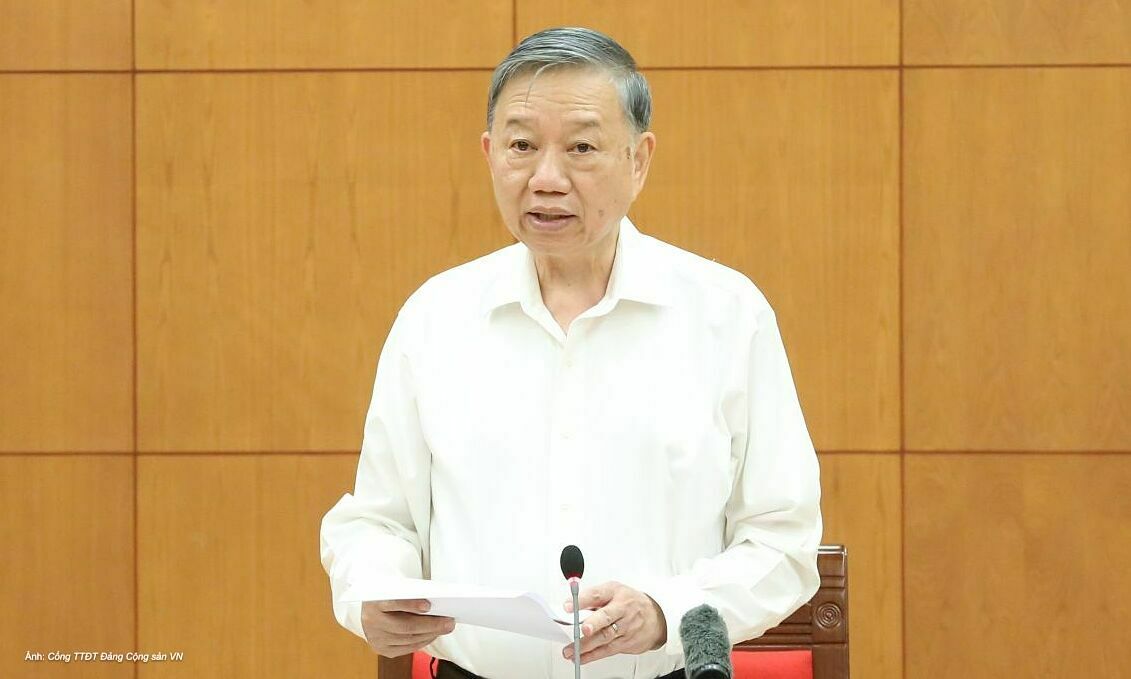 |
General Secretary and President To Lam working with the Central Policy and Strategy Committee on the afternoon of 14/9. Photo: Portal of the Communist Party of Vietnam |
According to him, the working-class nature and the goal of serving the people must be reflected in Party members' practical activities, including the origin of their assets, business organization methods, treatment of labor, and utilization of development achievements. Capable Party members are encouraged to lead in technological innovation, improve productivity, build Vietnamese brands, and foster sustainable business development.
The new regulations for Party members engaging in economic activities in the new era must be concise, clearly stating principles, subjects, limits, responsibilities, and authority. Content directly defining what is permitted and prohibited must also be explicitly outlined.
The General Secretary and President emphasized the content of delineating rights and limits for each group of Party members: those outside the public sector; incumbent cadres and civil servants; public employees; Party members in the People's Army and People's Public Security; leaders of state-owned enterprises and state capital representatives; and those who have resigned, retired, or ceased employment. "Effectively control conflicts of interest and protect legal economic activities," he stated.
The new regulations should enhance the quality of Party building within the private economic sector, recruiting Party members from exemplary entrepreneurs while also focusing on skilled workers, engineers, scientists, and outstanding laborers. "Motivation, character, reputation, and the training process must be genuinely assessed, without pursuing quantity or using sponsorship capacity as a basis for Party admission," he said.
Concurrently, Party organizations must act as political nuclei, educating and supervising Party members, and contributing to the development of progressive labor relations. The coordination regulations must clearly define the powers of Party organizations, owners, and the operating apparatus, ensuring they do not usurp each other's functions.
According to the Party and State leader, evaluating Party members involved in economic activities must prioritize productivity, innovation, fulfillment of tax obligations, wages, insurance, labor safety, and environmental protection. Social responsibility must begin with those who collaboratively create value, "it is not acceptable to use sponsorship or charity to compensate for violations of obligations towards laborers."
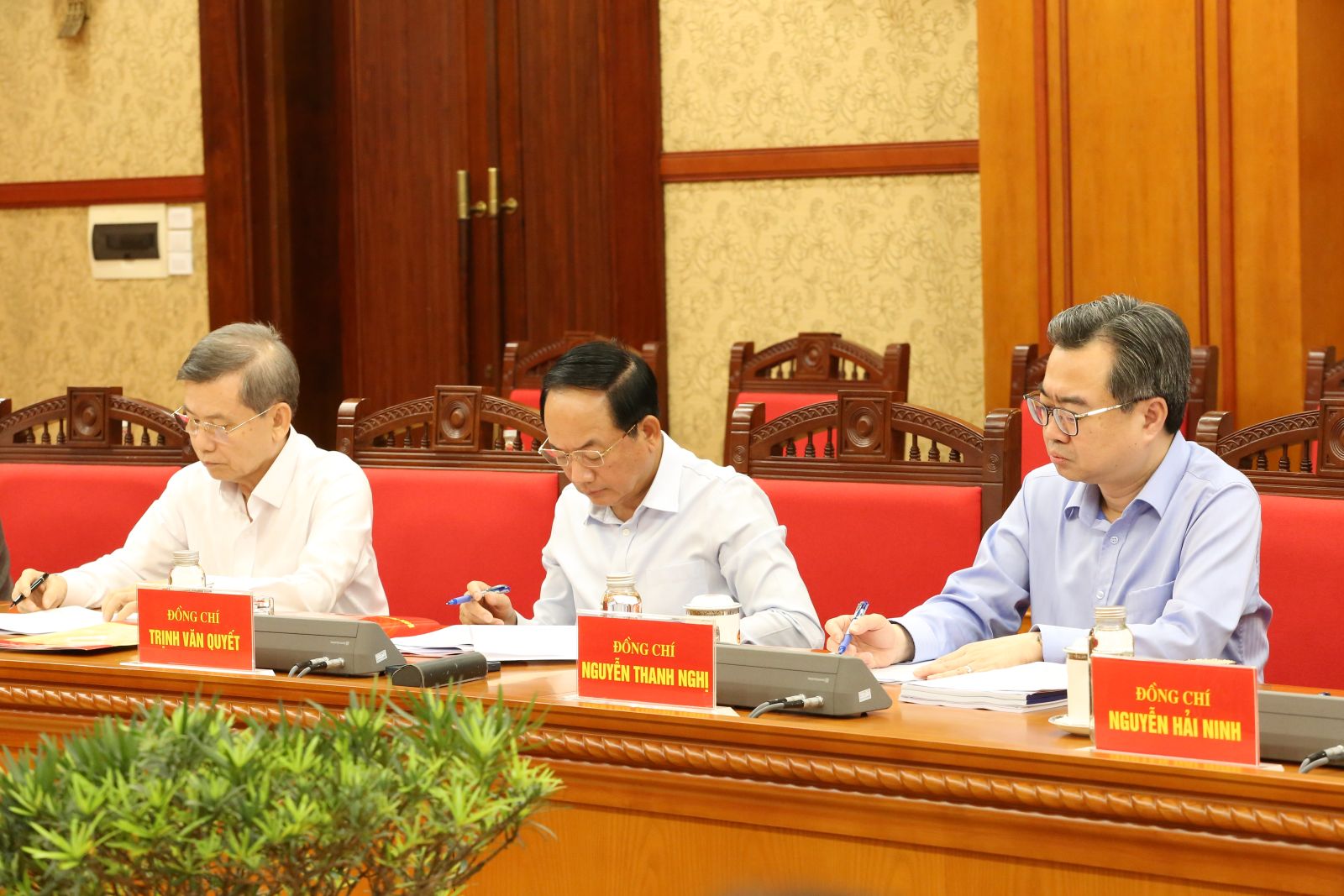 |
From left: Le Minh Tri, Head of the Central Internal Affairs Committee; Trinh Van Quyet, Head of the Central Propaganda Department; Nguyen Thanh Nghi, Head of the Central Policy and Strategy Committee. Photo: Portal of the Communist Party of Vietnam |
The General Secretary and President assigned the Central Policy and Strategy Committee to lead the finalization of the proposal; to coordinate with the Central Organization Committee in clarifying Party member management groupings and cadre mechanisms; and to coordinate with the Central Inspection Committee in refining control, supervision, and enforcement responsibilities.
The Government Party Committee is responsible for leading the review of relevant laws, proposing a roadmap for institutionalization, and coordinating with the National Assembly Party Committee on matters within the National Assembly's jurisdiction.
The General Secretary and President affirmed that the new regulations on Party members engaging in private economic activities must enable Party members to confidently contribute and conduct legal business; empower Party organizations to manage effectively; foster public and business confidence in the fairness and integrity of the system; leverage resources for development; and ultimately make the Party cleaner, stronger, and more closely connected with the people.
Vu Tuan