On 14/9, Le Hoang Son, Director of the Da Nang Special-Use Forest Management Board, announced the discovery of a nine-member elephant herd within the conservation area's forest in Que Phuoc commune. Image data showed the elephants appeared on the morning of 9/4. The camera trap footage was retrieved after more than two months, and the information is now being released after the unit spent considerable time carefully reviewing and analyzing data from hundreds of memory cards.
“The most encouraging aspect is the presence of two calves, around one year old, within the herd,” said Son. “This is the largest number of elephants ever recorded in the conservation area, exceeding the six individuals observed when the reserve was established 9 years ago.”
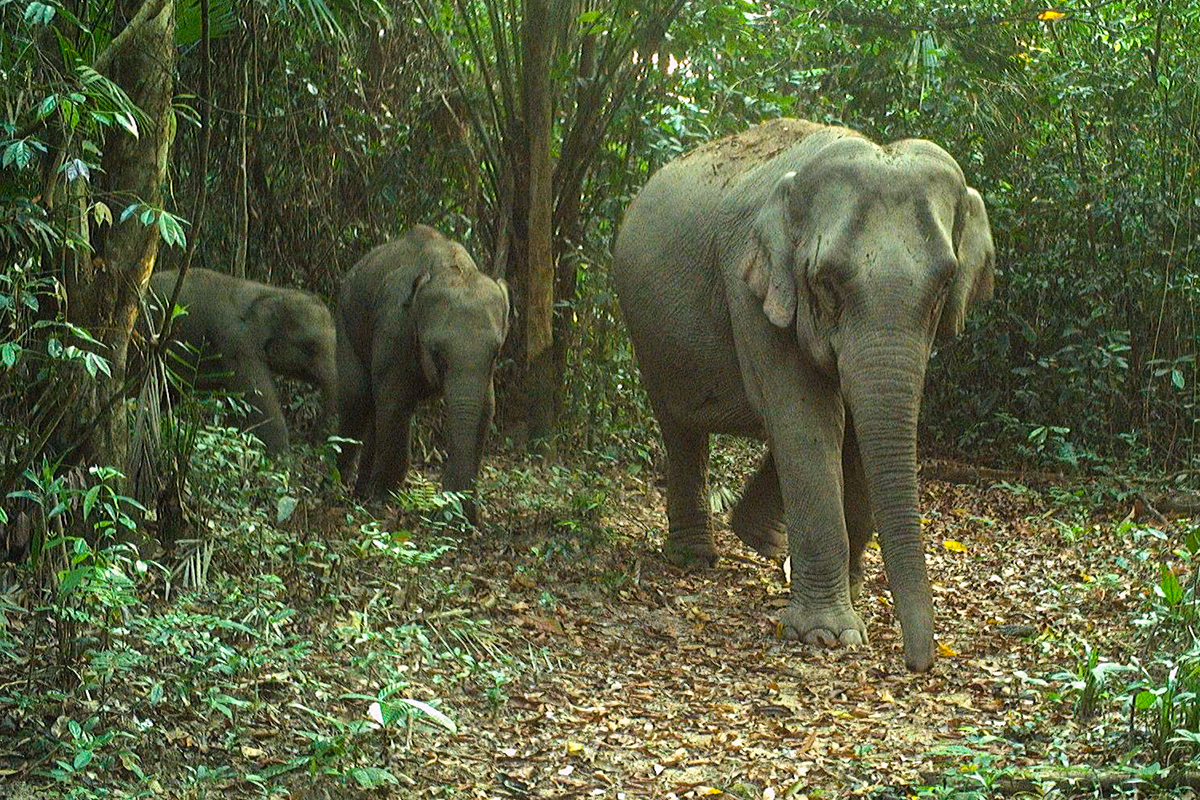 |
Images of the elephant herd captured by camera traps. Photo: Forest Management Board |
According to Director Son, the presence of calves confirms the healthy development of the herd structure and successful natural elephant reproduction within the conservation area. This achievement clearly reflects the effectiveness of habitat management and protection efforts since the reserve's establishment.
The Da Nang Special-Use Forest Management Board has restricted human access to the elephants' living space, maintaining a safe environment for their growth.
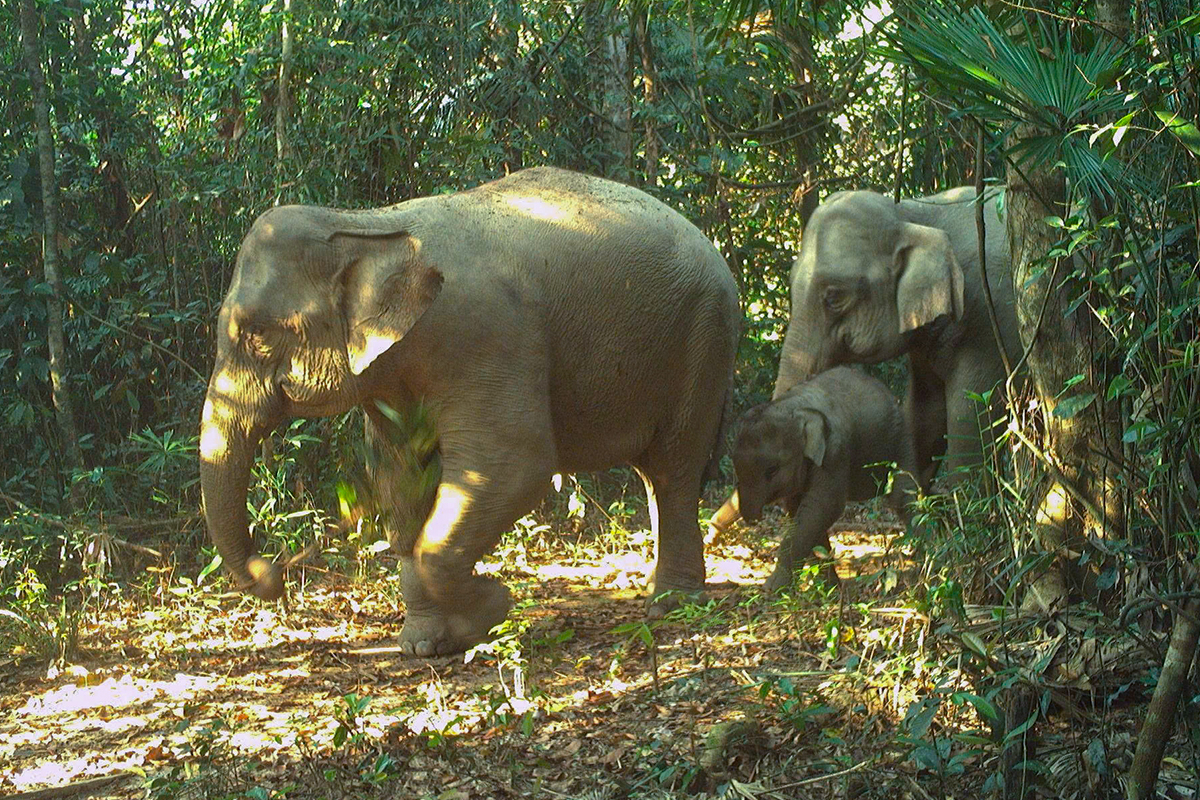 |
Among the herd are calves around two years old. Photo: Forest Management Board |
Previously in 2025, following reports from residents in the Na Lau area of Que Phuoc commune, authorities deployed 30 camera traps at 15 locations along the elephant migration routes. By 7/2025, camera traps also recorded a calf in the Na Lau area. The calf moved nimbly, always protected by its mother following closely behind.
Currently, the Da Nang Special-Use Forest Management Board employs two parallel methods: a grid-based camera trap system for comprehensive species assessment and targeted camera trapping at feeding grounds, water sources, and migration corridors for endangered species. In addition to Asian elephants, camera traps in local special-use forests have also recorded many rare species such as the giant muntjac, Truong Son muntjac, red-shanked douc, grey-shanked douc, white-eared pheasant, and crested argus.
The image data collected helps authorities accurately determine the distribution, behavior, and range of each species, allowing them to designate priority areas for strict protection and adjust patrol routes.
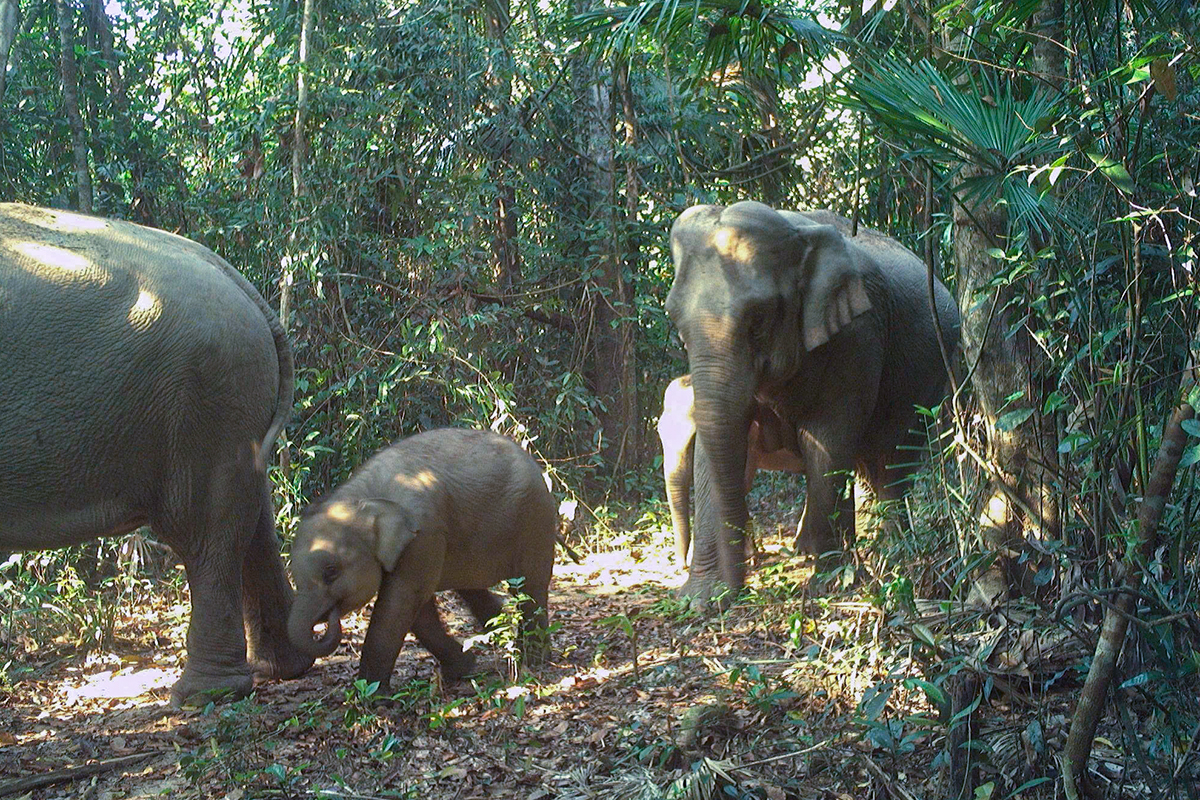 |
The elephant herd is in good health and moves nimbly. Photo: Forest Management Board |
In conjunction with applying technology like camera traps, drones, and SMART software, specialized forces conducted 520 patrols during the first four months of the year, discovering and dismantling numerous illegal makeshift camps and wildlife traps. The unit also implements projects promoting solutions for harmonious coexistence between humans and elephants, contributing to the sustainable conservation of the wild elephant population in the area.
The Elephant Species and Habitat Conservation Area was established in 2017 by the former Quang Nam province. It is Vietnam's first elephant conservation area, covering nearly 19,000 hectares across Phuoc Ninh and Que Lam communes, in the former Que Son district.
Nguyen Dong