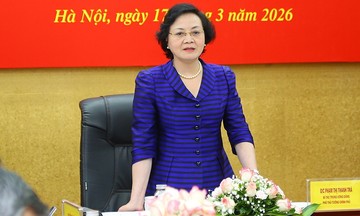
On the morning of 18/3, General Secretary To Lam chaired a meeting of the Central Steering Committee for Anti-Corruption, Anti-Waste, and Anti-Negativity. He stressed that 2026 marks the first year of implementing the resolution of the 14th Party Congress, necessitating persistent and resolute efforts to prevent, curb, and repel corruption, waste, and negativity. He articulated the spirit of "act more, speak less, see things through to the end, and ensure clear, substantive progress after each meeting".
The Party leader urged the completion of the Central Resolution on strengthening anti-corruption, anti-waste, and anti-negativity efforts, linking it with an action program. This includes continuing the resolute fight against "internal foes" while also connecting with socio-economic development and two-digit growth targets. The Government Party Committee and the National Assembly Party Committee are tasked with coordinating to propose a specific resolution to the National Assembly, aiming to institutionalize the Party's directives on handling legal violations.
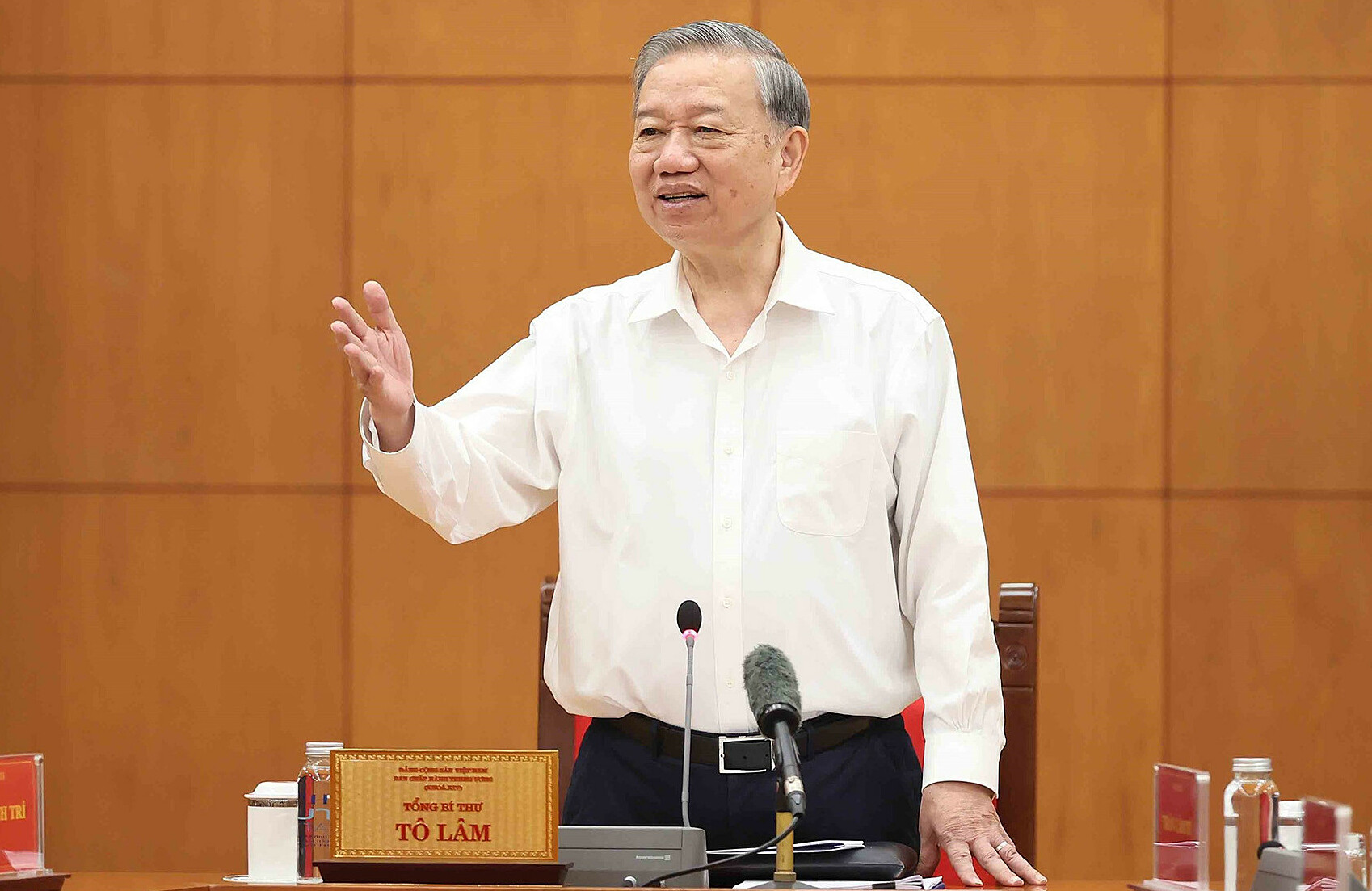 |
The General Secretary chaired a meeting of the Central Steering Committee for Anti-Corruption, Anti-Waste, and Anti-Negativity on the morning of 18/3. Photo: VNA |
The General Secretary called for enhanced power control and supervision over the implementation of policies and guidelines. This effort is linked to establishing a two-tier local government model, particularly at the grassroots level. Inspection and supervision must shift significantly towards early prevention, focusing on key national projects. Local authorities must implement controls during operation, identifying risks before violations occur.
Authorities must accelerate inspections, investigations, prosecutions, and trials for corruption, waste, and negativity cases. Serious, complex cases that garner public attention require definitive resolution. Agencies need to innovate their methods, empowering local authorities based on the Politburo's conclusions and the National Assembly's resolution.
The Government Party Committee, along with ministries and sectors, is tasked with expediting the processing and utilization of surplus land and property after reorganization. Concurrently, they must boost administrative reform and digital transformation, linking these efforts with the fight against corruption, waste, and negativity. National and specialized databases need early completion and interconnection, enabling citizens and businesses to access public services electronically and reduce harassment.
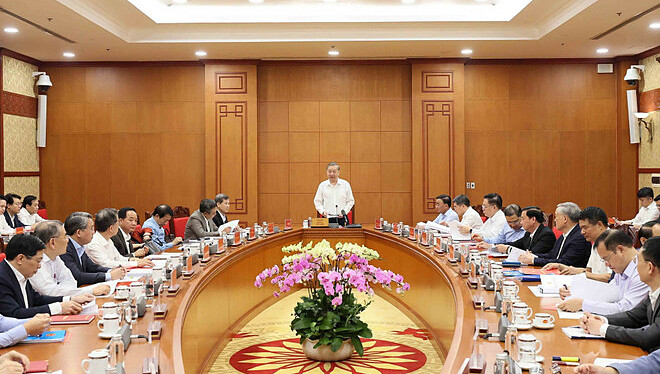 |
The General Secretary and members of the Central Steering Committee for Anti-Corruption, Anti-Waste, and Anti-Negativity at the meeting. Photo: VNA |
The General Secretary stated that the Central Steering Committee and provincial-level committees need to innovate their thinking and approaches to simultaneously combat corruption, waste, and negativity while promoting socio-economic development.
According to the meeting report, the Politburo and the Secretariat organized 22 delegations to monitor the implementation of the 14th Party Congress Resolution and the operations of agencies after the two-tier local government model was established. The government has directed the resolution of 1,023 slow-progress, backlogged, and prolonged projects, with 2,347 additional projects awaiting resolution.
Vu Tuan