The Vietnam Railways Corporation lifted the blockade on the pedestrian and two-wheeler lanes on both sides of Ghenh bridge around 5 PM. This allowed pedestrians, motorcycles, and other two-wheeled vehicles to cross. Many residents quickly used the bridge, reconnecting the familiar route between Tran Bien and Bien Hoa wards after over 4 months of disruption.
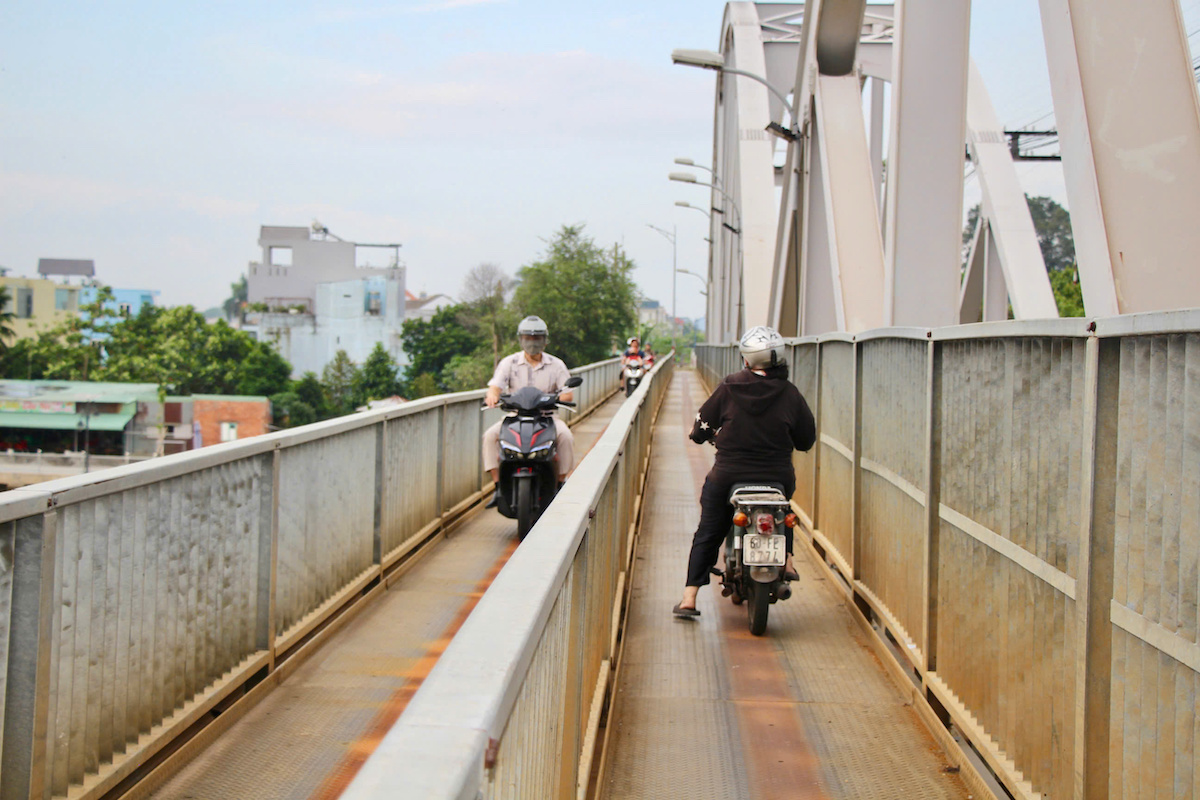 |
The motorcycle lane across Ghenh bridge is now open after 4 months of repairs. Photo: Thai Ha
Nguyen Thanh Trung, an official from the Bien Hoa Ward Economic - Infrastructure Department, confirmed that the road sections at both ends of the bridge were cleared after repair work was completed. The bridge's reopening significantly shortens travel distances for residents on both sides of the river, enhancing daily life and commerce.
The incident occurred on 6/3 when a barge collided with Ghenh bridge, causing damage to the structure. The lanes designated for pedestrians and two-wheelers were subsequently closed to ensure safety and allow for inspection and repairs.
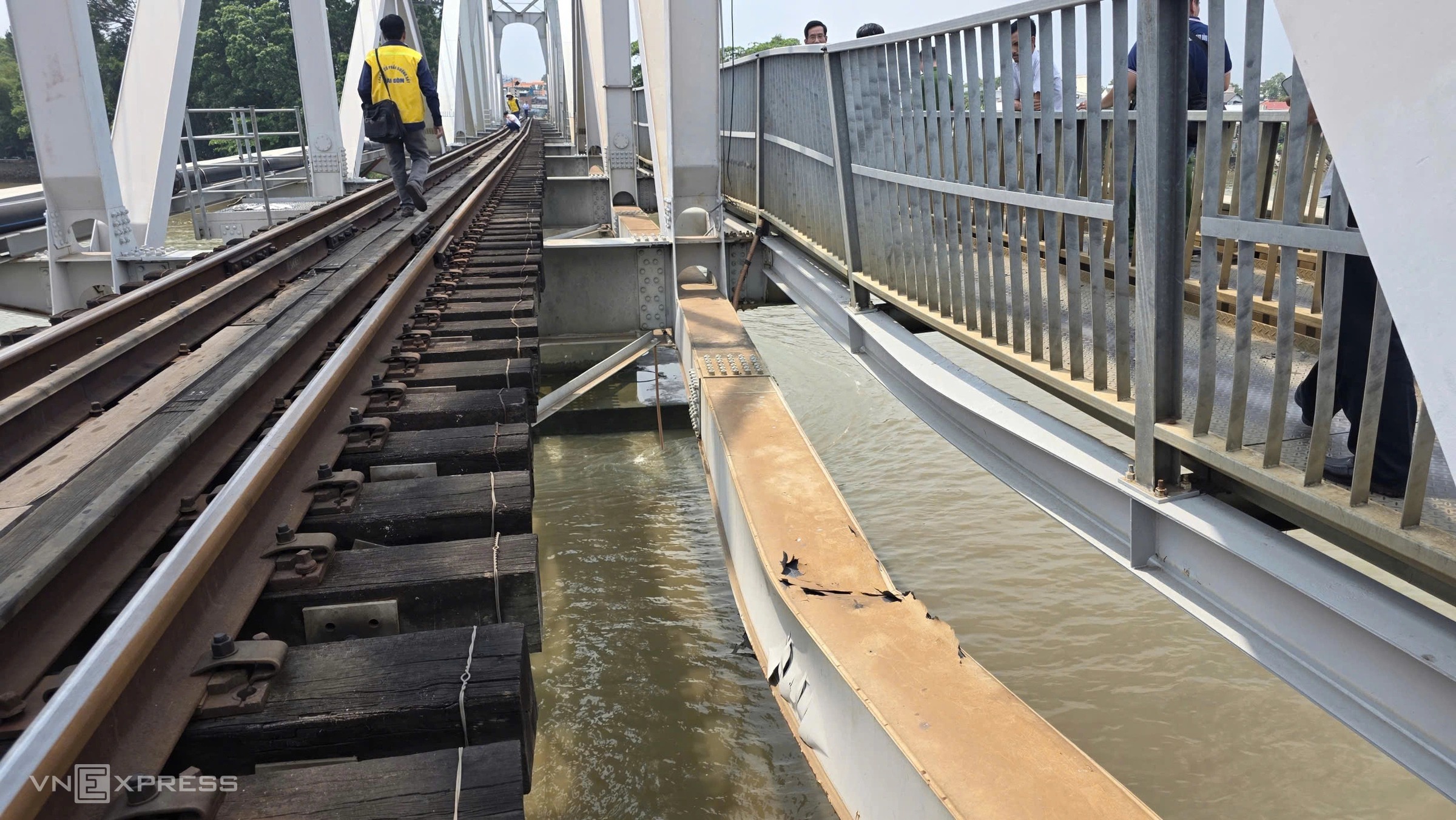 |
The side beam of Ghenh bridge was bent, and the railway tracks were misaligned after being struck by a barge on 6/3, disrupting the North-South railway line in the area. Photo: Phuoc Tuan
Following the inspection and successful load testing of the temporary repair components, the Vietnam Railways Corporation authorized the bridge's reopening. The corporation stated it will continue to coordinate with local authorities to implement permanent repair plans, aiming to restore the structure to its original condition.
Ghenh bridge spans the Dong Nai river and was constructed by the French in the early 20th century. In 2016, a barge previously struck and collapsed the bridge. Subsequently, the Government commissioned a new three-span bridge, which is the current structure. In addition to the railway tracks, the bridge includes two lanes for motorcycles.
Phuoc Tuan