The proposal from the provincial Department of Agriculture and Environment outlines 16 areas, comprising 13 concentrated resettlement projects and three mixed-use options, designed to accommodate 2,223 households. Of these, 1,861 households require relocation from dangerous zones. Funding for infrastructure investment, household support, and site clearance will come from central government resources, the provincial budget, and other legal sources.
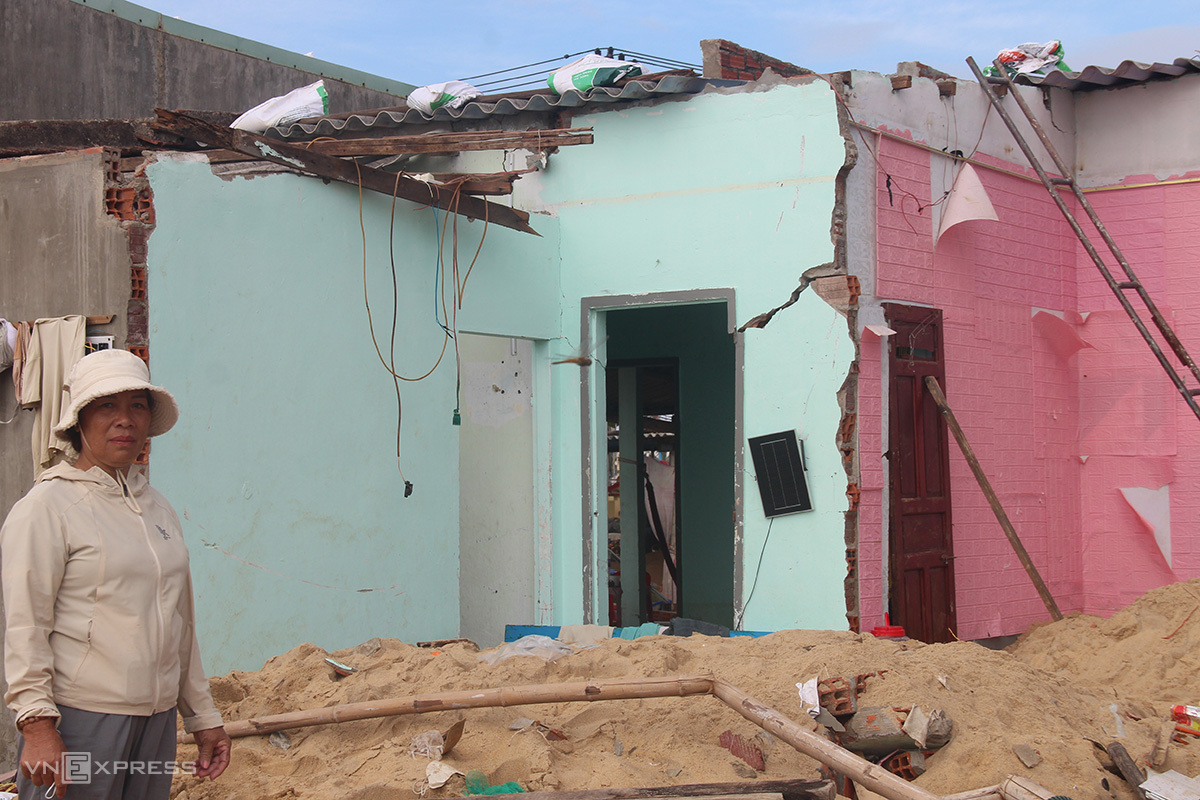 |
Houses in De Gi commune had their roofs collapse after Typhoon Kalmaegi. Photo: Tran Hoa |
In the eastern part of the province, nine locations with 1,269 affected households necessitate the relocation of 907 households from coastal and landslide-prone areas, including Cat Tien, De Gi, An Hoa communes, and Quy Nhon Dong ward. The western region includes seven areas, totaling 954 households, all designated for relocation in communes such as Ia Broai, Ia Hiao, Ia Rsuom, and Ia Ly.
Some resettlement projects already have basic infrastructure, while others are being completed or are preparing for investment. These are expected to be finished before Lunar New Year to facilitate timely resident resettlement.
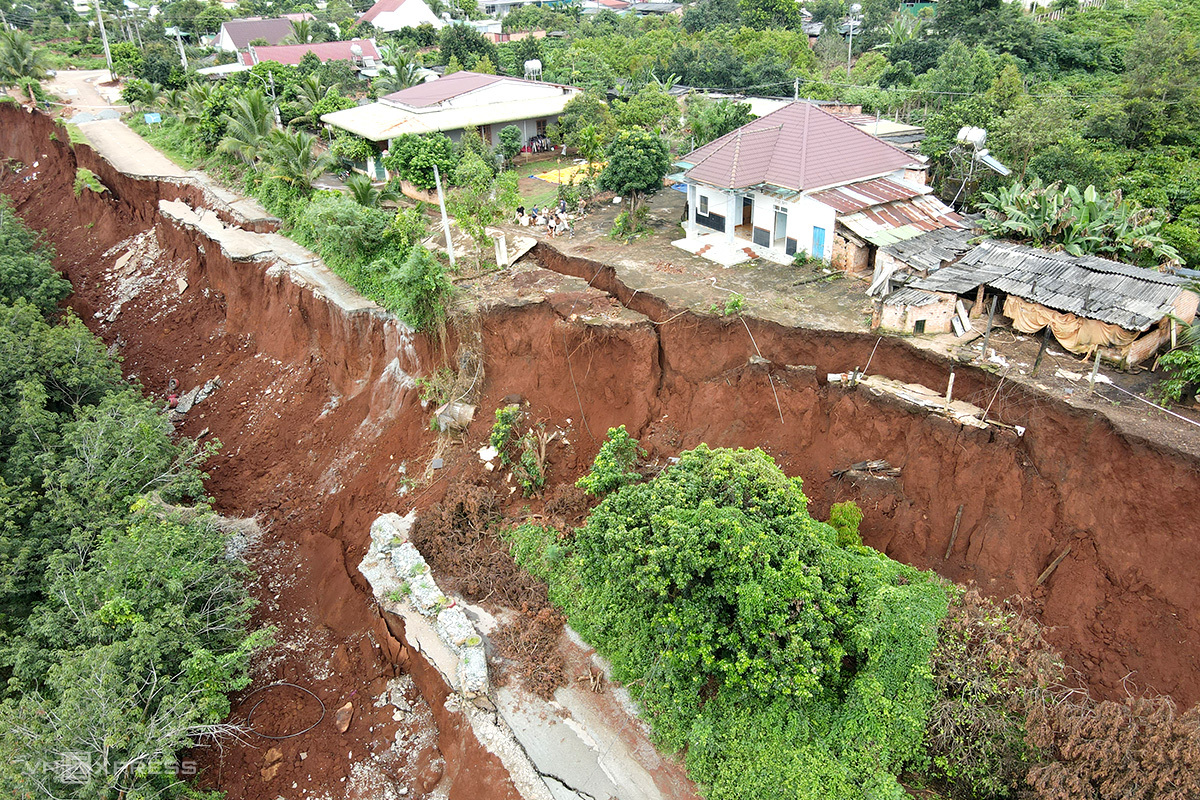 |
Landslides threaten houses in Ia Ly commune. Photo: Tran Hoa |
Typhoon Kalmaegi made landfall from Quang Ngai to Dak Lak on 7/11, causing significant damage to Gia Lai. While the locality was recovering from its aftermath, a historic flood occurred from 16/11 to 20/11.
The two natural disasters resulted in five fatalities, 11 injuries, and over 100,000 damaged or flooded houses. Additionally, 560 boats, over 540 hectares of aquaculture, and 254 fish cages were damaged, with total losses estimated at 11,636 billion VND. The Provincial People's Committee declared a state of emergency due to natural disaster in 77 communes and wards.
Tran Hoa