According to a plan developed by the Hai Phong City People's Committee, the city will focus on housing solutions for residents of 66 D-grade apartment buildings (dangerous, requiring urgent relocation) from 2026 to 2028. This phase will encompass approximately 2,200 apartments, along with 190 B and C-grade units (severely damaged).
Housing for this phase will primarily come from social housing projects, including: the Kho 3 Lac Vien project (1,680 units), Ngo 75 Ly Thanh Tong (68 units), the Dong Tam old apartment renovation (9,310 units), and the Ta Quang Buu apartment complex (390 units).
From 2028 to 2030, the city will continue to address 65 C and B-grade old apartment buildings and 46 buildings yet to be inspected. This phase is expected to involve over 2,570 apartments. Resettlement housing will be sourced from social housing projects XH1 and XH2 in Le Chan ward (890 units), the Cau Rao 2 urban area (923 units), Bac Giang dam (633 units), and the new urban area in eastern Hai Duong ward (130 units).
During implementation, the city will adjust housing allocations and resettlement support based on actual conditions and residents' registered preferences.
Hai Phong aims to transition from state-subsidized housing to a socialized model, attracting businesses to develop large-scale, integrated social housing projects. The total capital requirement for these projects is estimated at 4,250 billion VND.
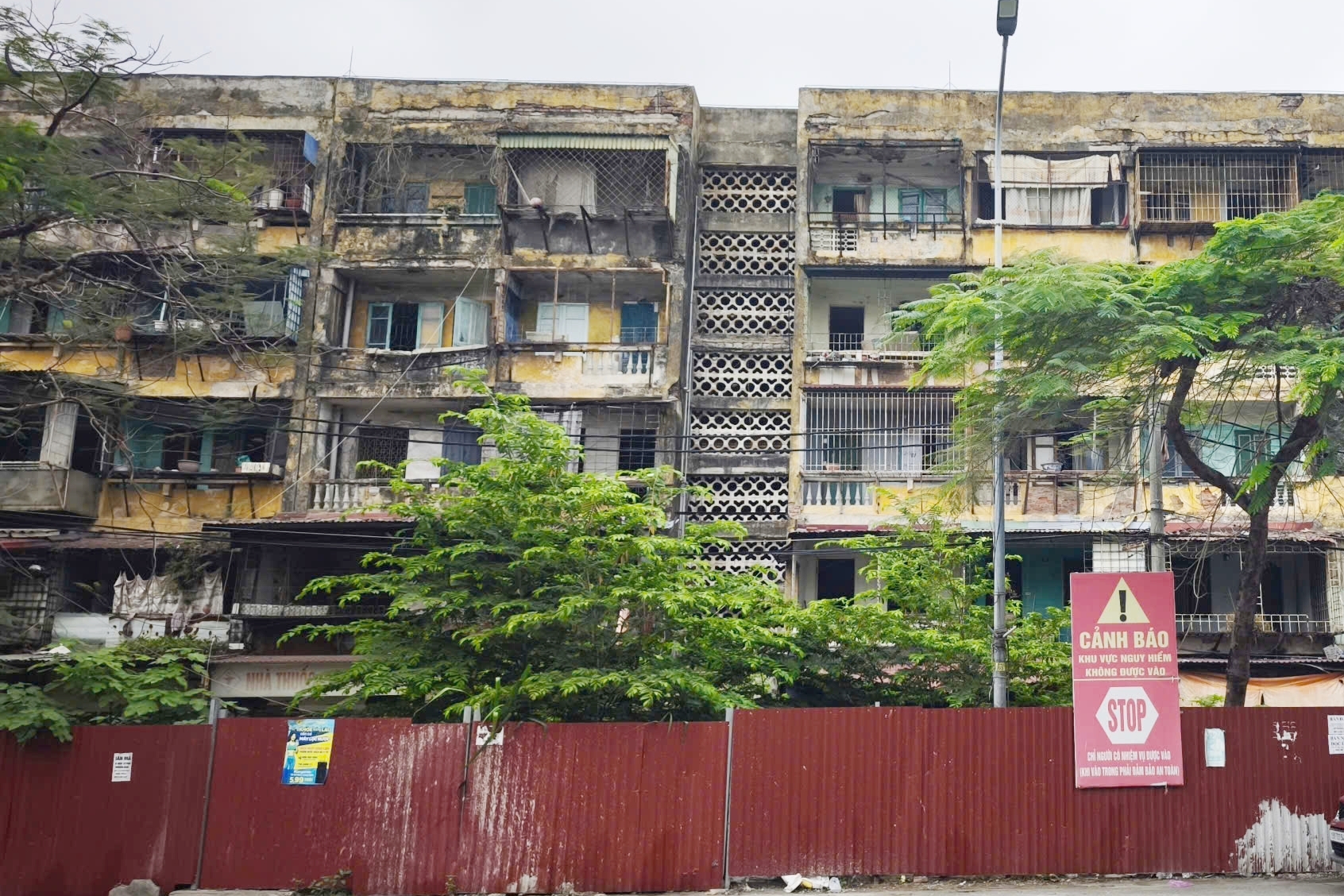 |
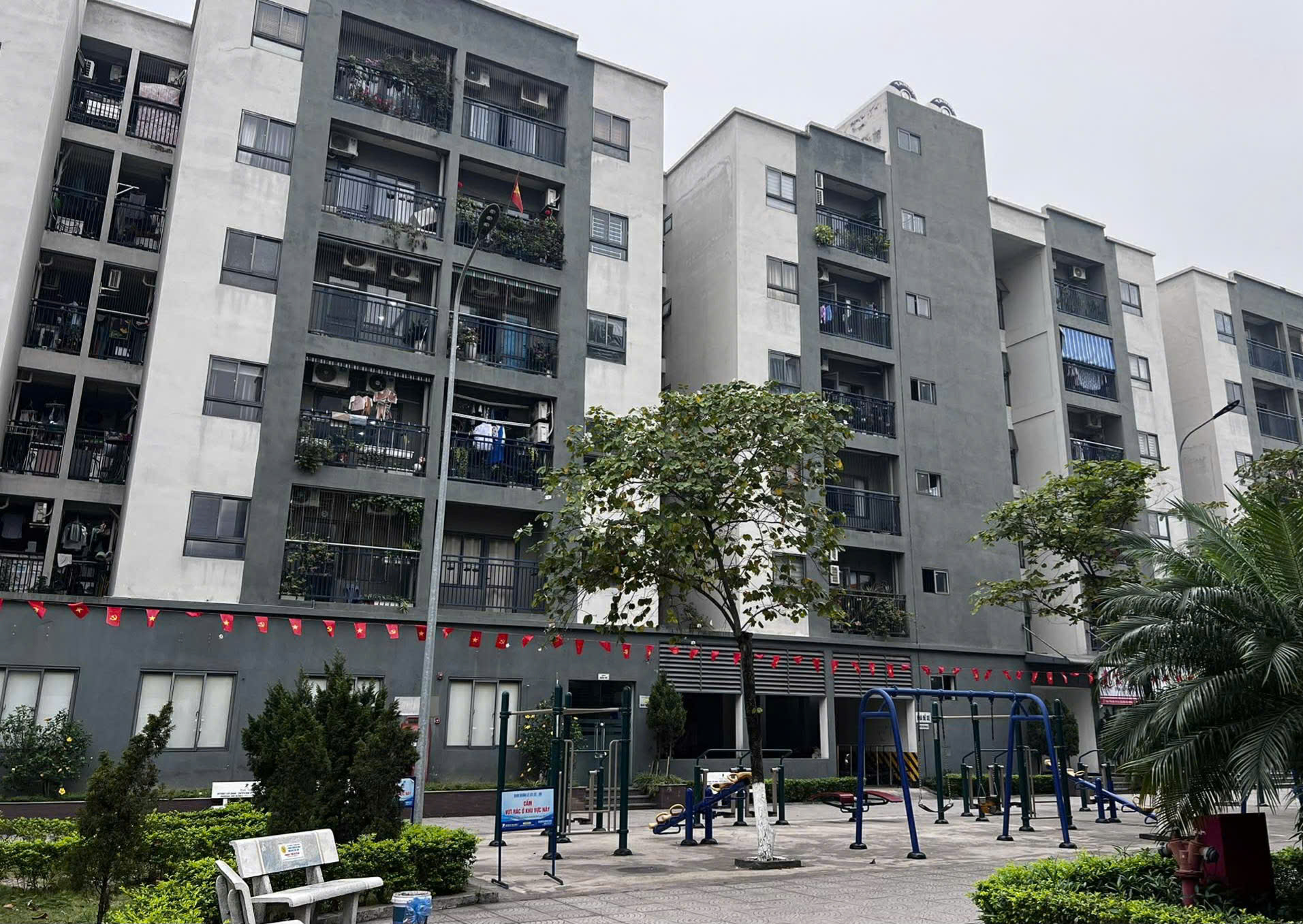
The A7 Van My apartment building tilted and subsided after Typhoon Yagi. Photo: Le Tan |
After demolition, the cleared land will be re-zoned to provide missing infrastructure within the urban center. Specifically, land from apartment complexes at Ngo 246 Da Nang, Thai Phien, Lam Tuong, and No 20 Nguyen Cong Tru will be allocated for schools. Land in the An Duong apartment area, Ngo 166 Chua Hang, and Kien An will be used for green parks and parking lots.
According to the Department of Construction, as of February 2026, Hai Phong still has 177 old apartment buildings, mostly constructed between 1960 and 1985. Of these, 148 buildings are in the eastern area (old Hai Phong) and 29 are in the western area (old Hai Duong). The total includes 66 D-grade buildings, 58 C-grade buildings, seven B-grade buildings, and 46 structures awaiting quality inspection. Approximately 7,000 households currently reside in these areas.
Most of these apartment buildings are two to five stories high, with apartment sizes ranging from 15 to 30 square meters. Due to their outdated, non-enclosed designs, residents share kitchen and bathroom facilities. Illegal extensions are common, increasing the load on already degraded structural elements and compromising escape routes.
As an immediate step, the Hai Phong City People's Committee has directed relevant units to prepare for the complete demolition of 37 dangerous D-grade apartment buildings in the Dong Quoc Binh, Van My, and Binh Minh collective residential areas before June 2026. The city will also inspect the 46 apartment buildings that have not yet been assessed or rated.
Households in the old apartment buildings will receive compensation and financial support for land use rights as stipulated by regulations. They will also be eligible to register to buy or rent homes in social housing projects within the city. However, residents face a significant challenge: the disparity between compensation funds and the cost of social housing. A 50-square-meter social housing apartment costs an average of 861,45 to 965,6 million VND, requiring many households to pay a substantial additional sum to own a new apartment.
The following table compares the estimated financial outlay for residents purchasing a social housing apartment (50 square meters):
| Category | Estimated compensation and support | Estimated additional payment required |
| Households with land use certificates | 542,84 million VND | 318,61-422,76 million VND |
| Households with liquidation decisions | 393,62 million VND | 467,83-571,98 million VND |
| Households renting public property | 259,92 million VND | 601,08-705,68 million VND |
To alleviate financial pressure, the Hai Phong City People's Committee has urged social housing projects like Tong Kho 3 Lac Vien and Dong Hoa to accelerate completion. This ensures a sufficient housing supply for residents and provides financial assistance for relocation and temporary accommodation. Additionally, the city has requested the Social Policy Bank to establish a preferential loan package to help low-income families access housing.
Le Tan