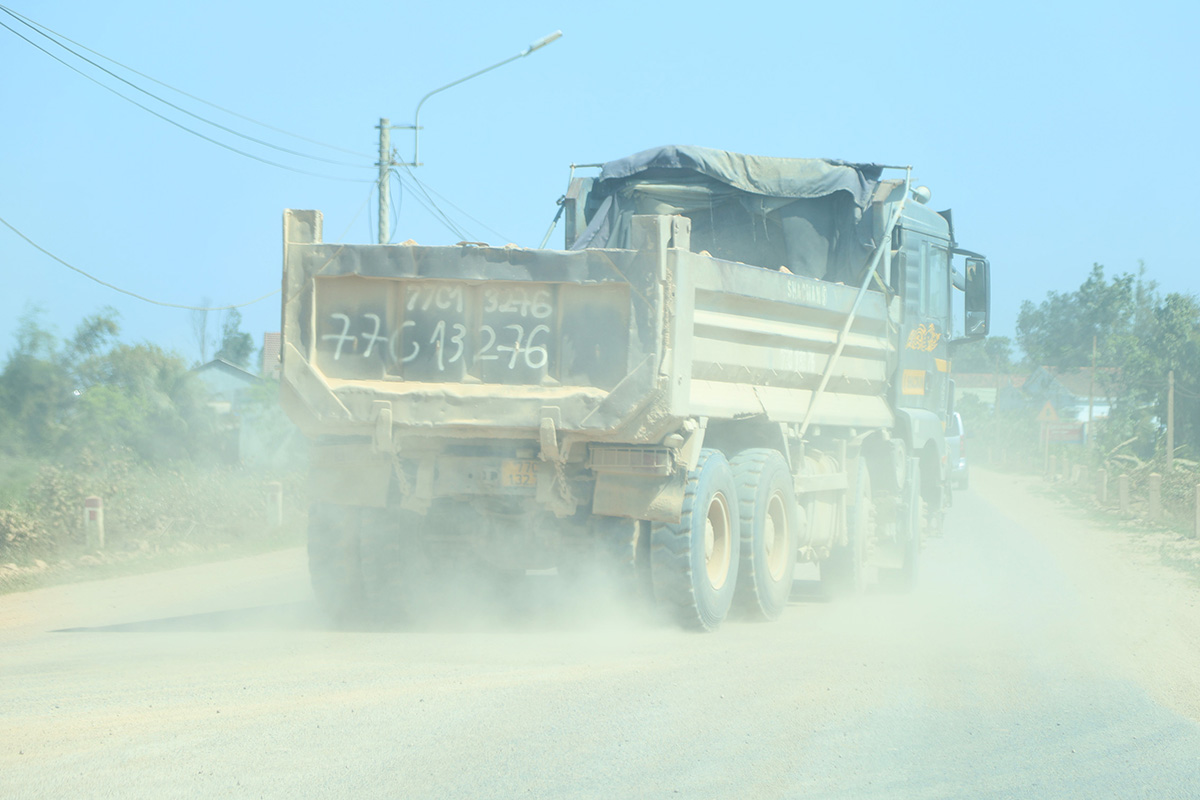
On the morning of 2/4, as a continuous line of trucks passed along National Highway 19B (An Nhon ward) and Provincial Road 638 (Hoi Son, Hoa Hoi, Binh Hiep, Binh An communes), thick layers of dust covered the roads, blowing directly into homes along both sides. By noon, intense heat caused dense dust to rise, creating "dust storms" that reduced visibility and made the air oppressive.
 |
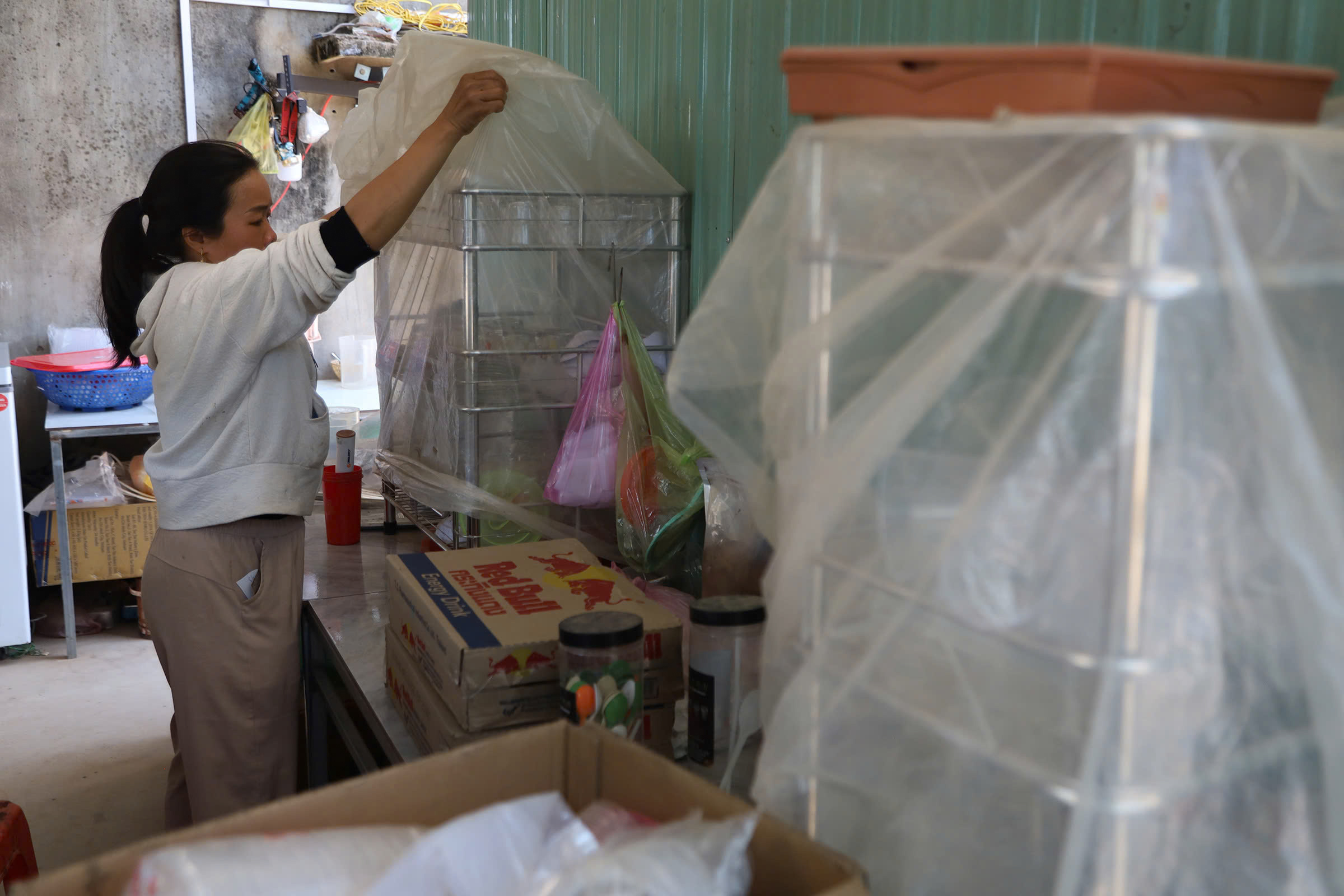
Huong uses nylon to cover her cup and bowl rack to prevent dust. *Tran Hoa*.
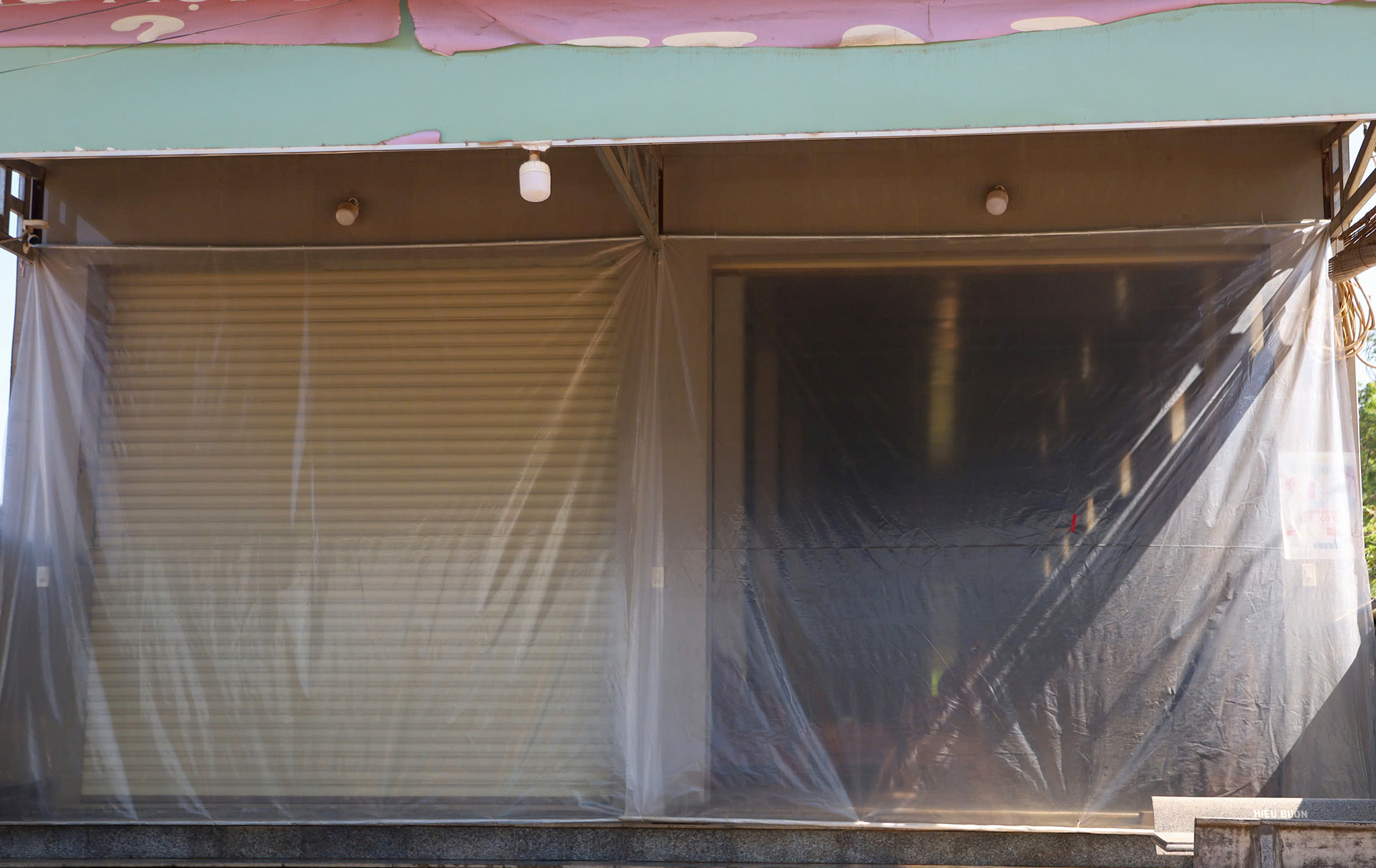
Do Thi Kim Huong's refreshment and general store in Tan Nghi residential group is almost always kept closed. To mitigate pollution, she covers all her goods with nylon, from candies and instant noodles to household items. However, fine dust still infiltrates inside.
"Even with ventilation holes sealed, dust still gets in. Customers see dusty food and drinks and leave immediately," Huong said, adding that her biggest concern is the health of her young children living amidst the pervasive dust.
About one km away, the family of Nguyen Thanh Hiep, 32, with his four-month-old infant, has also had to live in a 'sealed-off' state for many months. He has to stretch tarpaulins to cover the front door and use cardboard to seal all ventilation gaps. Even with the house always closed, dust still accumulates on furniture; a new layer appears shortly after cleaning.
 |
Residents on both sides of the road cover their houses with tarpaulins and water to reduce dust. *Tran Hoa*.
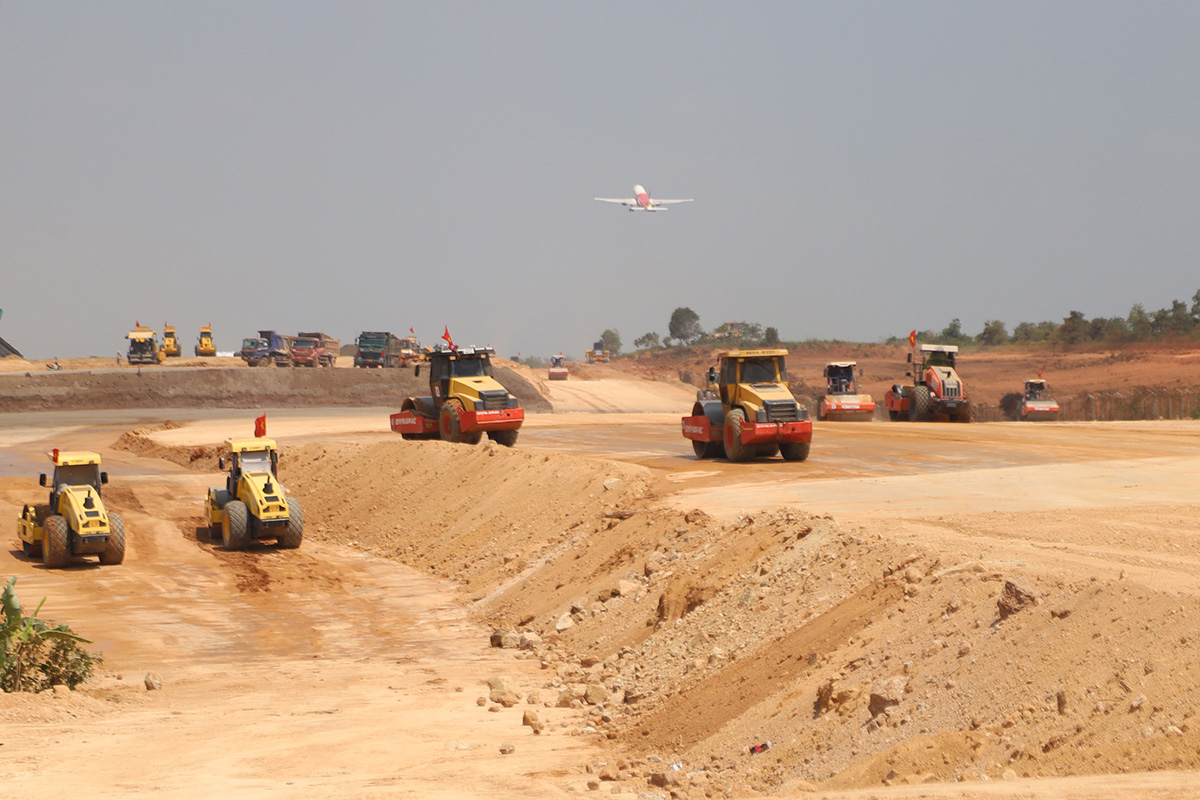
The dust pollution began in 8/2025 with the construction of Phu Cat airport's second runway, designed to accommodate larger aircraft. Nguyen Dinh Chuong, Chairman of An Nhon Ward People's Committee, stated that the project involves 300-350 trucks transporting soil from mines to the construction site daily, operating continuously from 6h to 21h30.
The transportation route spans tens of km, primarily along National Highway 19B and Provincial Road 638. Due to the high volume of vehicles, roads quickly become covered in dust, especially during hot weather. Over 80 households living along these roads are affected. Local authorities have repeatedly urged the construction unit to implement remedial measures; however, the situation has not improved significantly.
 |
Construction site for Phu Cat airport's second runway.
 |
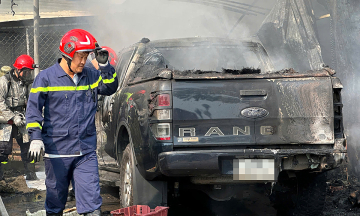
Trucks transport soil from the construction site day and night.
Vo Van Chin, Head of Project Department 1, Gia Lai Province's Management Board for Traffic and Civil Works Projects (the investor), explained that the project requires about 5 million m3 of infill soil. Given this large volume of soil and the urgent construction schedule, dust generation is unavoidable. The unit has deployed 11 water trucks along the roads to reduce dust; however, prolonged hot weather causes the water to evaporate quickly, limiting effectiveness.
"In the future, we will deploy more water trucks and require all soil-carrying vehicles to be properly covered to prevent spillage," Chin added that approximately 60% of the earthmoving has been completed. The dust situation will improve once soil transportation is finished in two months.
Tran Hoa