The Ministry of Construction recently tasked the Civil Aviation Authority of Vietnam (CAAV) with a comprehensive assessment of two proposals: adjusting the existing domestic airfare price cap or introducing a fuel surcharge. For the latter, which would be an additional fee outside the price cap, the CAAV must clearly define its legal basis, authority, and calculation methodology.
The specialized regulatory agency is also required to review the current domestic airfare price cap framework and evaluate the business performance of airlines following the implementation of various support policies. Furthermore, the CAAV will analyze the advantages and disadvantages of each proposed option and their potential impact on the consumer price index. The Ministry also seeks clarification on whether any proposed surcharge includes value-added tax.
In parallel, the CAAV must collaborate with airport enterprises and air traffic service providers to develop strategies for reducing landing, takeoff, and air traffic control service fees. This initiative aims to decrease input costs for airlines.
According to the Ministry of Construction, the government and various ministries have recently implemented numerous measures to support aviation businesses. These include adjusting fuel import taxes and establishing policies to waive or reduce fees and charges within the transport sector. However, these measures have not fully compensated for the impact of fluctuating fuel prices.
The recent increase in Jet A-1 aviation fuel prices primarily stems from significant volatility in global crude oil prices, partly due to tensions and conflicts in the Middle East disrupting supply chains. Simultaneously, the rapid recovery in air transport demand has intensified supply-demand pressures. This, combined with rising transportation and storage costs, has driven fuel prices higher, directly affecting the operating expenses of airlines.
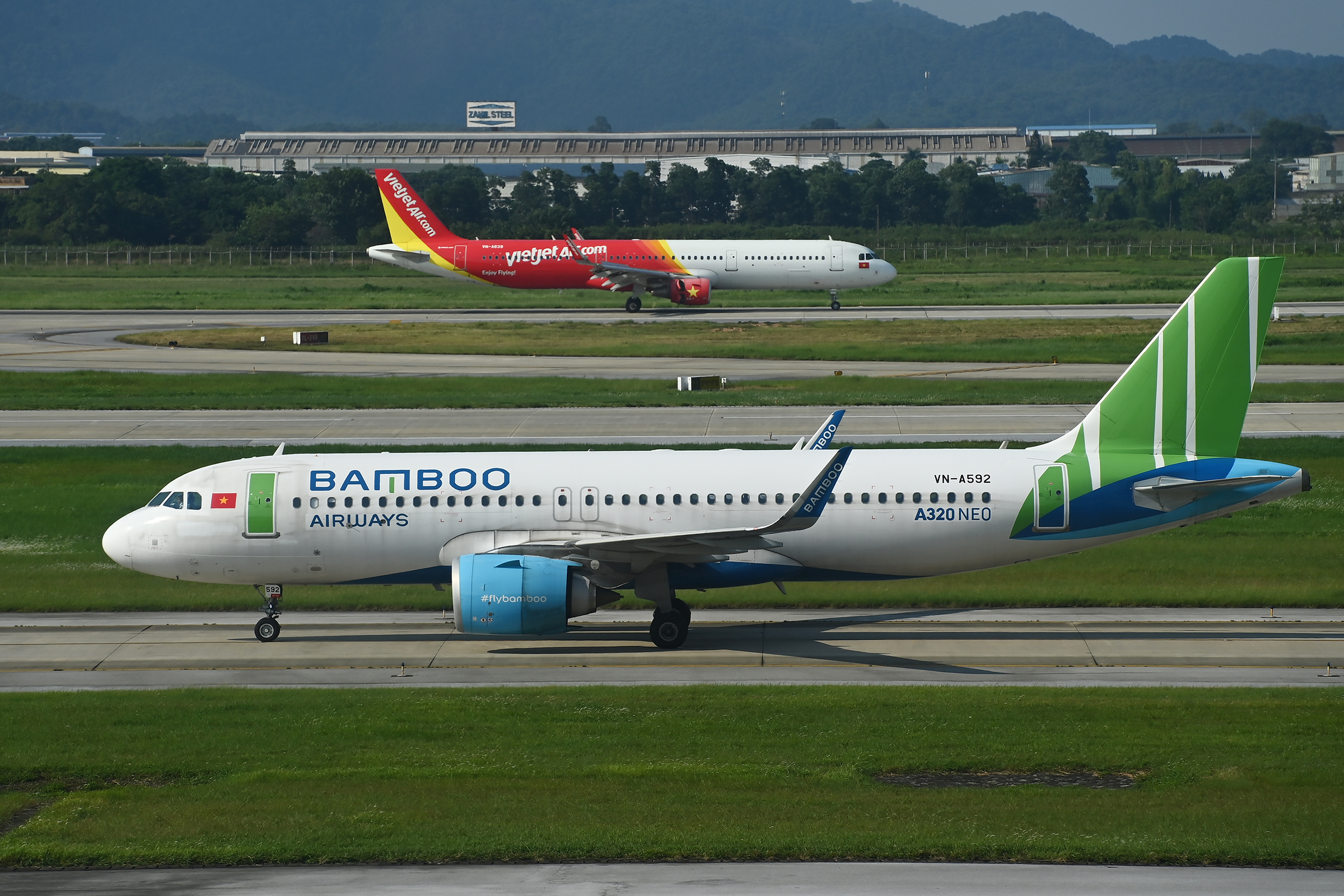 |
Aircraft at Noi Bai International Airport. Photo: Giang Huy |
The Civil Aviation Authority of Vietnam reports that since April, domestic airlines have adjusted their flight networks and supply capacity. These adjustments aim to adapt to rising Jet A-1 fuel prices, ensuring continued operations and maintaining business efficiency.
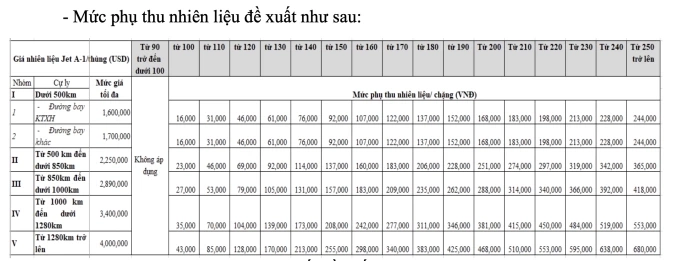
Based on this situation, the CAAV proposes implementing a fuel surcharge for domestic economy class passengers for approximately three months. This measure intends to balance the interests of the State, businesses, and the public.
Specifically, for routes spanning 500 to 850 km, such as Hanoi - Da Nang, the proposed surcharge is approximately 297,000 VND per ticket when fuel prices are at 220 USD per barrel. This would raise the maximum ticket price from 2,89 million VND to 3,16 million VND. Should fuel prices reach 250 USD per barrel or higher, the surcharge could increase to 365,000 VND, pushing the maximum ticket price to approximately 3,255 million VND.
For longer routes of 1,000 to 1,280 km, such as Hanoi - TP HCM, the projected surcharge ranges from 450,000 to 553,000 VND per ticket. This could increase the maximum fare from 3,4 million VND to nearly 4 million VND. Routes exceeding 1,280 km, like Hanoi - Phu Quoc, may see a surcharge of approximately 553,000 to 680,000 VND, potentially raising the maximum ticket price to between 4,55 and 4,68 million VND.
 |
Anh Duy