Around 18h, thunderstorms, strong winds, and hail occurred in the Fansipan peak area, Sa Pa ward, Lao Cai province. The hailstones fell densely, covering the ground, but heavy rain later melted them completely.
Most tourists had already left, with only a group of photographers remaining to capture the meteor shower. When the thunderstorms arrived, they had to seek shelter in sturdy buildings, according to Pham Hoang Cuong.
At the same time, Van Ban and Bac Ha areas also recorded hailstorms, but with a sparser density and shorter duration.
The National Center for Hydro-Meteorological Forecasting issued a warning this afternoon that a cold air mass from southern Trung Quoc is moving and has approached the northern border. It is expected to affect the northern mountainous and midland regions tonight, then spread to the Northwest and North Central regions.
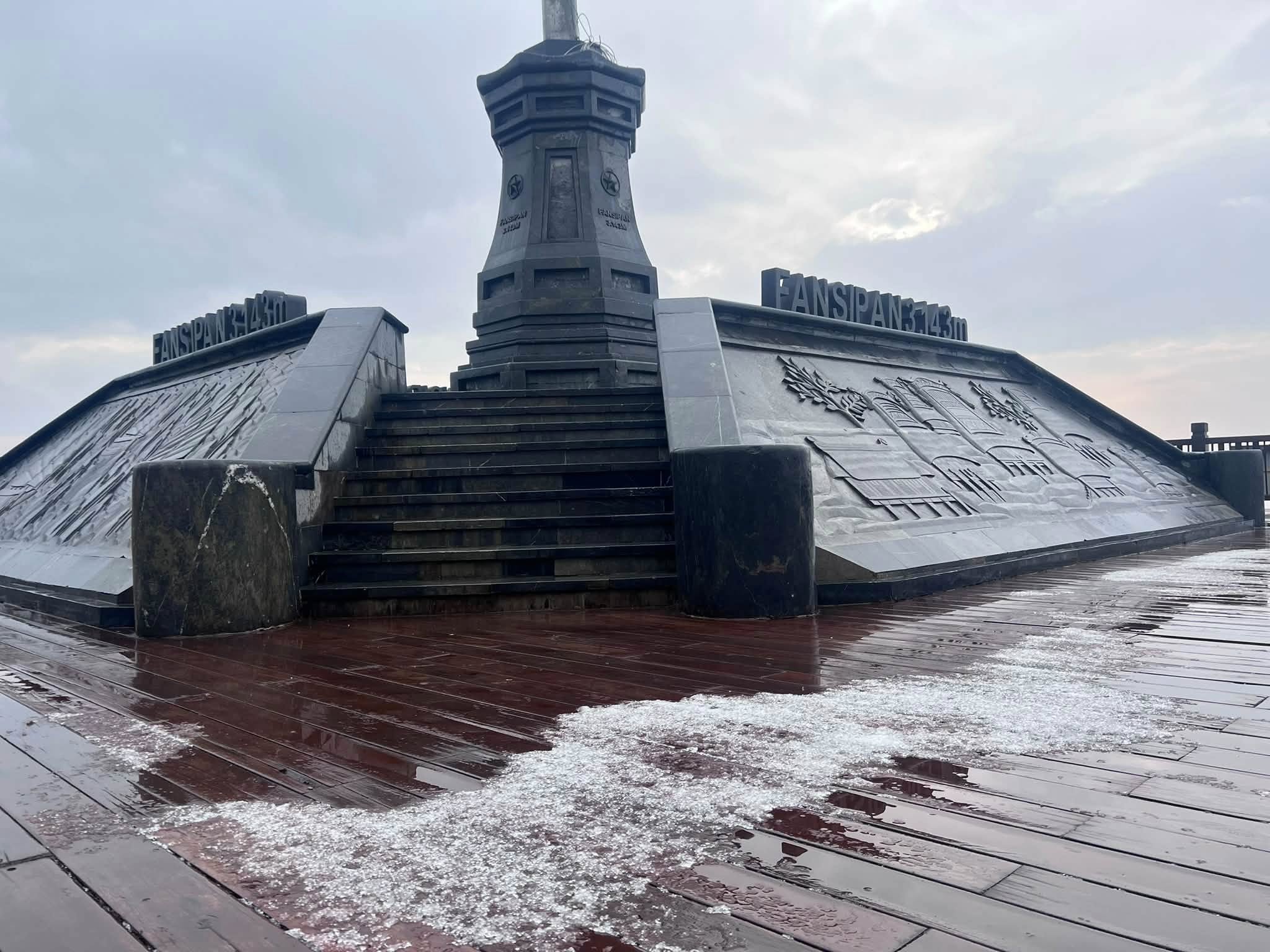 |
Hail on Fansipan peak, located at an elevation of over 3.000 m, on the evening of 22/4. Photo: Pham Hoang Cuong
The arrival of the cold air mass coincides with an upper-level convergence zone at 1.500-5.000 m. Consequently, from the evening of 22/4 to the night of 23/4, the North will experience thunderstorms with widespread rainfall of 20-40 mm, and localized areas receiving over 100 mm.
On 23-24/4, the North Central region will also receive similar rainfall. From the evening of 23/4 to 25/4, the Central Central region will have thunderstorms with 10-30 mm of rain, locally over 70 mm, concentrated in the evening and night.
The meteorological agency warns that the interaction between the cold air mass and the existing hot, humid air mass in the North and Central regions will create strong convection currents. This increases the risk of squalls, whirlwinds, hail, and strong gusts from this evening until the end of 24/4. High-risk areas include the northern midlands and mountainous regions, and the western mountainous areas of provinces from Thanh Hoa to TP Hue.
Under the influence of the cold air mass, temperatures in the North will drop by 5-7 degrees Celsius starting from 23/4, with common temperatures ranging from 26-28 degrees Celsius. The lowest temperatures during the night and early morning in mountainous areas will decrease to 19-21 degrees Celsius; midland and delta areas will see temperatures drop to 21-23 degrees Celsius.
The meteorological agency advises residents to closely monitor weather warnings and avoid going outdoors during thunderstorms. If outside, quickly seek safe shelter in sturdy buildings, staying away from large trees, utility poles, billboards, and temporary structures.
During hailstorms, residents should stay indoors, close all doors, and avoid proximity to glass windows to reduce the risk of injury from broken glass. Additionally, proactively reinforce roofs, secure objects easily swept away by wind, turn off electrical devices during lightning, and limit outdoor phone use to minimize the risk of lightning strikes.
Gia Chinh