From 7 a.m. on 22/4, authorities allowed vehicles to use the Xuan Huong Viaduct, reopening national highway 20 – the southern gateway to Da Lat. This crucial infrastructure project bypasses a significant landslide point on Mimosa Pass, which had previously caused severe disruption. Simultaneously, the construction unit is continuing to complete auxiliary items such as installing guardrails, telecommunications cable systems, and painting the bridge surface to ensure safe operation.
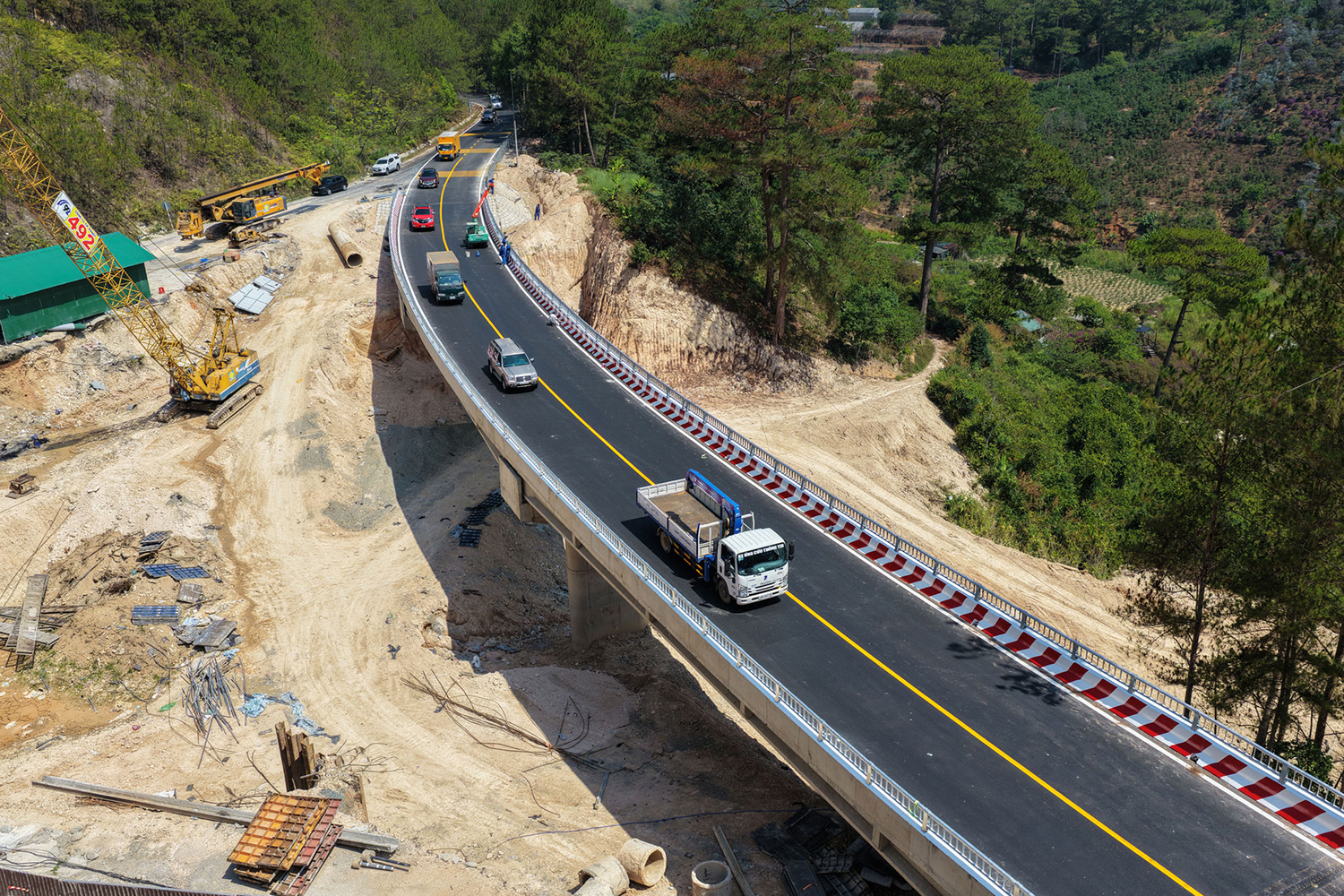 |
Cars drive across Xuan Huong Bridge on 22/4. *Photo: Nguyen Nghia*
Mimosa Pass, over 10 km long, is one of three main routes into Da Lat, alongside Prenn and Sacom passes, which restricts trucks. Last november, a section of the pass experienced a landslide over 70 meters long and about 40 meters deep, damaging the roadbed and surface. Authorities then opened a temporary road along the mountainside, but the area has complex geology, presenting persistent landslide risks.
To address this comprehensively and ensure long-term stability, the Ministry of Construction decided to build a viaduct 133 meters long and 9 meters wide. The project, costing over 33 billion VND, features three spans, each 33 meters, constructed with pre-stressed reinforced concrete I-beams.
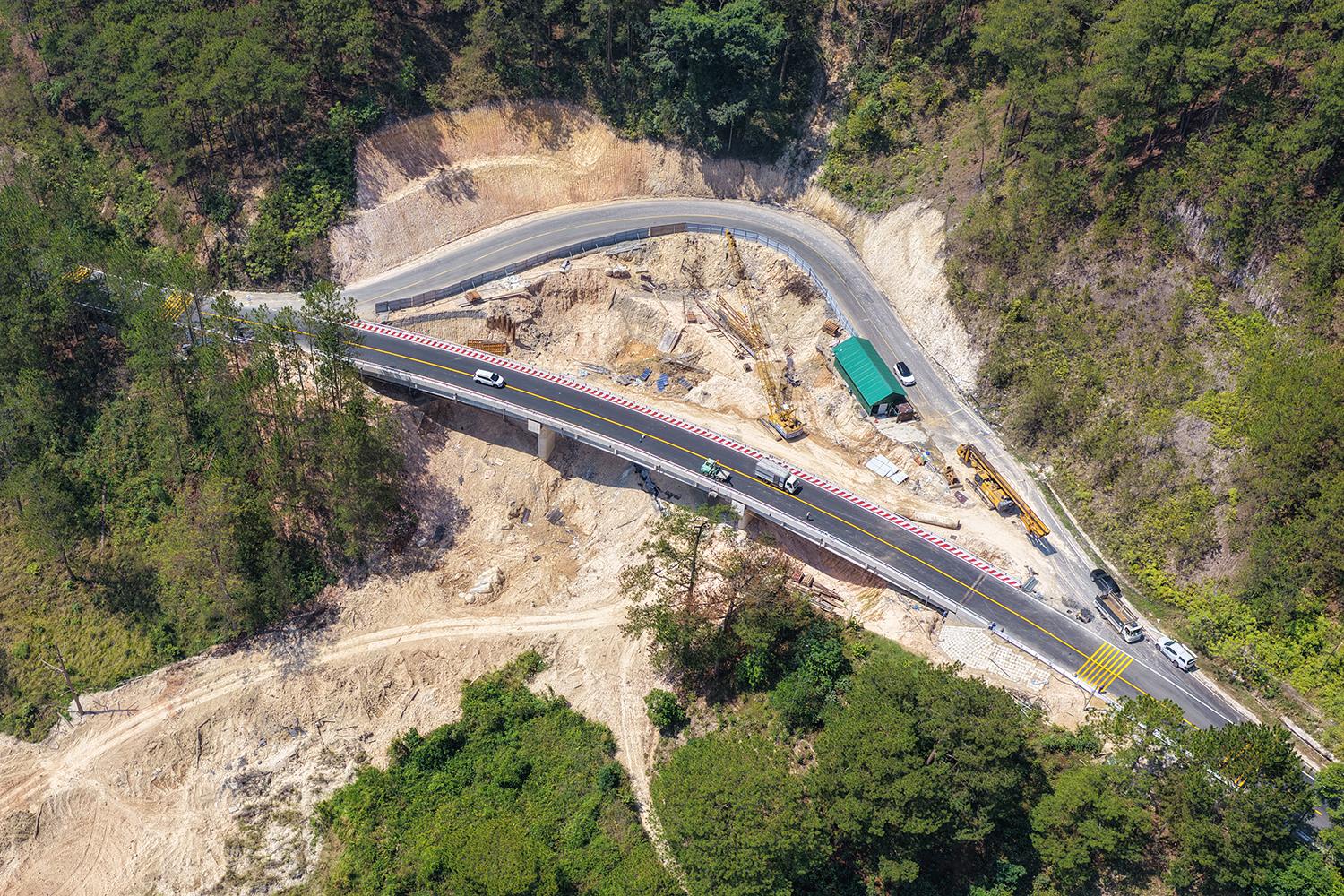 |
Xuan Huong Bridge spans the landslide point, viewed from above. *Photo: Nguyen Nghia*
The bridge’s robust design includes U-shaped abutments and solid concrete piers. These piers are anchored on large-diameter bored pile foundations, drilled dozens of meters deep to penetrate weak soil layers and securely reach bedrock, ensuring superior load-bearing capacity and stability.
The new viaduct eliminates a winding, dangerous road section and fundamentally addresses persistent landslide risks in the geologically weak area. Its operation ensures smooth traffic flow into Da Lat's gateway, especially crucial before the upcoming rainy season.
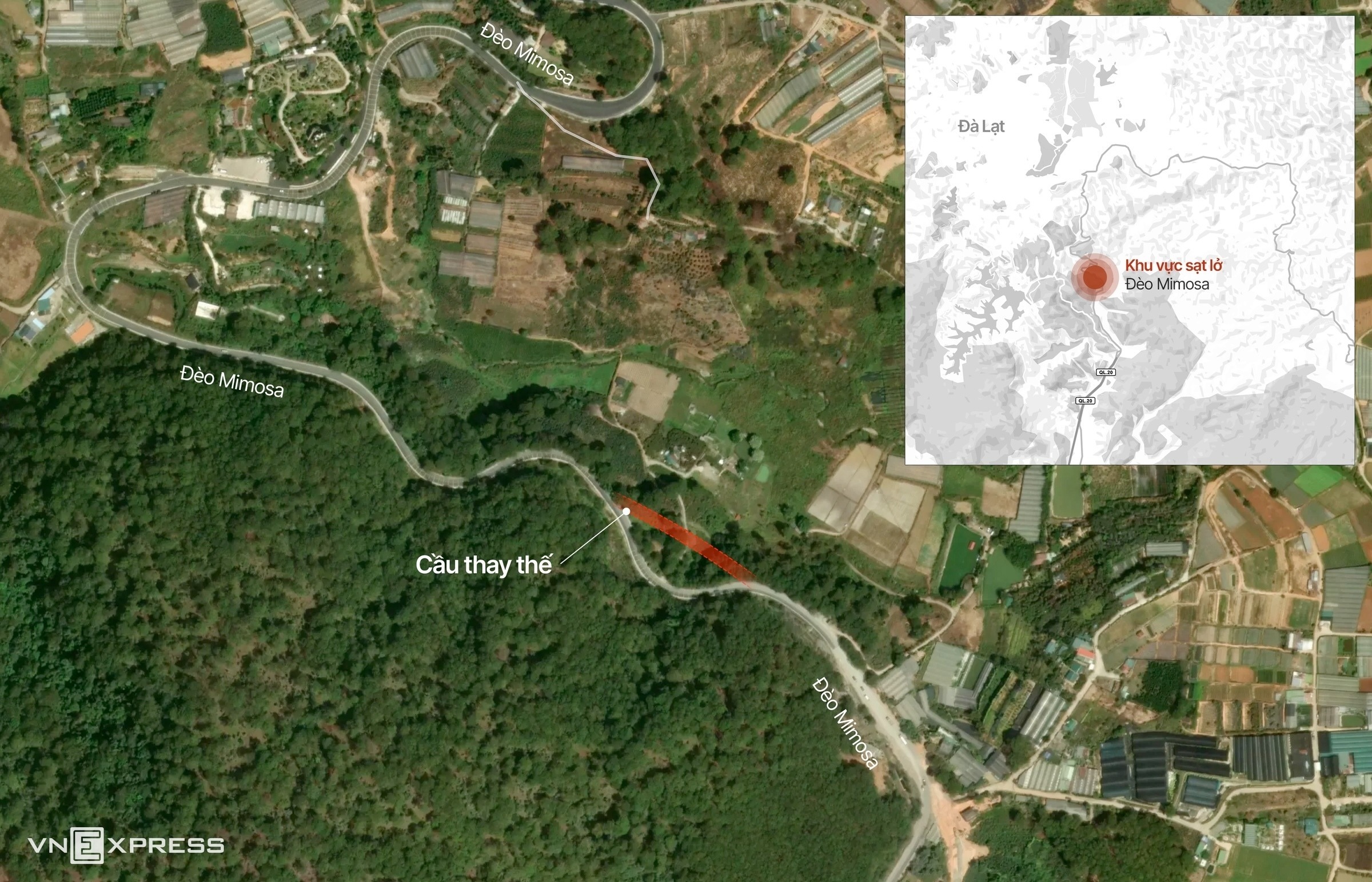 |
Location of the overpass on Mimosa Pass. *Graphic: Tam Thao*
Nguyen Nghia