On 22/4, Prime Minister Le Minh Hung chaired a meeting with the Ministry of Science and Technology to review the implementation of science, technology, innovation, and digital transformation tasks. He praised the ministry's efforts in advising on and implementing Resolution 57, refining institutions and policy mechanisms. He also acknowledged their role in promoting infrastructure and technology development, and in spreading science, technology, innovation, and digital transformation across sectors, fields, and daily life.
However, the Prime Minister noted persistent challenges in mechanisms for social resource mobilization, public-private partnerships, task assignments, expenditure contracts, and fund utilization. He identified weak links between research, application, training, and the market. Furthermore, the commercialization of research results, the development of technology enterprises, innovative startups, and the science and technology market have not met expectations.
Digital infrastructure, digital data, digital platforms, strategic technologies, and high-quality human resources remain bottlenecks. The formation of a data ecosystem, along with data sharing and exploitation for governance, management, and socio-economic development, lacks synchronization.
The head of government emphasized the need to prioritize resources in the coming period, increasing the proportion of spending on strategic, high, and core technologies within the total budget for science, technology, innovation, and digital transformation. This aims to fulfill the requirement of Resolution 57, which mandates allocating at least 3% of the total state budget expenditure to this sector.
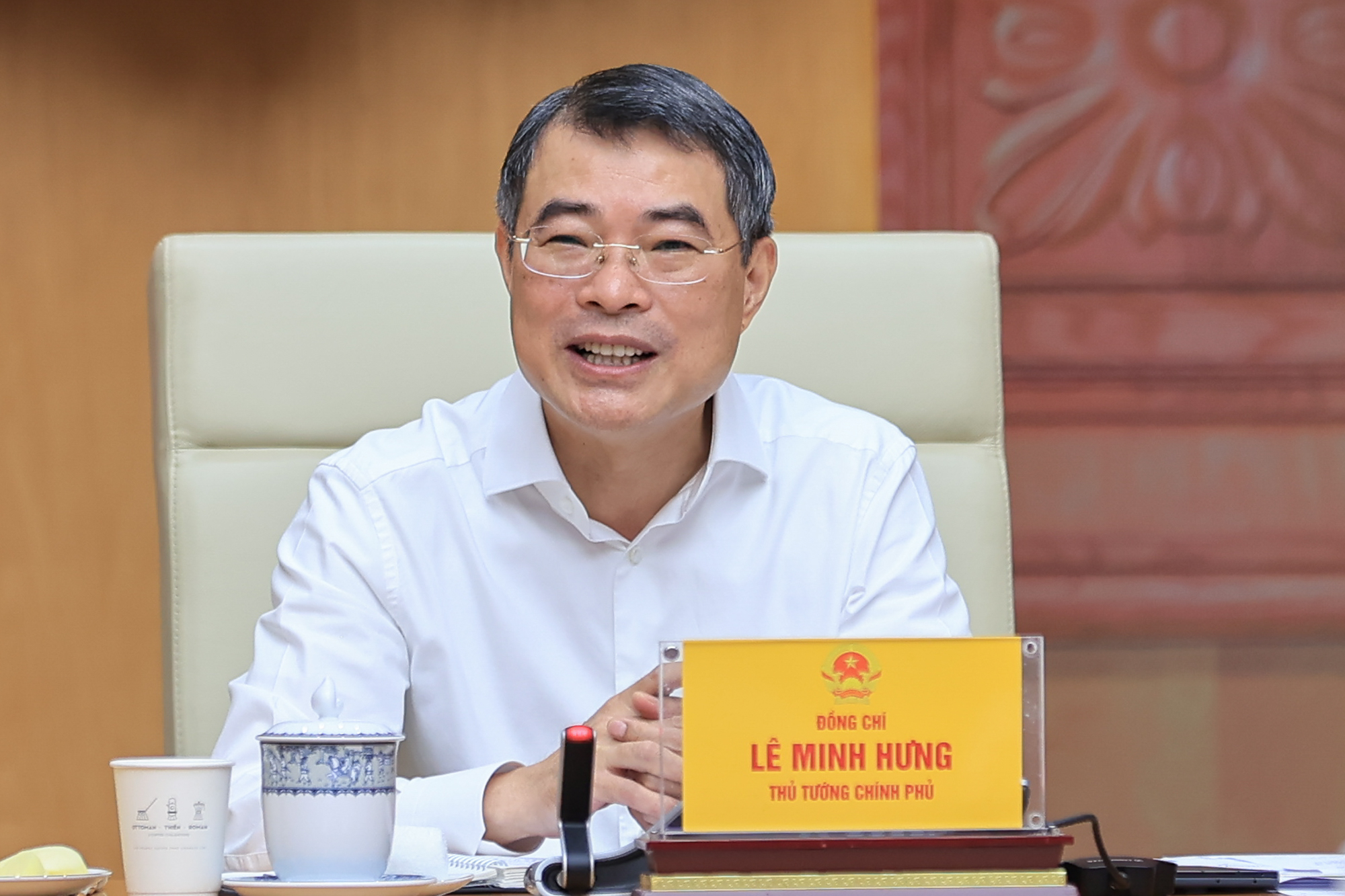 |
Prime Minister Le Minh Hung works with the Ministry of Science and Technology, 22/4. *Photo: Nhat Bac*
The Prime Minister called for a shift in management mindset, moving policy support for businesses from input-based to output-based results. He stressed the need to decisively remove barriers, accept controlled risks, and focus on management, financial, and investment mechanisms, while increasing autonomy for science and technology public service units.
He underscored the importance of mastering core technologies, prioritizing the acquisition, transfer, and mastery of foundational, advanced, strategic, and digital technologies. Concurrently, he urged managing and promoting the healthy and effective development of digital assets and digital currency.
Set targets include a digital economy contributing 30% of GDP, 40% of enterprises engaging in innovation activities, and average e-commerce revenue growth of 23-25%.
The Prime Minister requested the Ministry of Science and Technology to submit three decrees and two Prime Minister's decisions guiding the Digital Transformation Law and the Artificial Intelligence Law for promulgation in april. The ministry must also review and refine the list of strategic technologies and strategic technology products, making it concise and focusing on areas crucial for the country's immediate and long-term development.
The government leadership directed ministries and sectors to collaborate on selecting a number of key strategic technology tasks linked to major national challenges. These tasks should be implemented according to specific roadmaps with measurable results. Additionally, establishing an inter-sectoral coordination task force and a unified command mechanism is necessary for the effective implementation of strategic technology development programs, fostering stronger links between businesses, universities, and research institutions, and preventing resource waste.
The Ministry of Science and Technology is tasked with coordinating with the Ministry of Finance to finalize and submit regulations on criteria, procedures, and content for using the state budget for science, technology, innovation, and digital transformation projects. This includes transitioning from a grant mechanism to a commissioning and task assignment model based on output results, while also establishing a mechanism for accepting controlled risks in research.
In Q2, the Ministry of Science and Technology will coordinate with the Central Policy and Strategy Committee to develop a Resolution on the country's new development model based on science, technology, innovation, and digital transformation, to be submitted to Central Committee Meeting 3 for consideration.
The Prime Minister also called for the resolute restructuring of 16 national key laboratories and the promulgation of breakthrough mechanisms for the Science and Technology Exchange.
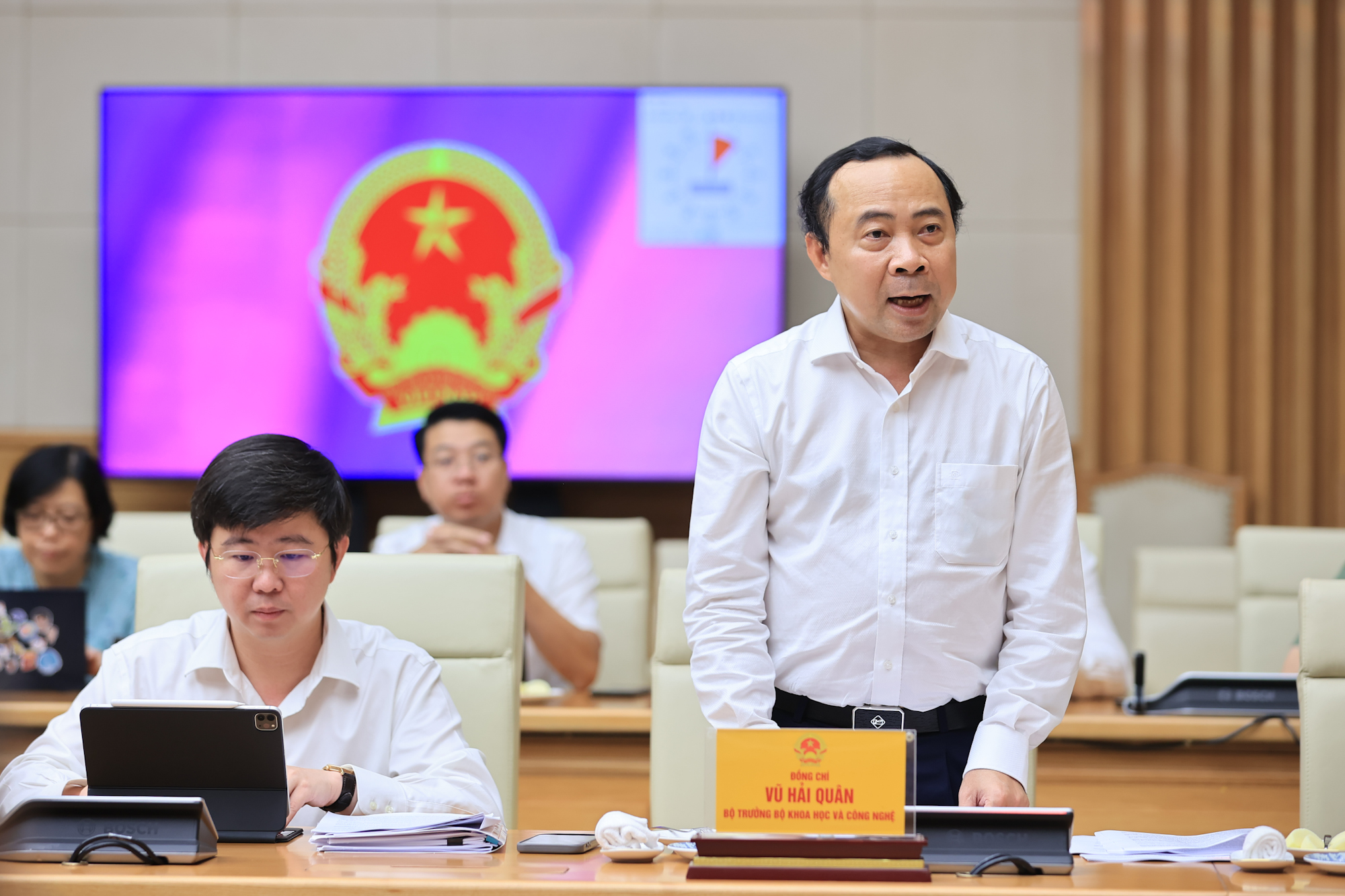 |
Minister of Science and Technology Vu Hai Quan at the meeting with the Prime Minister on 22/4. *Photo: Nhat Bac*
According to the report, Vietnam has promulgated 11 strategic technology groups with 35 strategic technology products. By 2025, 53 science and technology organizations are expected to achieve regional and international standards, along with six high-tech parks; the proportion of high-tech product exports will reach almost 50%. Vietnam ranks 44th out of 139 countries in the global innovation index, and its startup ecosystem ranks 55th globally.
By the end of march 2026, 5G coverage reached 91,9% of the population with over 22,4 million subscribers; mobile Internet speed ranked 14th globally, fixed Internet ranked 9th; IPv6 infrastructure ranked 7th globally.
The number of digital technology enterprises increased by 1.394. Exports of digital technology products reached over 45 billion USD, an increase of 32,2%; total digital technology product export turnover reached 172 billion USD; e-commerce scale reached 36 billion USD, three times that of 2020.
The total funding for science, technology, innovation, and digital transformation in 2026, approved by the National Assembly, is 65,020 billion dong, comprising 30,720 billion dong for recurrent expenditure and 34,300 billion dong for development investment. As of now, 92,27% of recurrent expenditure and 68,58% of investment expenditure have been allocated, with the remaining portion under review for allocation.
Vu Tuan