In a directive issued on 20/5, the Prime Minister noted that the number of hamlets and residential clusters nationwide (including hamlets, villages, sub-hamlets, mountainous villages, ethnic minority villages, Phum, Soc, residential clusters, urban blocks, and sub-districts) has steadily decreased over recent years. Many areas now meet the prescribed household size criteria.
However, numerous hamlets and residential clusters still do not meet these standards. Following the reorganization of provincial and commune-level administrative units, and the completion of district-level activities by mid-2025, the number of hamlets and residential clusters per commune-level administrative unit will increase. This surge is expected to intensify management pressure on local authorities.
The Prime Minister has therefore urged ministries, agencies, and localities to promptly reorganize hamlets and residential clusters. This reorganization must consider historical, cultural, customary, geographical, national defense, security, and the natural cohesion of residential communities. Special attention is required for mountainous areas, border regions, islands, ethnic minority areas, and regions with religious factors.
Provinces and cities are tasked with developing a comprehensive plan for reorganizing all hamlets and residential clusters within their jurisdiction. This plan must include provisions for consolidating the team of part-time grassroots officials and must be submitted to competent authorities by 10/6.
Communes and wards are required to gather public feedback and submit their merger proposals to the People's Council for approval by 30/6.
 |
A street corner in Hanoi. Photo: Pham ChieuThe Prime Minister also directed localities to select and appoint reputable, responsible, and capable part-time grassroots officials with strong mass mobilization skills. This initiative aims to gradually rejuvenate the workforce, enhance information technology application, and improve community governance skills.Provinces and cities must conclude the operations of current commune-level part-time officials by 31/5. Individuals with suitable capabilities and expertise will be considered for recruitment as commune-level civil servants or public employees.Under current regulations, hamlets are organized at the commune level, known by various names such as thon, lang, ap, ban, buon, bon, phum, and soc. Residential clusters are organized at the ward level, with names like to dan pho, khu pho, khoi pho, khom, and tieu khu.By the end of 2021, the country had over 90,000 hamlets and residential clusters, comprising approximately 69,500 hamlets and 20,900 residential clusters, served by nearly 297,800 part-time officials.According to regulations from the Ministry of Home Affairs, the minimum size of a hamlet is determined by region, ranging from 100 to 350 households. Specifically, the Red River Delta requires a minimum of 300 households, the Central region 250 households, the Southern region 350 households, and the Central Highlands 200 households. Border areas, island communes, and island districts require a minimum of 100 households.For residential clusters, the size varies from 150 to 450 households depending on the area. The Red River Delta requires a minimum of 350 households, with Hanoi specifically requiring 450 households. The Central region mandates 300 households, the Southern region 400 households, with Ho Chi Minh City requiring 450 households. The Central Highlands needs 250 households, while border areas and islands require a minimum of 150 households.During a meeting with voters on 6/5, Nguyen Thi Tuyen, Deputy Secretary of the Government Party Committee, stated that Hanoi is exploring options to increase the minimum size to 500 households for rural hamlets and 700 households for urban residential clusters.Vu Tuan |
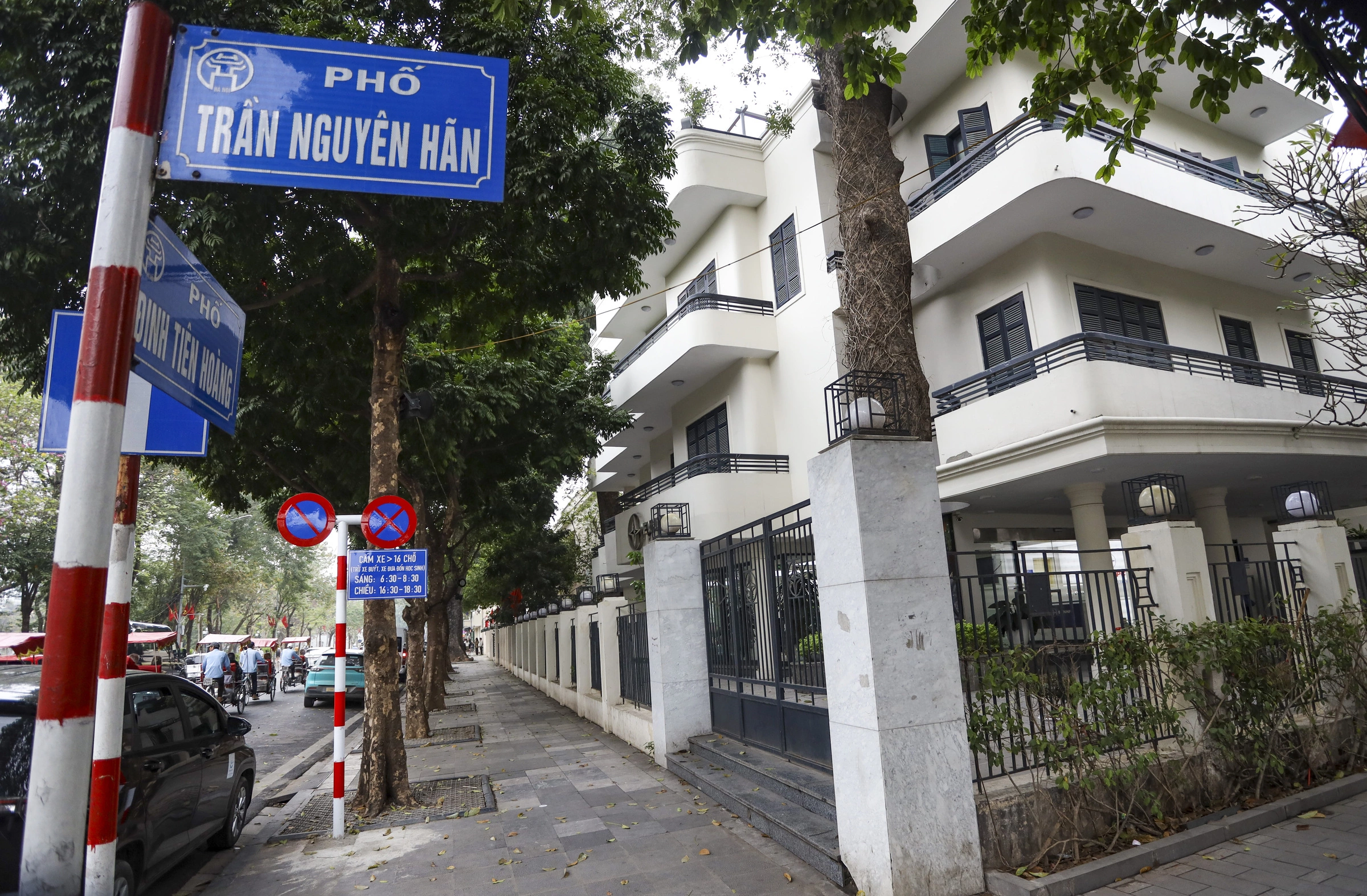
A street corner in Hanoi. Photo: Pham Chieu
The Prime Minister also directed localities to select and appoint reputable, responsible, and capable part-time grassroots officials with strong mass mobilization skills. This initiative aims to gradually rejuvenate the workforce, enhance information technology application, and improve community governance skills.
Provinces and cities must conclude the operations of current commune-level part-time officials by 31/5. Individuals with suitable capabilities and expertise will be considered for recruitment as commune-level civil servants or public employees.
Under current regulations, hamlets are organized at the commune level, known by various names such as thon, lang, ap, ban, buon, bon, phum, and soc. Residential clusters are organized at the ward level, with names like to dan pho, khu pho, khoi pho, khom, and tieu khu.
By the end of 2021, the country had over 90,000 hamlets and residential clusters, comprising approximately 69,500 hamlets and 20,900 residential clusters, served by nearly 297,800 part-time officials.
According to regulations from the Ministry of Home Affairs, the minimum size of a hamlet is determined by region, ranging from 100 to 350 households. Specifically, the Red River Delta requires a minimum of 300 households, the Central region 250 households, the Southern region 350 households, and the Central Highlands 200 households. Border areas, island communes, and island districts require a minimum of 100 households.
For residential clusters, the size varies from 150 to 450 households depending on the area. The Red River Delta requires a minimum of 350 households, with Hanoi specifically requiring 450 households. The Central region mandates 300 households, the Southern region 400 households, with Ho Chi Minh City requiring 450 households. The Central Highlands needs 250 households, while border areas and islands require a minimum of 150 households.
During a meeting with voters on 6/5, Nguyen Thi Tuyen, Deputy Secretary of the Government Party Committee, stated that Hanoi is exploring options to increase the minimum size to 500 households for rural hamlets and 700 households for urban residential clusters.
Vu Tuan