In recent days, farmer Huu Minh Ut in Tan Loc commune lost about half of his 2-hectare black tiger shrimp crop when the shrimp were just 70 days old. Intense heat caused rapid water evaporation and abrupt environmental shifts, weakening the shrimp and leading to widespread deaths.
"If conditions were favorable, I could have harvested about 50 million VND in two months. Now, nearly 10 million VND of my investment is essentially lost", he stated.
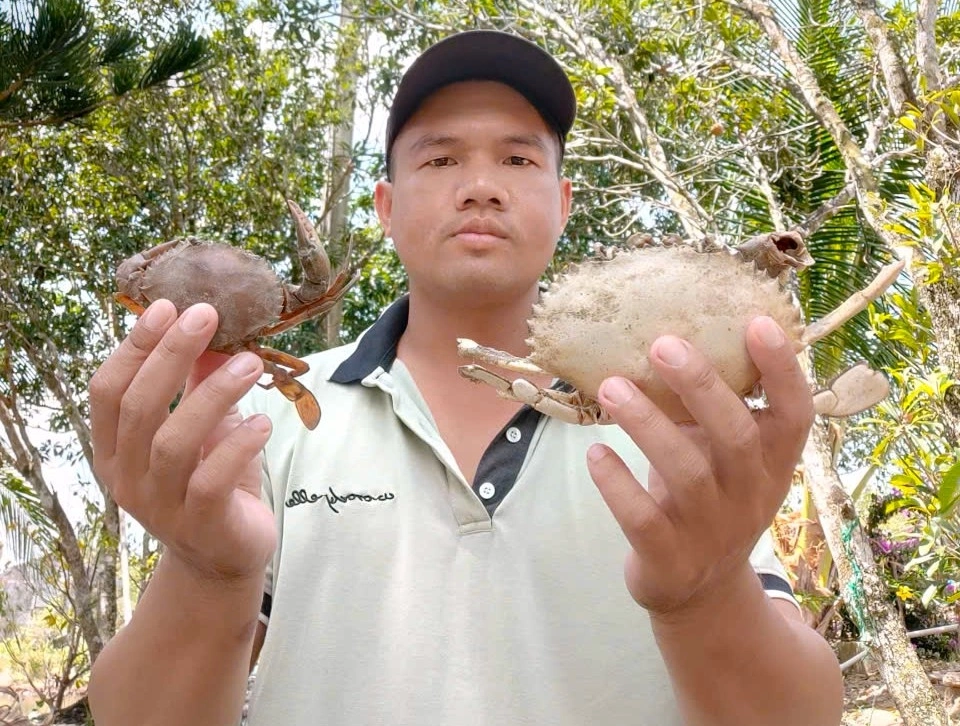 |
Dang An Hung collects dead crabs to prepare for a new farming season. Photo: An Minh |
In Dat Moi commune, Dang An Hung reported that crab deaths after Tet have recurred for many years due to prolonged heat. A month ago, crabs in his over 4-hectare shrimp-crab integrated pond began dying sporadically, with losses now almost total and damages reaching tens of millions of VND.
Farmers explain that intense hot weather promotes robust algal growth. When these algae die, the water environment fluctuates, fostering disease outbreaks.
This issue is widespread across Ca Mau province as it enters the 2026 main farming season. The province has seen a rapid increase in aquaculture stocking areas, with shrimp alone accounting for over 422,000 hectares.
Since the beginning of the year, statistics reveal over 1,300 hectares of aquaculture have suffered damage, with most losses exceeding 70%, a higher figure than the same period last year. Specifically, industrial and semi-industrial shrimp farming accounts for nearly 247 hectares of damage, traditional shrimp farming for nearly 97 hectares, and crabs for over 390 hectares. Disease outbreaks have been reported in over 50 communes, predominantly affecting crops in the 20–80 day farming stage.
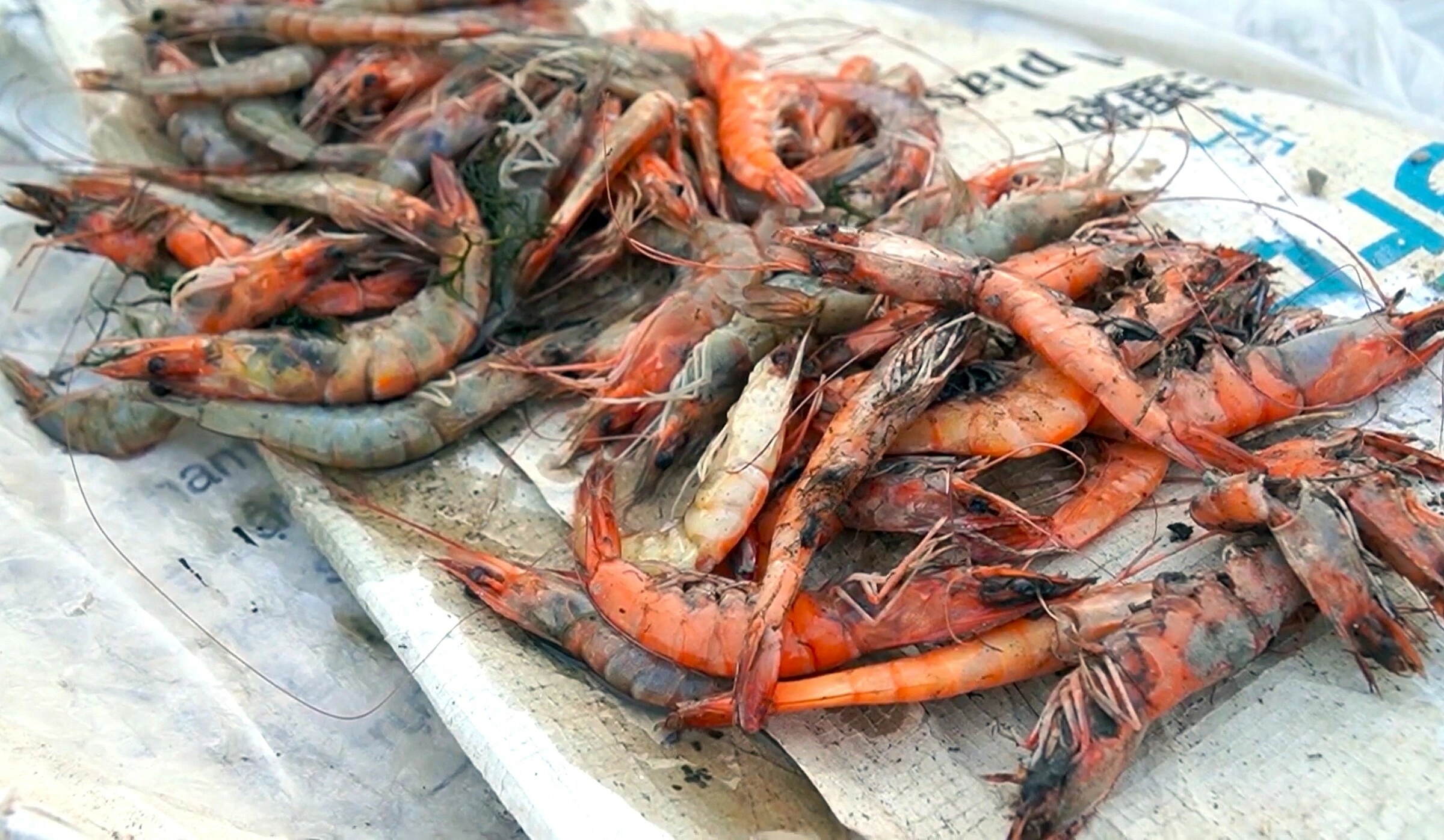 |
Dead shrimp are collected by farmers in Ho Thi Ky commune to clean ponds. Photo: An Minh |
Specialized agencies report that extreme weather accounts for about 59% of the damaged area, with the remainder attributed to common shrimp diseases and crab parasites.
The Department of Agriculture and Environment has advised the Provincial People's Committee to implement a disease prevention plan. This includes dispatching officials to collect samples, guide pond treatment, disinfect, and improve environmental conditions. Authorities also recommend adjusting stocking schedules and adopting multi-stage farming models to mitigate risks.
The province has also requested central government support, specifically 50 tons of chlorine from national reserves, to treat pond environments and control disease outbreaks.
Chuc Ly