Currently, Ho Chi Minh City has about 180 bus routes operating over 2,400 vehicles, primarily within its pre-merger boundaries. The fleet largely consists of 41-60 seat capacity vehicles, totaling over 1,200, followed by nearly 900 vehicles with 20-40 seat capacity. This configuration means buses mainly operate on major roads, requiring residents in small alleys to travel considerable distances to reach a bus stop.
At a recent seminar on developing a new bus network, Pham Ngoc Dung, Director of the Ho Chi Minh City Public Transport Management Center, stated that DRT is being researched as a complementary solution for larger buses and urban railways. This model allows for flexible routes and schedules based on passenger demand, intending to use 9-16 seat vehicles to access narrow streets. The city is currently developing specific plans and selecting areas for implementation.
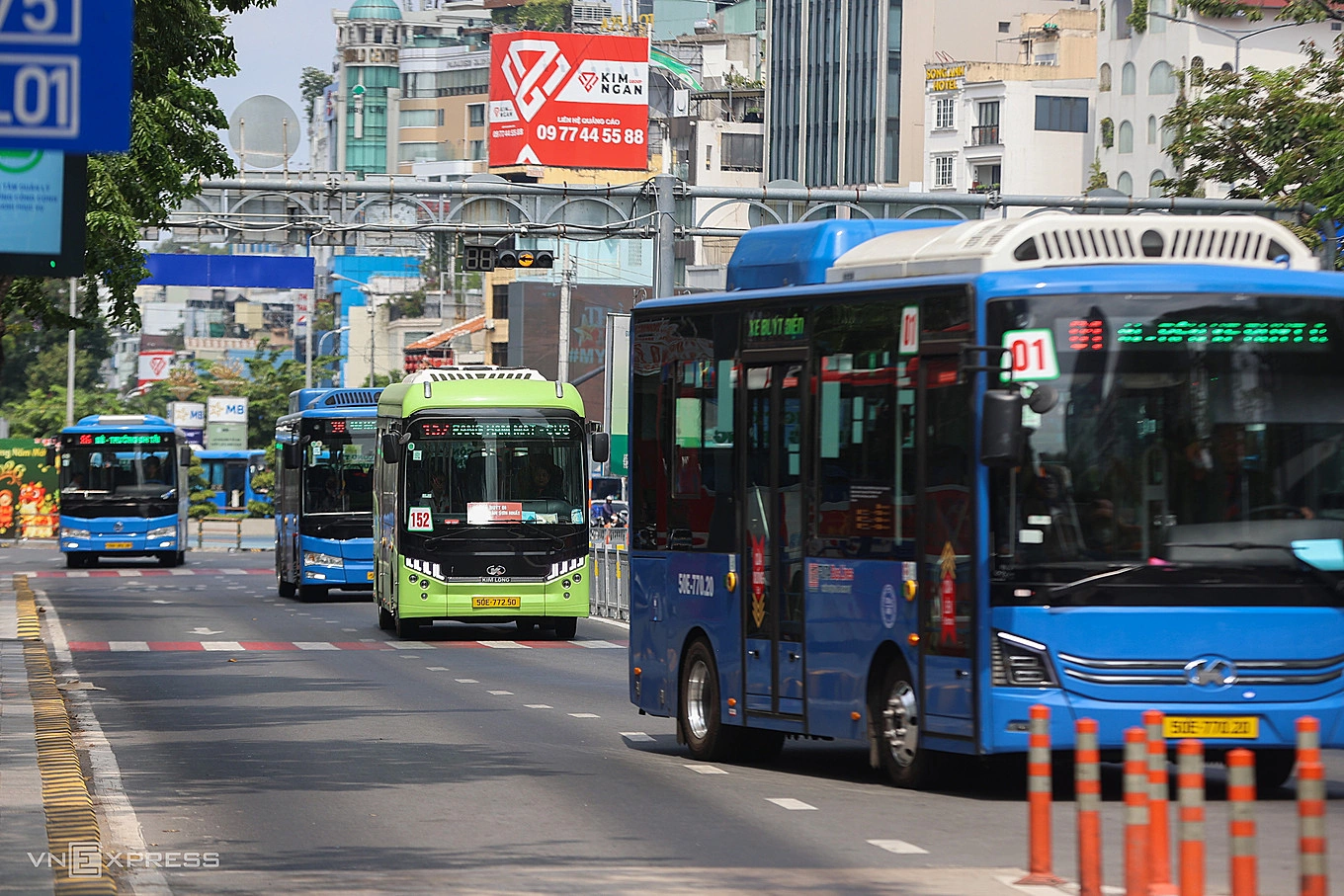 |
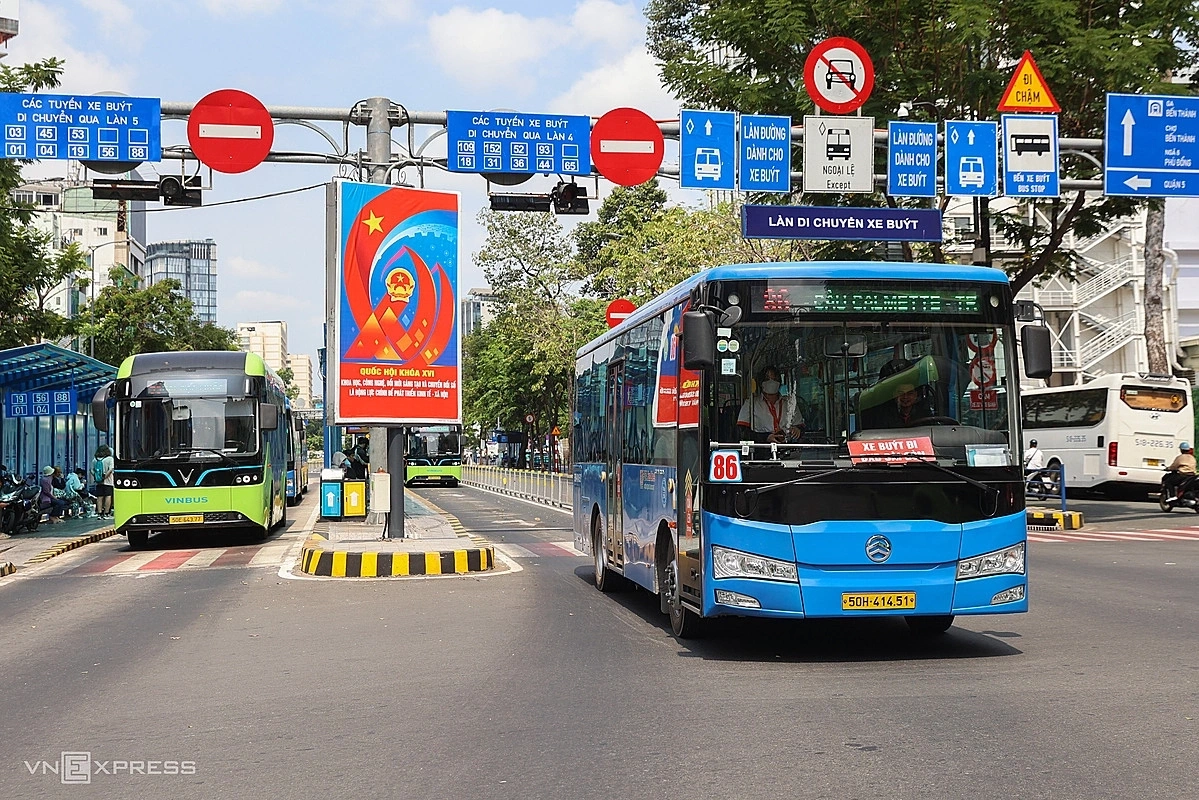
Buses currently operate in downtown Ho Chi Minh City, 4/2026. Photo: Quynh Tran |
Le Trung Tinh, Chairman of the Ho Chi Minh City Passenger Transport Association, believes that smaller buses will bring services closer to residents, helping attract passengers, especially as the city plans to introduce free bus fares.
According to Tinh, DRT offers flexible public transport, allowing adjustments to routes, times, and frequencies based on actual demand. It can establish fixed starting and ending points to connect with high-capacity transport lines. This operational method enables smaller vehicles to easily access residential areas, organize flexible stops, and serve as a shuttle, bringing passengers to main arteries.
Previously, Ho Chi Minh City operated 12-seat buses but gradually replaced them with larger vehicles due to a regulation requiring a minimum of 17 seats. Some proposals to reintroduce small buses could not be implemented due to legal obstacles; only three 12-seat electric bus routes were piloted in the city center and Phu My Hung before being discontinued.
Tinh noted that current regulations have been relaxed, permitting buses with 8 seats or more, which provides a basis for reintroducing the small bus model. However, this type of service is supplementary and will not replace larger buses, which are responsible for transport on main routes.
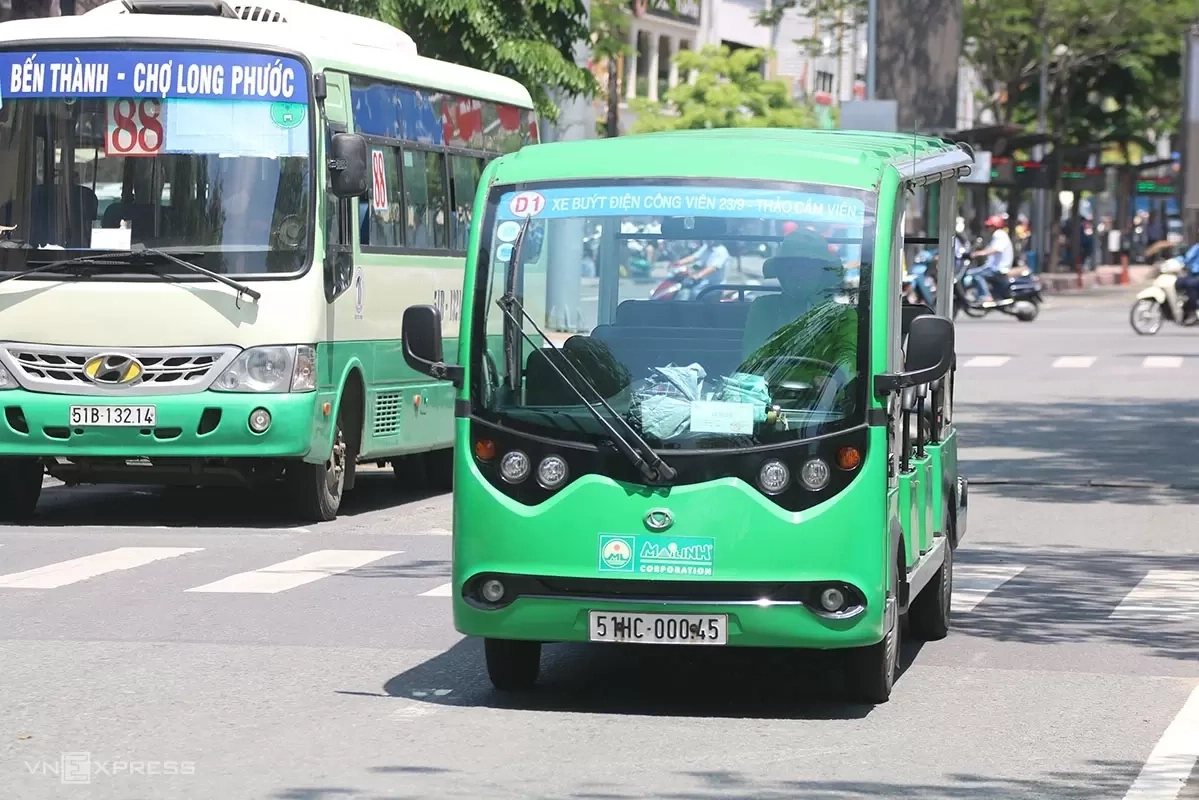 |
Small pilot buses in Ho Chi Minh City center, 2018, now discontinued. Photo: Giang Anh |
Associate Professor Doctor Vu Anh Tuan, Director of the Transport Research Center - Vietnamese-German University, emphasized that developing demand-responsive small buses is essential given the city's sparse and limited public transport network coverage. This model is suitable for industrial zones, tourist areas, and schools, where travel demand is concentrated at specific times but spatially dispersed.
Tuan observed that this is a large segment currently handled mainly by taxis. If organized systematically within public transport, this solution could reduce travel costs and improve connectivity with main bus routes and the metro. "As specific regulations are not yet in place, Ho Chi Minh City may need a special mechanism for piloting this," Tuan said.
From a systemic perspective, the expert suggested restructuring the network into tiers: metro and main bus routes, combined with feeder buses, public bicycles, and pedestrian infrastructure. Frequencies and routes need to be flexibly adjusted by area and time slot, closely matching travel demand.
However, Tuan stressed that data is the key factor for implementing these requirements. Utilizing big data from mobile networks can help predict demand, optimize operations, increase services in high-demand areas, and reduce them where demand is low, thereby enhancing overall system efficiency.
In addition to researching the mini-bus system, Ho Chi Minh City plans to offer free bus fares starting early 5/2026 to encourage public transport use. Concurrently, the city will restructure its network, explore priority lanes, expand connectivity with neighboring provinces and Long Thanh Airport, implement interlinked electronic tickets, and transition to electric buses.
Giang Anh