Major General Nguyen Thanh Trung, Political Commissar of the Ho Chi Minh City Command, shared this information during a meeting with the Vietnam War Archive Initiative (VWAI) research team from the University of Texas, United States, on the morning of 18/6.
According to Major General Trung, following the annexation, Ho Chi Minh City now has seven areas suspected of containing mass graves of martyrs, though their precise locations remain undetermined. These areas were all sites of major battles between 1966 and 1970.
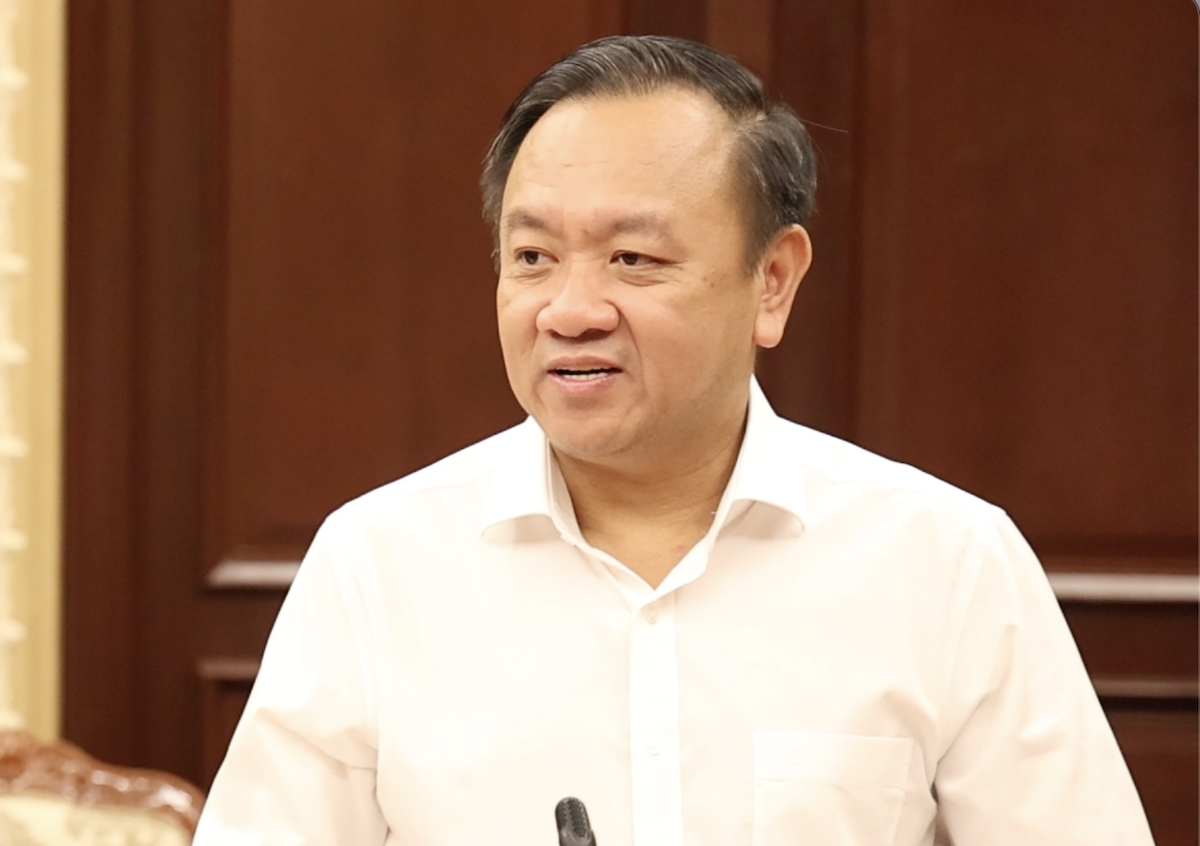 |
Major General Nguyen Thanh Trung, Political Commissar of the Ho Chi Minh City Command, speaks at the meeting. Photo: Dinh Van
One such location is Chanh Phu Hoa ward (in the former Binh Duong province), where the Hon Da Lan operation took place on 21/1/1966. Documents indicate that 154 soldiers were buried in two B-52 bomb craters there. In Bong Trang commune (in the former Ba Ria - Vung Tau province), following the Lang Ca Thi battle on 30/12/1970, 21 soldiers were interred by the Australian army in two mass graves.
Additionally, three battles in Go May, west of Binh Loi bridge (Ho Chi Minh City) in 1968, and in Xa Bang commune (in the former Ba Ria - Vung Tau province) are also believed to be sites where many martyrs were buried in mass graves. Specifically, the Tan Son Nhat airport area previously revealed two grave trenches. In 1985, authorities excavated one trench, collecting 182 remains of martyrs, but the location of the remaining trench is still unknown.
The Political Commissar of the Ho Chi Minh City Command noted that the search faces many challenges due to limited domestic documentation and the increasing age of witnesses. "We hope to receive support in accessing data from the former Republic of Vietnam as well as from US and Australian veterans to piece together information and pinpoint the locations of these mass graves, aiding the search for martyrs' remains," he stated.
Dr. Stephen Maxner, Director of the Vietnam Center and Sam Johnson Archive, and head of the VWAI research team, explained that the team has accessed numerous documents from the Combined Document Exploitation Center (CDEC). This archive comprises records including handwritten letters, diaries, personal papers, and other materials collected from backpacks or the bodies of fallen soldiers, preserved by the US military and the Republic of Vietnam after battles.
Currently, the Vietnam Center and Archive at the University of Texas houses over 261,000 CDEC records.
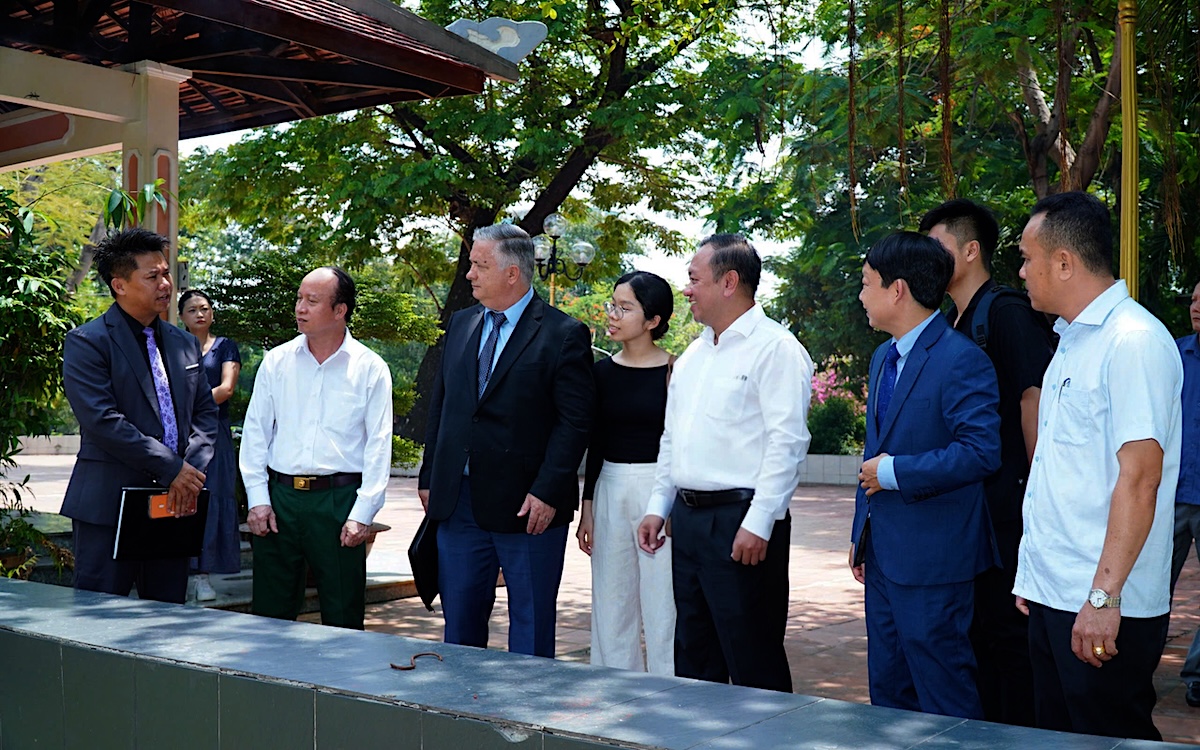 |
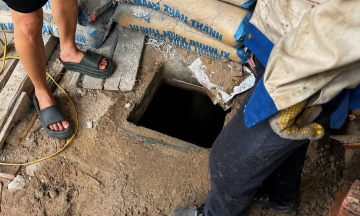
The VWAI research team, led by Dr. Stephen Maxner (fourth from left), and the Ho Chi Minh City Command survey a potential site for three mass grave trenches in Le Thi Rieng park. Photo: Dinh Van
Ta Thu Phong, head of the VWAI research team, specified that the documents are categorized into three main groups: records indicating burial locations with accompanying maps; records listing fallen soldiers whose burial sites are undetermined; and memorabilia such as diaries and letters.
Other sources include US military combat reports, radio logs, secret orders, and post-battle reports. According to Phong, these documents can be cross-referenced with images, maps, and other data sources to determine the burial locations of martyrs.
"Some letters still bear traces of blood, letters from soldiers to wives and children they hadn't seen for years, which are very moving", Phong shared.
To enhance search effectiveness, he proposed that the Ho Chi Minh City Command establish a coordination mechanism with local authorities to exchange, verify, and cross-reference information from archives.
Major General Nguyen Thanh Trung affirmed that the unit will form a specialized force and enhance coordination with the research team in analyzing documents, serving the search and collection of martyrs' remains.
Dinh Van