On 18/6, the Ministry of National Defense's Civil Defense Exercise Steering Committee organized a live civil defense exercise for Hospital 108 at the Mieu Mon National Training Center. This marked the first time Central Military Hospital 108 coordinated with forces from the Air Defense Air Force Service, Hanoi Capital Command, Border Guard, Engineer Corps, Chemical Corps, and Signal Corps to practice responding to medical emergencies.
 |
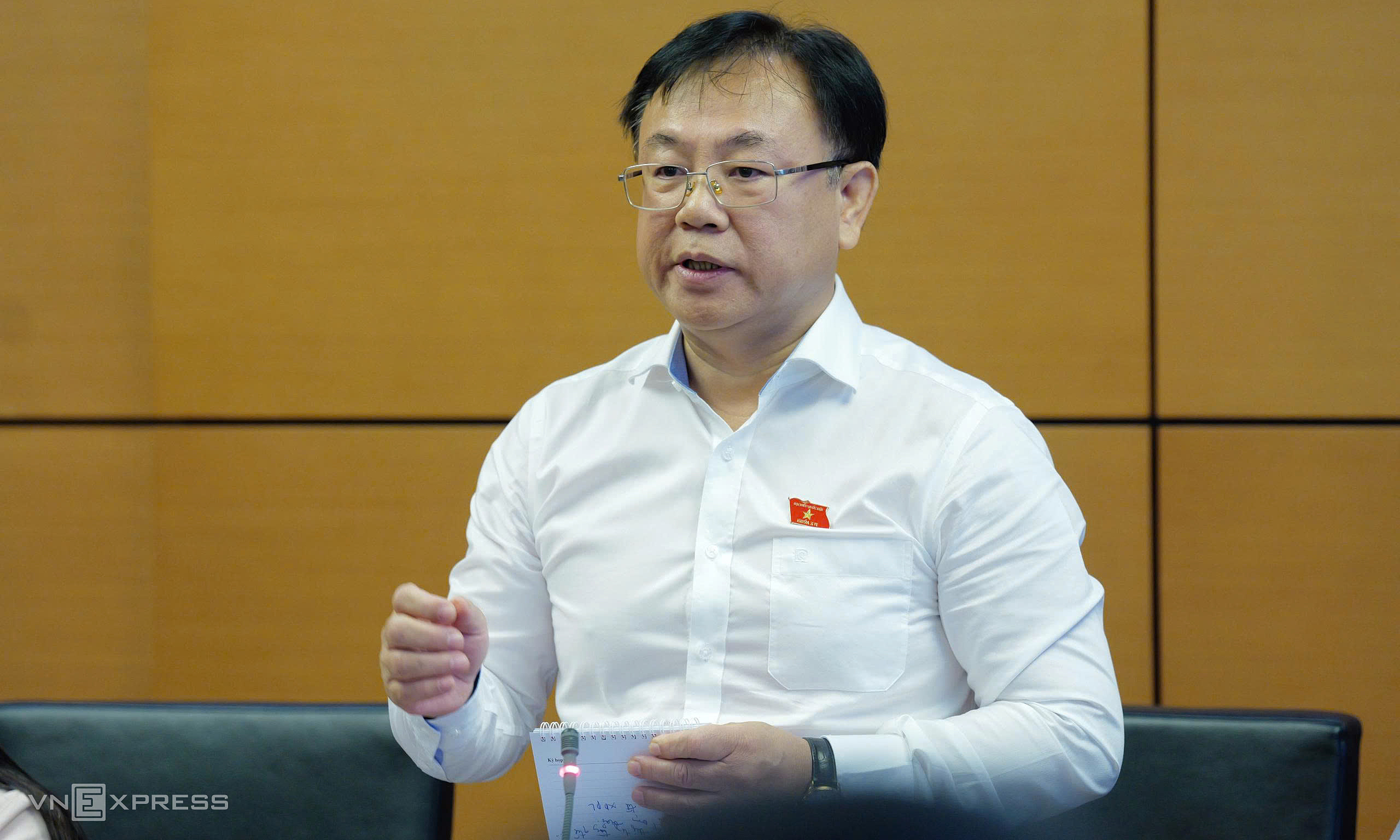
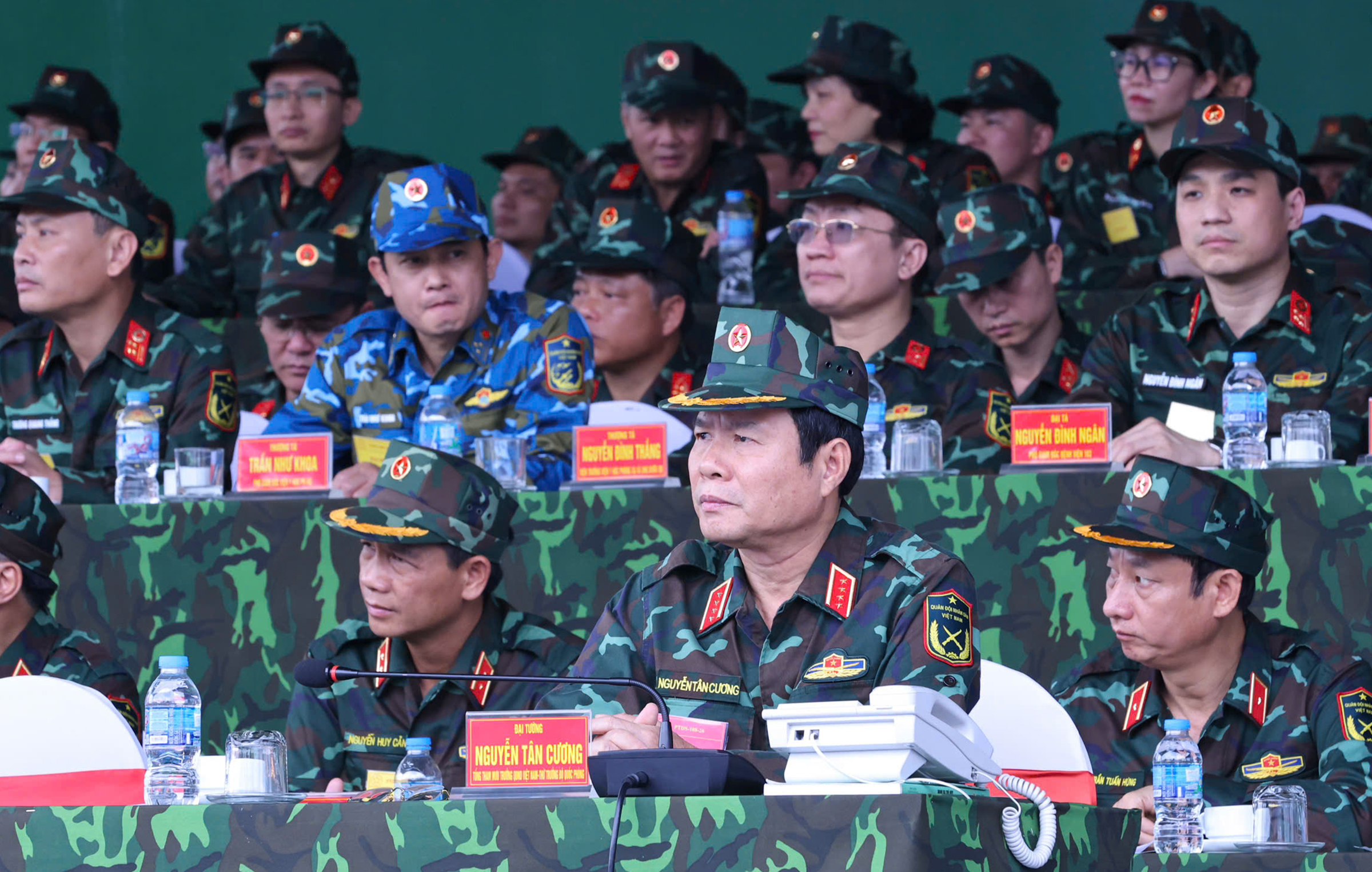
General Nguyen Tan Cuong, Chief of the General Staff of the Vietnam People's Army and Deputy Minister of National Defense, at the exercise. Photo: Huy Nguyen |
The exercise featured realistic, complex, interconnected, and severe simulated scenarios. These included: a fire on the 19th floor of the musculoskeletal internal medicine department in Hospital 108's internal medicine twin tower; a toxic chemical and radiation leak at the accelerator center; structural collapse; and the establishment and deployment of a field hospital.
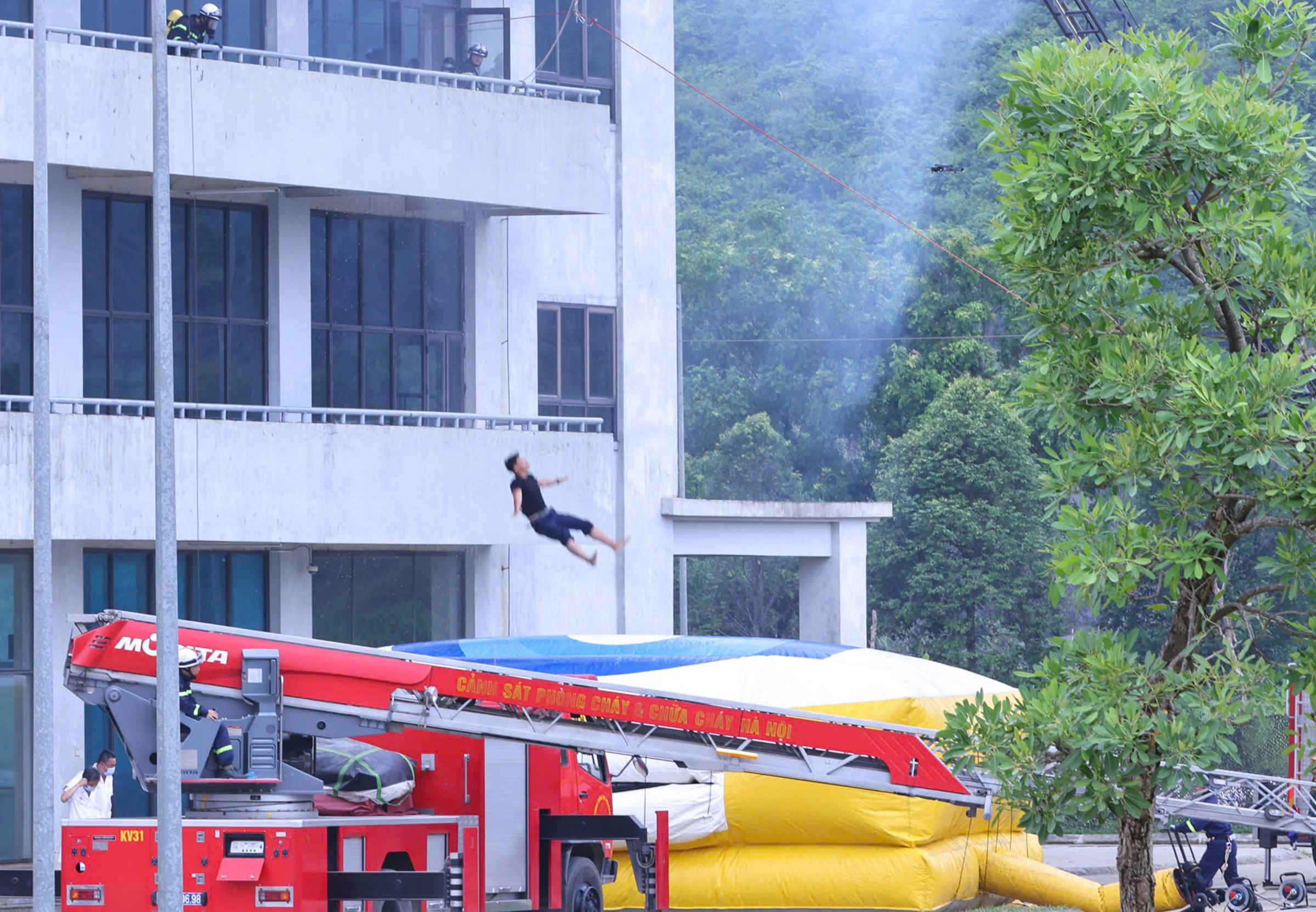
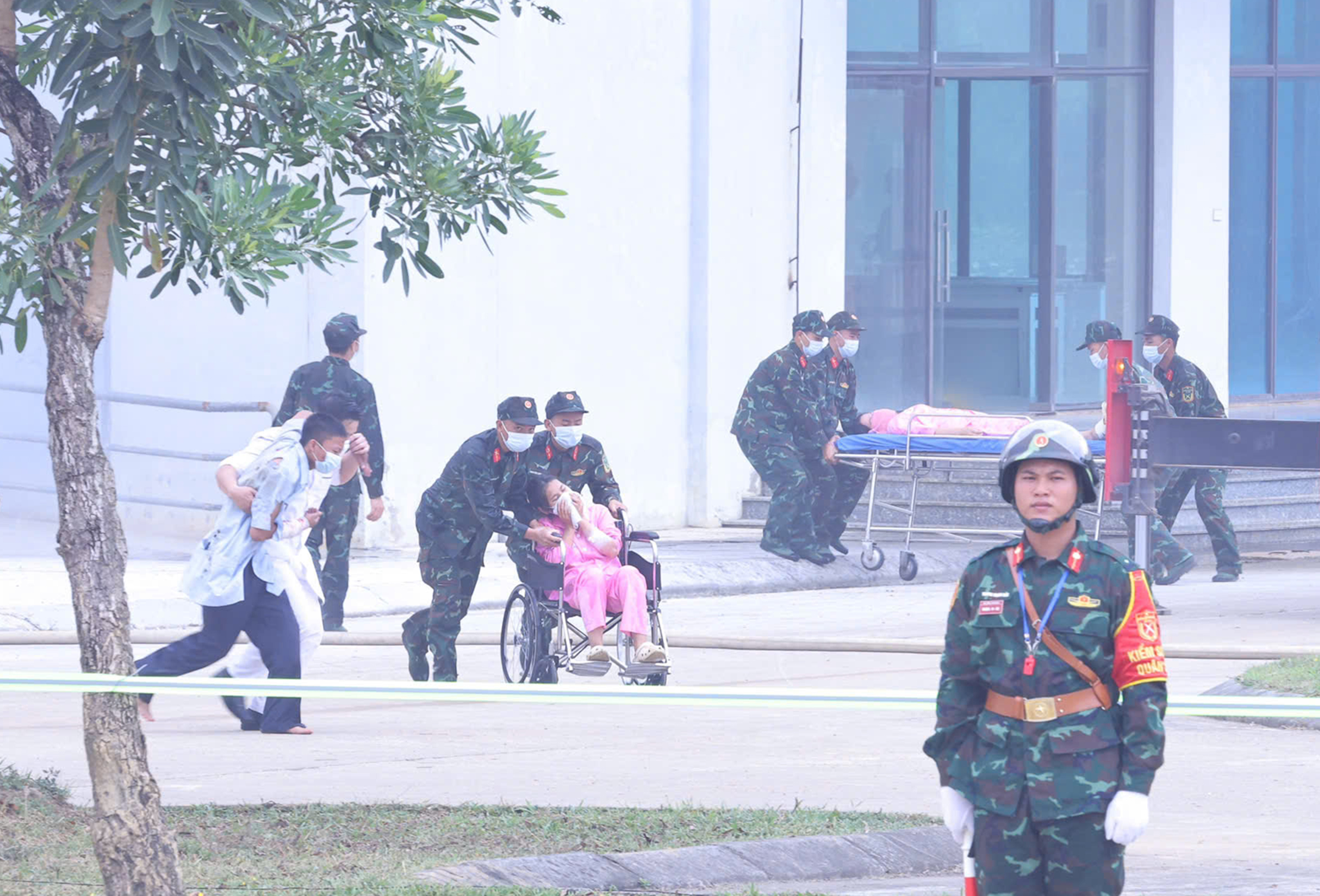
In the simulated fire on the 19th floor, on-site forces guided trapped individuals to safety via stairs and reported to superiors. The Ministry of National Defense then dispatched helicopters to evacuate those trapped in the twin tower, while reinforcing rescue efforts. Victims were guided to safe areas. The hospital's military medical team provided initial first aid, including anti-shock and anti-asphyxiation measures, before transferring them to the emergency and treatment area.
 |
Rescue forces use an inflatable cushion during a simulated high-rise fire.
 |
Doctors, nurses, and soldiers practice evacuating casualties.
 |
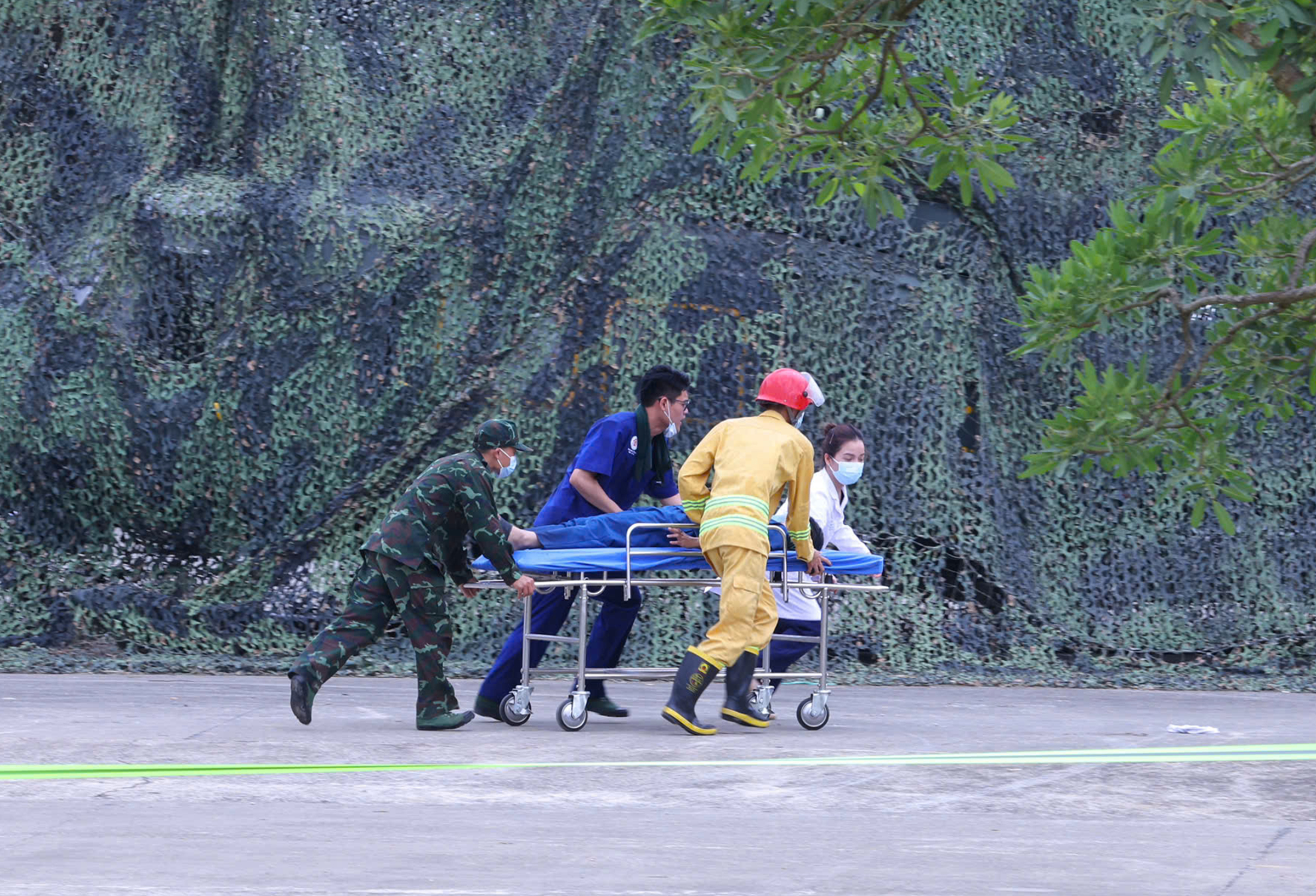
Victims are moved from the incident area for first aid.
 |
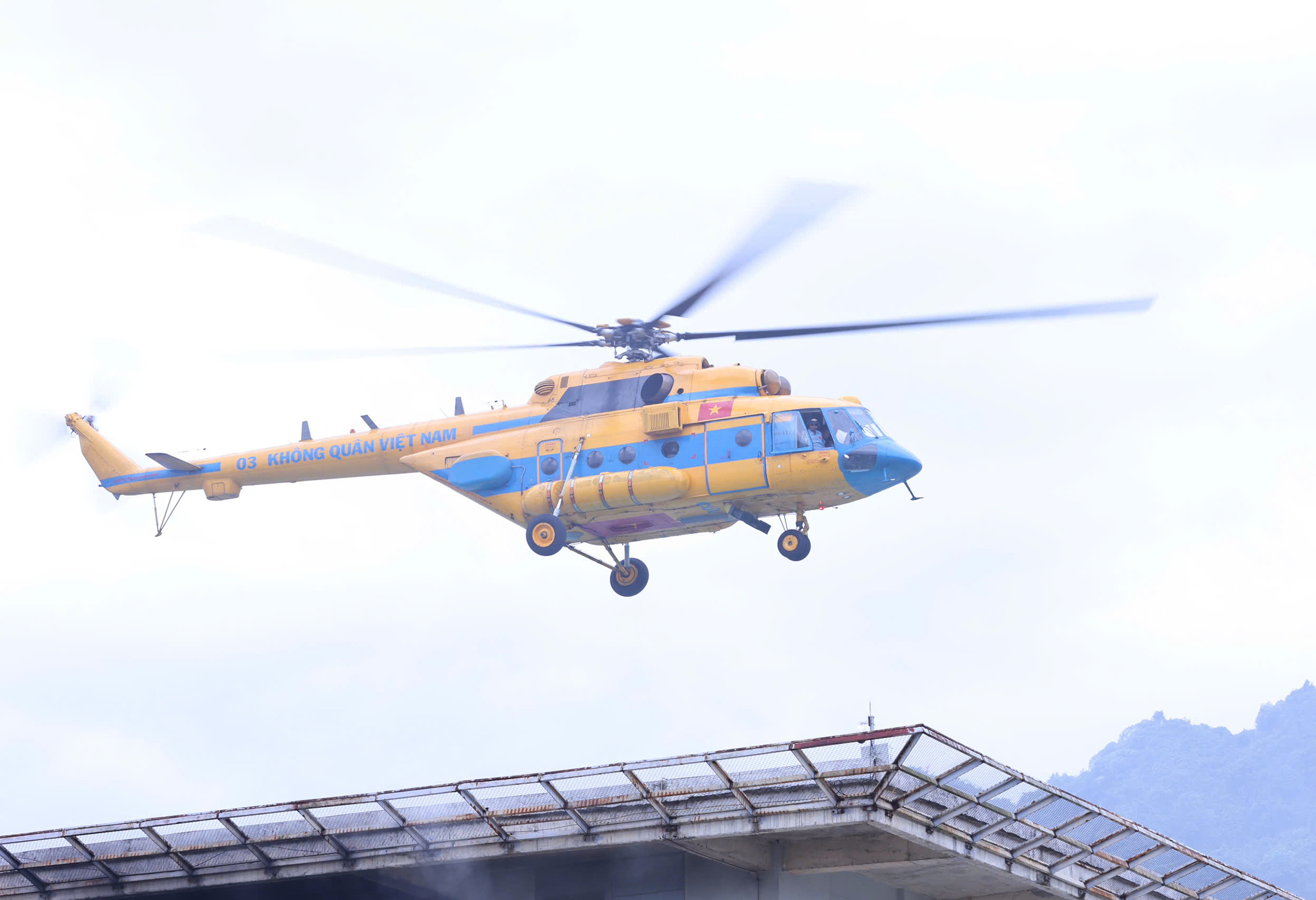
A helicopter from the Air Defense Air Force Service participates in medical transport during the exercise.
For the toxic chemical and radiation leak scenario, the hospital initiated an emergency response by cordoning off and securing the scene, placing warning signs, containing spills with specialized absorbent paper, and isolating the incident area. However, high radiation levels exceeded the unit's capacity to handle the incident.
The Ministry of National Defense then deployed forces from the Chemical Corps to establish a mobile radiation monitoring station. After monitoring, they reported to the field command. The command determined response measures, including assessing the radiation contamination level around the incident, searching for victims to transfer to a specialized radiation treatment area, and conducting decontamination, preventing further spillage, and channeling decontamination solution into a pit for collection and disposal.
Other units also practiced responding to an electrical short circuit causing a fire and explosion at a household gas storage facility, which led to multiple structural collapses, and deploying a field hospital. This marked the first deployment of the Hospital 108 Field Hospital model in Vietnam, adhering to United Nations standards. It features 100 beds, modern equipment for a full range of specialized medical examinations and treatments, the capacity to perform a minimum of 15 major and 30 minor surgeries daily, and professional air medical transport.
According to the organizers, the exercise results demonstrated the coordination capabilities among various forces and functional agencies in managing medical emergency situations. It also highlighted their professional competence in organizing search and rescue operations and mass casualty treatment. The exercise served as an opportunity to refine response plans and procedures, and to define the responsibilities of medical forces in civil defense duties.
Hospital 108 is a national special-grade medical facility and the military's highest-level hospital, boasting a team of over 800 specialized doctors and engineers. The unit is also a leading center for organ and liver transplants, as well as trauma and orthopedic surgery.
Song Huy