The Ho Chi Minh City Department of Construction, in a recent document submitted to the Ministry of Construction, highlighted that current apartment building design and construction adhere to national technical regulation QCVN 04:2021/BXD. This regulation, however, lacks definitions and specific provisions for electric vehicle charging stations. Critical details, such as the placement of charging pillars in basements or parking areas, technical requirements for ventilation and smoke extraction, safety distances from gasoline-powered vehicles, and electrical wiring, are currently undefined.
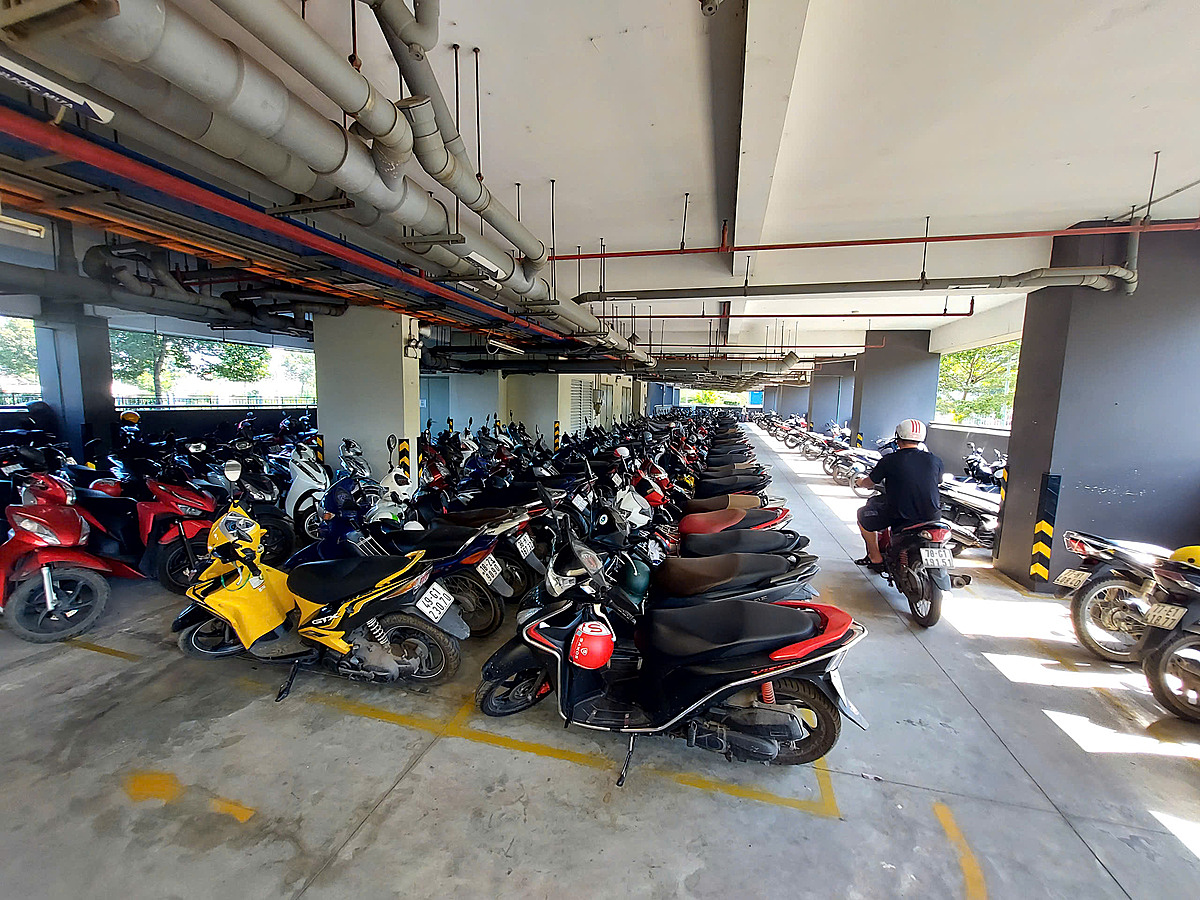 |
A parking lot at an apartment building in Thu Duc City (former) lacks designated electric vehicle charging spaces, 30/11. Giang Anh
Current regulations broadly cover parking within apartment buildings but omit specific details regarding the placement and quantity of electric vehicle charging stations. Crucially, there are no dedicated fire prevention and fighting standards for charging pillars and electric vehicles in apartment buildings, especially considering the fire risk posed by lithium-ion batteries in enclosed basements. This regulatory gap creates significant challenges for design appraisal, acceptance, and the approval of additional charging installations in apartment complexes.
With the rising demand for electric vehicles, the Department of Construction recommends updating apartment building technical standards to include internationally recognized safety benchmarks like IEC 61851, IEC 62196, and NFPA 70. The department also advocates for distinct standards for charging stations located in various facilities, encompassing apartment buildings and outdoor parking areas.
To avert disputes between developers, management boards, and residents, the Ho Chi Minh City Department of Construction suggests amending apartment building management regulations. These amendments would cover repairs, renovations, and internal design alterations, specifically including the installation of additional electric charging stations.
Ho Chi Minh City also urges the Ministry of Construction to issue guidelines for establishing new or supplementary charging stations in other types of structures, addressing land use and planning requirements. Simultaneously, the department proposes amending the Law on Construction to exempt charging stations from construction permits, classifying them as internal equipment installations, provided they do not compromise structural safety and comply with fire prevention and fighting, and environmental standards.
An electric car charging at an apartment building in Hanoi. Giang Huy
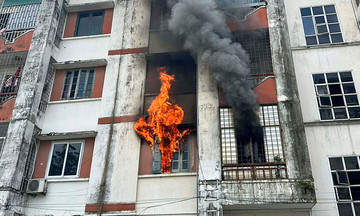
Recent periods have seen conflicts emerge between management boards and residents in Ho Chi Minh City and other localities. These disputes center on electric vehicle charging in apartment buildings, primarily driven by fire safety concerns.
Ho Chi Minh City currently manages over 39,500 electric cars and nearly 87,000 electric motorbikes. The city hosts approximately 1,000 charging stations outside apartment complexes. V-Green's network alone comprises 900 stations, featuring over 9,400 charging pillars and 14,700 charging ports, while Selex Motors operates around 50 battery swap points.
Ho Chi Minh City plans to significantly expand its battery swap cabinet system for electric motorbikes and install at least 1,500 fast charging pillars in key areas during the next phase. This initiative aims to reduce charging times and accelerate the shift towards green transportation.