 |
During summer, parents bring their children to Tien Mai wharf on the Rao Nan river for free swimming lessons. The clear river serves as a natural swimming pool for children in the mountainous region. The class, funded by a local enterprise and several organizations, is in its fourth year, serving 160 students aged 8 to 15, divided into four groups for early morning and late afternoon sessions.
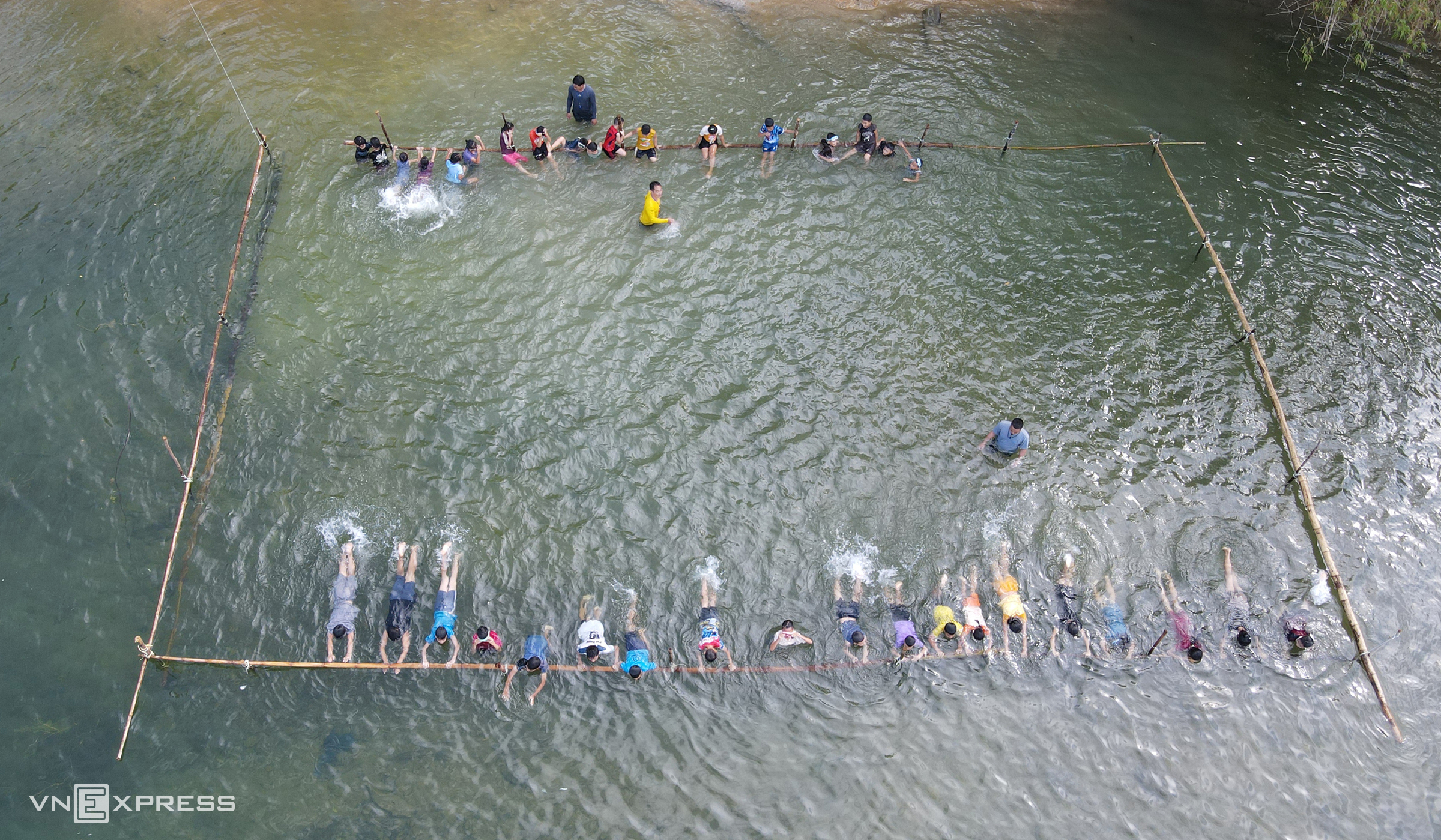
The designated swimming area along the riverbank is about 80 cm deep and 200 square meters wide. Bamboo poles form a protective barrier around it. Students hold onto the bamboo barrier, floating on the water with their bodies while vigorously kicking their legs backward. This repeated motion helps them develop reflexes before actual swimming practice.
Vo Manh Hung, a teacher at Cao Quang Secondary School, stated that the riverbed, which had varying depths, was leveled. Bamboo was sourced from local residents, and teachers purchased the swimming equipment.
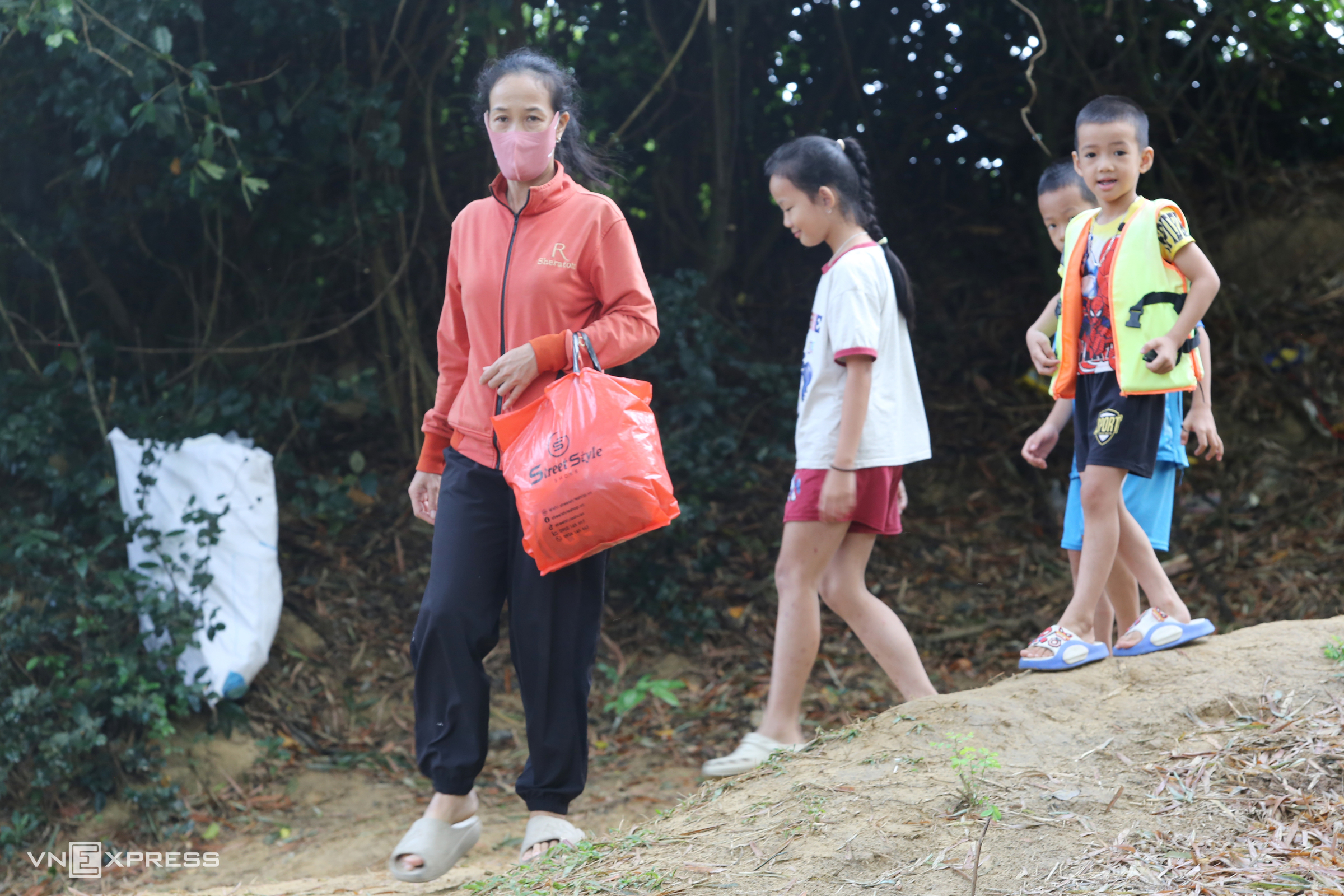 |
Parents lead their children to the sandy riverbank before class. For many families, this is a rare opportunity for their children to receive formal swimming lessons without paying for pools dozens of kilometers away.
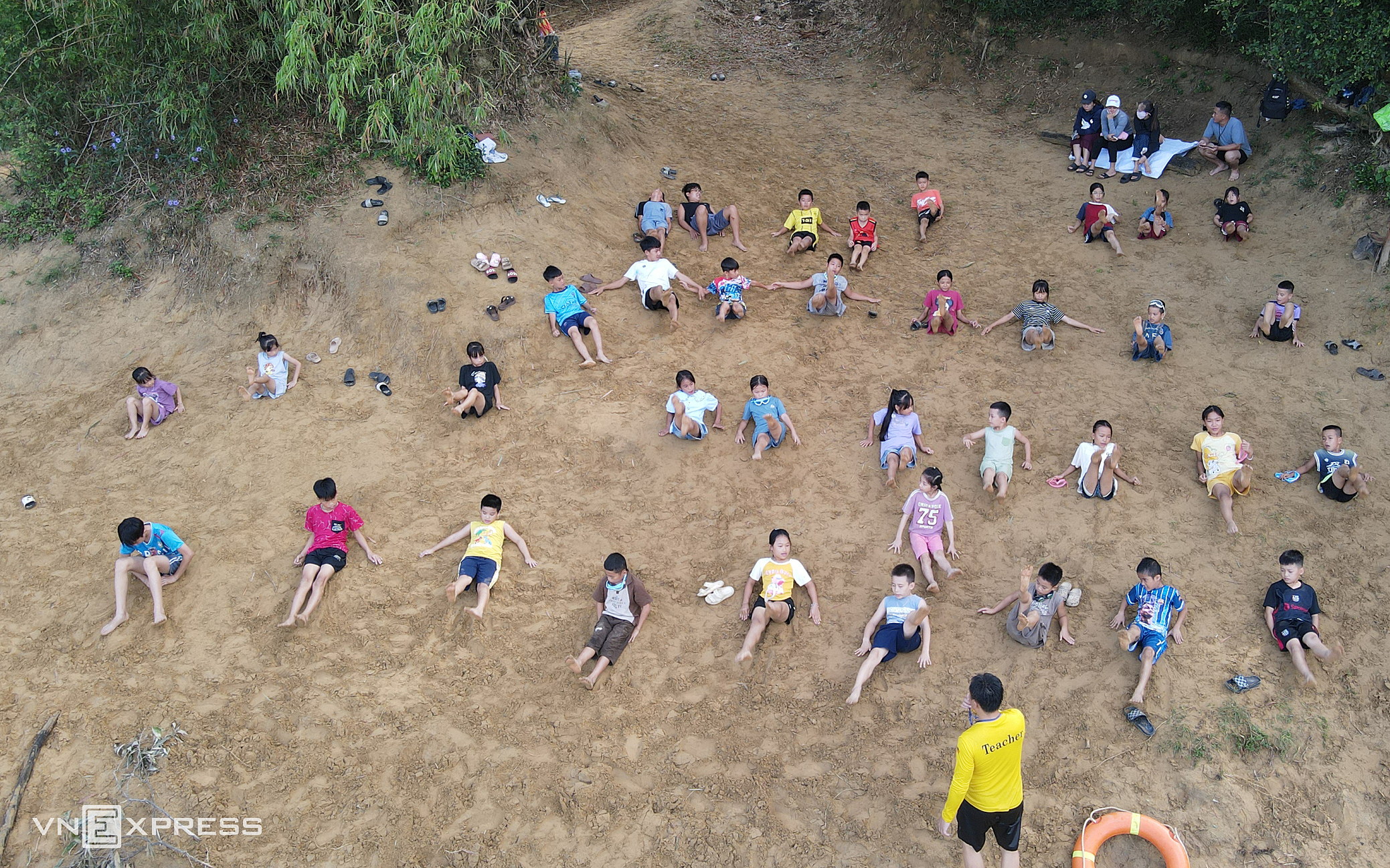 |
Before entering the water, students line up on the sand to warm up their wrists and ankles, stretch, and run. These exercises help warm up the body, prevent cramps, and build confidence before getting in the water. Teachers take attendance to manage students.
Most students do not have swimming goggles. Only a few younger children are provided with protective eyewear by their families to minimize eye irritation during many hours of practice underwater.
The bamboo barrier serves as both protection and a support point for students to practice swimming. They sit on top, legs extended forward, perfecting their leg-kicking technique for swimming.
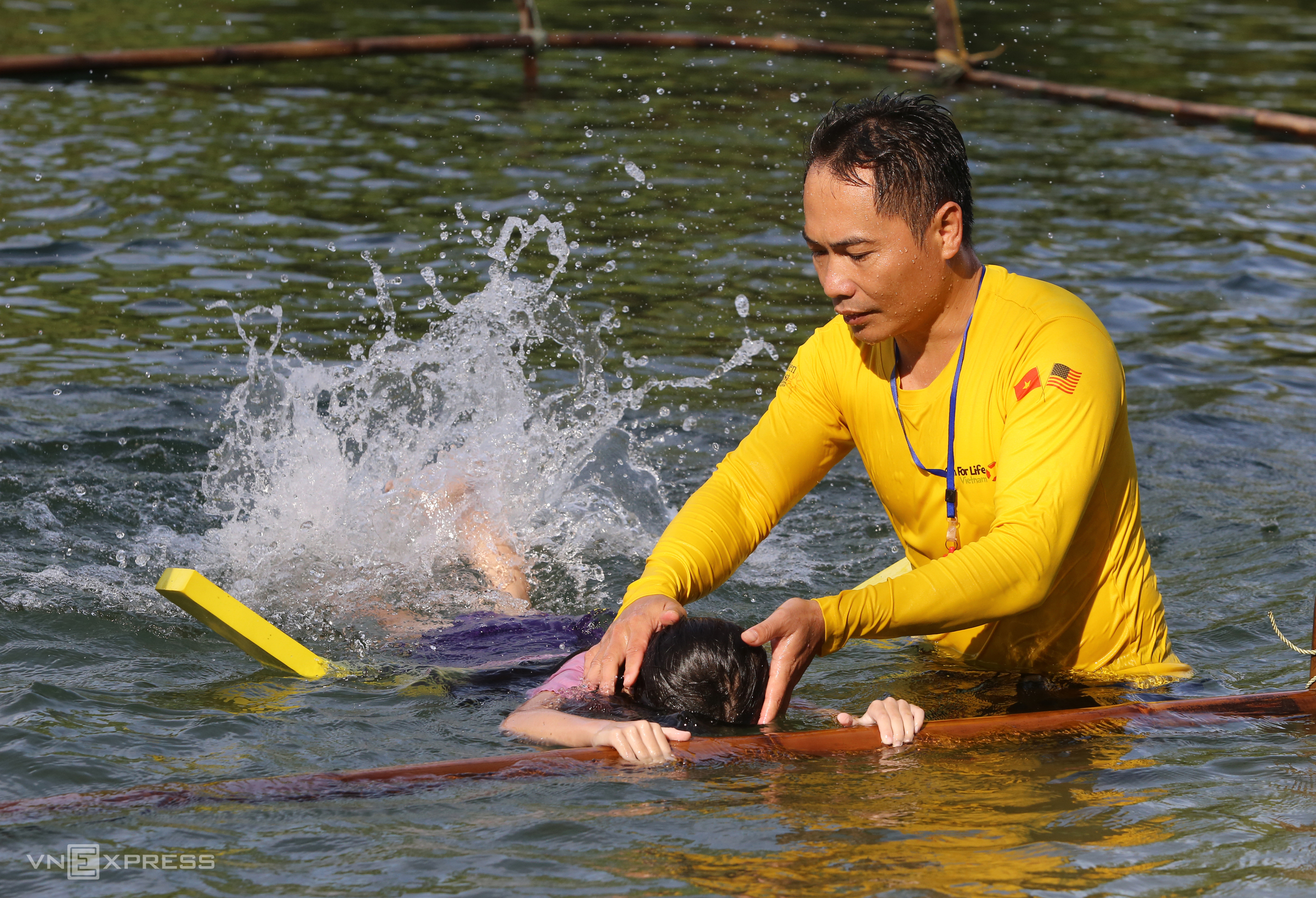 |
Teacher Tran Manh Hung, from Xuan Mai Primary School, instructs students on breathing techniques. He helps them take deep breaths, submerge their faces up to their heads, and hold their breath for 5 to 10 seconds.
Once comfortable holding their breath, students practice turning their heads to breathe while swimming. Teachers continuously correct their posture, reminding them to inhale through their mouths when surfacing and exhale slowly when submerging, which helps maintain a steady swimming rhythm.
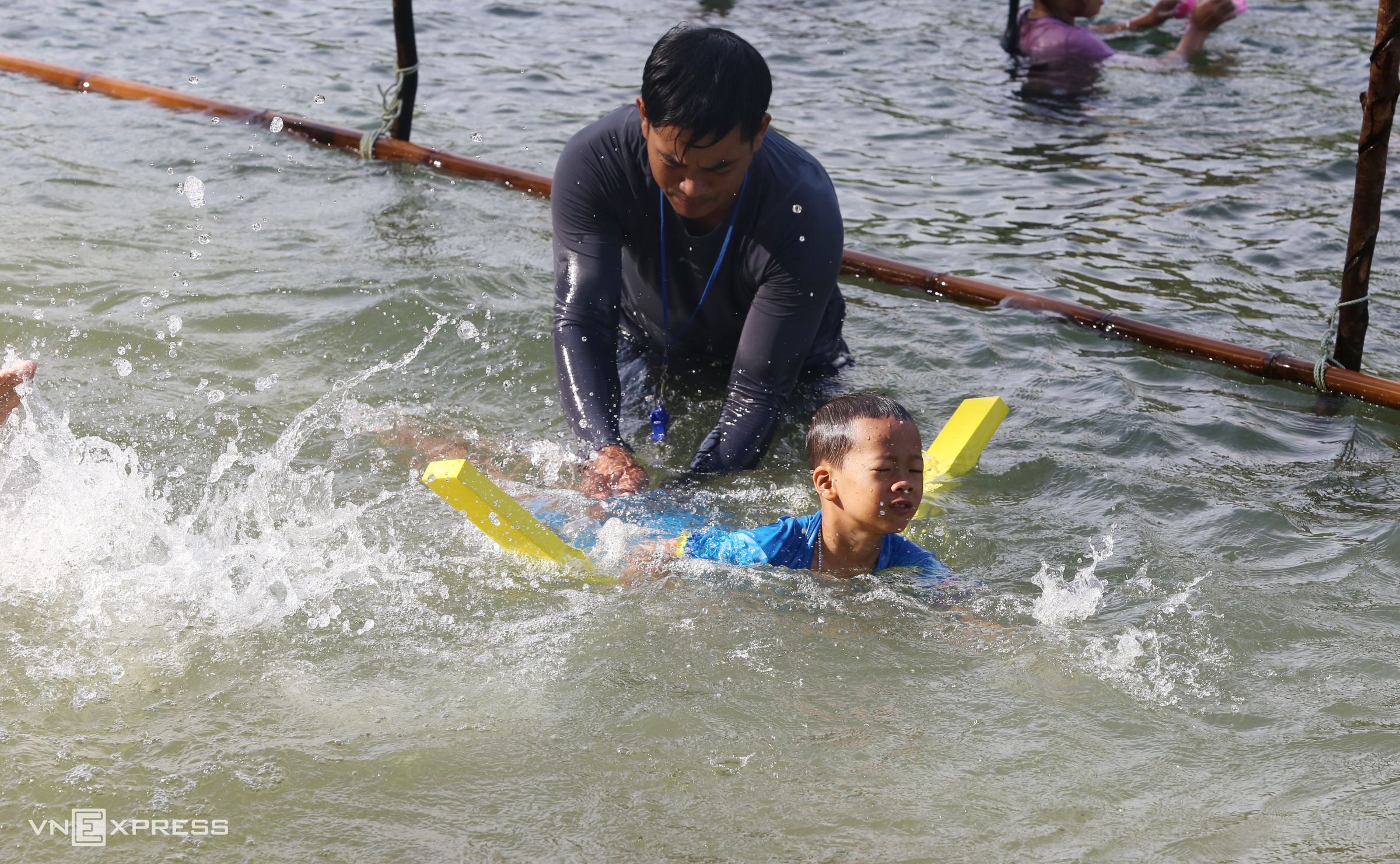 |
For students who cannot float, teachers place a float under their stomachs to support their bodies. Once balanced, students begin to coordinate leg kicks, arm strokes, and breathing.
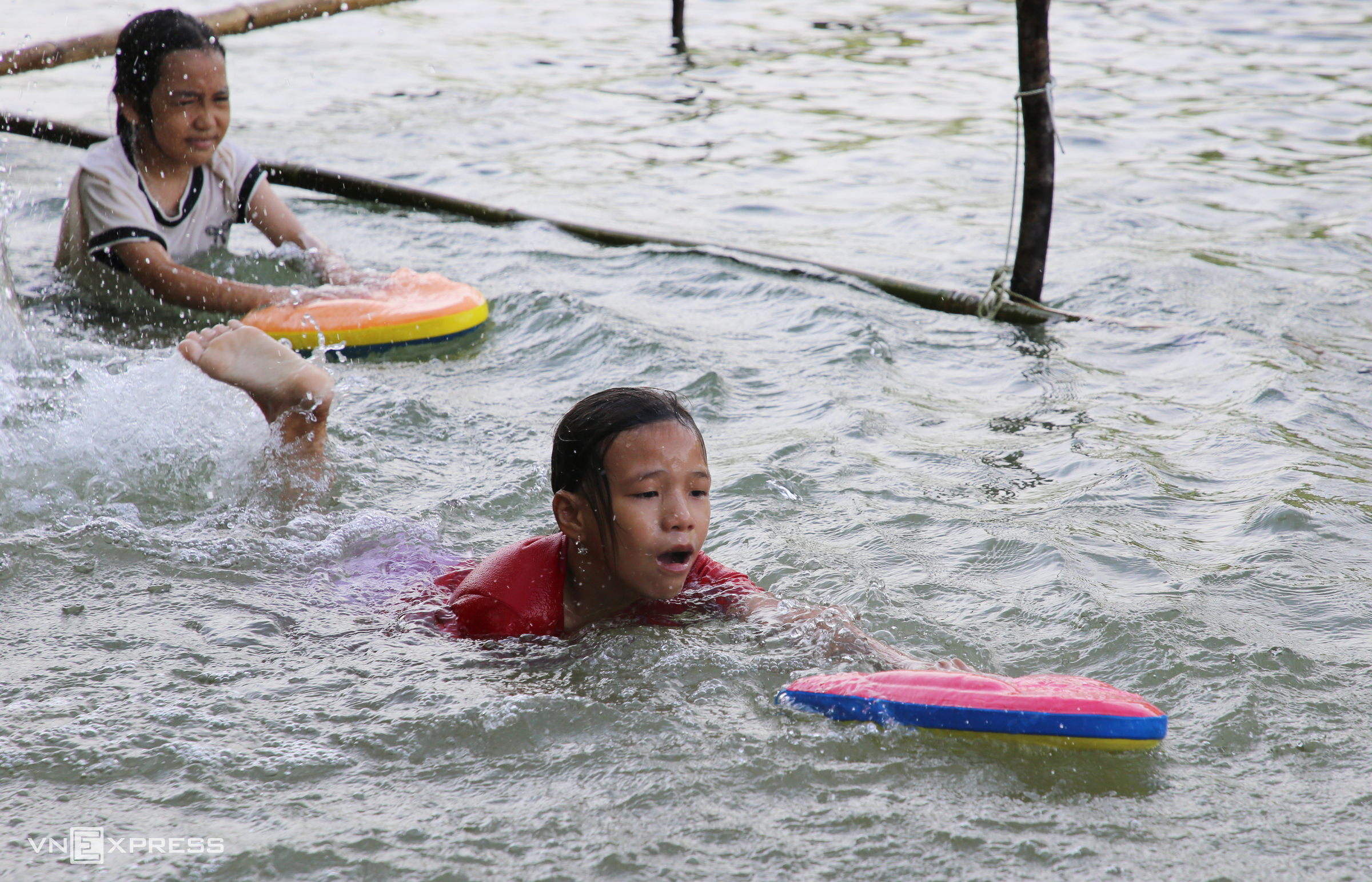 |
Younger students or those new to the water practice with floats near the shore. Teachers stay close to help them overcome their fear of water before moving on to more challenging exercises.
After many practice sessions, students swim back and forth within the bamboo-fenced area. Initially hesitant, many gradually learn to keep their bodies floating level with the water, coordinating their arms and legs smoothly to move forward.
At the end of the nearly one-month course, students take a practical swimming test. The assessment results determine each student's swimming ability and water safety skills.
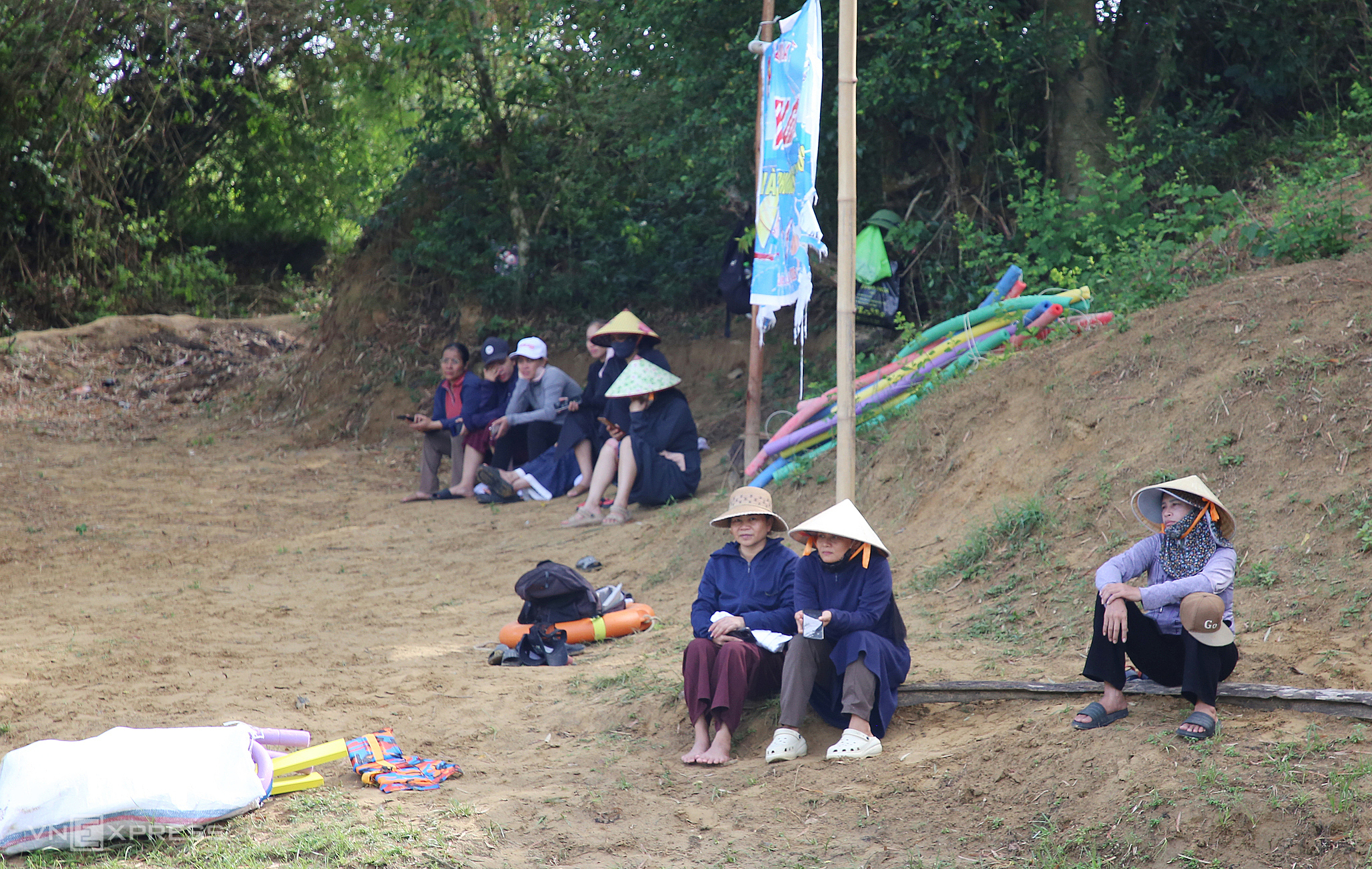 |
On the riverbank, many parents watch their children swim. Truong Kim Anh said her 8-year-old son was very afraid of water before, but after 15 days, he could swim independently. "Seeing my child learn to swim gives me peace of mind because our house is near the river, and he's also improving his health during the summer," she said.
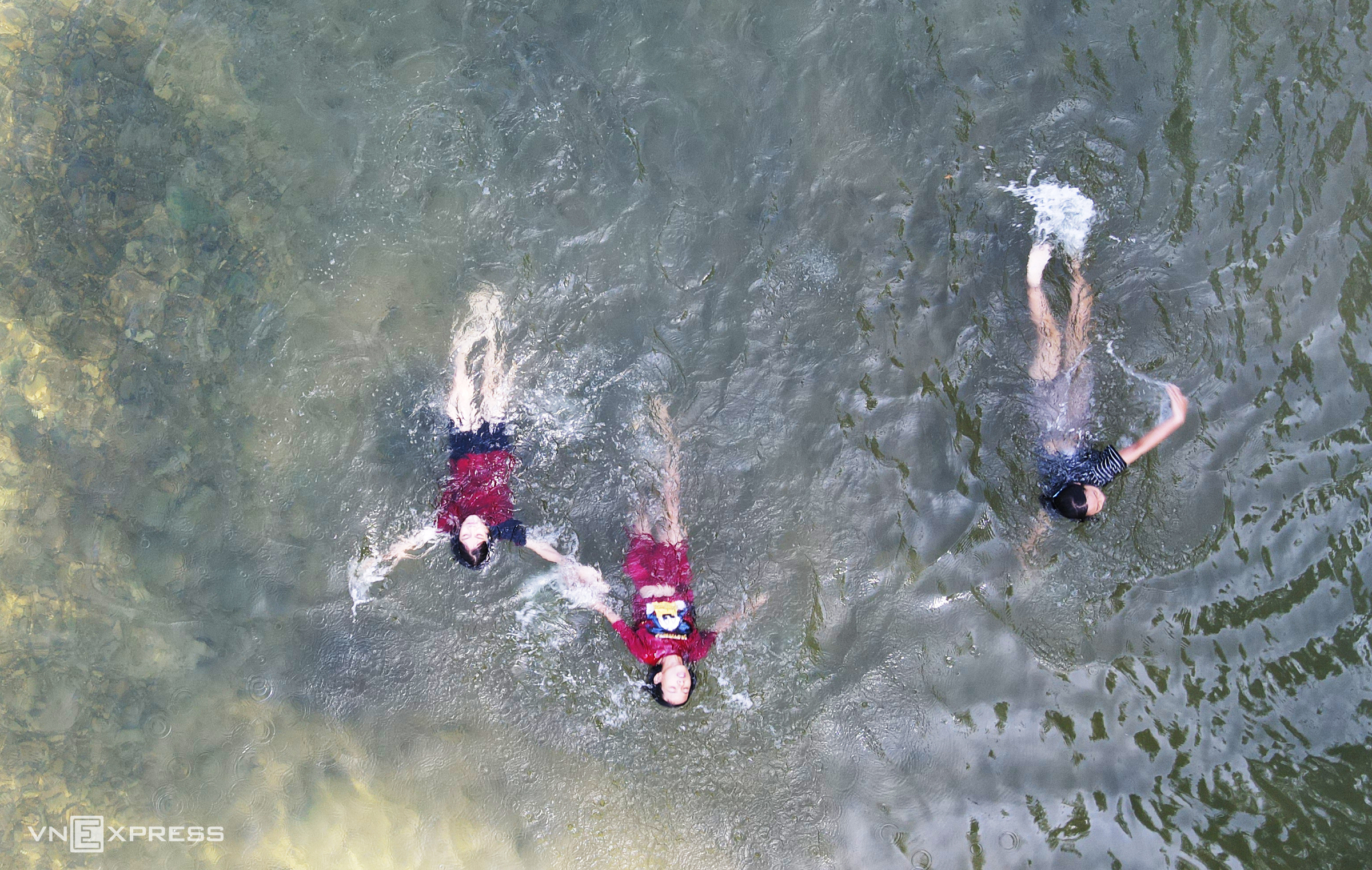 |
Thanh Thao, 14 (center), shared that despite living near the Rao Nan river, she never knew how to swim before. After nearly one month in the class, she can now swim several basic styles and feels confident in the water.
According to teacher Nguyen Anh Duc of Cao Quang Primary School, this year's class attracted 160 students, an increase of 40 from previous years; over 80% of students learn to swim after the course, with the remaining students continuing lessons next summer.
Dac Thanh