Foreigners, priority passengers, and transit passengers also have separate lanes for processing, helping reduce congestion.
This model is currently adopted by many international airports to optimize immigration control processes and shorten processing times.
A representative from Noi Bai International Airport stated that the dedicated lanes help Vietnamese citizens quickly locate processing areas and reduce waiting times during peak hours. This optimization of passenger flow at immigration control also streamlines procedures, enhancing the experience for all travelers, both domestic and international.
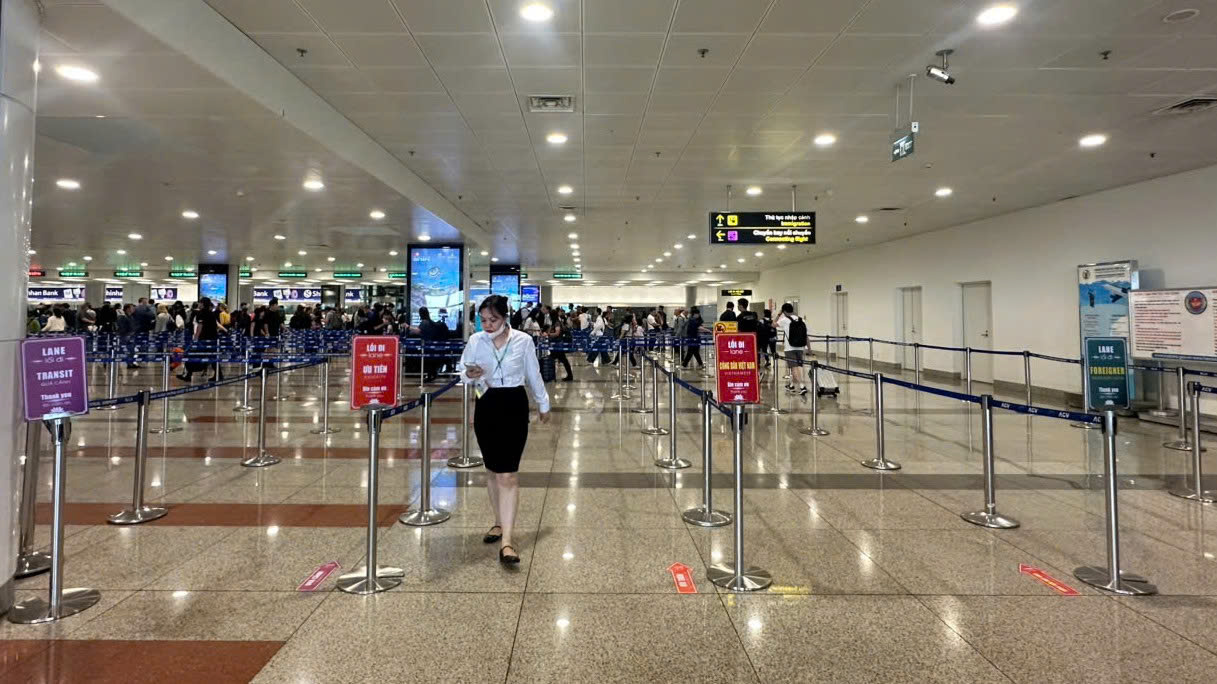 |
Immigration lane separation for passengers at Noi Bai airport. Photo: NIA |
Previously, multiple passenger groups shared a common queue. This often led to delays, as a single case with document issues or requiring information verification could hold up all subsequent travelers, significantly reducing clearance efficiency.
Some passengers reported that under the new system, processing time is reduced to approximately 5-10 minutes, and even faster during off-peak periods. Before, when Vietnamese citizens and foreigners queued together, immigration waiting times could extend from 30 minutes to nearly one hour.
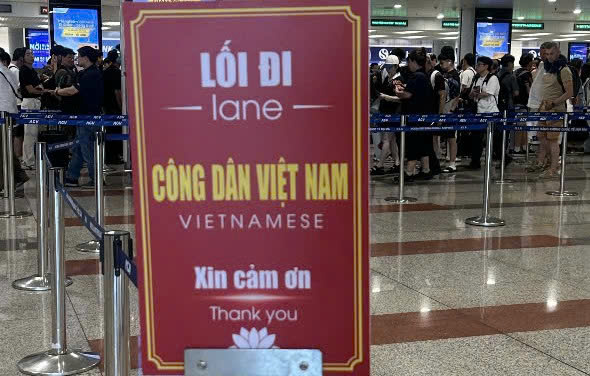 |
Lane signage for Vietnamese citizens. Photo: NIA |
For Vietnamese citizens holding chip-embedded passports, automated control gates are available for processing, with staff on hand to provide assistance as needed.
Beyond immigration, Noi Bai International Airport, in coordination with Border Police, implemented new traffic flow arrangements at both the domestic T1 and international T2 terminals starting 3/8. These new regulations specify distinct pick-up and drop-off locations for different vehicle groups operating at the airport.
Anh Duy