The ambitious plan outlines a comprehensive network of expressways and national highways across Vietnam. The expressway system's North-South axis will include: the eastern North-South expressway, approximately 2,065 km long, and the western North-South expressway, approximately 1,205 km long.
Regional development is a key focus. The northern region will feature 14 expressway routes, totaling approximately 2,242 km. The central and Central Highlands regions will include 11 routes, with a total length of approximately 1,353 km. The southern region will feature 11 expressway routes, spanning approximately 1,342 km.
In major urban centers, Hanoi will have three ring roads totaling approximately 417 km by 2050. Ho Chi Minh City will develop two ring roads, spanning about 299 km.
Beyond expressways, the plan for 2050 also defines a national highway system of 172 routes nationwide, with a total length of approximately 28,614 km. The North-South axis will include: national highway 1, approximately 2,218 km long, and the Ho Chi Minh road, approximately 1,894 km long.
Regionally, the northern area will comprise 21 key national highway routes, approximately 6,530 km long, and 34 secondary national highway routes, approximately 3,857 km long. The central and Central Highlands regions will include 24 key national highway routes, approximately 4,275 km long, and 47 secondary national highway routes, approximately 4,393 km long. The southern region will feature 17 key national highway routes, approximately 2,378 km long, and 27 secondary national highway routes, approximately 3,069 km long.
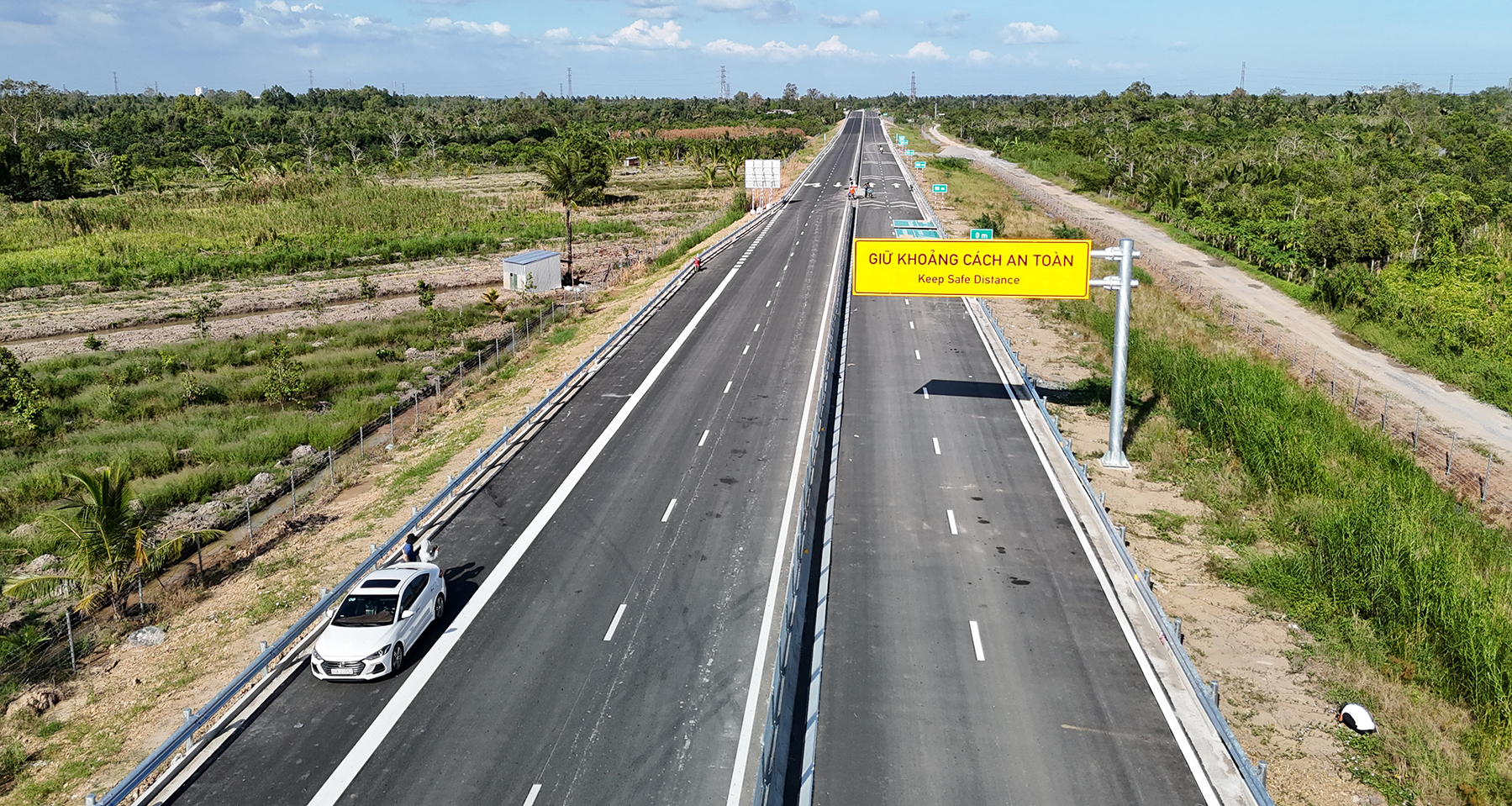 |
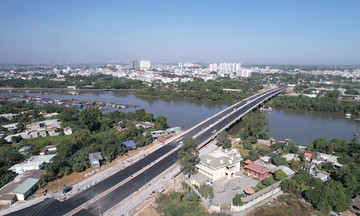
Can Tho - Ca Mau expressway at the end of 12/2025. *Photo: Huy Phong* |
The Ministry of Construction estimates that land use for developing the road system according to the plan will require more than 200,000 hectares. Investment capital needs will exceed 3.2 trillion VND, to be mobilized from state budget funds, government bonds, official development assistance (ODA) loans, non-state budget capital, and other legal sources.
The expansion of expressway routes will follow the planned scale. Upgrading and widening national highway sections or constructing bypasses will be determined based on forecasted transport demand and resource balancing capabilities.
By the end of 2025, the country had completed 3,803 km of expressways, including 3,345 km of main routes and 458 km of access roads, surpassing the target of 3,000 km. This represents a significant advancement compared to the 2001-2010 period (89 km) and 2011-2020 (1,163 km). In the last five years alone, the transportation sector completed approximately 2,000 km, nearly double the amount completed in the preceding ten years.
The government has set a goal to construct an additional 2,000 km, increasing the total expressway network to 5,000 km by 2030.
Anh Duy