 |
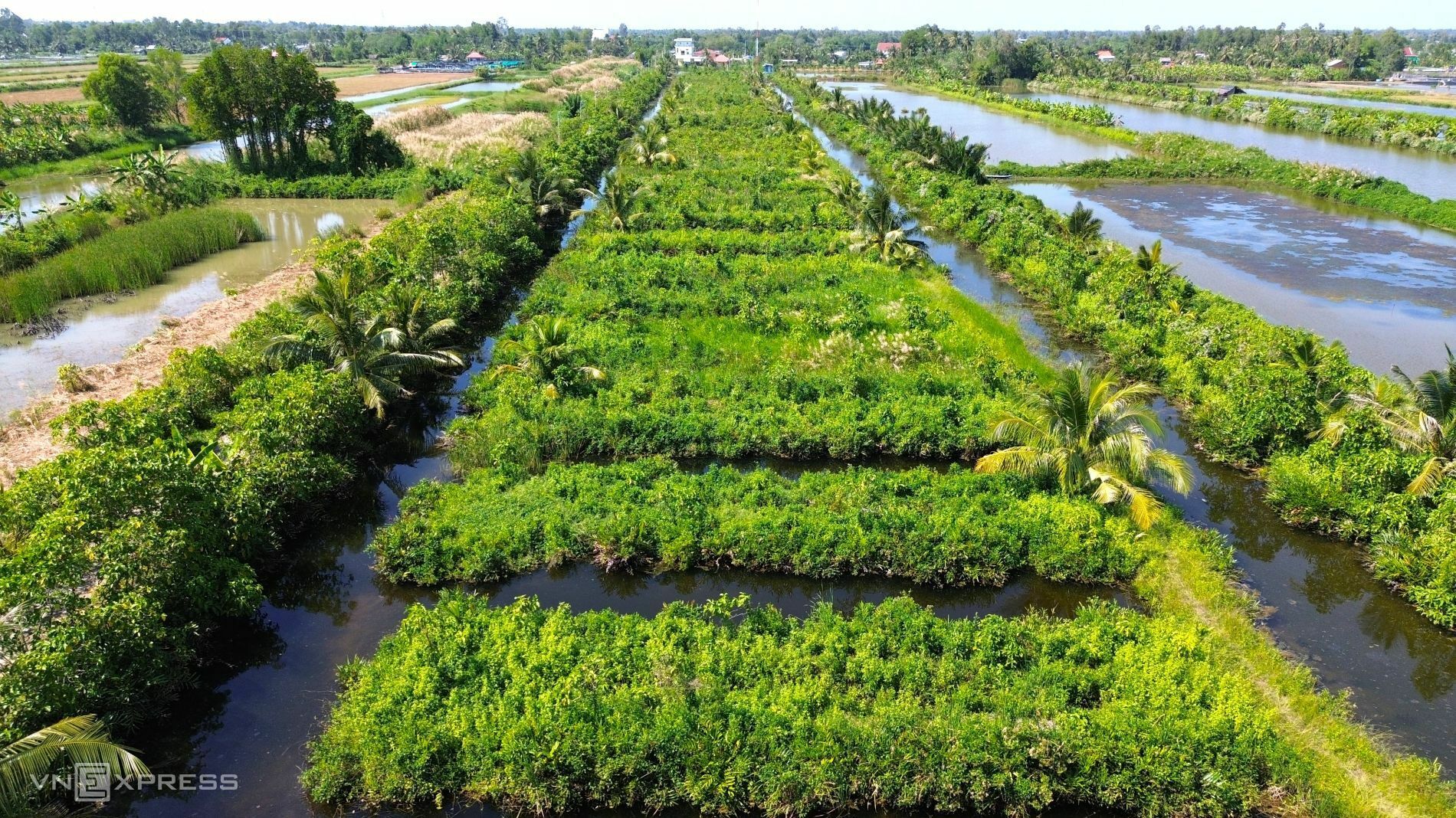
Khuu Van Chuong cultivates tens of thousands of noni trees across more than 5 ha of shrimp ponds in Cong Nghiep Hamlet, Tran Van Thoi commune, securing raw materials for his production. In 2018, he decided to leave his stable job at a telecommunications company to return to his hometown and research noni juice concentrate production.
The production facility, spanning over 600 m2, is located near the noni cultivation area. It includes sections for washing, fermentation, machinery, packaging, and warehouses for raw materials, packaging, and finished products. The surrounding area consists of shrimp farms, which also serve as a raw material source for this modern noni juice concentrate factory in the Mekong Delta.
To ensure a consistent supply of raw materials, Chuong collaborates with about 10 households in the province, cultivating noni on over 50 ha. The noni tree, also known as "cao" or "noni nui" (mountain noni), belongs to the coffee family. Most parts of this plant can be used for medicinal purposes. Traditionally, elders used the fruit to make medicinal wine for body aches, though few realize that noni contains up to 200 active compounds, supporting health and preventing illness.
To achieve a high-quality product, the facility selects fresh noni fruit harvested from clean, organically farmed raw material areas. Only fruits that are 80% ripe or more are chosen as input. These standardized fruits are thoroughly cleaned in an ozone bubbling machine to remove any dirt. Chuong noted that the biggest challenge during his research was eliminating the noni fruit's characteristic pungent smell while preserving its flavor and benefits. After numerous trials with tens of noni juice concentrate samples, he finalized a satisfactory formula.
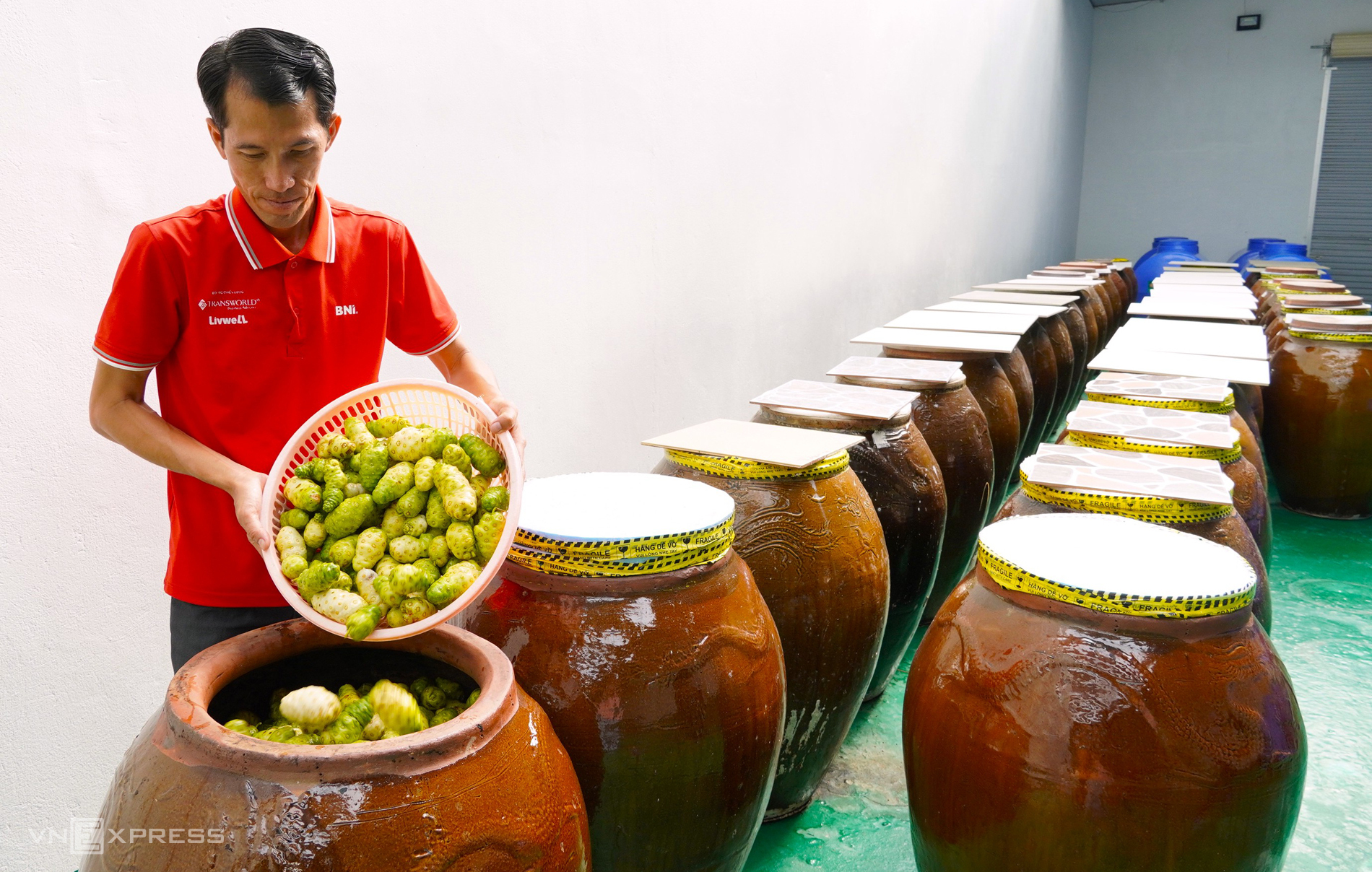
After initial processing, the noni is dried and then placed in jars to ferment for 12 months.
This long fermentation process facilitates natural fermentation, activating all active compounds to produce a 100% pure final product. One liter of finished concentrate requires 3-4 kg of fresh noni fruit.
 |
After the fermentation period, the noni gradually changes color before being transferred to a machine that separates the liquid from the seeds, yielding the concentrate for various product lines. According to Chuong, noni juice concentrate is well-known in countries like the United States and Australia. This product is recognized as a "superfood" that improves and enhances health, boosting immunity. Notably, Iridoids found in noni fruit have anti-cancer and anti-cell mutation properties.
To best serve customers, the products are meticulously prepared with clear labels, diverse quantities, and hygienic packaging.
In addition to the noni washing machine, the facility owner also invested in machines for pasteurization, cooling, and filling.
The product is available in 30 ml pouches for single use. The facility also produces three bottled formats, with prices ranging from 155,000 - 380,000 dong, depending on volume and product line.
Currently, the facility produces two types of noni juice concentrate: with sugar and without sugar. These are distributed through 30 agents nationwide and via e-commerce platforms.
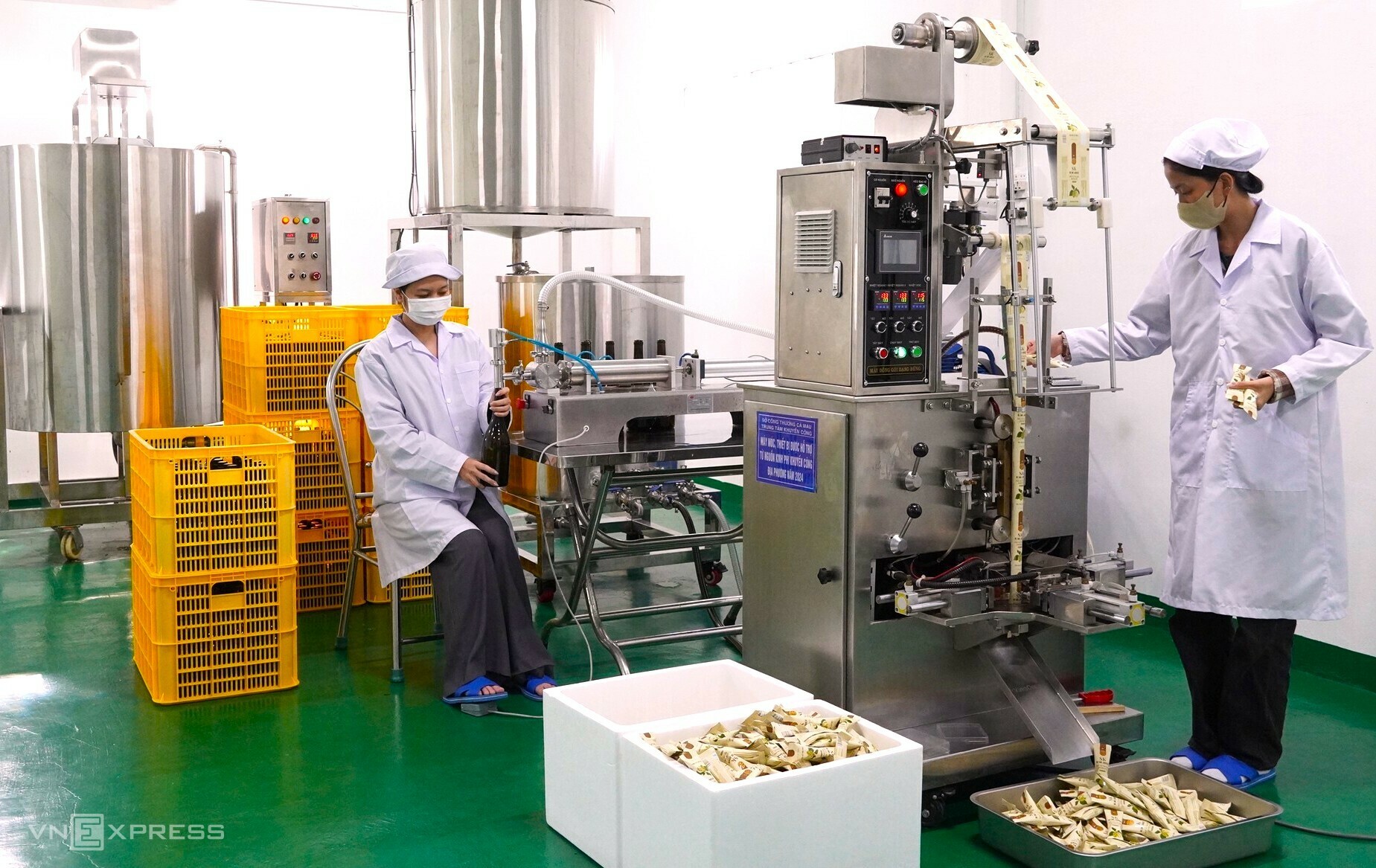 |
Workers are busy packaging the finished noni juice concentrate to ensure timely delivery for customers' Tet holiday gifts.
Chuong's facility has promoted its products at trade promotion conferences, fairs, and startup programs. SK NONI noni juice concentrate is a registered trademark and has been recognized as a 4-star OCOP product of the province.
Annually, the facility sells over 10,000 liters of noni juice concentrate, generating nearly 2 billion dong in profit. Besides domestic sales, noni juice concentrate is also exported internationally through informal trade channels.
Chuc Ly