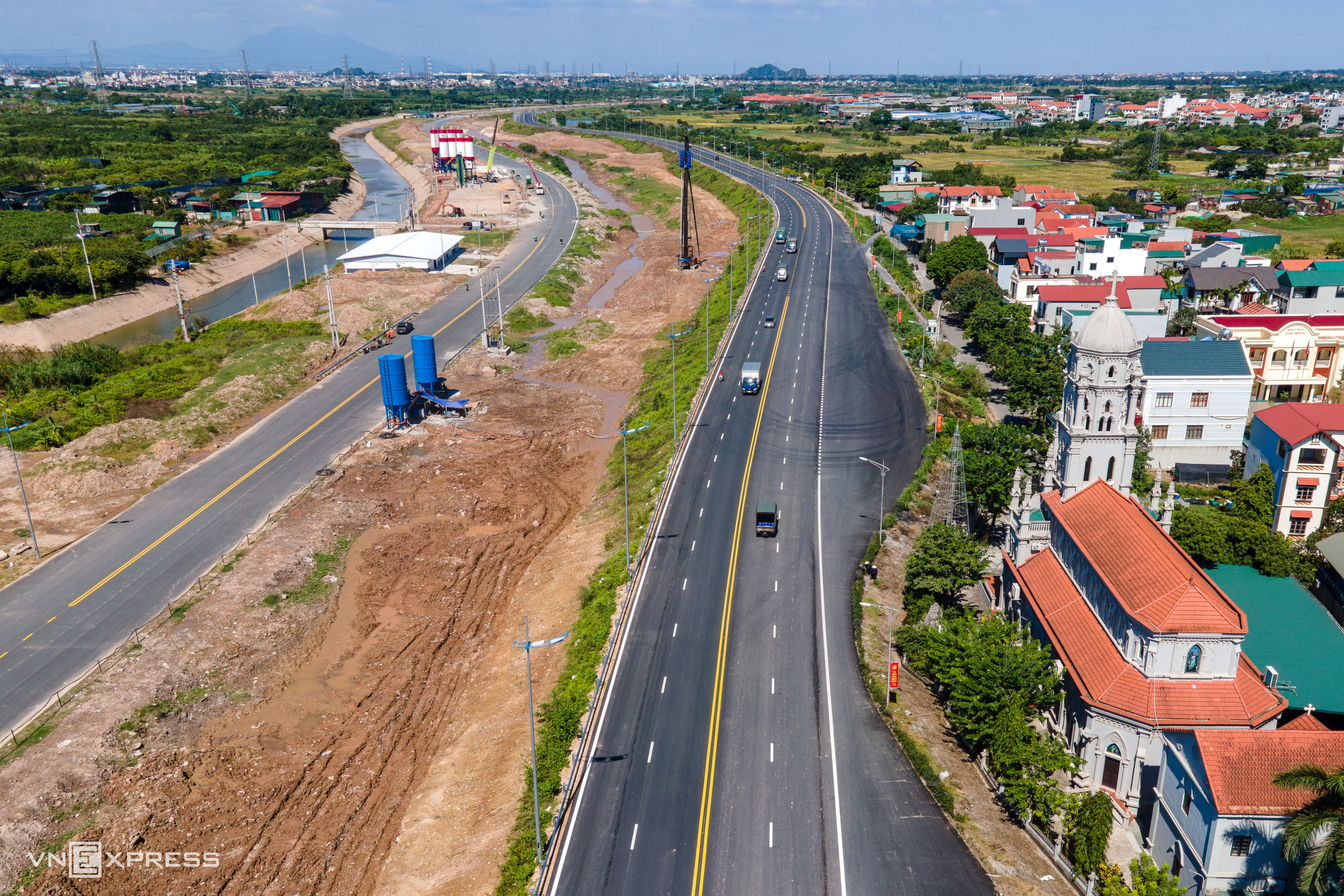
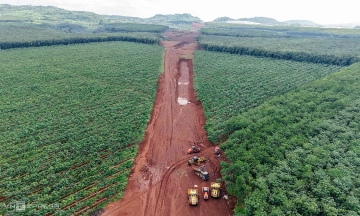
On 22/8, the National Assembly debated the mechanism for relocating historical relics. This discussion centered on facilitating the construction of a road linking Gia Binh airport with Ha Noi and a new barracks for the People's Public Security Air Force Regiment. The topic was a recent addition to the session's agenda.
The government has agreed to propose a special mechanism for the relocation of Dinh Dong Coi in Thuan Thanh ward and Dinh Tam Son in Luong Tai commune. However, Den Tan Tran in Lam Thao commune was not included in the draft Resolution, pending further review of issues related to the Law on Belief and Religion.
These projects are deemed crucial for socio-economic development, national defense, security, and international affairs, notably the APEC 2027 Summit.
Explaining the rationale to the National Assembly, Minister of Culture, Sports and Tourism Lam Thi Phuong Thanh emphasized that relic relocation is a last resort, to be undertaken only when in-situ preservation is no longer viable. She stressed that any relocation plan must be developed transparently, objectively, and with active public consultation.
The Minister highlighted that communal houses (dinh) and temples (den) are more than just architectural structures; they are deeply intertwined with the history, beliefs, and daily lives of rural communities. Consequently, any new location must respect traditional characteristics and maintain the vital connection between the relic and its community.
The dismantling, transportation, and reconstruction process must strictly follow relic restoration protocols, ensuring the preservation of as many original structural elements as possible. Post-relocation, the relics must continue to be preserved and their value promoted, not simply rebuilt as architectural pieces.
The Minister affirmed that the government will finalize the relocation plans and oversee their implementation to balance infrastructure development needs with heritage preservation.
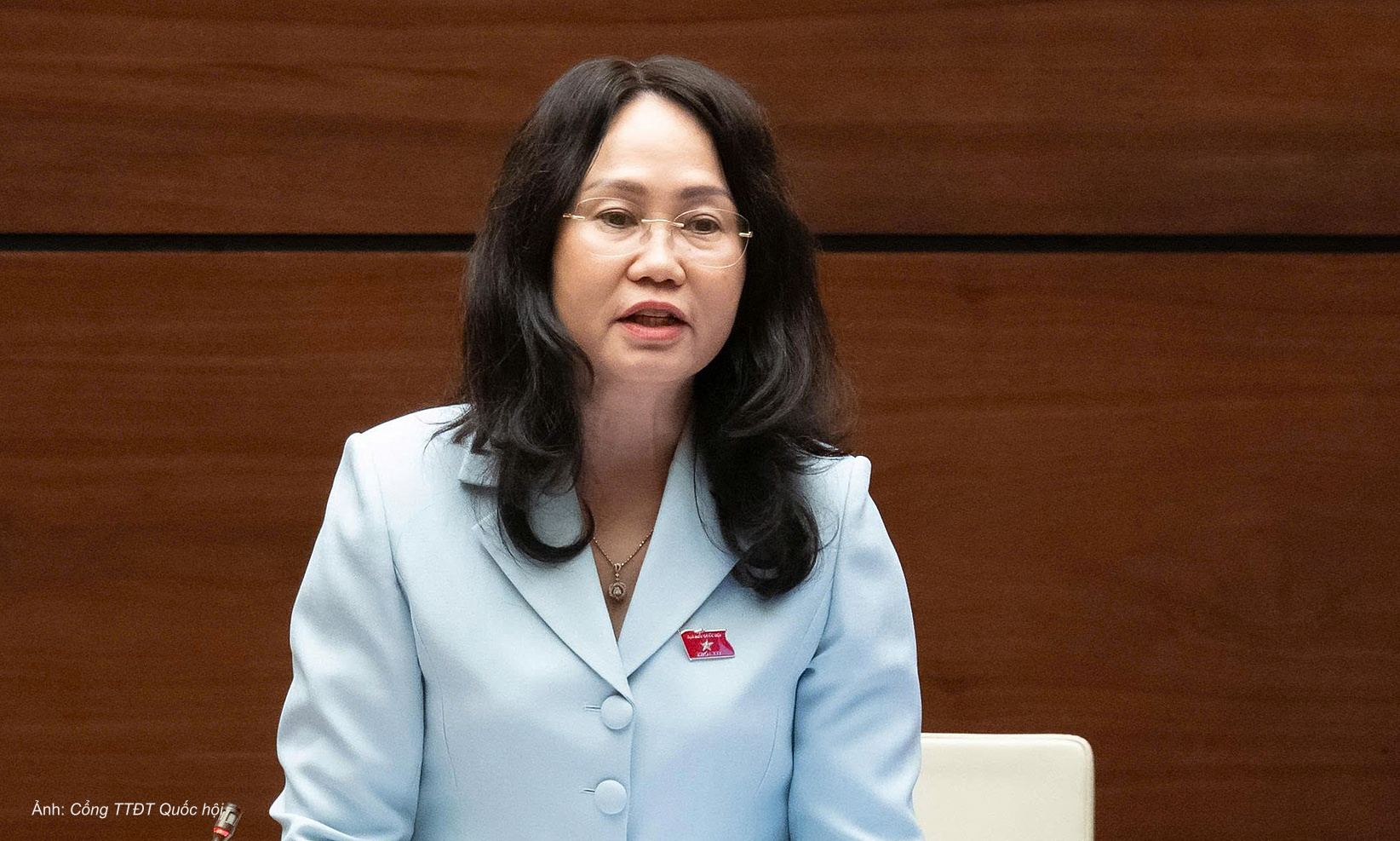 |
Minister of Culture, Sports and Tourism Lam Thi Phuong Thanh addressing the National Assembly on 23/8. *Photo: National Assembly E-portal*
Earlier, Nguyen Thi Suu, Deputy Head of the Hue City National Assembly Delegation, supported issuing a resolution for these important projects. However, she urged a comprehensive consideration of the historical, spiritual, and community memory values intrinsically linked to each relic.
According to Suu, communal houses in the Kinh Bac region hold more than architectural significance; they safeguard ancient legends, royal decrees, worship artifacts, and traditional rituals. These sites are central to community life, serving as places for religious practice, festival organization, and the intergenerational preservation of the profound cultural value of "drinking water, remembering the source"—a Vietnamese idiom emphasizing gratitude and remembrance of one's origins.
Therefore, relic relocation cannot be a simple process of dismantling and reassembling a structure elsewhere. "The fundamental question is how to pursue development without eroding the core values of our heritage," Suu stated.
Suu urged that the resolution include strict provisions for the preservation plan, the new relocation site, and strategies to promote the relic's value post-reconstruction. She emphasized that citizens must be directly involved in developing these plans, not merely informed, to ensure their cultural and religious life remains uninterrupted.
The Bac Ninh Provincial People's Committee must take responsibility for the scientific documentation, boundaries, relocation plans, and preservation outcomes for each relic. The central government, in turn, is responsible for providing guidance, conducting inspections, and resolving issues that exceed local jurisdiction.
The National Assembly is scheduled to vote on the draft Resolution on 24/8.
Son Ha