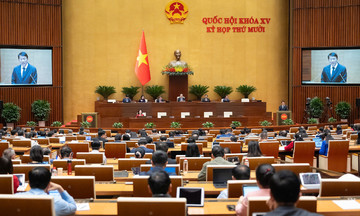
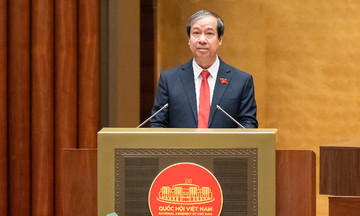
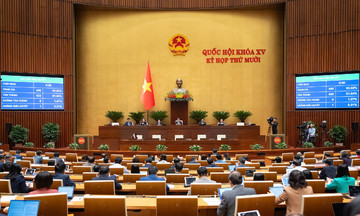
On 20/11, the National Assembly discussed a draft Resolution on specific mechanisms and policies to implement the Politburo's Resolution on breakthrough development in education and training. According to the draft, the state will implement superior preferential policies for teachers and staff in preschool and general education institutions. This includes a minimum professional incentive allowance of 70% for teachers, 30% for staff, and 100% for teachers working in especially difficult, border, and island regions.
Delegate Pham Hung Thang (Ninh Binh delegation) supported the policy of increasing allowances for educators but raised concerns when comparing it with the mechanism applied to healthcare personnel. According to him, healthcare staff at communal health stations and in preventive medicine currently receive a 100% professional incentive allowance in many mountainous areas, ethnic minority regions, and disadvantaged localities. In contrast, teachers only reach the 100% level when working in "especially difficult" regions, while in merely "difficult" regions, the allowance is equivalent to that in developed areas. He argued that this regulation is "disproportionate, unfair, and does not demonstrate superiority".
Based on this reality, Thang proposed increasing the allowance for public preschool and general education teachers working in difficult areas to a level higher than 70%, suggesting it should be close to 100% to avoid disadvantages. He also highlighted an inconsistency where the 30% incentive allowance for school staff is applied uniformly across all regions, without differentiation between developed and difficult areas. He believes this allowance needs to be higher to genuinely encourage working in challenging regions.
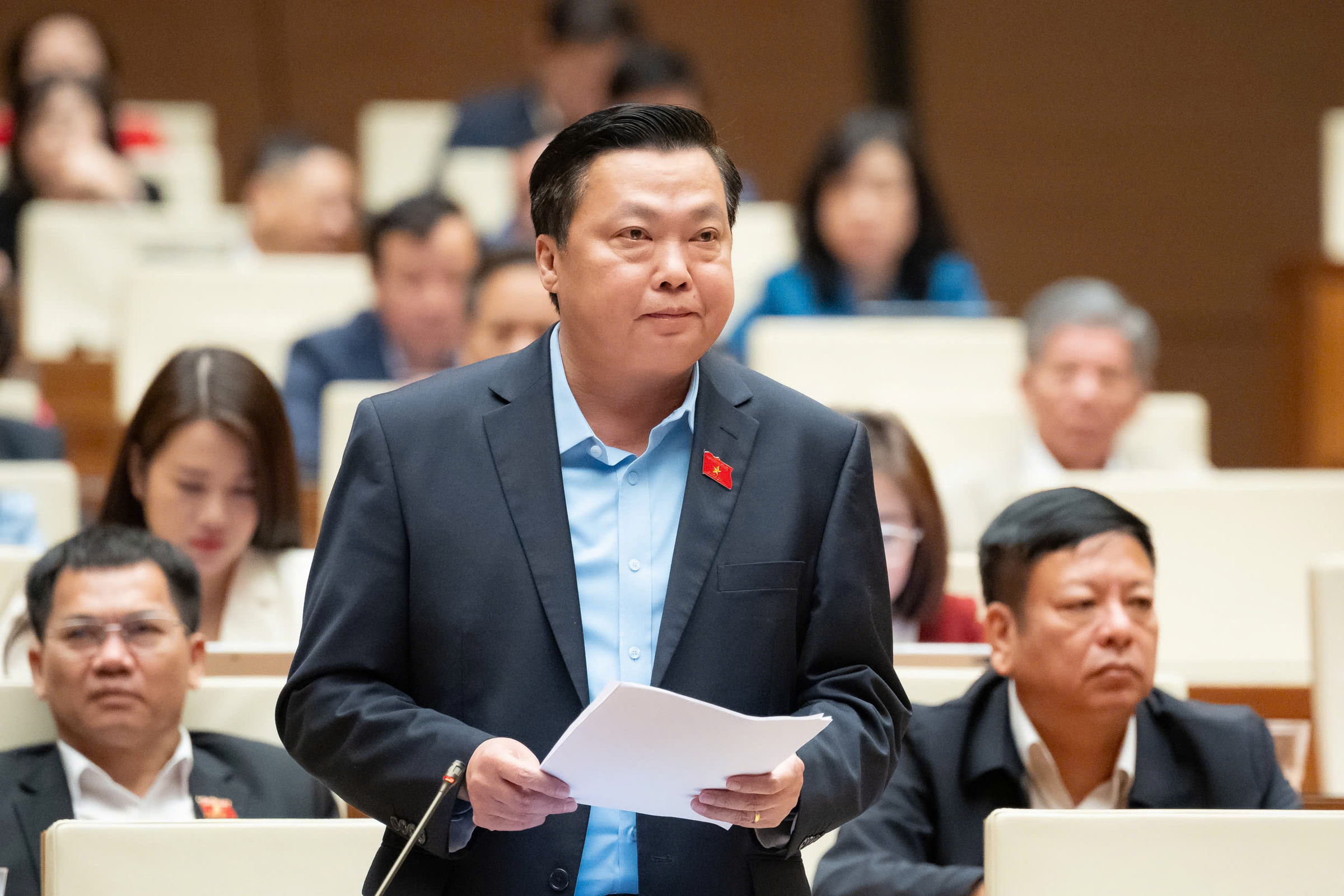 |
Delegate Pham Hung Thang (Deputy Head of Ninh Binh delegation). Photo: Hoang Phong |
Professor Hoang Van Cuong, former Vice Rector of National Economics University, agreed that the draft recognized the efforts and sacrifices of teachers in highland areas through preferential rates ranging from 70% to 100%. He emphasized that teachers need to be supported with concrete policies, not just honored with words, reflecting consistency in policy and law.
Cuong analyzed that teaching is a special profession, requiring teachers to maintain standards to set an example for students. Unlike many professions where individuals can take on additional work if their salary is insufficient, teachers are bound by numerous regulations, making it difficult to find external income sources. Therefore, higher allowances help improve income, enhance their sense of responsibility towards society and learners, and enable them to fully dedicate themselves to their schools.
The former Vice Rector of National Economics University stressed that increasing benefits for teachers is a small investment that yields significant returns, impacting hundreds of thousands of learners. When teachers receive more attention, societal expectations and supervision should also increase, contributing to building a standard team of educators – a decisive factor in the success of national education.
20% of state budget allocation for education is 'not groundbreaking'
Delegate Nguyen Thi Tuyet Nga (Quang Tri delegation) stated that the 20% budget allocation for education is not truly groundbreaking, though it serves as a minimum to cover salaries and basic investment for the sector. Nga expressed concern that education faces many urgent tasks in the coming period, requiring substantial resources, while the "budget pie is only 20% – already a significant effort".
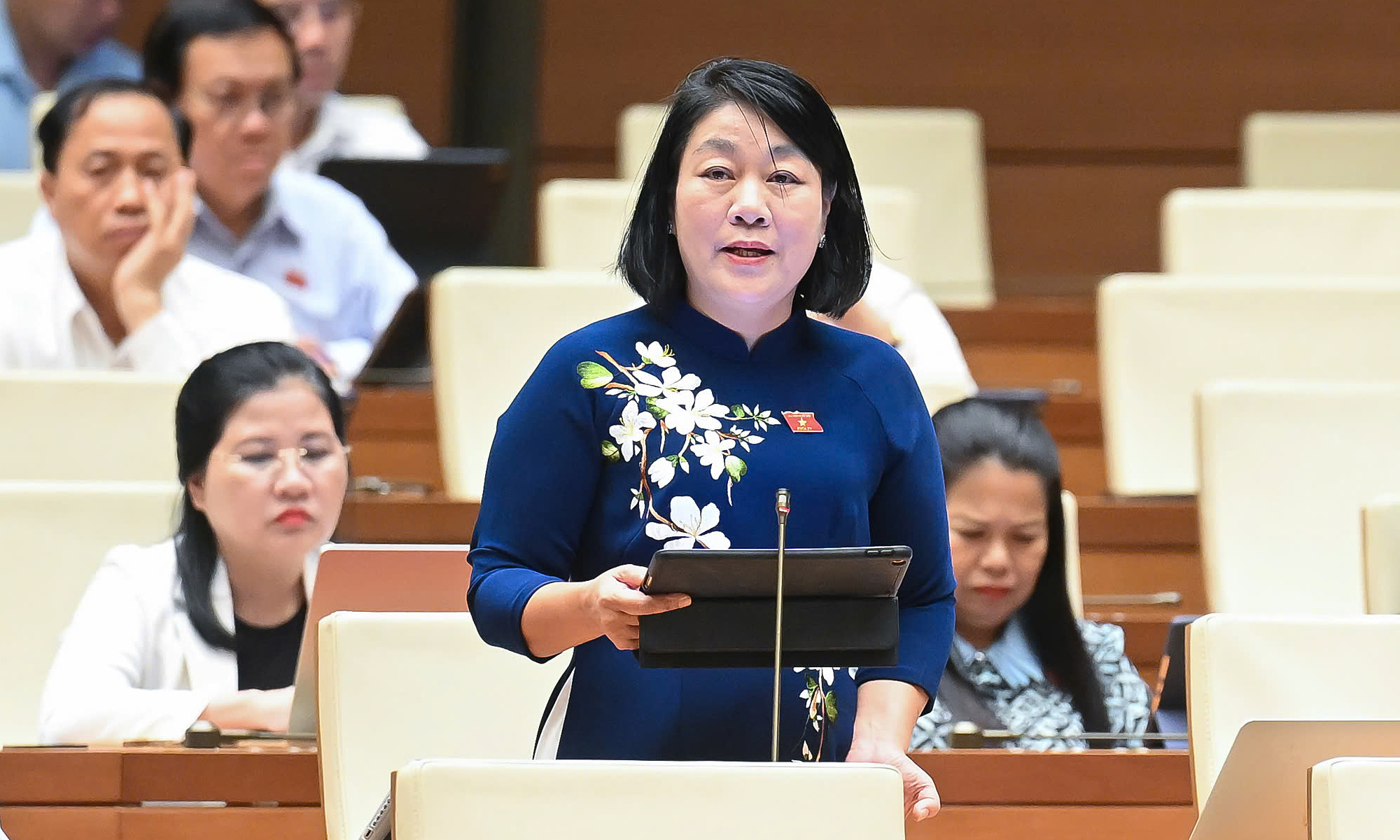 |
Delegate Nguyen Thi Tuyet Nga (Quang Tri delegation). Photo: Hoang Phong |
Therefore, Nga proposed that the draft clarify financial mechanisms, investment strategies, and methods for efficient resource utilization. She also emphasized that the state cannot solely rely on the budget but needs to mobilize socialized resources and diversify funding. She pointed out that the legal framework for public-private partnerships in education is currently incomplete, potentially exposing businesses investing in public schools to legal risks. Consequently, the draft needs bold amendments and additions of superior mechanisms to attract private resources.
"The most important resources remain people, governance, and institutions," she stated. Arguing that autonomy is both an advantage and a significant resource that can bring faster and stronger results than direct financial investment, she proposed that the draft Resolution include specific policies on finance, investment, socialization, and special mechanisms for education autonomy and university autonomy.
The National Assembly will consider passing this draft Resolution on 11/12.
Son Ha