According to a government report submitted to the National Assembly, the Ministry of Construction has developed a project for training and developing Vietnam's railway human resources. The goal for the 2025-2030 period is to train at least 35,000 people, focusing on high-quality personnel to meet the demands of implementing high-speed rail, electrified rail, and urban rail projects, as well as supplementing teaching staff for training institutions.
For the 2031-2035 period, the project aims to train at least 70,000 people to support the deployment of high-speed rail and electrified national railway projects. Additionally, Vietnam needs to organize human resource training for technology transfer, gradually mastering parts of railway technology and industry.
Specifically, the North-South high-speed railway project will require 13,880 workers during the 2027-2032 period for management, operation, exploitation, and maintenance.
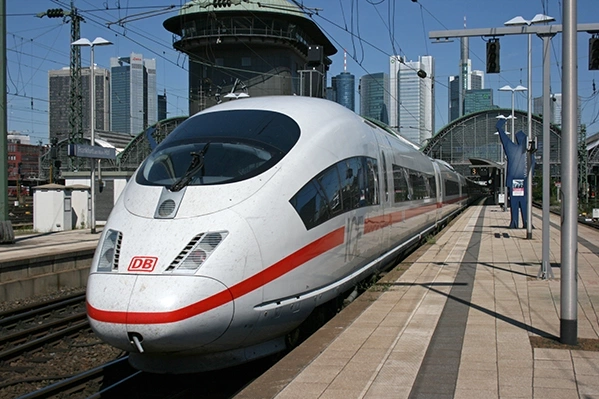 |
High-speed rail in Germany. Photo: InterCityExpress
The Ministry of Construction is developing a human resource training and development plan for the railway sector for 2026 and the 2026-2030 period. This plan defines specific annual training roadmaps to promptly support the construction, management, operation, and exploitation of railway lines, especially the Lao Cai - Ha Noi - Hai Phong route and the North-South high-speed line.
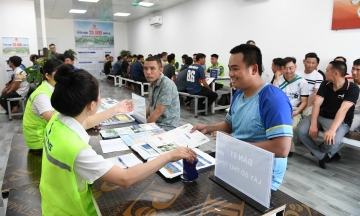
Universities under the Ministry of Construction and several key schools under the Ministry of Education and Training have established specialized units, launched new training programs, invested in laboratories and simulation facilities, and enhanced international cooperation.
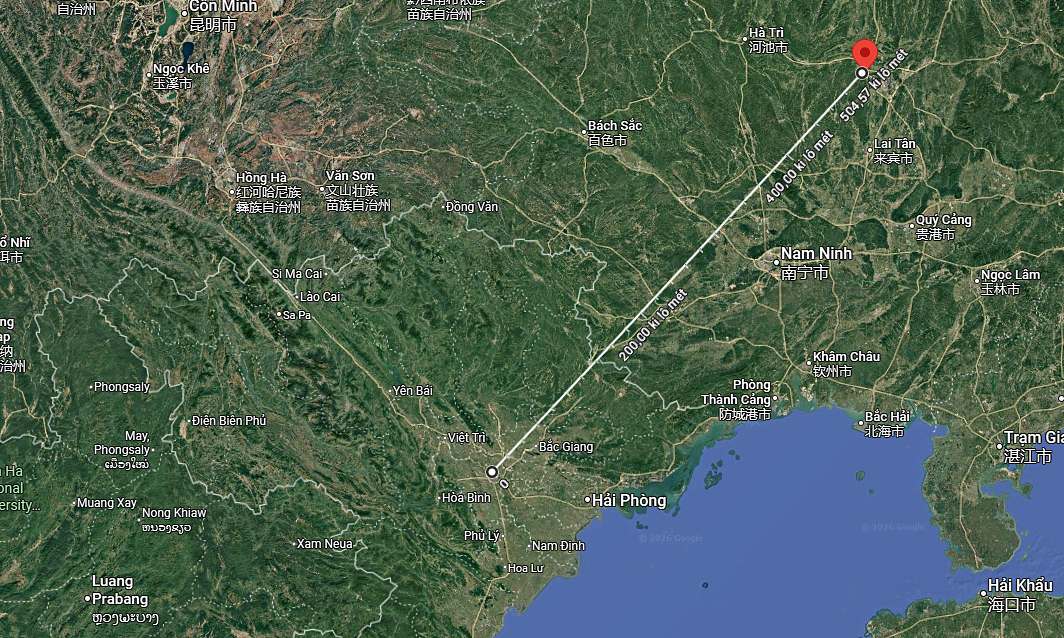
Vietnam Railways Corporation (VNR) has collaborated with Chinese railway training institutions, such as Liuzhou Railway Vocational Technical College and Kunming Railway Vocational and Technical College, to train personnel to international standards. The enterprise organized six training classes for approximately 180 trainees at various levels, directly serving the construction of new railway projects and high-speed railways. These training courses were completed in 12/2025.
VNR is also partnering with reputable universities in China and South Korea, including Southwest Jiaotong University, Shanghai University, and Dongyang University, to train engineers, masters, and doctors specializing in new and high-speed rail. VNR is also coordinating with Korea Railroad Corporation (Korail) to develop a master plan for high-speed rail human resource training.
The University of Transport and Communications Ho Chi Minh City established the Institute of High-Speed Rail, which has invested in a high-speed rail control and operation simulation system. The university also founded the High-Speed Rail Center, collaborating to build laboratories and modern simulation models, and adopting advanced practical training models from countries with advanced high-speed rail systems for pilot application.
The North-South high-speed railway project has received investment approval from the National Assembly. It will span 1,541 km from Ha Noi to Ho Chi Minh City. The new line will feature a double track, 1,435 mm gauge, and a design speed of 350 km/h, including 23 passenger stations and five freight stations. Primarily for passenger transport, it will also meet dual-use requirements for national defense and security, with the capability to transport goods if needed.
The preliminary total investment for the project is 1,713,540 billion VND, equivalent to 67,34 billion USD. It will be implemented as a public investment, with deployment expected from 2025 to 2035. Many localities are currently acquiring land and clearing sites to prepare for the project's groundbreaking in 12/2026.
Doan Loan