On 24/9, Deputy Minister of Health Do Xuan Tuyen presented the draft amended food safety law to the National Assembly Standing Committee. He highlighted that a key new provision is the inclusion of food safety requirements for online food delivery services. This addresses challenges emerging from evolving food business models.
The Committee on Science, Technology and Environment, which is appraising the bill, also noted gaps in the current law regarding food management via digital platforms, e-commerce, and online food delivery services. The committee proposed adding responsibilities for digital platform owners and e-commerce marketplaces in ensuring food safety. It also suggested strengthening consumer rights to access information and product traceability.
The draft law further outlines responsibilities for entities registering and announcing products, and obligations for those providing collective meals not for commercial purposes. It also specifies prohibited actions and food recall procedures. Regulations on temporarily suspending the acceptance and processing of product announcement dossiers are also clarified.
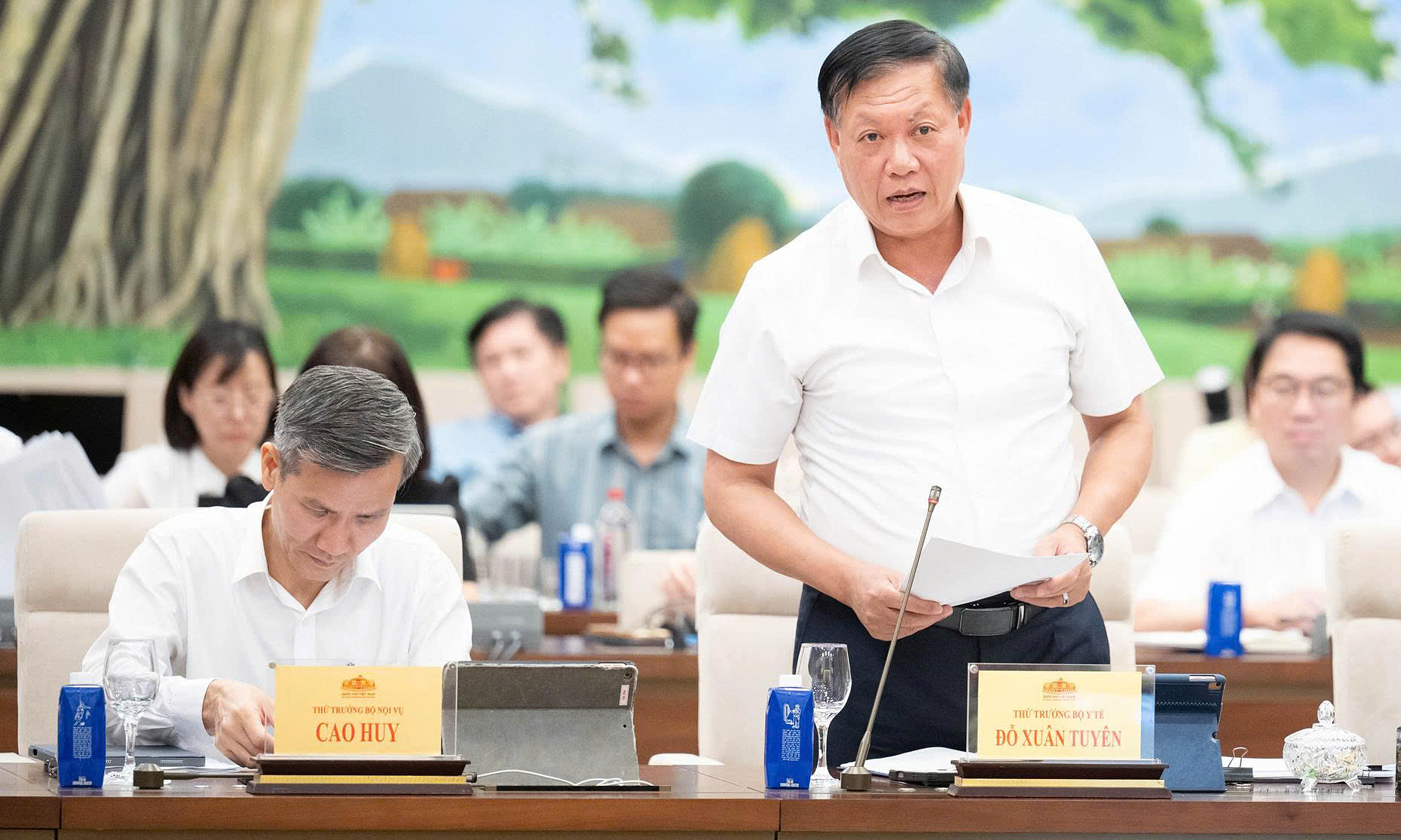 |
Deputy Minister of Health Do Xuan Tuyen speaks at the session. Photo: National Assembly Portal |
Risk-based management and incident traceability
Deputy Minister Do Xuan Tuyen stated that the draft law establishes risk analysis principles and a framework for classifying food by risk level. High-risk food products will be subject to mandatory traceability. The draft also includes principles for resolving conflicts when the food safety law and other laws have differing provisions.
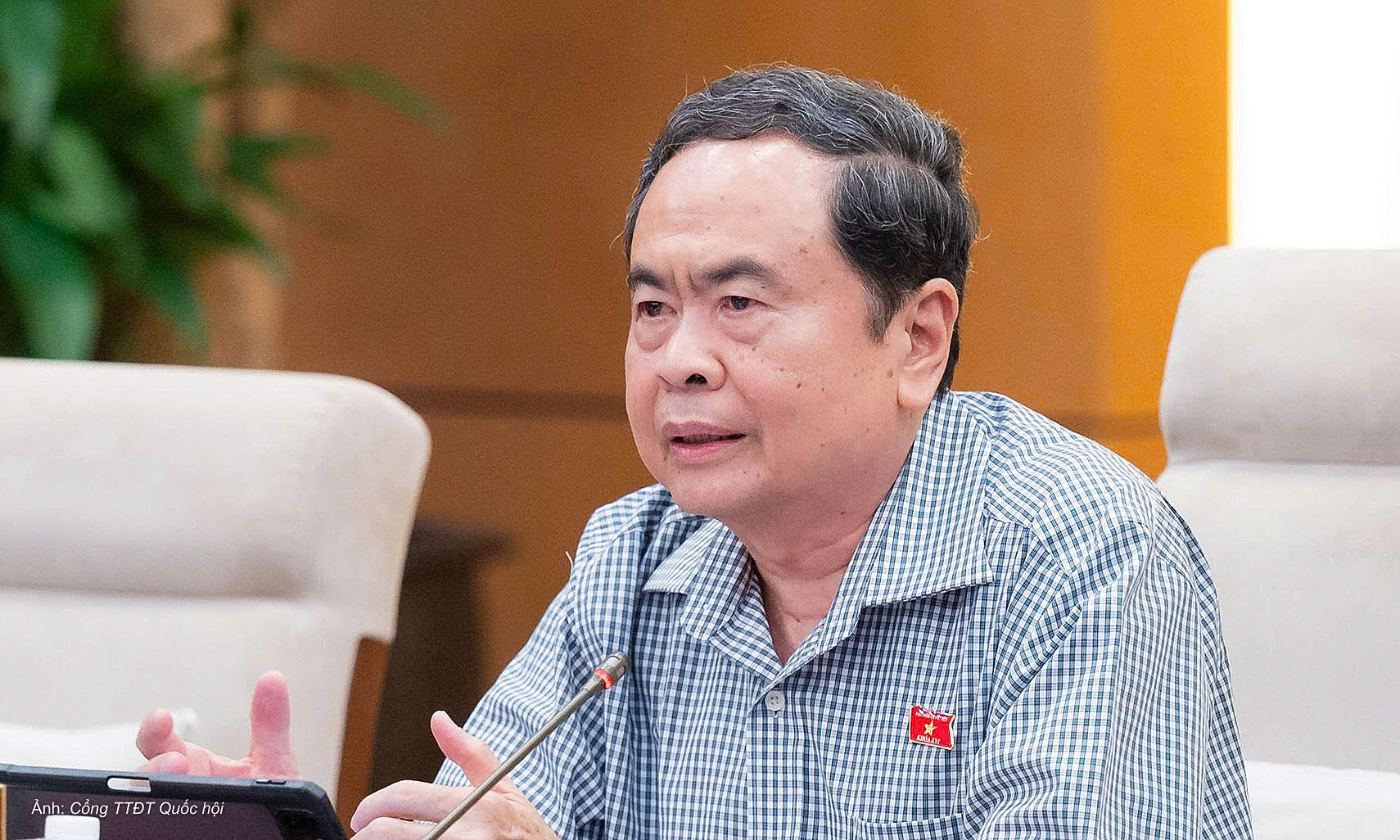
National Assembly Chairman Tran Thanh Man remarked that after 15 years of the current law's implementation, the core challenge is to innovate management approaches rather than simply adding conditions, licenses, and procedures. He proposed using risk levels as the basis for designing regulations: high-risk foods would undergo stricter control, while low-risk products could be subject to post-market surveillance.
Chairman Man emphasized that post-market surveillance should focus on facilities, products in circulation, compliance history, and traceability. A control mechanism is essential to prevent this from becoming a covert form of pre-market approval, and procedural reforms must not compromise safety standards.
Citing cases where over 100 people suffered from bread poisoning, Chairman Man suggested the cause could be in ingredients like vegetables, pork sausage, pate, or cold cuts. He stressed the importance of the health sector accurately identifying the contaminated food to implement effective solutions. Therefore, the draft law needs to clarify the lead and coordinating agencies, decision-making authority, and individual responsibilities during food safety incidents.
The National Assembly Chairman urged the draft law to address three critical questions: ensuring food safety for consumers, providing simplified procedures for compliant businesses, and enabling rapid traceability, accountability, and resolution in the event of an incident.
The appraising agency also recommended reviewing post-market surveillance regulations to prevent them from becoming a new form of pre-market control. It proposed clear provisions for compensating businesses if state agencies temporarily suspend product sales or advertising, but subsequent inspections find no violations. Furthermore, the agency suggested exploring temporary or permanent revocation of operating licenses for individuals who intentionally commit serious violations.
Proposed unified management authority
Another significant change under development is the unification of food safety management from central to local levels. Deputy Minister Do Xuan Tuyen stated that the central management authority is expected to be consolidated under the Food Safety Department of the Ministry of Health. Functions and tasks currently handled by other ministries and sectors will be reviewed for transfer to this unified body.
At the provincial level, food safety sub-departments are planned for 34 provinces and cities. TP HCM currently operates a Food Safety Department model under a pilot resolution by the National Assembly. Under the proposed plan, TP HCM will adopt the general model after its pilot phase ends. At the commune level, the Culture Department will have specialized advisory staff, with inter-sectoral teams implementing tasks under the direction of the commune-level People's Committee.
The draft amended food safety law is scheduled for submission to the National Assembly for feedback in October.
Son Ha