Vung Ro Bay, spanning approximately 1,640 hectares, offers suitable conditions for aquaculture, especially lobster farming. In 1995, the Research Institute of Aquaculture 3 initiated a pilot project there, focusing on pearl oyster farming.
In subsequent years, lobster farming developed organically, drawing numerous households from other localities to settle and invest in cages. By 2026, the bay had 603 cage owners operating over 37,000 cages, spanning about 400 hectares of water surface across areas like Huong, Nhan, Chua, and Lach.
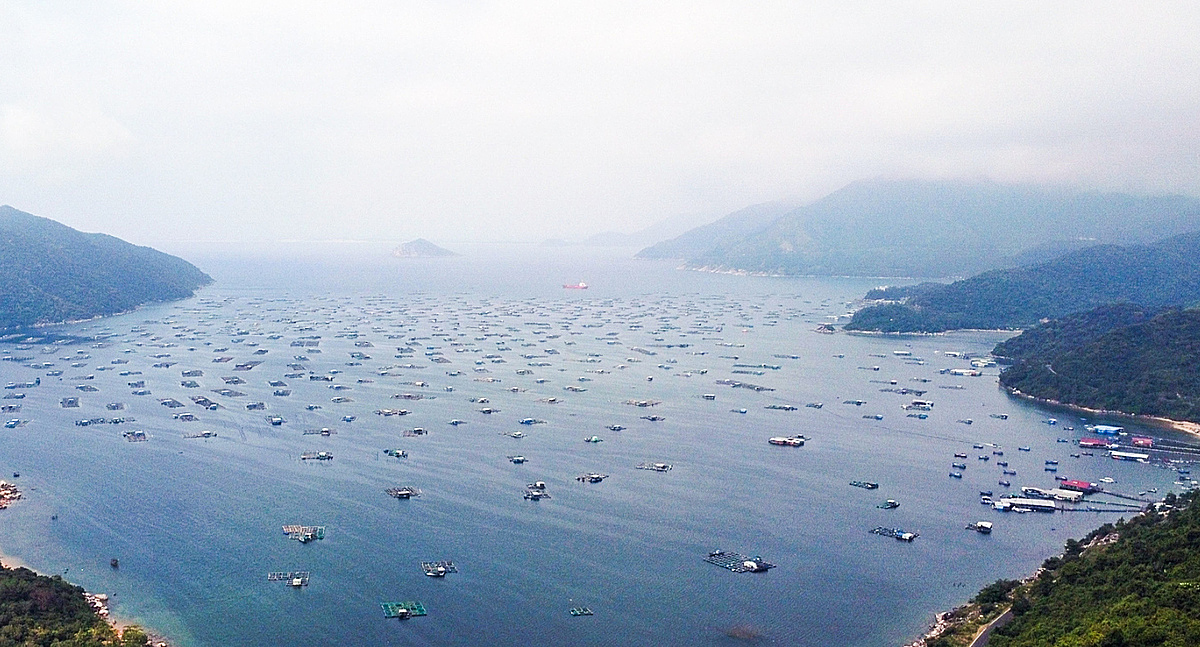 |
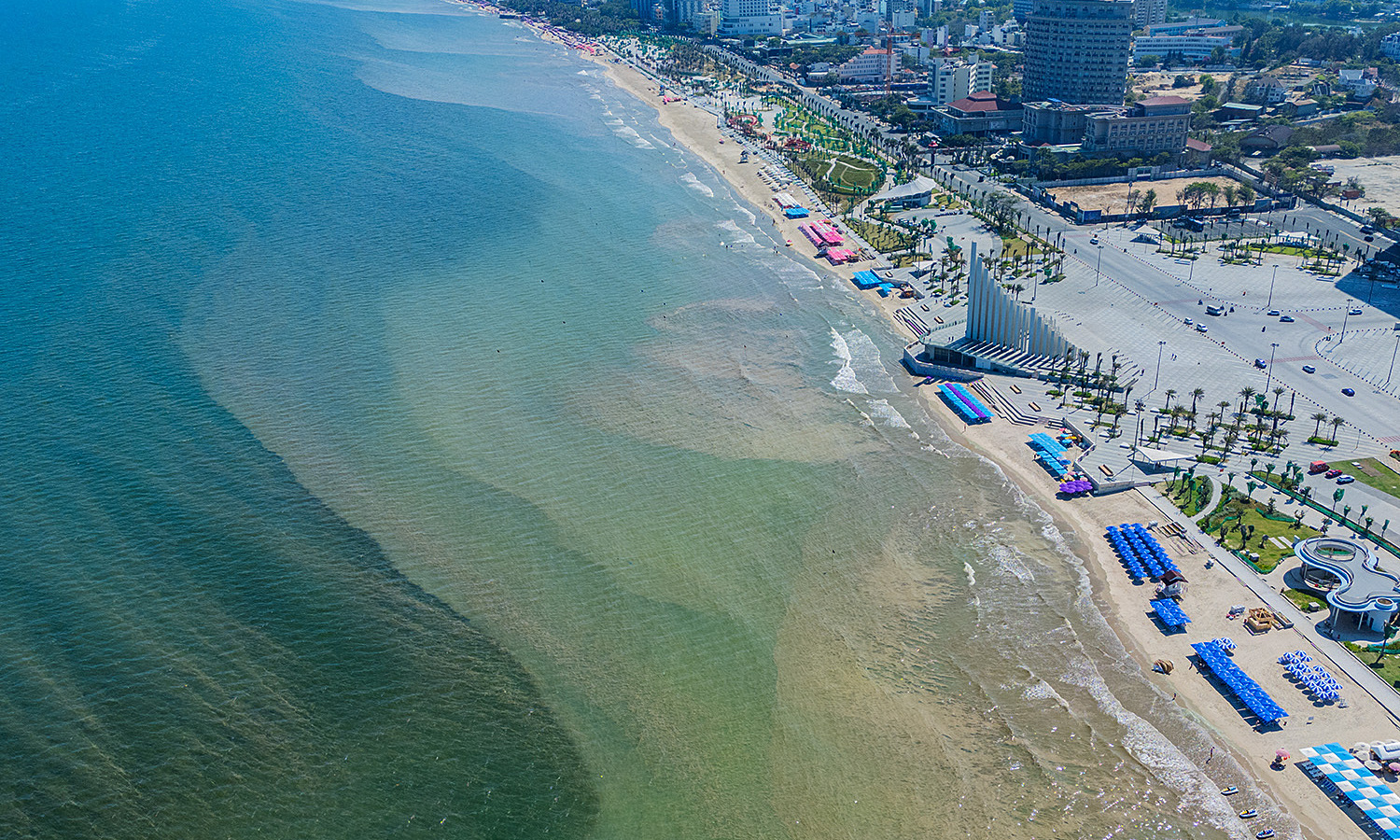
A corner of Vung Ro Bay, Hoa Xuan commune. *Photo: Minh Khue*
Statistics indicate that over 90% of cages house more than 12 million flower and green lobsters. The rest hold about 4 million pompano, cobia, and grouper. For the 2026-2027 period, the projected yield exceeds 2,800 tons of lobster and 3,800 tons of marine fish.
However, aquaculture will no longer be permitted in this area in the future, as it falls within the 1/2,000 zoning plan for the Vung Ro Bay - Hon Nua Island tourism complex.
Cage relocation will proceed in phases. In 2026, 121 facilities will be relocated; in 2027, 192 facilities; and in 2028, 74 additional facilities. By 2029, 216 facilities established before 2005, along with those of Vung Ro village residents, will be moved to a planned aquaculture zone.
To lessen livelihood impact, the Hoa Xuan Commune People's Committee proposed allocating 150 hectares of water surface in the eastern part of the bay for residents to continue aquatic farming. This approach supports the relocation plan while enabling more systematic, efficient management.
Bui Toan