Pham Van Sau, a farmer in Nam Trach commune, is facing significant losses this watermelon season, selling his produce for less than his investment costs. On an afternoon in mid-April, he hired nearly 30 workers at 40,000 dong per hour to harvest 1,7 hectares of ripe watermelons, a task made easier by the mild sun preventing fruit from drying out.
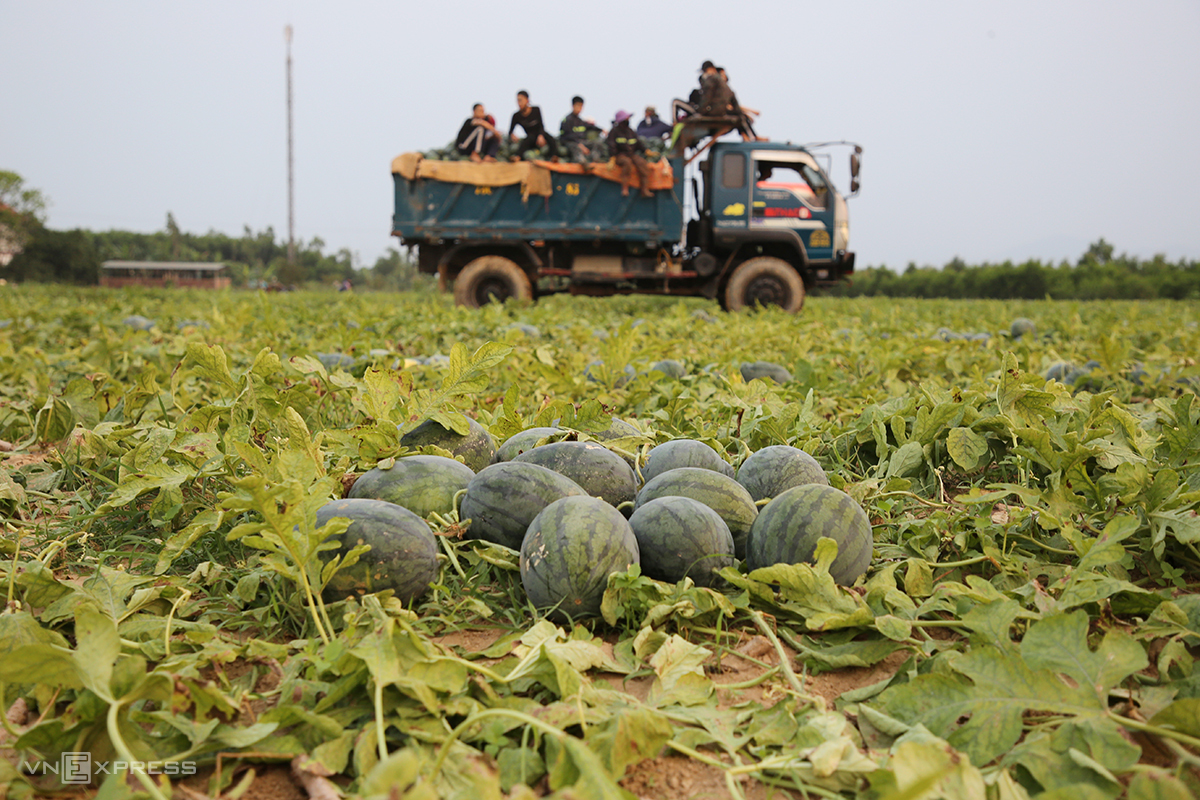 |
Sau’s watermelon field, where workers harvested the fruit and loaded it onto trucks to be sold to traders on the main road for 2,900 dong per kg. Anh: Dac Thanh |
Workers moved through the rows, cutting the fruit with scissors. In each row, two people cut the watermelons from the vines, while those following piled them up. The fruit, scattered across the field, was then loaded onto shuttle vehicles and transported nearly 1 km to the road for sale to traders.
For this winter-spring crop, Sau rented land to grow Apolo 66 watermelons. Investment costs for seeds, fertilizers, pesticides, and fuel for irrigation pumping exceeded 170 million dong, not including labor. From planting after Tet Nguyen Dan (Lunar New Year) until nearing harvest, the weather was hot and dry. He irrigated daily, resulting in a high fruit set rate and a yield of 20 tons per hectare.
Sau calculated that with 1,7 hectares, he invested nearly 170 million dong. After two months of care, he harvested about 40 tons. Selling at 2,900 dong per kg, he earned nearly 120 million dong, incurring a loss of approximately 50 million dong. "This is the second consecutive year watermelon farmers in Nam Trach commune have suffered heavy losses," said the farmer, who has grown watermelons for 10 years. "Last year saw both poor harvest and low prices; this year, we have a good harvest, but prices are cheap." He added that he had hoped for high prices this season to recover from the previous year's losses, but instead faced significant deficits.
The struggle is widespread among farmers in the area. Hoang Van Hien, who rented 2 hectares to grow Apolo 66 watermelons nearly 10 km from his home, set up a tent in the field to live and care for his crop. Despite hot weather and little rain, regular irrigation resulted in large, uniform fruits. The watermelons are now ripe, but there are no buyers. "I called many traders, but they aren't buying because the watermelons ripened simultaneously, and there's no market for them," he stated.
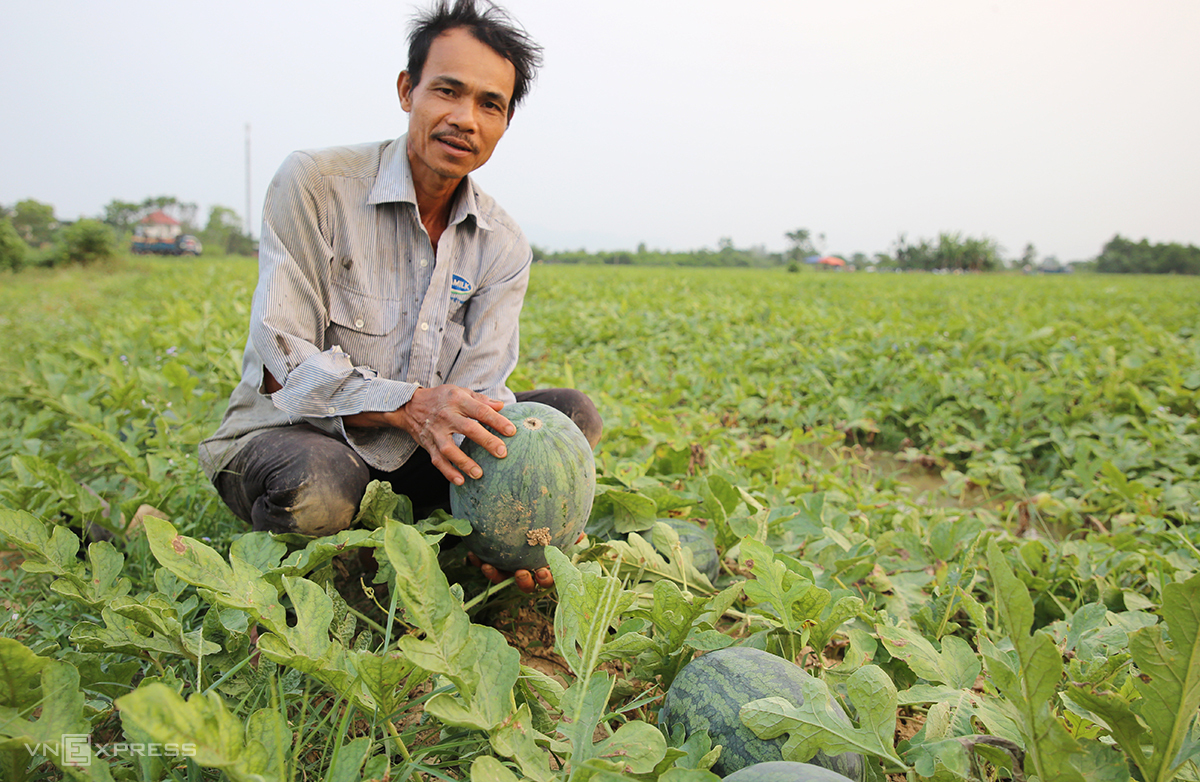 |
Hien planted 2 hectares of watermelons, and the fruit is now ripe, but no traders are buying. Anh: Dac Thanh |
Hien anticipates that if no traders buy his watermelons in the next few days, he will have to harvest and sell them retail, hoping to salvage whatever he can. "Ripe watermelons must be picked; otherwise, they will crack and spoil if exposed to rain followed by sun," said Hien, who has 20 years of experience growing watermelons.
Similarly, Le Van Minh's more than 2 hectares of Apolo 66 watermelons in Nam Trach commune are also ready for harvest. Yesterday afternoon, traders came to buy grade 1 fruit, weighing 2 kg or more, for 3,000 dong per kg. However, despite an agreement, the traders "broke the deal" after he hired workers for the harvest.
Minh contacted many places to sell his watermelons, hoping to recover capital for the upcoming summer-autumn crop, but no one has agreed. If he cannot find a buyer, he will sell them retail. "Two years ago, traders from other provinces brought dozens of tons of trucks, buying at over 6,000 dong and lining up to transport them away. Now, mainly 1,5-5 ton trucks transport them to mountainous communes," he recounted.
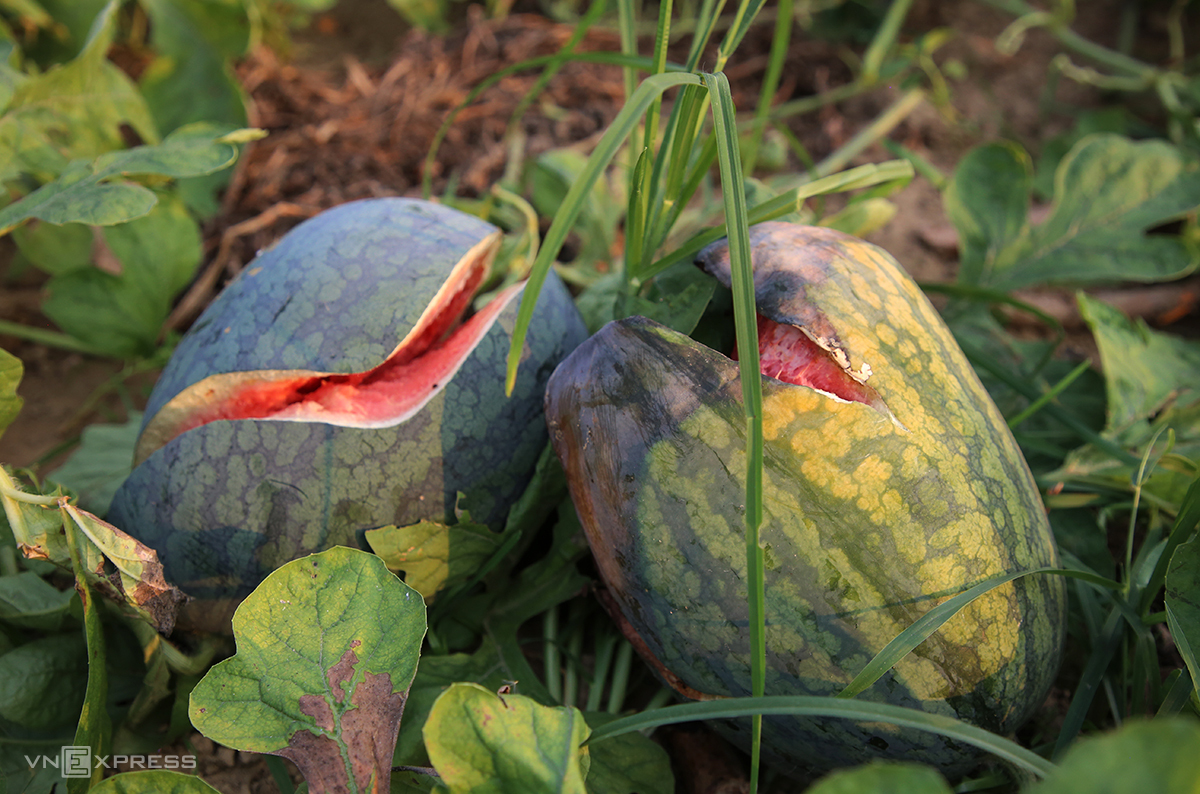 |
Many ripe watermelons are damaged due to hot weather. Anh: Dac Thanh |
The low prices are largely due to market saturation. Le Chien, a trader, stated that he buys about 80 tons of watermelons daily for consumption in the northern region. This year, Quang Tri's watermelon harvest coincides with those of Gia Lai, Quang Ngai, and Da Nang provinces. The watermelons are consumed domestically, with no exports, leading to a large supply and low demand, which has driven prices down sharply.
Nam Trach commune is Quang Tri province's largest specialized watermelon cultivation area. Farmers grow watermelons on alluvial soil, with plots ranging from at least 1 hectare to as much as 4 hectares. Each plant is allowed to grow three branches, yielding two fruits weighing between 2 and 7 kg.
The watermelons are popular with consumers due to their firm, crisp, heavy, and sweet flesh. Nam Trach residents rent land for cultivation annually, moving to different locations after each season. They return to the same land only after more than 5 years, as continuous watermelon cultivation hinders growth and increases pest and disease issues.
Le Dinh San, Chairman of the Nam Trach Commune Farmers' Association, reported that this year's watermelon crop in the commune covers nearly 300 hectares with high yields. However, the current price of 3,000 dong per kg is too low compared to farmers' investment costs. This losing season directly impacts the livelihoods of residents and their ability to reinvest in the next crop.
Dac Thanh