Cao Bang province recently requested the Ministry of Construction to conduct a comprehensive survey and assessment to propose a planning location for Cao Bang airport.
According to the National master plan for airport system development for the period 2021-2030, with a vision to 2050, Cao Bang airport is designated as category 4C, to be built after 2030.
A category 4C airport, as per ICAO standards, can accommodate medium-range aircraft such as the Airbus A320/A321 and Boeing 737. Its runway length ranges from 1,800 m to under 2,400 m, primarily serving domestic flights and some short-haul international flights.
However, considering spatial development orientation and transport demand, the Cao Bang Provincial People's Committee believes that the category 4C scale does not meet long-term development requirements. It also fails to fully leverage the role of an aviation infrastructure hub in a strategically located border region.
 |
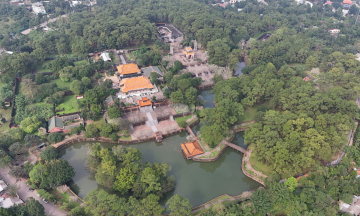
Ban Gioc waterfall in Cao Bang province. Photo: Lam Le |
Ban Gioc waterfall in Cao Bang province. Photo: Lam Le
According to provincial leaders, Cao Bang airport will directly connect with two expressways passing through the province. A category 4E scale will ensure compatibility with major transport routes' standards, enhancing inter-regional and international transport connectivity.
A category 4E airport allows for wide-body, modern aircraft such as the Boeing 777, Boeing 787, Airbus A350, and Airbus A330. Its runway length is typically over 3,000 m. This airport can operate long-haul routes, particularly international flights and high-volume, high-value cargo transport.
Investing in category 4E standards from the outset also optimizes the project lifecycle and reduces future upgrade costs. It also enhances infrastructure operational efficiency, especially amid the rapid development of cross-border logistics and increasing air transport demand in the region.
In contrast, investing in a category 4C airport would limit future expansion capacity, potentially leading to expensive upgrade requirements later.
Preliminary local studies indicate that the proposed areas for Cao Bang airport have sufficient land and suitable terrain to accommodate a 3,000-3,500 m runway, meeting category 4E standards without significantly increasing land clearance costs compared to the 4C option.
According to the national airport master plan, by 2030, the country will have 30 airports, including 14 international airports: Van Don, Cat Bi, Noi Bai, Tho Xuan, Vinh, Phu Bai, Da Nang, Chu Lai, Cam Ranh, Lien Khuong, Long Thanh, Tan Son Nhat, Can Tho, and Phu Quoc; and 16 domestic airports: Lai Chau, Dien Bien, Sa Pa, Na San, Dong Hoi, Quang Tri, Phu Cat, Tuy Hoa, Pleiku, Buon Ma Thuot, Phan Thiet, Rach Gia, Ca Mau, Con Dao, Thanh Son, and Bien Hoa.
By 2050, the country's vision is to have 33 airports, including the existing 14 international airports, with Hai Phong International Airport replacing Cat Bi; and 19 domestic airports, adding Cao Bang, Cat Bi, and Nam Ha Noi airports.
In 2025, the government adjusted the National master plan for airport system development to include Gia Binh airport (Bac Ninh) in the plan.
Anh Duy