In late july, technical teams at Phu Quoc airport continuously checked light clusters, signs, and electrical equipment. They measured light intensity, beam direction, power supply, and the synchronized operation of the entire system. Concurrently, taxiways, the apron, and auxiliary infrastructure were also completed to meet operational requirements.
At night, the entire strip of lights along the 3,300 m runway was illuminated for engineers to verify synchronized operation. This is the final step before a calibration aircraft assesses the accuracy of the signal light system, navigation equipment, and other facilities supporting flight operations.
In the initial phase, about 1,500 aviation lights and nearly 400 airfield signs were installed. The system uses CAT II standard LED lights, integrating two PAPI (precision approach path indicator) systems and ILS/DME (instrument landing system/distance measuring equipment) CAT II precision landing equipment. This supports safe aircraft approach during nighttime or in limited visibility conditions.
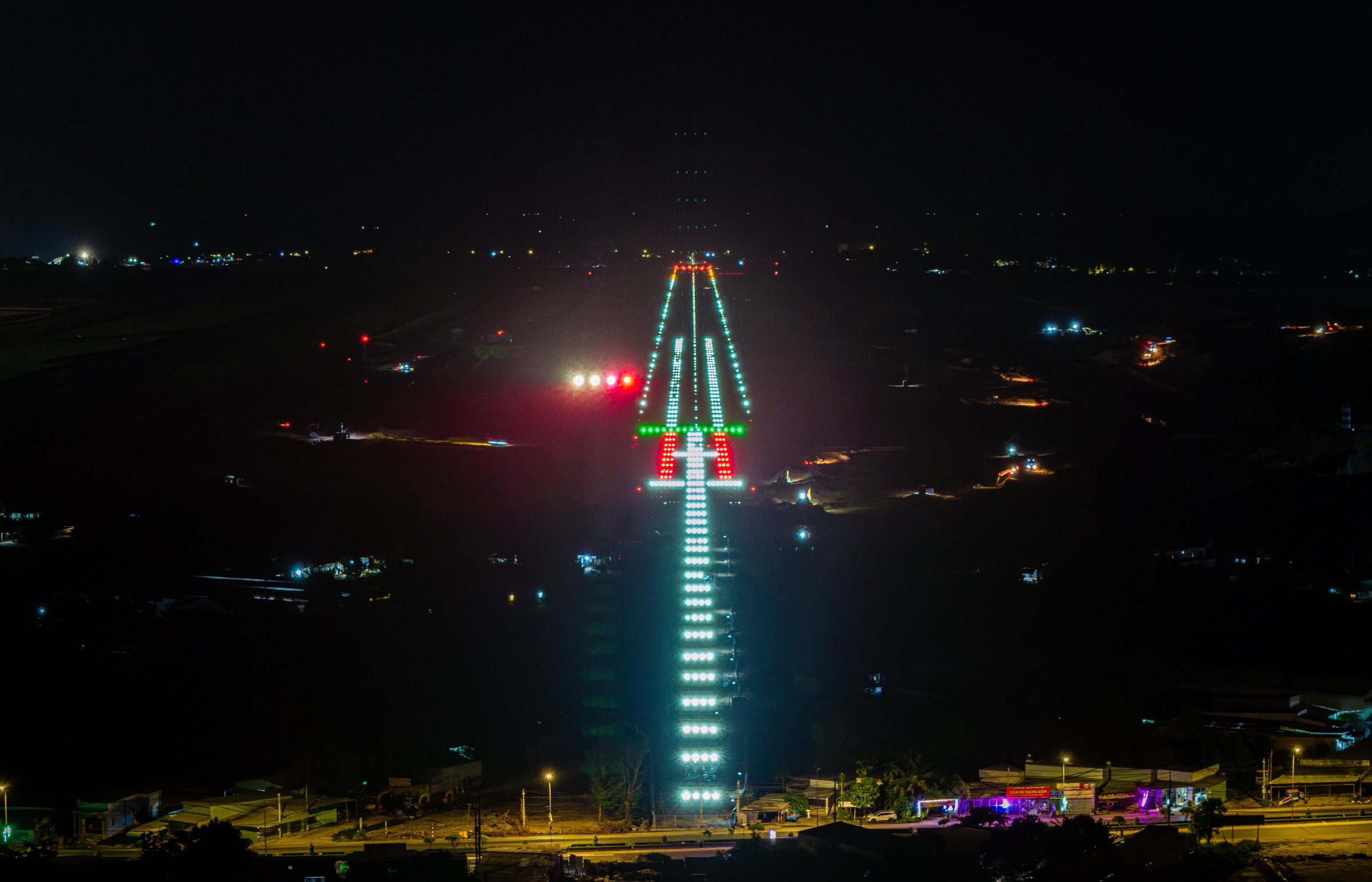 |
The lighting array is ready for calibration flight. Photo: Phuong Linh |
The lighting array is ready for calibration flight. Photo: Phuong Linh
The first calibration flight, scheduled for 27/7, will verify the accuracy of the entire signal system, navigation equipment, and operational parameters under real conditions. The calibration results will serve as the basis for finalizing technical procedures before the runway becomes operational.
Runway two is 3,300 m long and 45 m wide, capable of regularly accommodating wide-body aircraft such as: Boeing 787, Airbus A350, and Boeing 777. The construction was completed in about eight months, including six months for structural and pavement work, and two months for installing, connecting, and calibrating aviation equipment systems.
Construction on the island presented numerous challenges. All oversized machinery and specialized materials required sea transport, while the site was affected by rain and storms. Furthermore, existing operations at the airport had to be maintained.
To meet the schedule, contractors organized continuous shifts, mobilizing a large number of personnel and equipment. They operated the site continuously with three shifts and four crews, while ensuring aviation security, safety, and maintaining smooth existing operations.
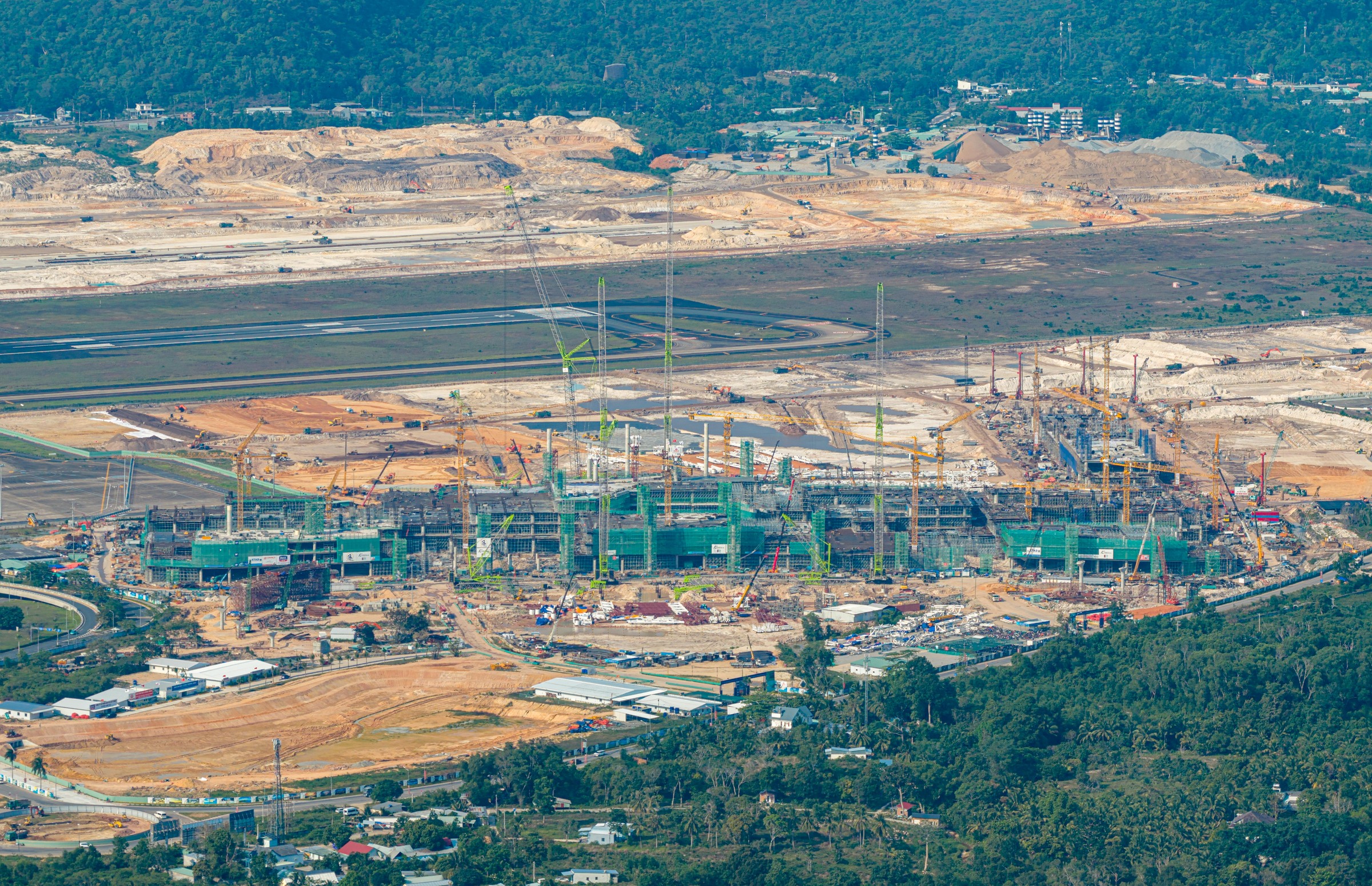 |
Construction site of Phu Quoc T2 terminal, 3/2026. Photo: Phuong Linh |
Construction site of Phu Quoc T2 terminal, 3/2026. Photo: Phuong Linh
Nguyen Ba Quan, director of Phu Quoc International Airport (Sun Airport Joint Stock Company), stated that the unit is finalizing an integrated operational plan for runway two with the taxiway system, apron, T2 terminal, and auxiliary facilities. This ensures safe reception for wide-body aircraft and facilitates special flights when necessary.
According to the master plan, after the expansion is completed, Phu Quoc airport will feature two runways and a modern, synchronized infrastructure system. This development aims to serve the APEC high-level week in 2027 and meet the increasing operational demands of Phu Quoc island.
Phu Quoc airport will ultimately have two international standard runways, a T2 terminal, and fully integrated aviation infrastructure. Long-term projections aim to increase its annual capacity to 50 million passengers.
Doan Loan