


On 8/5, the Prime Minister issued a directive aimed at enhancing the quality of commune-level local government officials. Accordingly, chairs of provincial and city People's Committees must conduct a comprehensive review of the quality, qualifications, and capabilities of commune-level officials. This is to ensure proper placement, align individuals with suitable roles, match them to appropriate localities, and leverage their strengths and work experience.
The Prime Minister urged localities to thoroughly reassign redundant deputy leaders and managers from provincial agencies, where their numbers exceed regulations, to commune-level positions. By May, provinces and cities must develop solutions to improve the quality of commune-level officials, tailored to the specific characteristics of each locality and region.
The directive states that officials demonstrating resilience, the ability to handle pressure, and experience in managing complex situations will be prioritized for assignment to challenging areas or fields requiring high professional expertise, such as land management, construction, ethnic affairs, religion, and handling complaints or denunciations. "It is imperative to prevent situations where officials are assigned roles that do not align with their capabilities or professional strengths," the directive emphasized.
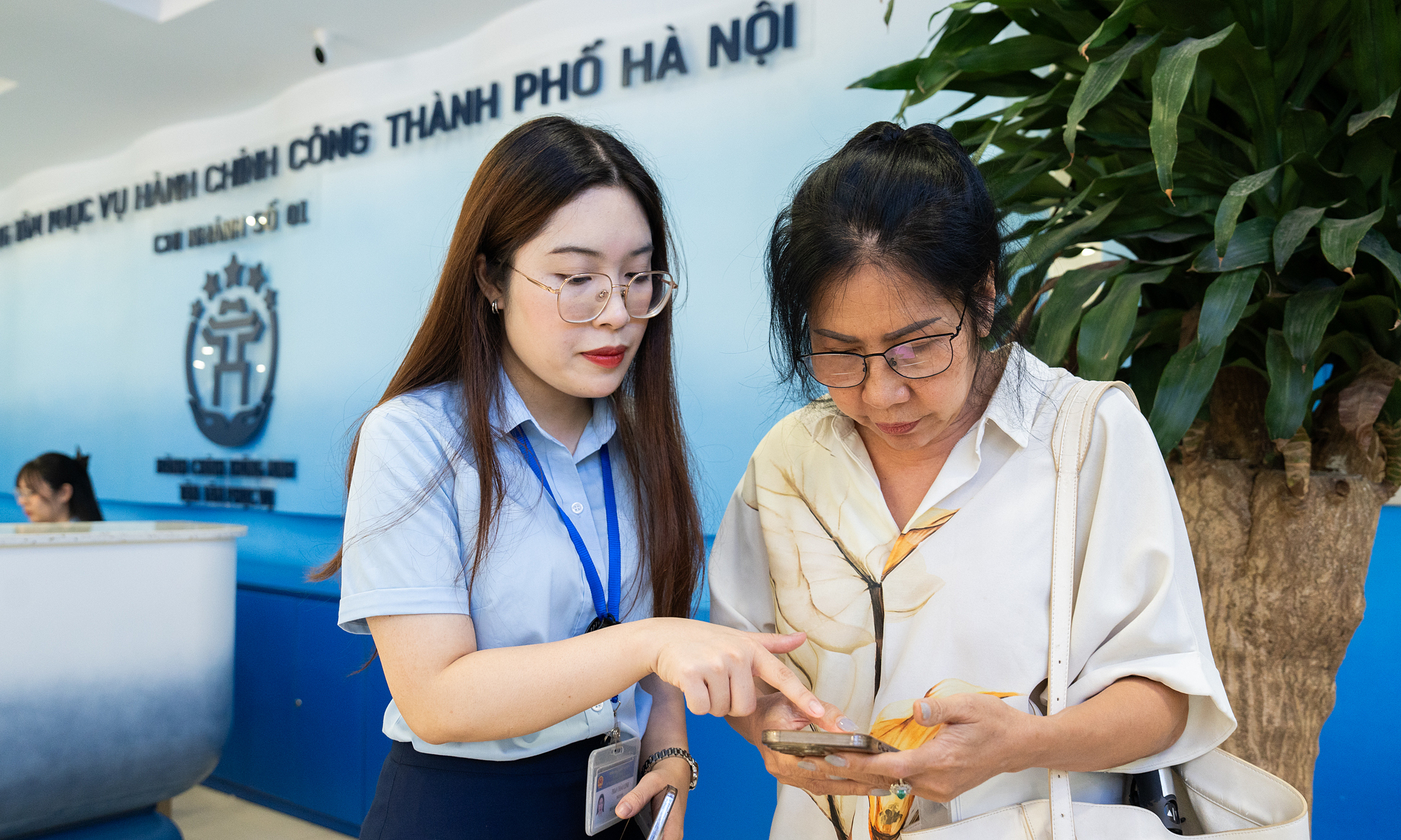 |
Hanoi Public Administrative Service Center. Photo: Tung Dinh
The Prime Minister also mandated that localities evaluate commune-level officials based on the progress and quality of their work, their coordination abilities, sense of responsibility, service attitude, and the satisfaction levels of citizens and businesses.
Officials identified with weak capabilities, a lack of responsibility, or those failing to meet job requirements will be streamlined. Concurrently, localities must recruit additional personnel with specialized expertise and experience to immediately address work demands.
The directive calls for increased and regular training, fostering, and workshops for commune-level officials, with a particular focus on public service execution skills and situation handling. Training will be conducted through a "learn-as-you-go" approach to avoid disrupting the operations of agencies and units.
The Ministry of Construction has been tasked with researching social housing policies for officials and public employees facing difficulties. The Ministry of Home Affairs is responsible for guiding specific recruitment mechanisms for commune-level human resources and developing a shared digital learning resource system on the "Binh Dan Hoc Vu So" platform.
According to government calculations, following the merger of provinces and communes and the abolition of the district level from mid-2025, the country will have approximately 91,784 provincial-level officials, public employees, and civil servants, and around 199,000 commune-level staff within a two-tier local government model.
Current guidelines stipulate that each commune, ward, or special administrative zone, after mergers, will be allocated a minimum of 32 personnel, excluding those from Party organizations, mass organizations, and the commune-level military command. Depending on population size, the number of personnel may increase, but to a maximum of 50 for communes and 70 for wards or special administrative zones.
Vu Tuan


