In Phu Huu and Phu Thu hamlets, the Prime Minister met with the most severely affected households. Hoa Thinh commune alone reported 25 deaths and 67 completely collapsed homes. He shared his condolences with the families and encouraged local authorities and forces to continue supporting residents in overcoming post-disaster challenges.
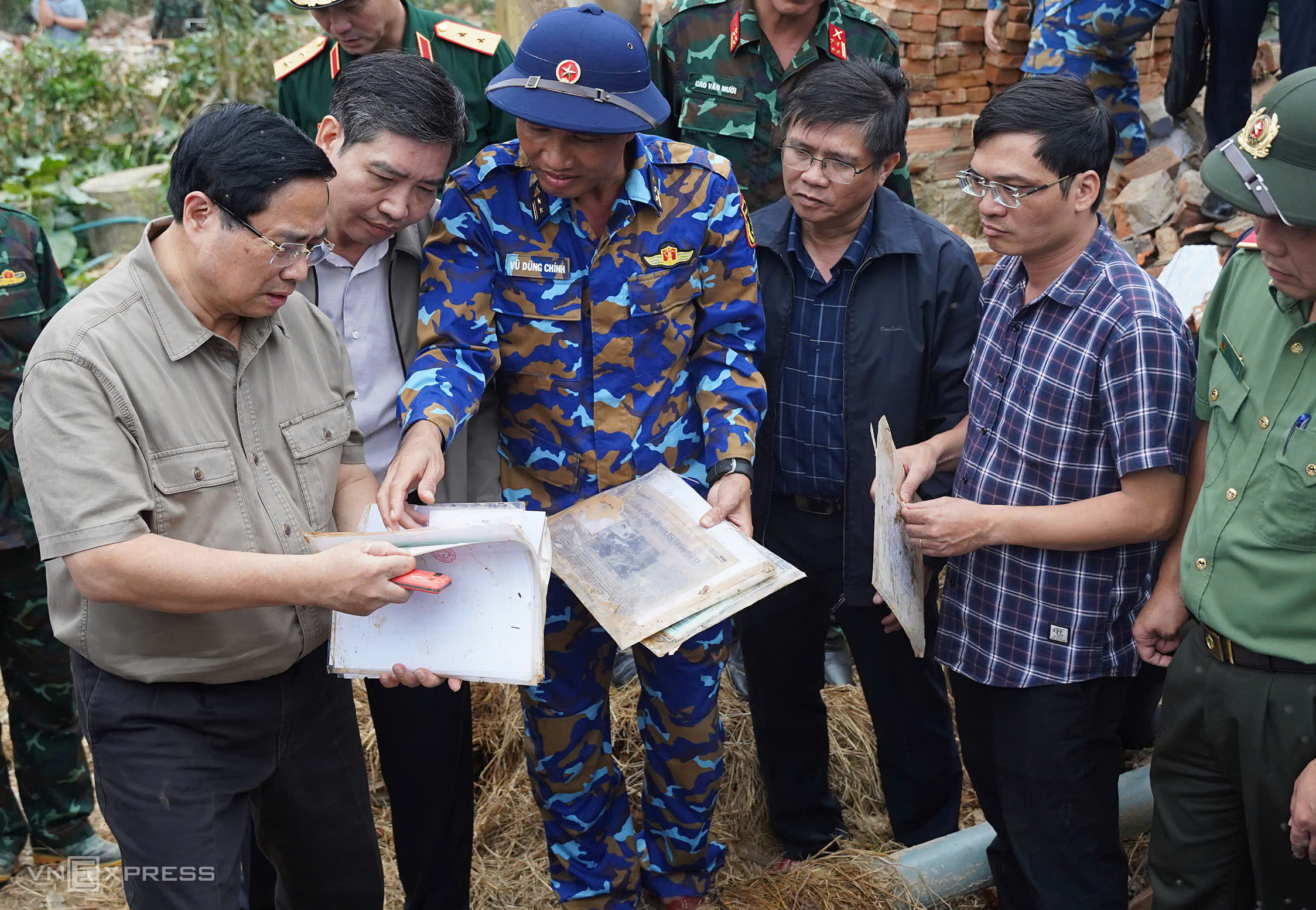 |
The Prime Minister (far left) visits the flood-stricken areas of Hoa Thinh and Tay Hoa. *Photo: Bui Toan* |
The floods, deemed the largest in 50 years, saw river water levels surpass historical peaks. As of 21/11, the disaster had resulted in 98 deaths and 10 missing persons across various localities. Dak Lak suffered the heaviest losses, recording 63 fatalities. Additionally, 426 homes collapsed, nearly 2,100 were damaged, and numerous infrastructure facilities were swept away or rendered inoperable. This followed a period since early November when the South Central Coast and Central Highlands were repeatedly hit by storms and heavy rainfall.
To address the devastation, the Prime Minister urged local authorities to focus on repairing homes, arranging safe accommodation, and ensuring food, clean water, and essential supplies for residents. He also directed efforts towards environmental sanitation, school repairs, and the restoration of transportation, irrigation, electricity, telecommunications, and agricultural production, stressing that no resident should suffer from hunger or cold during the recovery period. In the afternoon, he chaired a meeting with four provinces to review their support needs and post-flood recovery plans.
From 18/11 to 23/11, the government allocated over 1,500 billion dong to support the four provinces. The Vietnam Fatherland Front received more than 2,000 billion dong in donations from organizations and individuals for the flood-affected regions. The Ministry of Finance also released 4,000 tons of reserve rice, distributing 2,000 tons to Dak Lak, 1,000 tons to Lam Dong, and 1,000 tons to Gia Lai.
By Bui Toan - Le Tuyet