On the morning of 7/4, the National Assembly elected the President, and this afternoon, the Prime Minister, completing the finalization of key state leadership positions for the 2026-2031 term.
The Constitution stipulates that the National Assembly is the sole body authorized to elect the President and Prime Minister. After their election, both officials swear allegiance to the Fatherland, the people, and the Constitution before the National Assembly. During this process, the National Assembly combines private sessions to handle personnel matters with public sessions to vote on resolutions and announce results.
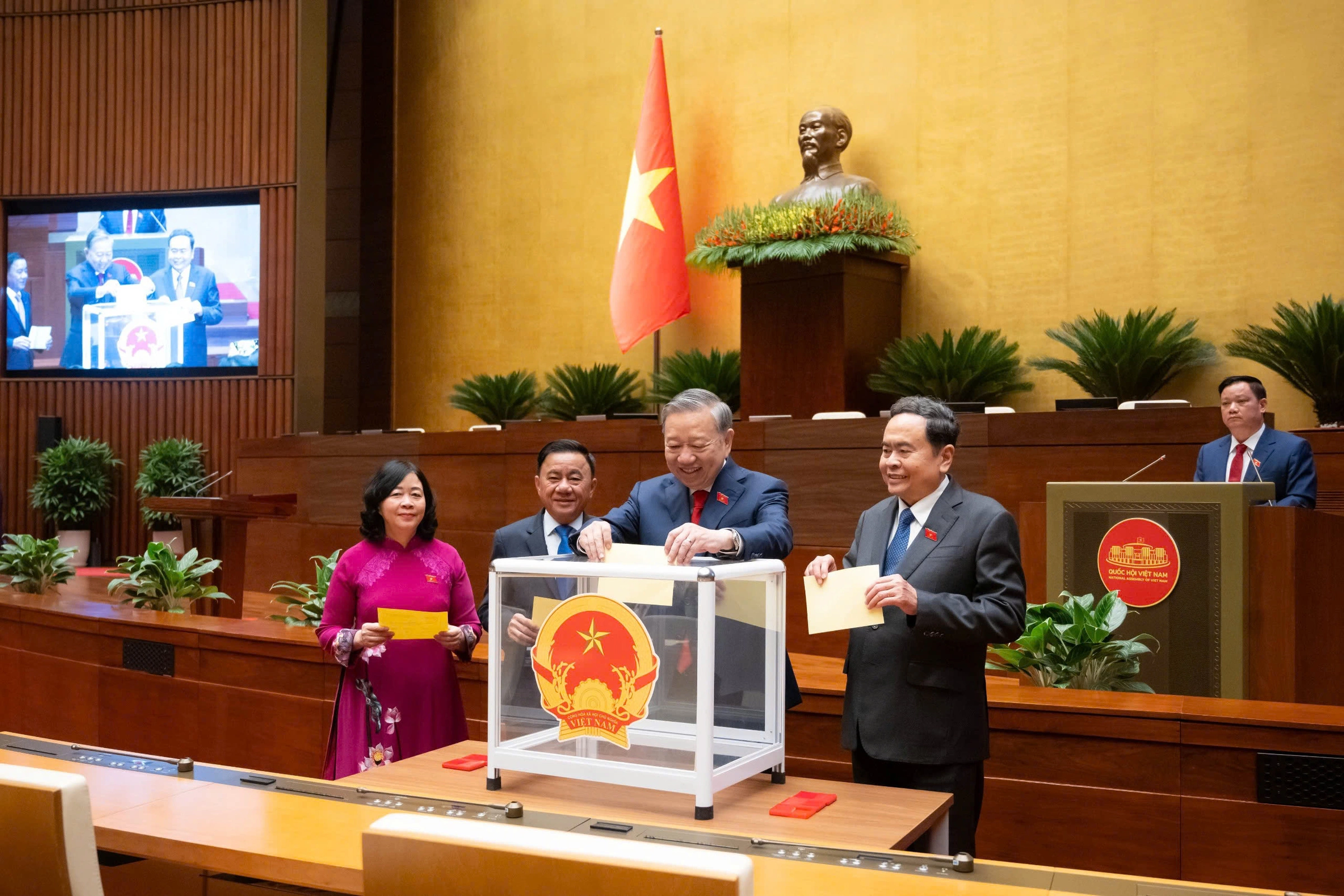 |
Party and State leaders cast their votes for the new President, morning of 7/4. Photo: National Assembly Portal |
In early March, the second plenum of the 14th Central Committee unanimously voted to recommend personnel for the National Assembly to elect and approve for the new term's state leadership positions. The Politburo then completed procedures to submit to the National Assembly as per its authority.
The process for electing the President begins with the National Assembly Standing Committee presenting a list of nominations. After the list is presented, National Assembly delegates have the right to nominate, introduce additional candidates, or self-nominate; those nominated may request withdrawal. Cases of supplementary nominations, self-nominations, or withdrawal requests are compiled and reported by the National Assembly Standing Committee; the National Assembly votes to decide on withdrawals or inclusion in the official list.
The National Assembly discusses the candidates in delegate groups. Based on these discussions, the National Assembly Standing Committee explains, incorporates feedback, and finalizes the list. The official list is established when the National Assembly votes to approve it before proceeding with the election.
The next step involves forming a Ballot Counting Committee and conducting a secret ballot. The Ballot Counting Committee, elected by the National Assembly, does not include individuals on the list of candidates. The successful candidate must secure over half of the total votes from National Assembly delegates.
After counting the ballots, the Ballot Counting Committee reports the results to the National Assembly. Based on this, the National Assembly Standing Committee presents the draft resolution for electing the President. The National Assembly votes to approve the resolution. The elected individual then performs the oath-taking ceremony.
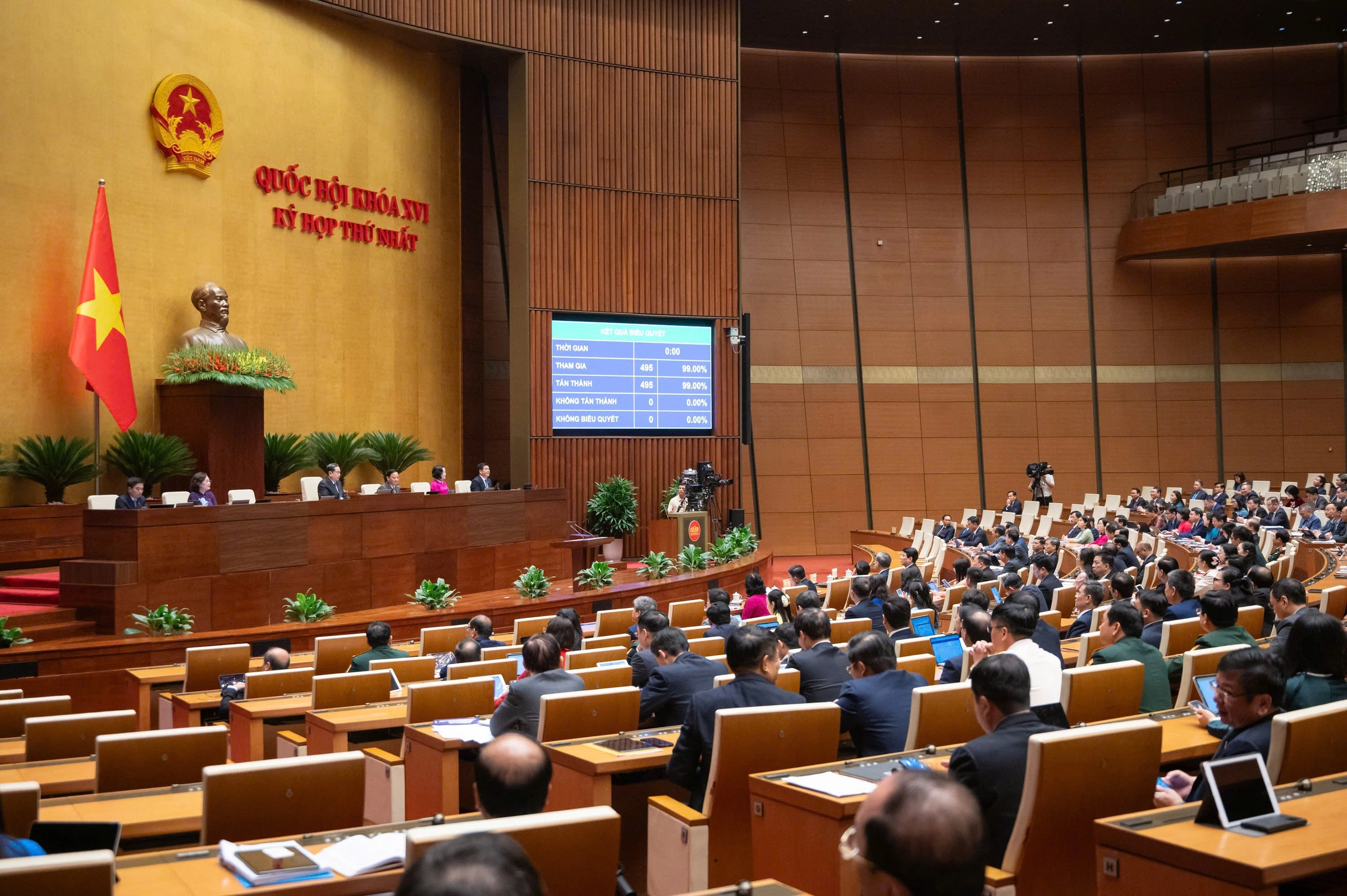 |
The National Assembly votes to approve the resolution electing the President, morning of 7/4. Photo: Pham Thang |
The process for electing the Prime Minister has a similar structure but differs in the nomination stage. According to the Constitution, the President presents the list for the National Assembly to elect the Prime Minister.
After the list is presented, National Assembly delegates have the right to nominate, introduce additional candidates, or self-nominate; those nominated may request withdrawal. Cases of supplementary nominations, self-nominations, or withdrawal requests are compiled and reported by the National Assembly Standing Committee; the National Assembly votes to decide on withdrawals and inclusion in the official list.
The National Assembly discusses in delegate groups; the National Assembly Standing Committee explains and incorporates feedback. When the official list is approved, the National Assembly proceeds with steps similar to the presidential election, including forming a Ballot Counting Committee, conducting a secret ballot, announcing results, and then approving the election resolution. The elected Prime Minister takes the oath of office before the National Assembly.
The President is the head of State, authorized to promulgate the Constitution, laws, and ordinances; propose to the National Assembly the election or removal of certain officials; decide on nationality, special amnesty, foreign affairs, and serve as commander-in-chief of the armed forces.
The Prime Minister is the head of Government, responsible for managing the state administrative system, organizing law enforcement, and accountable to the National Assembly for the Government's operations.
Personnel standards for these two positions are stipulated in the Central Committee's Regulation 365 of 2025, emphasizing requirements for prestige, comprehensive capability, leadership experience, and macro-level management skills.
According to current regulations, the incumbent President and Government perform their duties until the new National Assembly elects replacement personnel and consolidates the apparatus.
Vu Tuan