On the evening of 17/11, Minister of Science and Technology Nguyen Manh Hung presented the draft Law on Artificial Intelligence to the National Assembly Standing Committee. This draft law introduces the concept of "unacceptable risk AI systems" for the first time. These are systems that could cause severe, irreversible harm to human rights, national security, social order, and safety, or are designed for activities prohibited by law. Such systems are prohibited from development, provision, deployment, or use in any form in Vietnam.
Indicators of these prohibited systems include: designs that facilitate illegal acts; the use of fake elements or simulations of real people or events to intentionally deceive, manipulate perceptions and behaviors, causing serious harm to users; exploitation of vulnerabilities in susceptible groups; and the creation or dissemination of deepfake content posing a high risk to national security, social order, and safety.
According to the proposal, the rapid advancement of AI introduces new security risks. Deepfake technology, for instance, could be exploited to generate fake news, defame individuals, commit fraud, and destabilize society. Autonomous weapon systems also raise significant international ethical and legal concerns. The slow pace of legal reform compared to technological progress creates a growing regulatory gap. Therefore, the government believes a legal framework is urgently needed to both control risks and promote AI research and application in Vietnam.
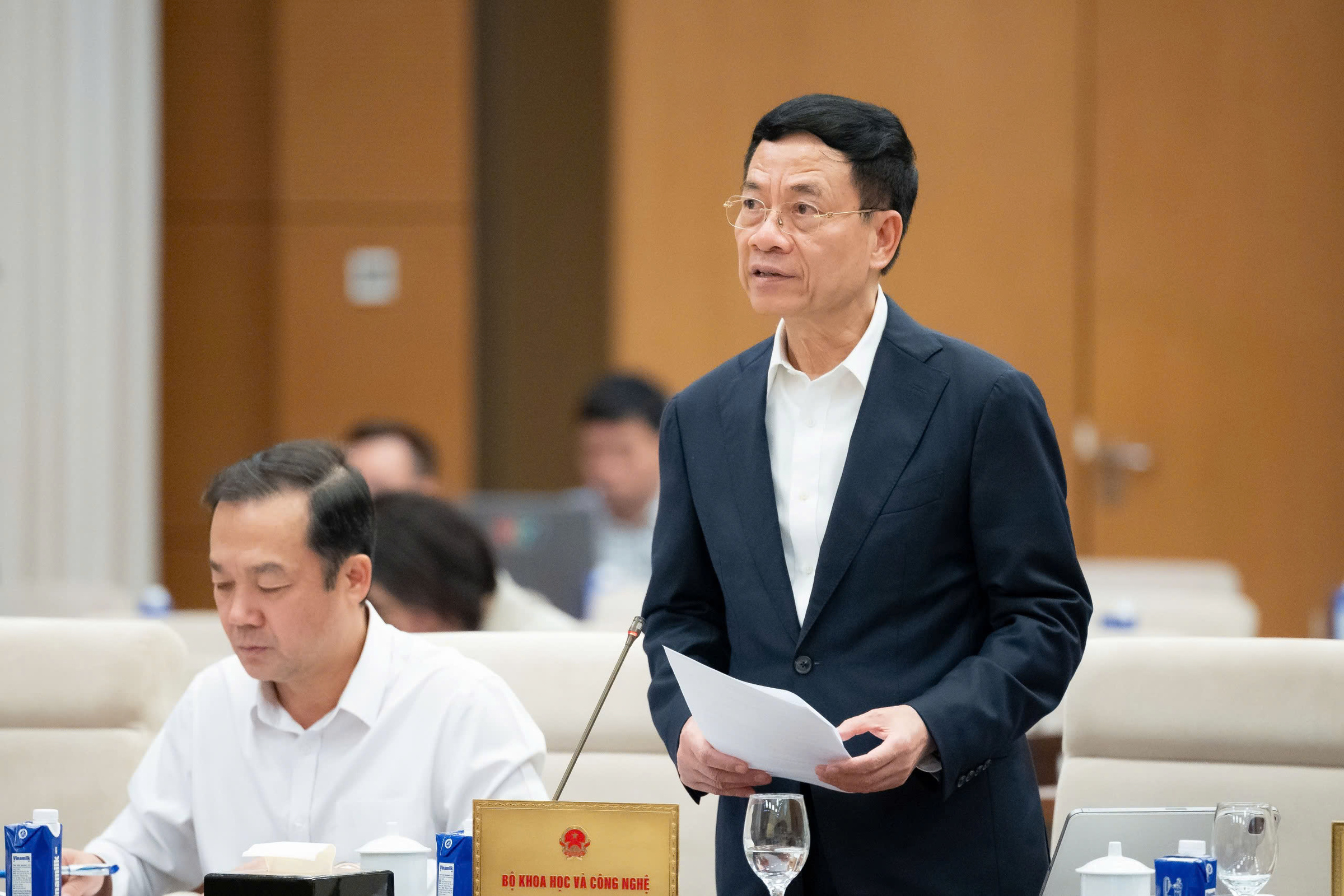 |
Minister of Science and Technology Nguyen Manh Hung presented the draft Law on Artificial Intelligence to the National Assembly Standing Committee. Photo: Hoang Phong
Minister Nguyen Manh Hung stated that the draft law aims to establish a unified legal framework, ensuring AI development is safe, responsible, and human-centric. AI is identified as a national intellectual infrastructure, a driver for productivity growth, innovation, and enhanced technological self-reliance and national competitiveness.
The draft AI Law comprises 8 chapters and 36 articles. It emphasizes a human-centered AI development policy and clarifies the State's role in management and creation. The law establishes a risk-based management mechanism, ensuring transparent, safe, controlled, and accountable AI applications. It also protects national security, safety, data sovereignty, and the right to national technology reserves.
The draft law mandates that AI systems must be harmless, unbiased, and respectful of human values. It includes mechanisms for monitoring, inspection, and violation handling to ensure deterrence and strengthen public trust. The government will foster an innovation ecosystem and develop high-quality human resources through support mechanisms for research, investment, and training for research institutes, businesses, and individuals involved in AI development.
The Science and Technology Committee generally agreed with the draft's policy but requested clearer quantitative or qualitative criteria for classifying AI by risk level. The appraisal agency proposed adding more prohibited acts to enhance deterrence and ensure consistent legal application. Examples include banning the use of AI to create deepfakes for fraud, insulting dignity, causing political unrest, manipulating elections, or infringing upon national security.
The government will submit the draft Law on Artificial Intelligence to the National Assembly on 21/11, with delegates scheduled to debate it in the hall on 27/11.
Son Ha