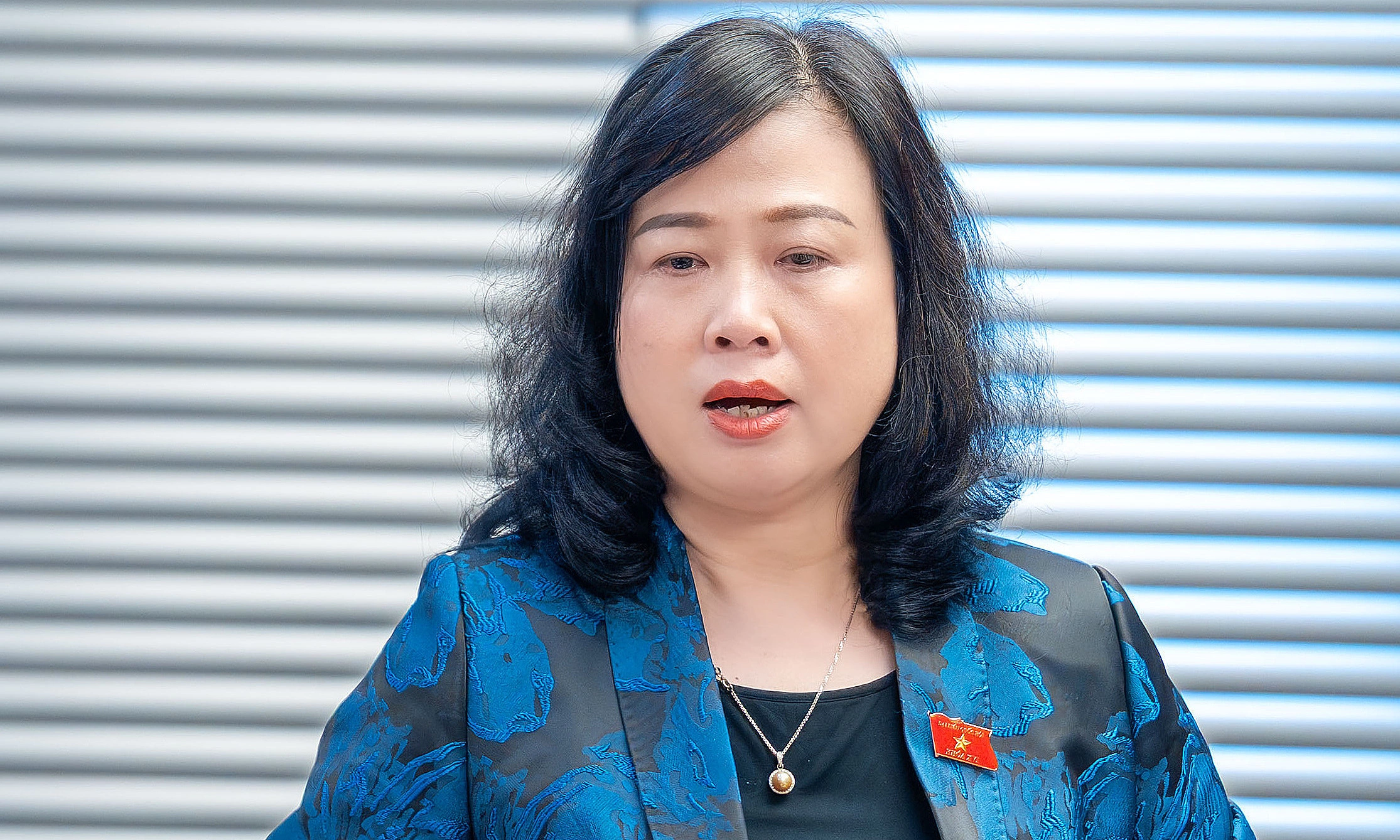
On the afternoon of 10/4, Delegate Hoang Thi Thanh Thuy, Deputy Head of the Tay Ninh delegation, commented on the draft revised Law on Belief and Religion. She noted that while the bill has initially set up a mechanism for managing revenues from festivals and religious beliefs, it requires more stringent regulations on financial disclosure and transparency for religious organizations. She highlighted that this represents a significant source of income with many potential risks, particularly concerning foreign donations or merit money (cong duc) transferred through personal accounts, which could lead to money laundering and fraud.
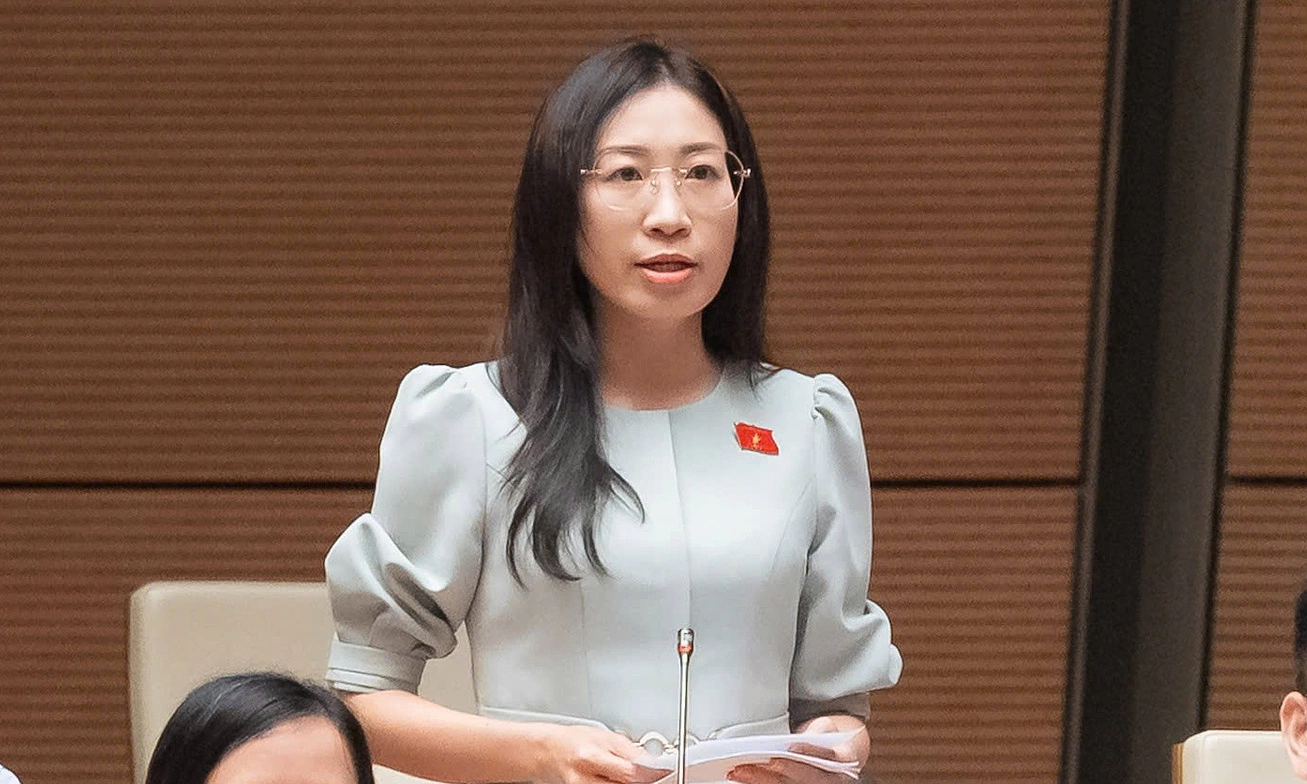 |
Delegate Hoang Thi Thanh Thuy (Deputy Head of the Tay Ninh delegation). Photo: Hoang Phong |
To address these concerns, Delegate Thuy proposed that religious organizations and their affiliated units, when fundraising online, must use bank accounts registered with competent authorities. This regulation aims to help management agencies inspect and control financial flows for their intended purposes, while also enabling citizens to verify and prevent asset misappropriation. She also noted that the scope of assets currently includes not only tangible assets but also digital assets. Many establishments own social media channels with large followings, generating advertising revenue, which need to be brought under management.
Additionally, Delegate Thuy proposed adding regulations prohibiting the misuse of social media algorithms to spread false information about religious doctrines and laws. She explained that automatic dissemination mechanisms can be manipulated, turning distorted information into widespread content, affecting the perceptions of followers and the reputation of religious organizations. Citing data from the Government Committee for Religious Affairs, she noted that online proselytizing, dharma teaching, and ritual performance are becoming increasingly common. Therefore, adding regulations on religious and belief activities in cyberspace is necessary to fill legal gaps.
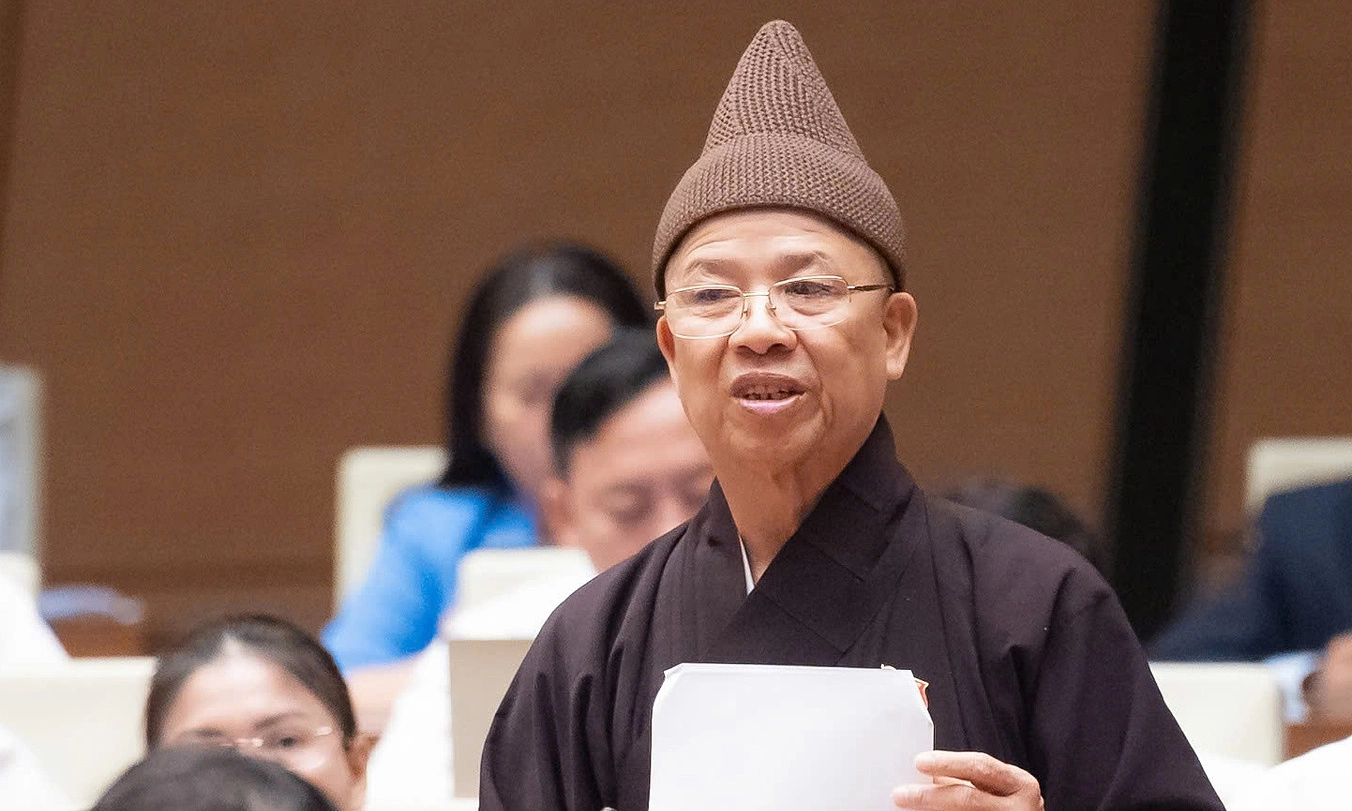 |
Most Venerable Thich Thanh Quyet (Vice Chairman of the Executive Council of the Vietnam Buddhist Sangha). Photo: Hoang Phong |
Most Venerable Thich Thanh Quyet, Vice Chairman of the Executive Council of the Vietnam Buddhist Sangha, echoed calls for enhanced financial transparency. He proposed adding specific regulations on asset management principles, especially for merit money (cong duc), emphasizing transparency, strictness, and equality among religions. He stated that the law needs to include mechanisms to prevent loss and negativity, as this is a sensitive issue of public concern. "The view must be clear: temple money is for building temples, church money is for building churches," he said.
Regarding religious activities in cyberspace, Most Venerable Thich Thanh Quyet proposed specific criteria for identifying violations and a coordinated process for detecting and handling content on cross-border platforms. He also called for clarifying the boundary between freedom of belief and the exploitation of religion.
Currently, Circular 04/2023 stipulates that merit money (cong duc) transferred or paid electronically must be received through accounts at the State Treasury or commercial banks. Cash must be recorded, periodically audited, and strictly managed. Unused funds must be deposited into accounts to ensure safety and transparency. The National Assembly is expected to pass the revised Law on Belief and Religion project through a single session process.