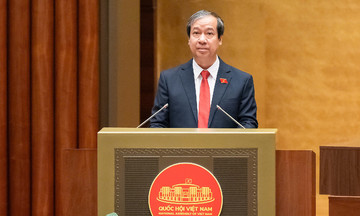
On the afternoon of 10/12, the National Assembly passed the amended Press Law, tightening the obligation to provide information to the press and for the first time clearly establishing this as a mandatory legal responsibility for agencies, organizations, and authorized individuals.
According to the law, within their duties and powers, agencies, organizations, and authorized individuals have both the right and the obligation to provide information to the press and are legally responsible for the content provided. Press agencies must use accurate information and clearly state the source.
Specific cases where information can be refused include: state secrets, personal secrets, and family secrets; information about ongoing investigations or unjudged cases, except when serving crime prevention and combat requirements; and information about ongoing inspections, complaint resolutions, denunciations, or disputes where no official conclusion has been reached and disclosure is not yet permitted.
The law also clearly binds the responsibility of agency and organization heads to respond to the press regarding recommendations, feedback, complaints, and denunciations forwarded by press agencies, and to notify them of handling measures. The Government will detail the procedures and methods for fulfilling this responsibility.
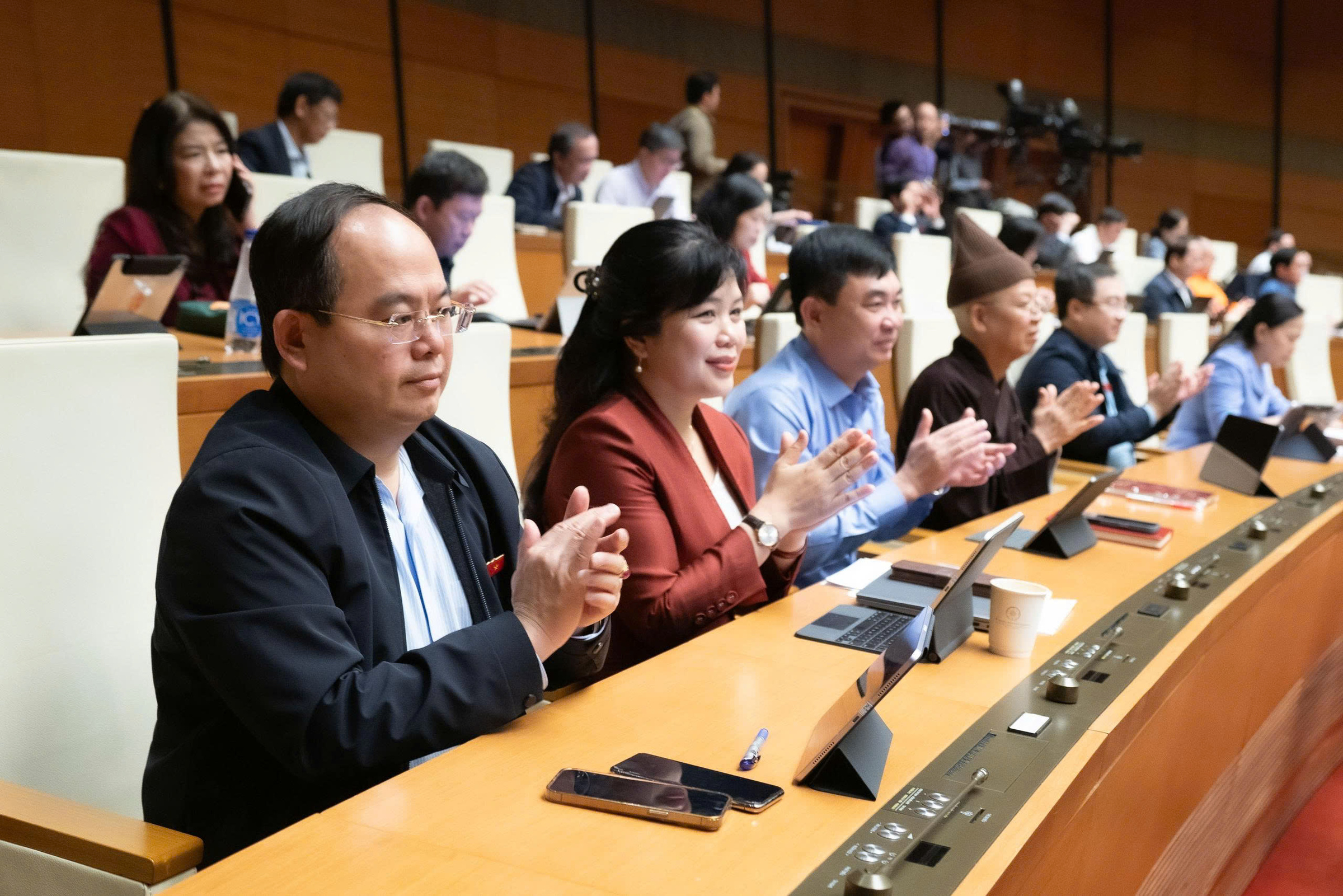 |
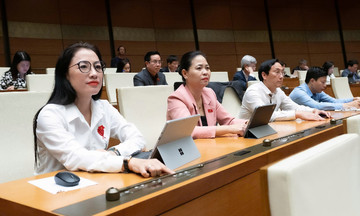
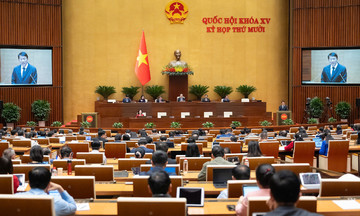
National Assembly delegates attend the morning session on 10/12. Photo: National Assembly Media |
Tax reduction, financial support for press undertaking political tasks
The law stipulates that the State implements preferential tax policies for press agencies involved in political, national defense, and security propaganda, foreign information, policy communication, and serving adolescents, children, people with disabilities, ethnic minority communities, areas with particularly difficult socioeconomic conditions, and in emergencies as decided by the Prime Minister.
This content falls within the State's policies for press development, alongside mechanisms for assigning tasks, placing orders, bidding, and supporting transmission fees and broadcasting costs for the press serving political tasks.
Additionally, the State assigns tasks, places orders, conducts bidding, and supports transmission fees and broadcasting costs for the press to perform key tasks, ensuring the stable operation of the press system amidst digital transformation.
Organizing key multimedia press agencies
The law adds regulations on key multimedia press agencies—a model of press agencies with multiple types and subordinate press agencies, enjoying specific financial mechanisms and established according to the press system development strategy approved by the Prime Minister.
Other press agencies are permitted to operate one or more types of journalism, with one or more journalistic products. Provincial radio and television stations are allowed to have multiple types and products. All press agencies must have an operating license issued by a competent state agency.
Heads of investigation agencies can request source information
The law stipulates that press agencies and journalists have the right and obligation not to disclose information providers, except when there is a written request from the Prosecutor General of the People's Procuracy, the Chief Justice of the Provincial People's Court and equivalents; the Head of the Ministry of Public Security's Investigation Agency, and the Head of the Provincial Public Security Investigation Agency to serve investigation, prosecution, and trial purposes.
These agencies are responsible for protecting information providers. Compared to the current law, the authority to request source information has been expanded to include the Head of the Ministry of Public Security's Investigation Agency and the Provincial Public Security Investigation Agency.
Press is responsible for content broadcast on social networks
The law dedicates a section to press activities in cyberspace, requiring press agencies to fully comply with press law and cybersecurity regulations, adhering to their principles and objectives when posting or broadcasting information on social networks.
Press agencies are responsible for the content and copyright of information posted on social media platforms that are part of their official content channels. If content is altered due to technical errors from the platform operator, the press is not liable.
Content published in cyberspace must be stored on server systems according to regulations on electronic press archiving.
Tightened conditions for issuing press cards
The law stipulates that those eligible for press cards include leaders, heads, or deputy heads of press professional departments; reporters and editors of press agencies and the national news agency; and cinematographers and directors of radio and television programs, excluding feature films, from licensed units.
Individuals who have been issued a card but are transferred to teach journalism at a higher education institution, work at press associations at all levels, or directly manage state press affairs are still eligible for consideration.
A person issued a press card must be a Vietnamese citizen, permanently residing in Vietnam, and hold a university degree or higher. For television cinematographers and ethnic minorities working in ethnic language media, the minimum requirement is an associate degree.
A new point is that first-time card recipients must have worked continuously at a press agency for two years or more and must complete a journalism training course and professional ethics training. Leaders of press agencies approved for appointment by the Ministry of Culture, Sports and Tourism are exempt from this condition. Press cards are valid for 5 years.
The amended Press Law takes effect on 1/7/2026.
Vu Tuan