Starting at 7 a.m., a team of geophysics experts from the Department of Geophysics, University of Natural Sciences, Vietnam National University TP HCM, collaborated with nearly 10 military engineers from the TP HCM High Command and the Institute of Design, General Department of Logistics - Engineering (Ministry of National Defense). They surveyed three areas within the 7,5-hectare park.
The first location, spanning 800 square meters, is next to the traditional house and The Huc bridge. The second, approximately 500 square meters, is near a bird cafe. The remaining area, 1,200 square meters, is close to a petanque court.
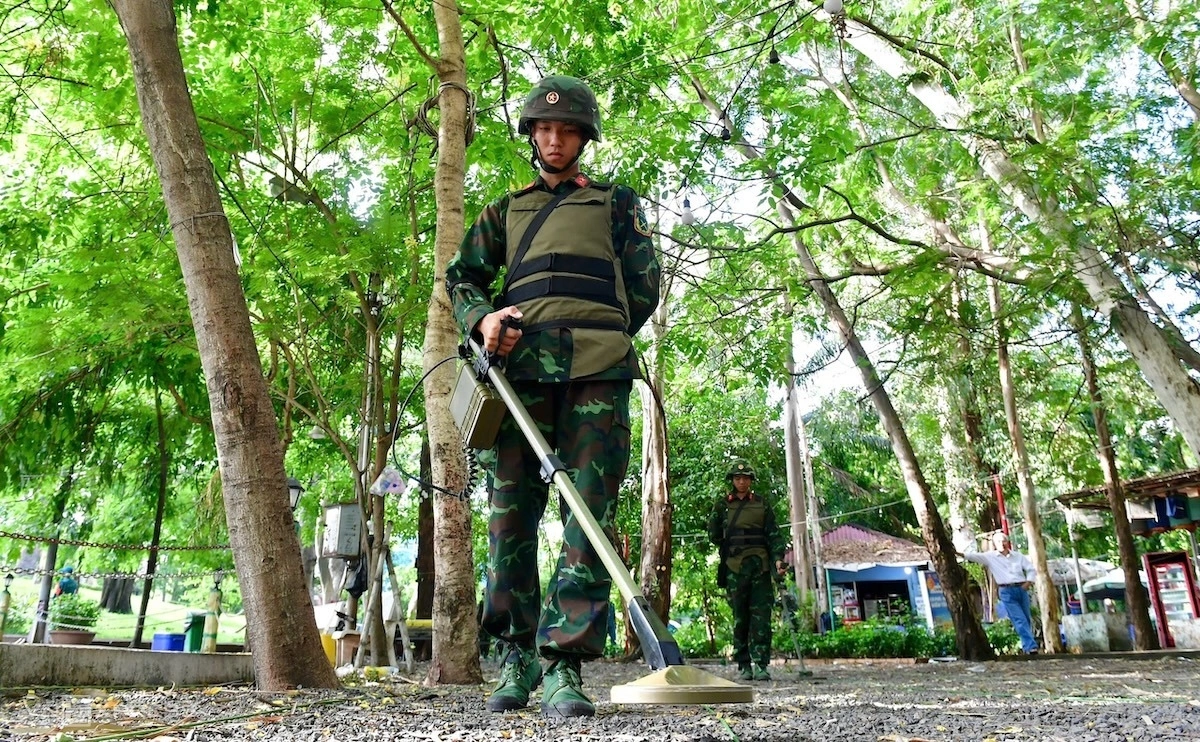 |
Military engineers sweep for bombs and mines before using ground-penetrating radar to search for mass graves in Le Thi Rieng Park. *Thanh Tung* |
At each site, military engineers sectioned off areas with ropes and swept for bombs and mines. This was done before experts deployed electrical imaging devices and ground-penetrating radar to conduct surveys up to a depth of 10 meters.
Associate Professor Doctor Le Van Anh Cuong, Head of the Department of Geophysics, explained that the equipment records the reflection and scattering of electromagnetic waves and measures electrical resistivity in the ground. The collected data helps identify stratigraphic changes, distinguishing untouched soil layers from areas that have been excavated.
"We will analyze the cross-sections to identify any traces of excavated trenches or collapsed pits, if present", Mr. Cuong said.
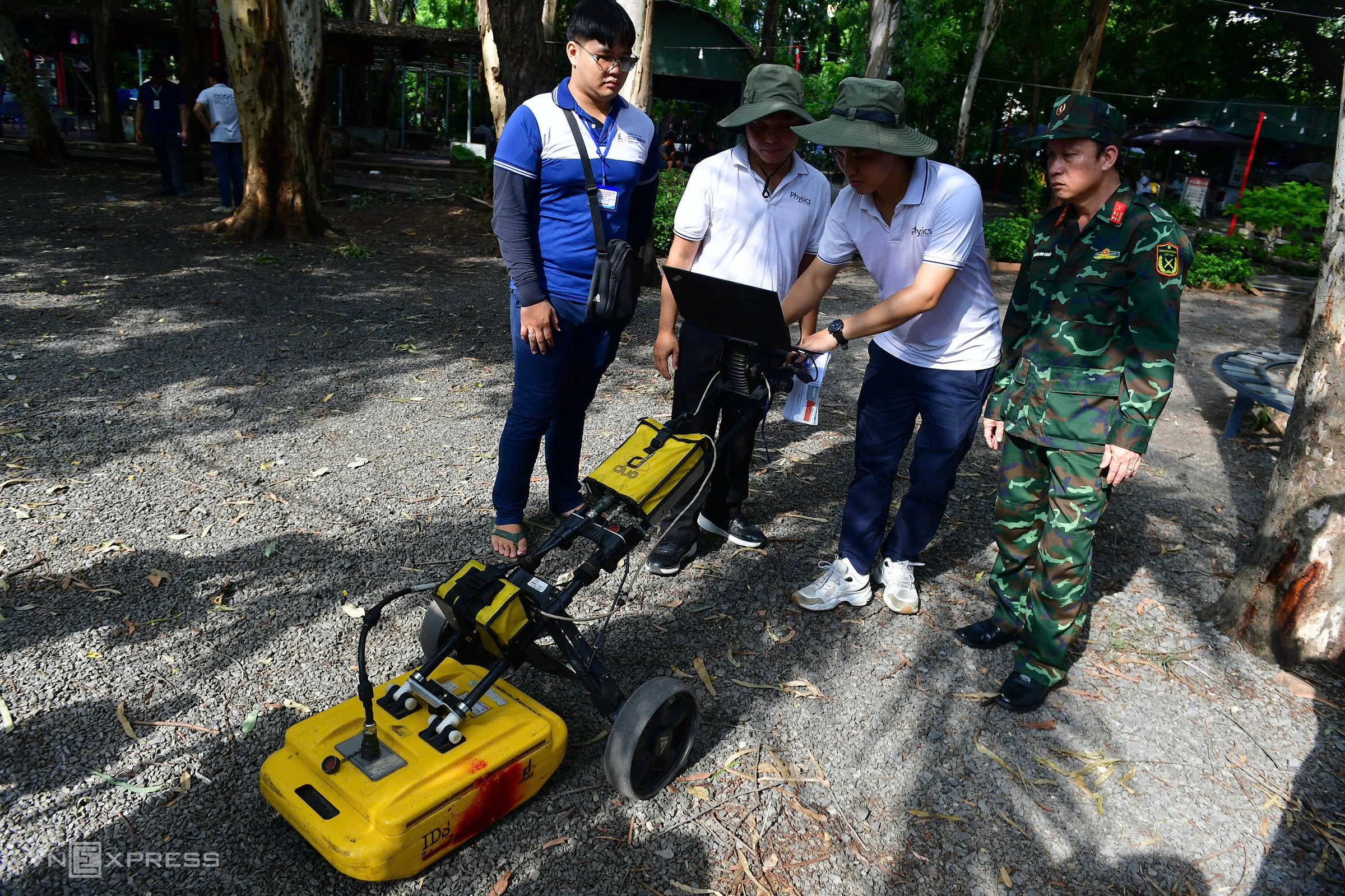 |
Colonel Nguyen Dinh Chuan, Deputy Political Commissar of the TP HCM High Command, and experts use ground-penetrating radar in an area suspected of containing mass graves of martyrs in Le Thi Rieng Park. *Thanh Tung* |
This marks the first field survey, following extensive research involving aerial photographs, documents, and witness testimonies concerning the mass graves of martyrs who perished during the Tet Mau Than General Offensive and Uprising in 1968.
Previously, the research group had determined that Le Thi Rieng Park, formerly Chi Hoa Cemetery, likely contains three mass grave trenches holding approximately 900 martyrs and civilians.
This assessment is based on an 8-year research project led by architect Nguyen Xuan Thang. The project involved cross-referencing historical archival photos from AP and satellite images from the 1968-1972 period.
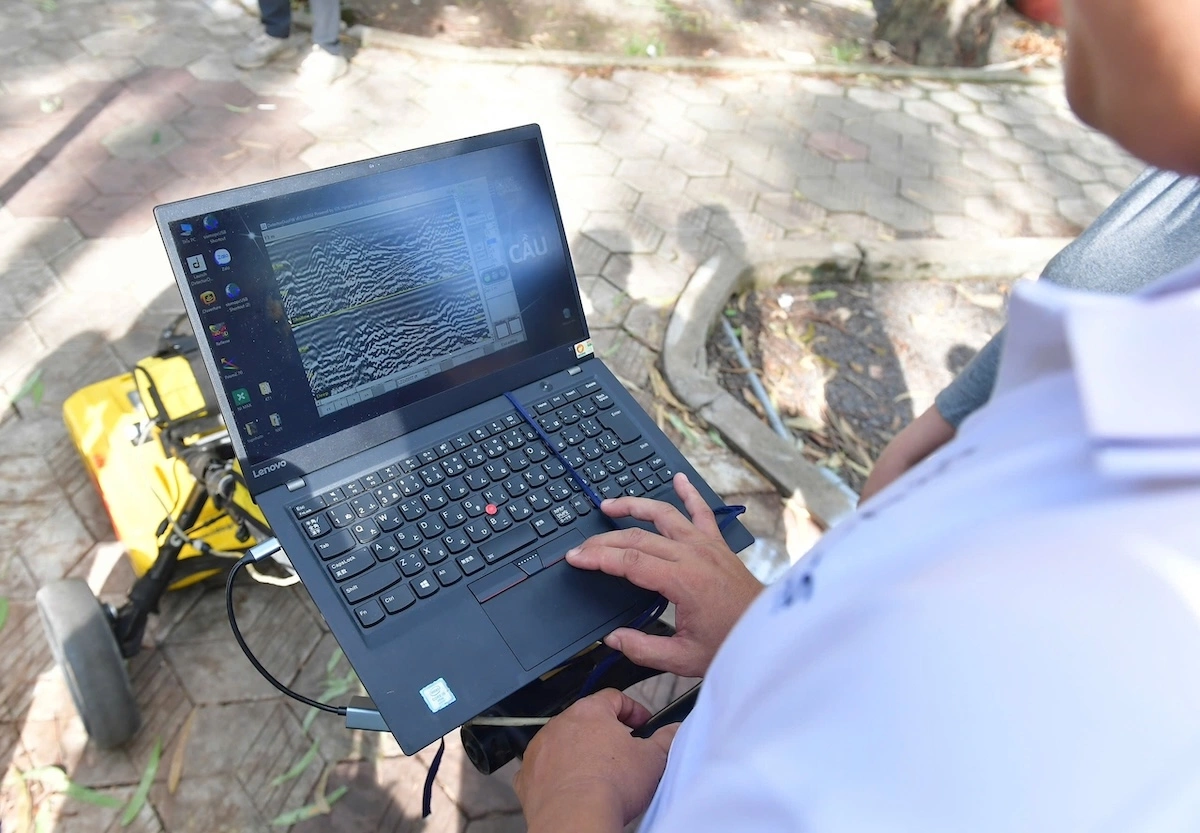 |
Radar equipment collects subsurface cross-section data onto a laptop for expert analysis. *Thanh Tung* |
Colonel Nguyen Dinh Chuan, Deputy Political Commissar of the TP HCM High Command, stated that the survey will continue for several days. The collected data will then be analyzed, synthesized, and reported to Steering Committee 515 of Military Region 7 by 30/6. This report will serve as the basis for developing plans for excavation, search, and repatriation.
By Dinh Van - Thanh Tung